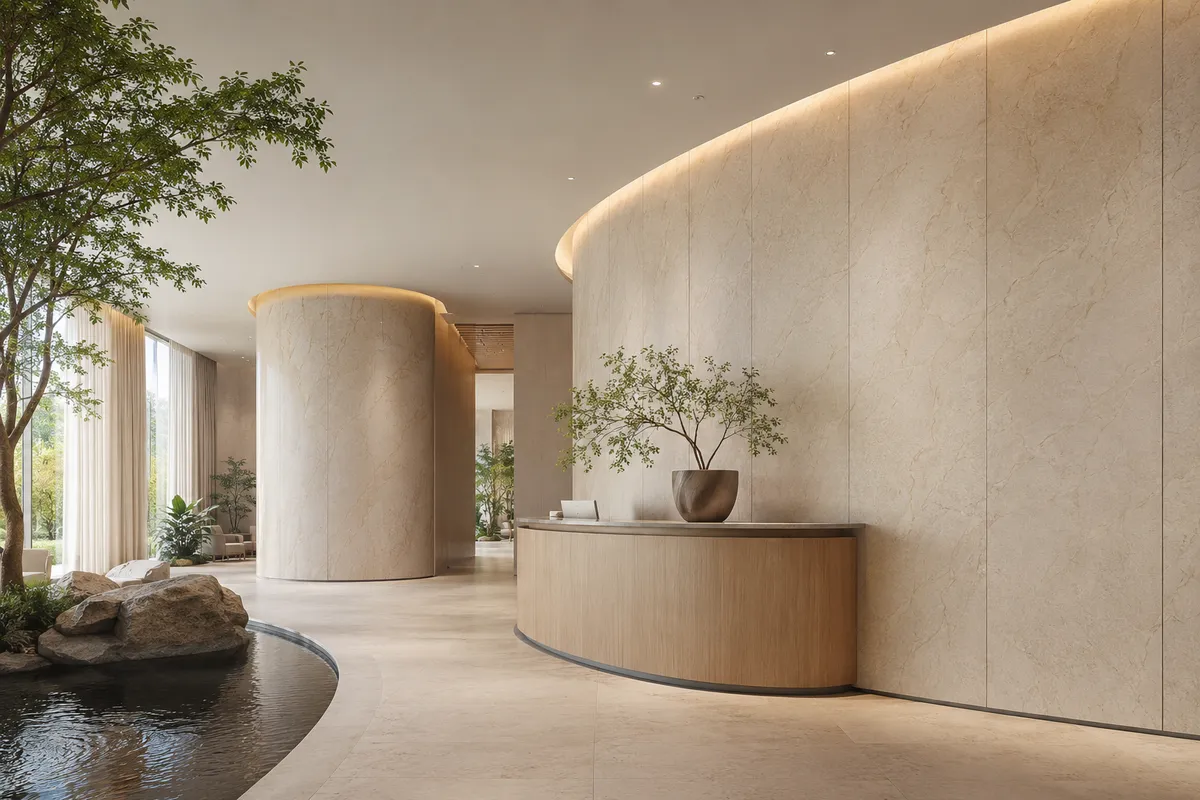
The Weekly System, Vol 11: Spectrim Ven4ma Wall Protection
Wall Protection That Works With the Architecture
How formable panels, adhesive installation, design-led finishes and high-impact performance help protect demanding interiors without making them feel institutional
Walls do more than divide a building. They establish the material character of the interior, guide people through the space and create the backdrop for almost every other design decision.
They are also expected to withstand considerably more contact than most architectural surfaces.
In hospitality environments, luggage carts, housekeeping equipment and movable furniture regularly pass through corridors, lobbies and reception areas. Senior living and healthcare spaces must accommodate wheelchairs, walkers, equipment and continuous daily use. Even a carefully designed wall can quickly become scratched, marked or damaged when its finish is not suited to the realities of the space.
Conventional wall-protection products can address that problem, but they often introduce another one: the protection looks separate from the architecture. Applied rails, guards and institutional-looking surfaces may preserve the wall while working against the intended interior concept.
Ven4ma by Spectrim approaches protection as part of the finished wall. Its formable panels, adhesive installation method and range of decorative finishes allow designers to introduce durable, high-impact protection while maintaining a more cohesive architectural appearance.
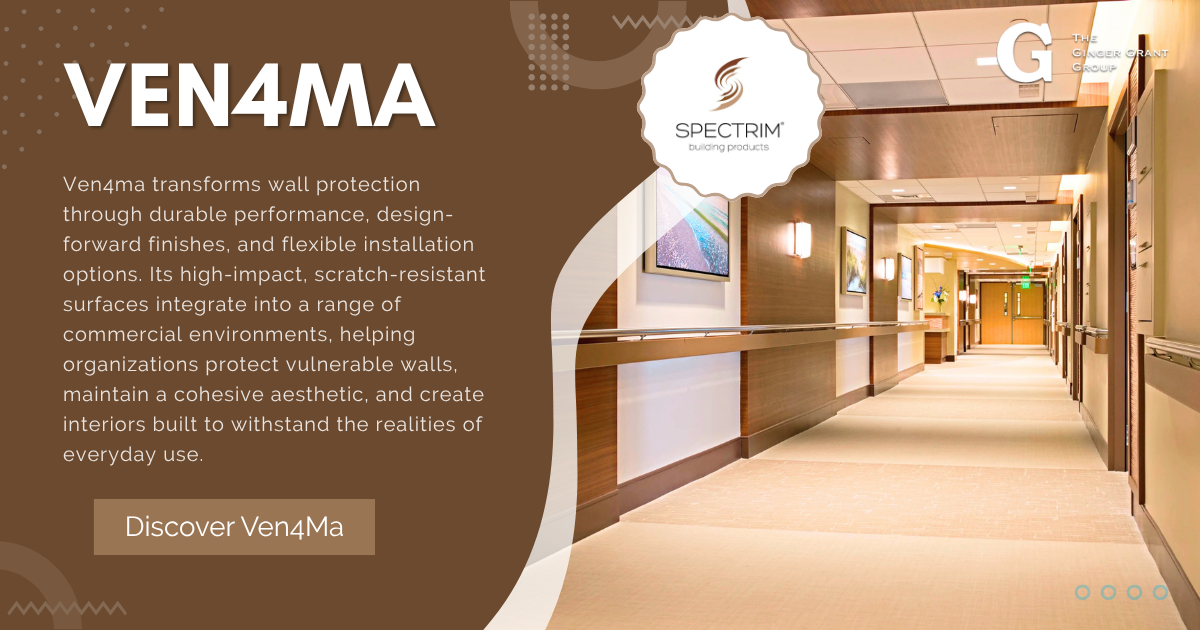
Protection Should Follow the Architecture
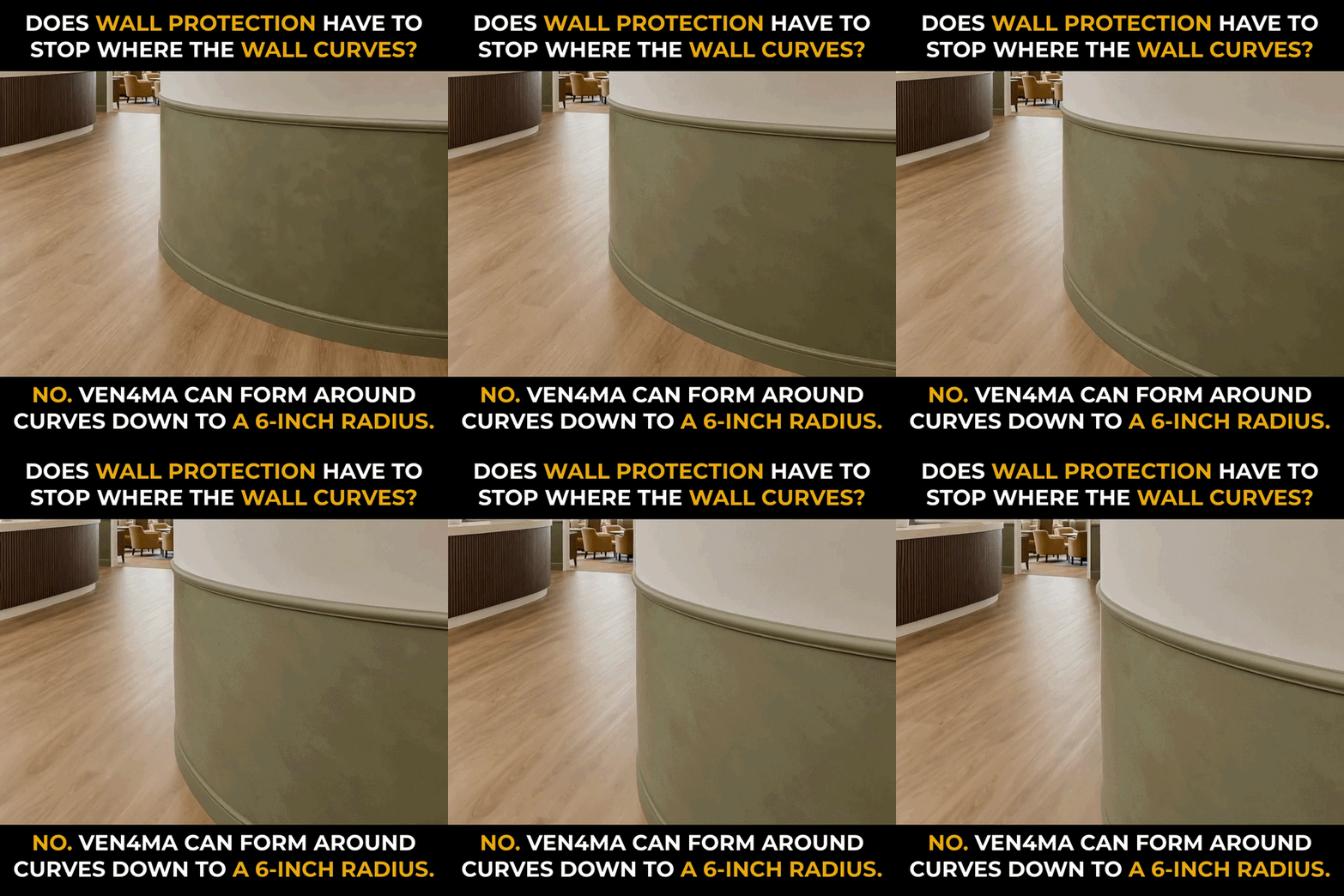
Curved walls can define a reception desk, soften a corridor intersection or create a more natural transition between adjoining spaces. They can also make wall protection more difficult to specify.
When a protective material cannot follow the curve, the system may need to stop at precisely the point where continued protection is most valuable. The designer is then left to introduce another material, create an awkward termination or expose part of the wall to damage.
Ven4ma can form around curves down to a minimum six-inch radius. This allows the protective surface to continue around rounded walls and architectural features instead of treating every change in direction as an interruption.
The advantage is both functional and visual. Protection can follow the areas exposed to passing carts, furniture and equipment, while the wall retains the continuous form envisioned by the design team. Curved reception fronts, column surrounds and corridor transitions can remain intentional architectural elements rather than becoming exceptions within the protection plan.
These conditions should still be coordinated carefully. The substrate, radius, panel layout, joints, rails and finished terminations all affect the final result. Addressing those details during specification helps the protection appear integrated into the architecture instead of added after the fact.
Fewer Fasteners. A Cleaner Wall.
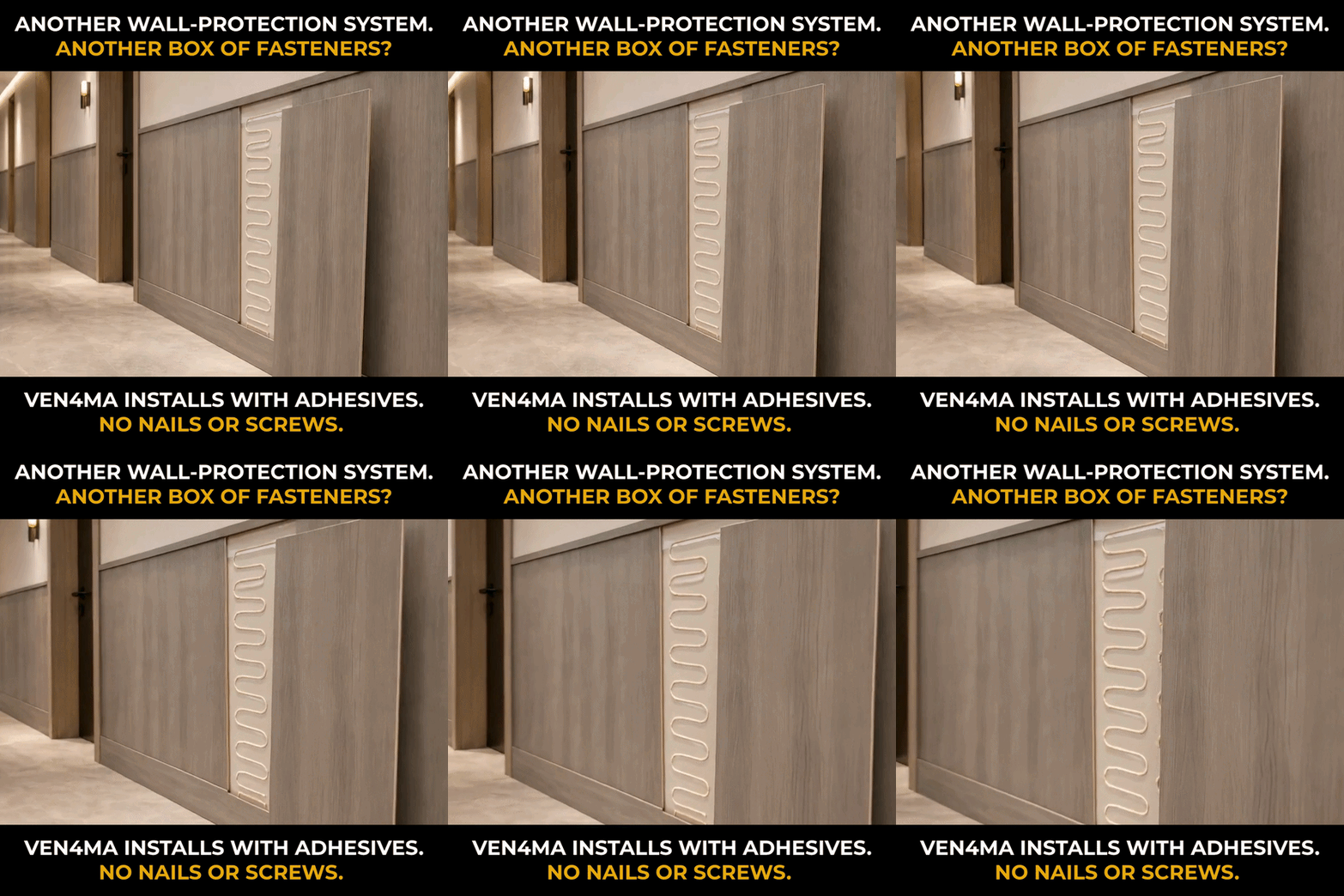
A wall-protection system can involve more than the visible material. Mechanical fasteners, penetrations and separate attachment components can add steps to the installation and influence the appearance of the completed surface.
Ven4ma components are applied to the wall using adhesives, without nails or screws. This creates a cleaner finished face without exposed mechanical fasteners competing with the panel design.
For architects and interior designers, that allows the selected finish and panel arrangement to remain the visual focus. For contractors, it changes the installation conversation from locating and concealing fasteners to properly preparing the substrate and following the specified adhesive process.
Adhesive installation does not eliminate the need for careful coordination. Wall conditions, primer, adhesive coverage, panel acclimation, temperature and curing requirements all contribute to a secure installation. The panels and supporting components need to be considered as a complete system rather than as a decorative layer that can be applied to any unprepared surface.
When those requirements are included in the project planning, the result can feel more like a finished architectural wall and less like protection attached over one.
Protection Does Not Have to Look Institutional
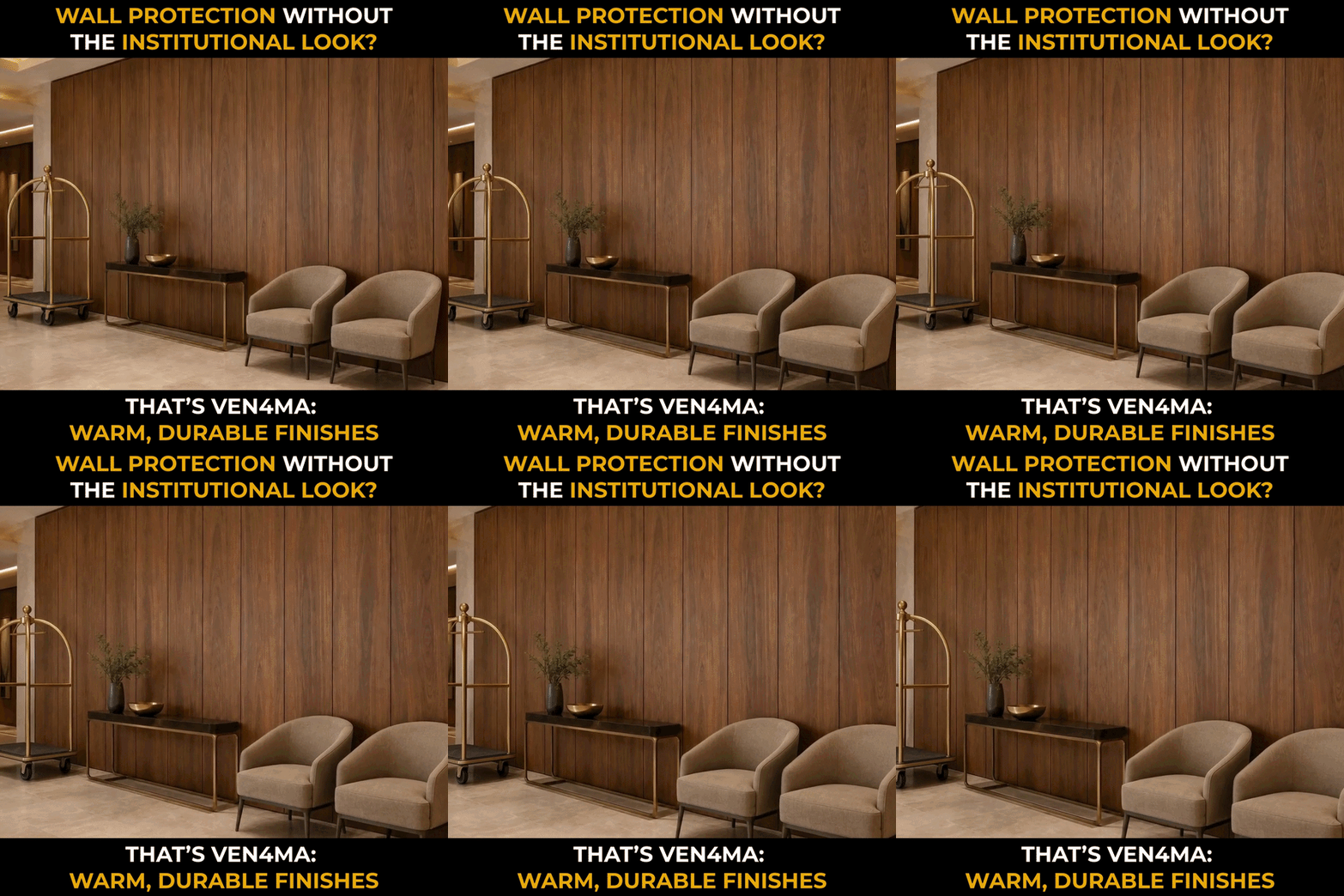
Wall protection has traditionally been associated with environments where durability takes priority over atmosphere. That association can make it difficult to introduce protective surfaces into hospitality, senior living and other design-focused interiors without creating an institutional appearance.
Ven4ma offers solid, woodgrain and textured finishes that allow protection to participate in the material palette of the room.
A warm woodgrain can support the residential character of a senior living lounge or hospitality reception area. A subtle solid can coordinate with surrounding paint and millwork. Textured and specialty finishes can give designers another way to introduce depth without relying on a conventional wallcovering in areas exposed to repeated contact.
Spectrim’s finish offering includes standard selections such as Amber Cherry, Maple, Driftwood, Honduras Mahogany and Autumn Walnut, along with additional woodgrains, solids and specialty textures. The chosen finish can therefore respond to the intended atmosphere instead of announcing that a protective product has been installed.
This is particularly important in environments where comfort and durability must coexist. Senior living communities should feel welcoming and familiar. Hotels need surfaces that support the guest experience while tolerating luggage and housekeeping traffic. Healthcare interiors increasingly use warmer materials to create spaces that feel less clinical.
The specification still needs to consider how the finish will work across panels, transitions and adjoining materials. Colour, grain direction, joint locations, lighting and the relationship to nearby millwork all influence whether the completed installation reads as one considered surface.
Designed for the Contact That Actually Happens
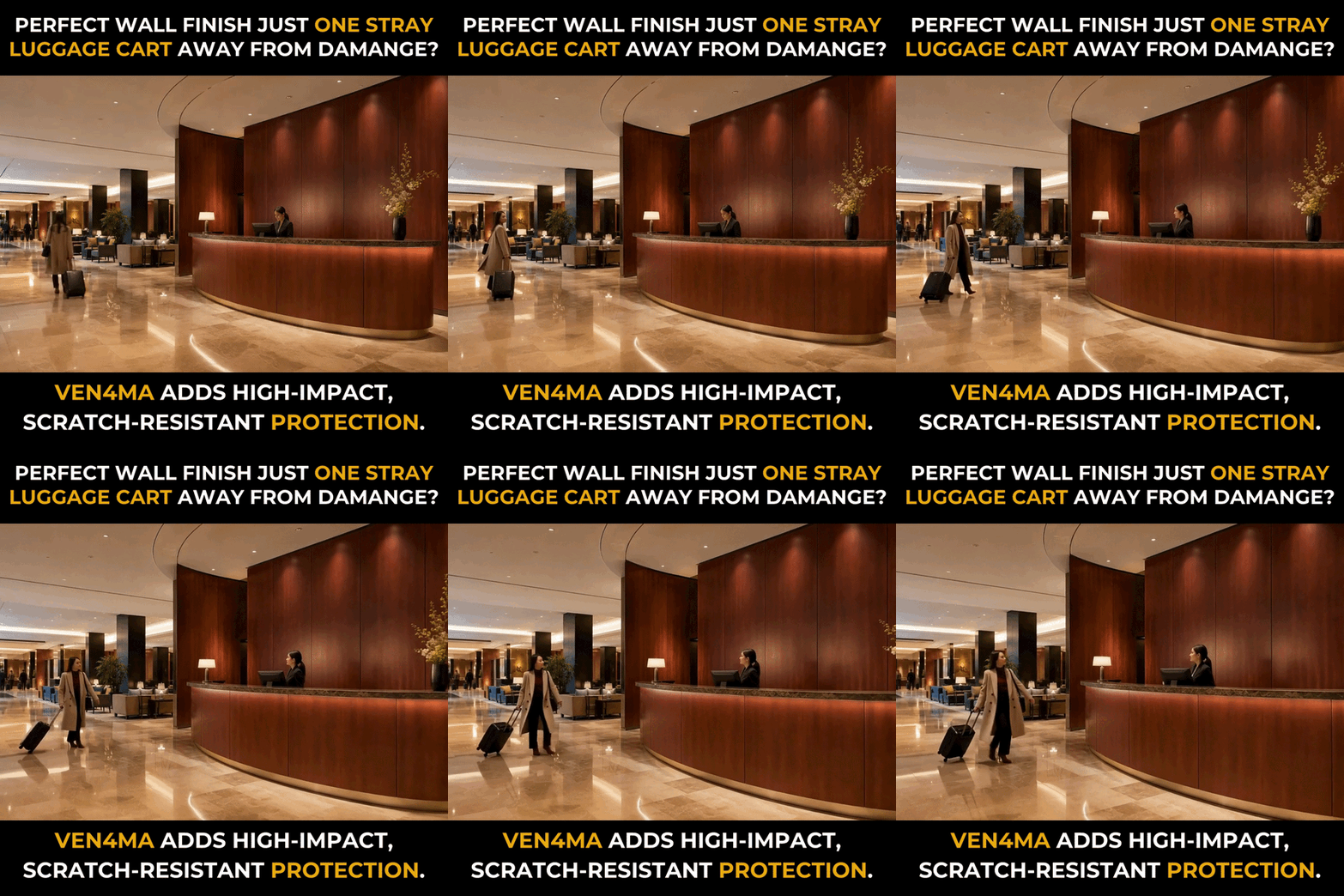
A wall does not need to experience a dramatic collision to begin showing wear. Repeated contact from luggage, carts, chair backs and equipment can gradually turn a refined interior into one that appears tired or poorly maintained.
The most vulnerable area is not always limited to the base of the wall. Handles, shelves and projecting parts of mobile equipment can make contact at several different heights. Corners and curved transitions may experience even more concentrated exposure as objects move through tight circulation paths.
Ven4ma provides durable, high-impact and scratch-resistant protection for those working conditions. Rather than relying only on a narrow rail to intercept contact at one height, designers can use a larger panelled surface where broader coverage is appropriate.
That makes the system relevant to hotel reception areas and corridors, senior living communities, healthcare spaces and other commercial interiors where the wall finish is expected to maintain its appearance through continuous use.
No surface should be treated as indestructible, and protection should be selected in relation to the actual risks within the room. Traffic patterns, cart dimensions, furniture placement and equipment movement can help determine where protection is needed and how high it should extend.
The objective is not simply to install more material. It is to place durable protection where contact is most likely, while allowing the completed wall to remain part of the design.
What Matters Most
Ven4ma brings several specification priorities together within one wall-protection system: the ability to follow curved architecture, an installation method that does not require nails or screws, a broad selection of decorative finishes and resistance to the impacts and scratches associated with demanding commercial spaces.
Its value is not limited to any one of those features. It comes from the way they work together.
A durable surface is more useful when it can continue around the shape of the wall. A protective panel is easier to integrate when its finish supports the interior palette. A clean installation is more effective when its substrate, adhesive, joints and terminations have all been properly coordinated.
That means Ven4ma should be approached as an architectural system rather than a last-minute response to possible wall damage. Panel dimensions, finish selections, curved conditions, trim components, transitions and installation requirements should be considered alongside the surrounding millwork, flooring and furnishings.
The larger design lesson is that durability and visual warmth do not have to be opposing priorities. A wall can withstand the realities of luggage carts, furniture, equipment and everyday traffic without forcing the rest of the room to adopt an institutional character.
If you’re evaluating Ven4ma for a hospitality, senior living, healthcare, education or commercial project, GGG can help you compare finish options, panel configurations, curved conditions and installation requirements in relation to your architecture and expected patterns of use.