The Weekly System, Vol 14: Ezobord Suspended Office
The Weekly System: Ezobord Suspended Office
Privacy Doesn’t Have to Mean Another Room
Open offices solved one problem and created another.
Removing walls made workplaces more connected, flexible, and visually open. But it also removed many of the boundaries that once told people where individual work happened.
The response is often framed as a choice.
Keep the workstation open, or put the person in an enclosed office.
There is useful territory between those two conditions.
A workspace can remain visibly connected to the office while still gaining enough definition to feel distinct. Acoustic surfaces, overhead elements, and partial enclosure can establish boundaries without turning every workstation into another room.
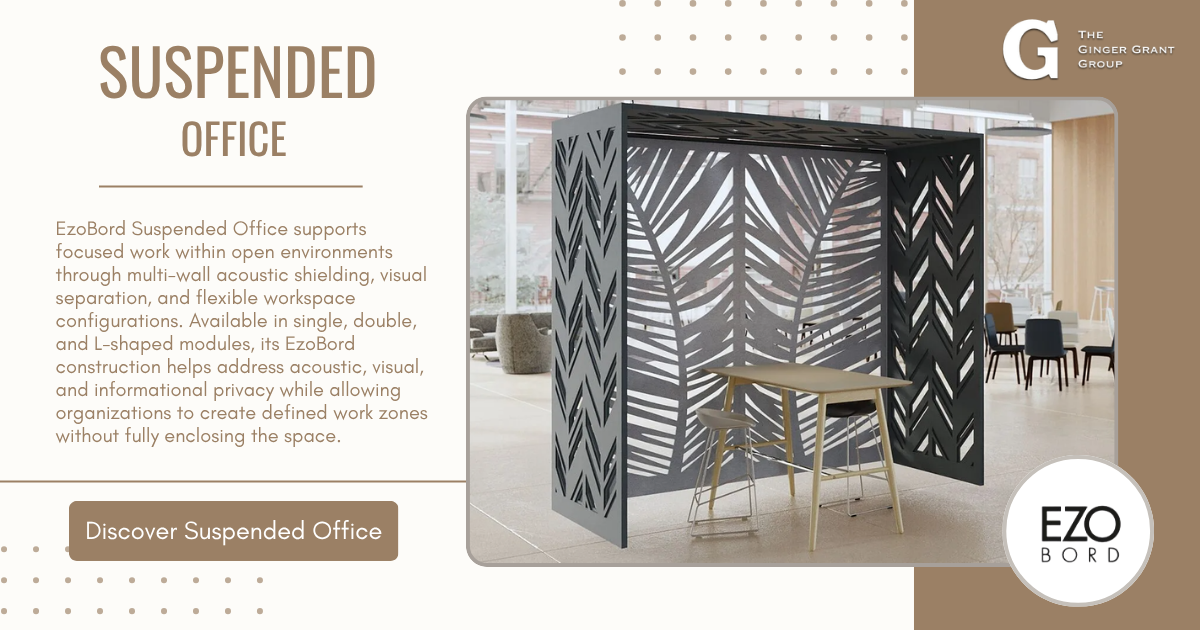
That is the design opportunity behind EzoBord’s Suspended Office.
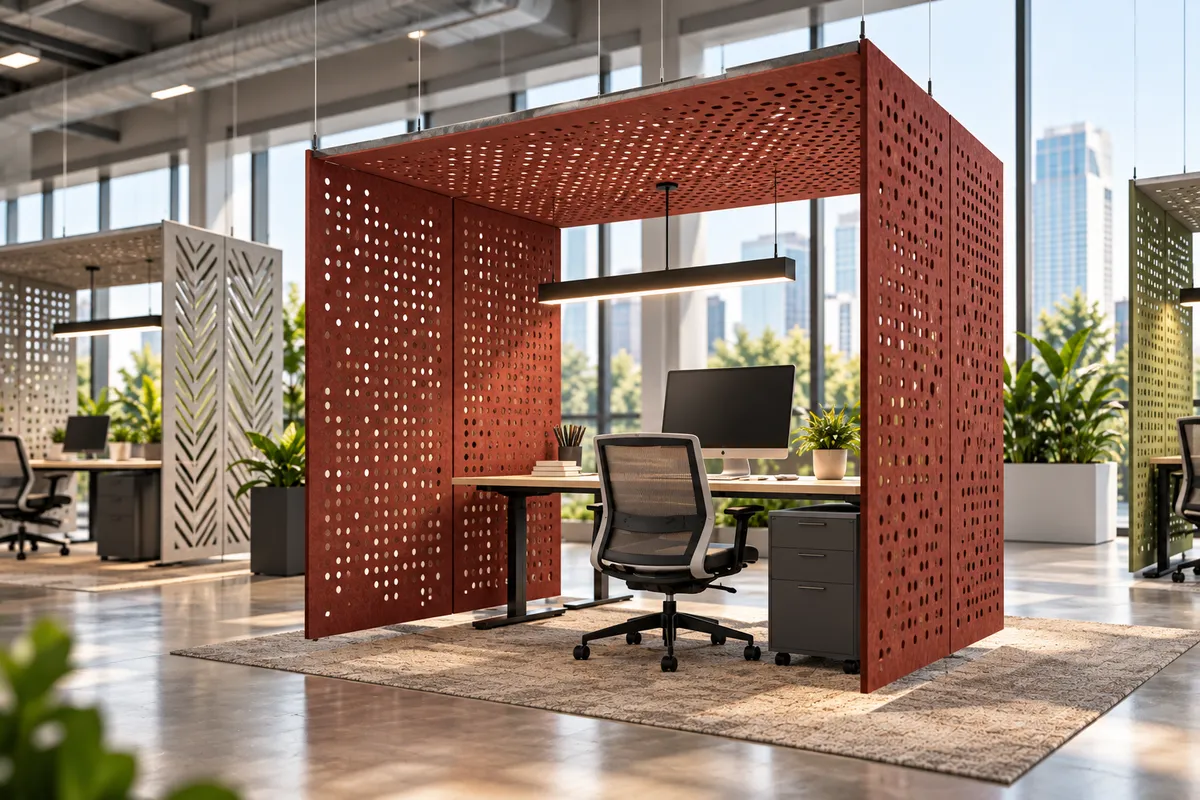
Instead of putting acoustic treatment somewhere else in the workplace, Suspended Office brings it directly around the workstation. Patterned EzoBord panels create vertical and overhead definition while leaving the workspace connected to the larger floor plan.
The result is not an enclosed office.
It is a workspace within the workspace.
Workplace Privacy Has More Than One Dimension
Privacy is often treated as a visual problem.
Can someone see me?
Can I see them?
But that is only part of what people experience when working in an open environment.
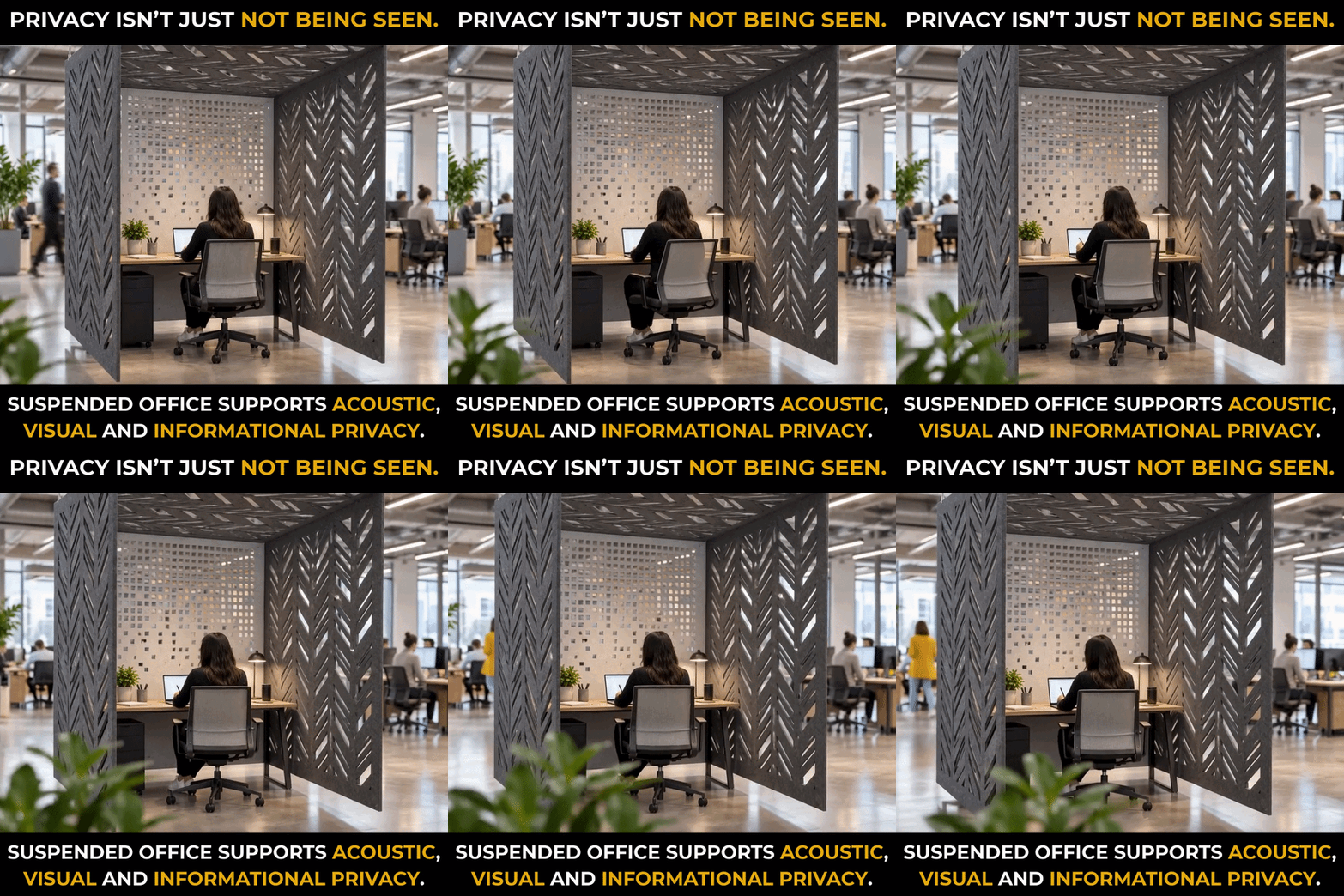
EzoBord describes workplace privacy as encompassing acoustical, informational, and visual needs. Suspended Office responds by creating shielding around the work area rather than relying only on a conventional desk-height divider.
That distinction matters.
Visual privacy is about controlling sightlines and reducing some of the movement competing for attention.
Acoustic treatment addresses another layer of the environment by introducing sound-absorbing material around the workstation.
Informational privacy adds another consideration: how exposed the activity happening at the workstation feels within the larger office.
None of those necessarily requires complete enclosure.
Sometimes the design problem is simply that the workstation has no meaningful boundary at all.
Suspended Office creates that boundary vertically and overhead while maintaining openings to the surrounding workplace. The user still occupies the larger office, but the immediate workspace becomes more clearly defined.
That creates a useful middle condition between a completely exposed workstation and a conventional enclosed room.
Privacy, in other words, does not have to begin with a door.
Workplace Materials Have to Survive the Workplace
An architectural product can look good in a rendering and still struggle with the realities of daily use.
Workplaces are active environments.
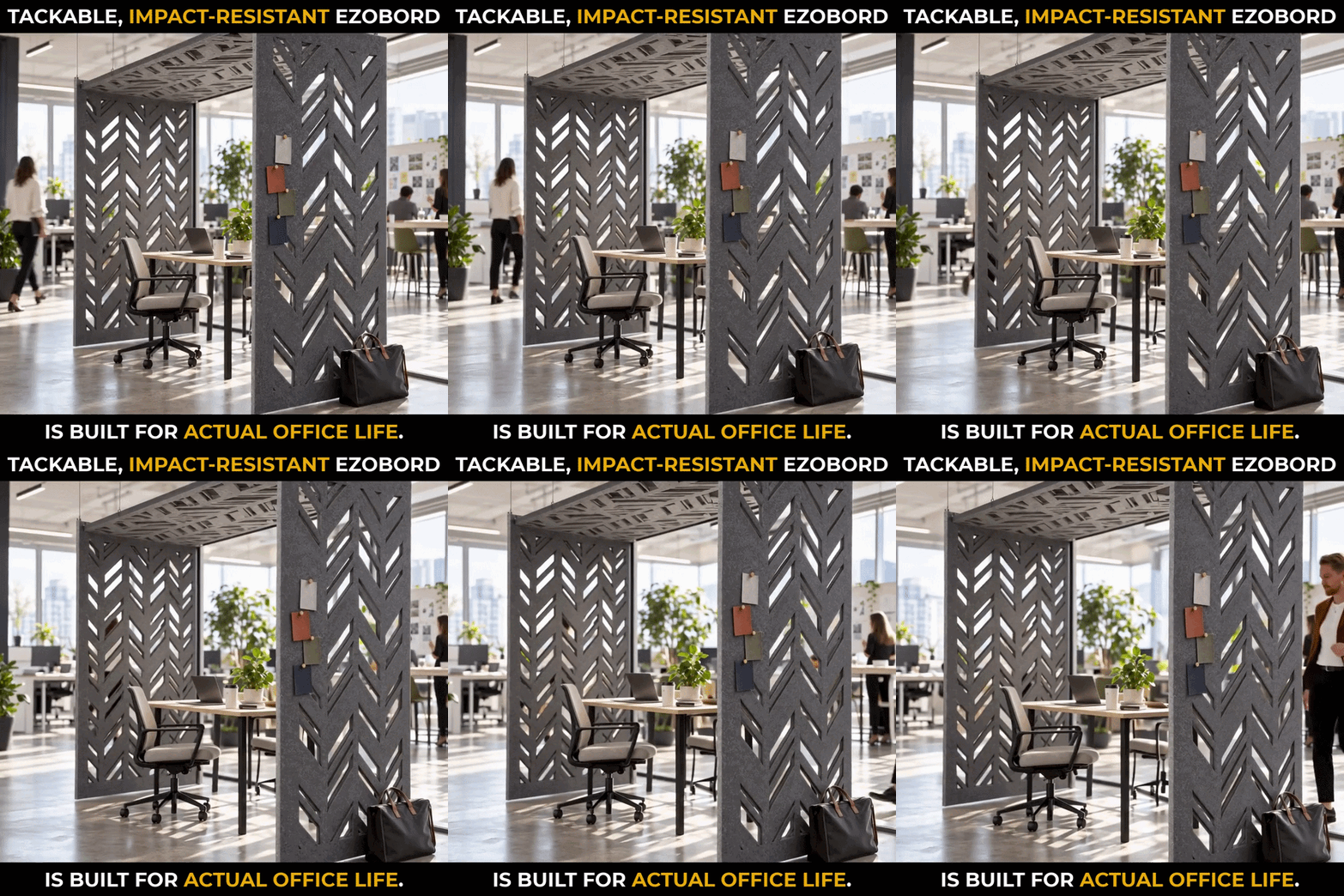
Chairs move. Bags get placed against surfaces. People brush past partitions. Workstations change. Employees pin up information, samples, reminders, schedules, and the temporary artifacts of whatever they are working on.
That means material characteristics matter beyond appearance.
EzoBord identifies the material used for Suspended Office as tackable, impact resistant, bacteria resistant, moisture resistant, and installation friendly. Its current product information lists the composition as 100% PET with a minimum 60% recycled content.
The tackable surface is particularly relevant at the workstation.
Instead of treating the enclosure only as a visual boundary, the surrounding surface can become useful territory. Notes, material samples, schedules, inspiration, and other lightweight workplace information can become part of the immediate environment.
That changes the role of the panel.
It is not simply something separating one employee from another.
It becomes part of the working environment itself.
Impact resistance matters for the same practical reason. These surfaces are positioned where people, furniture, bags, and everyday activity will interact with them.
Specifications have to survive contact with real life.
That is an important filter for any workplace product.
A material should contribute to the design intent on installation day—but it also has to continue performing once people actually occupy the space.
The Floor Plan Will Change. Privacy Should Adapt With It.
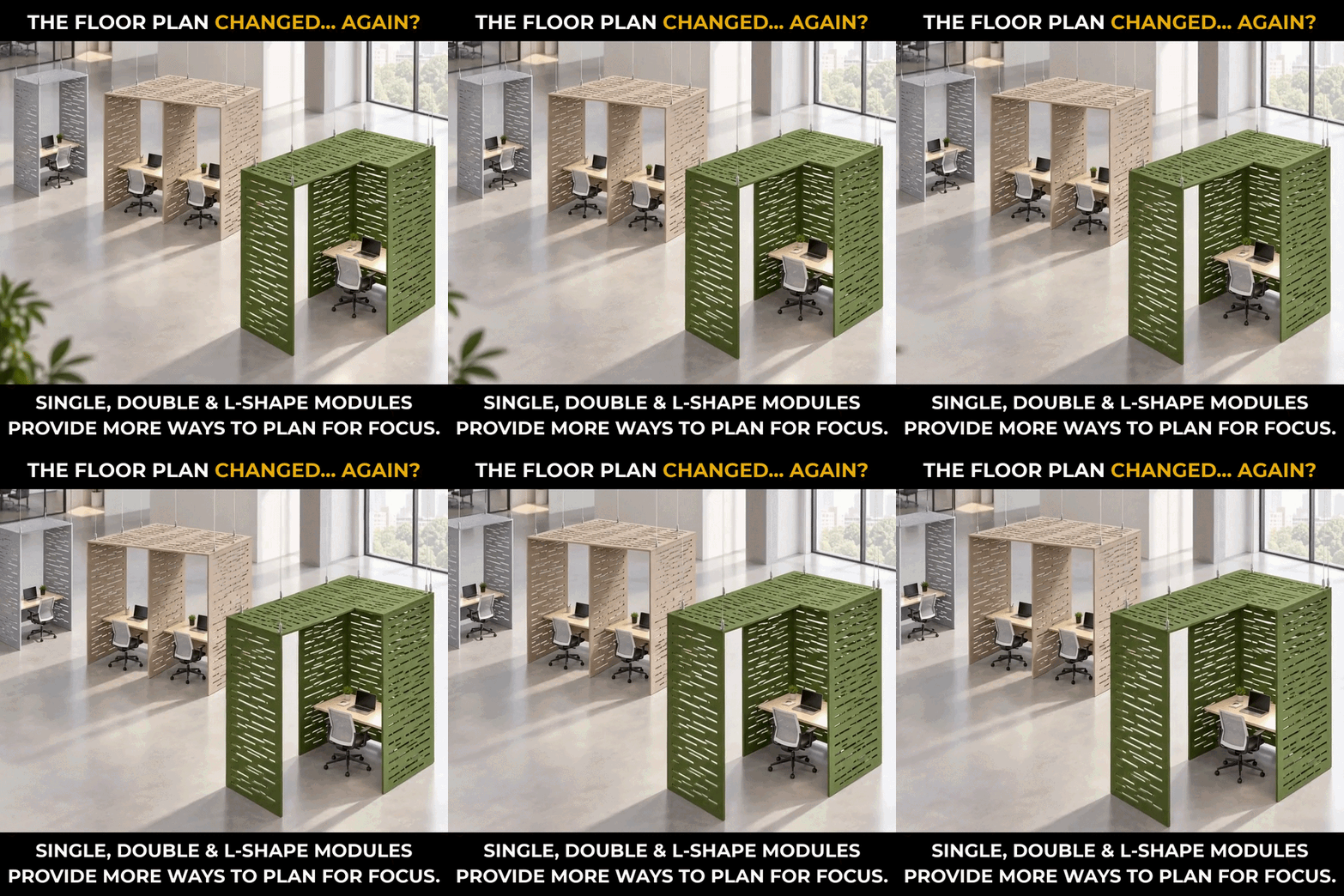
Workplace planning rarely stays static.
Teams grow.
Departments move.
Individual work becomes collaborative work.
Collaborative areas become focus areas.
Furniture gets rearranged as organizations discover how people actually use the space.
Permanent construction can make every one of those changes more complicated.
Suspended Office approaches workplace definition as a configurable system instead.
EzoBord offers three standard configurations: Single, Double, and L Shape.
The Single Module has nominal dimensions of 48 inches wide by 96 inches long.
The Double Module expands to 96 inches wide by 96 inches long.
The L Shape configuration extends to 96 inches wide by 144 inches long.
Those options give designers different ways to introduce definition depending on how the workstation or group of workstations needs to function.
The visual language can change as well.
EzoBord lists Chevron, Rectangular Undulation, Squares, Pixelated Squares, and Pixelated Circles as pattern options for Suspended Office. The catalog also lists Desert Sand, Brick Red, Charcoal Gray, Silver Gray, Moss Green, and Royal Blue.
That combination of configuration, pattern, and color allows the enclosure to participate in the architecture rather than simply being hidden within it.
More importantly, the system gives designers another planning tool.
Instead of asking only where permanent walls should go, the conversation can include another question:
Where does the floor plan need more definition?
That is a much more flexible starting point.
Focus Can Come From Creating a Boundary, Not Complete Isolation
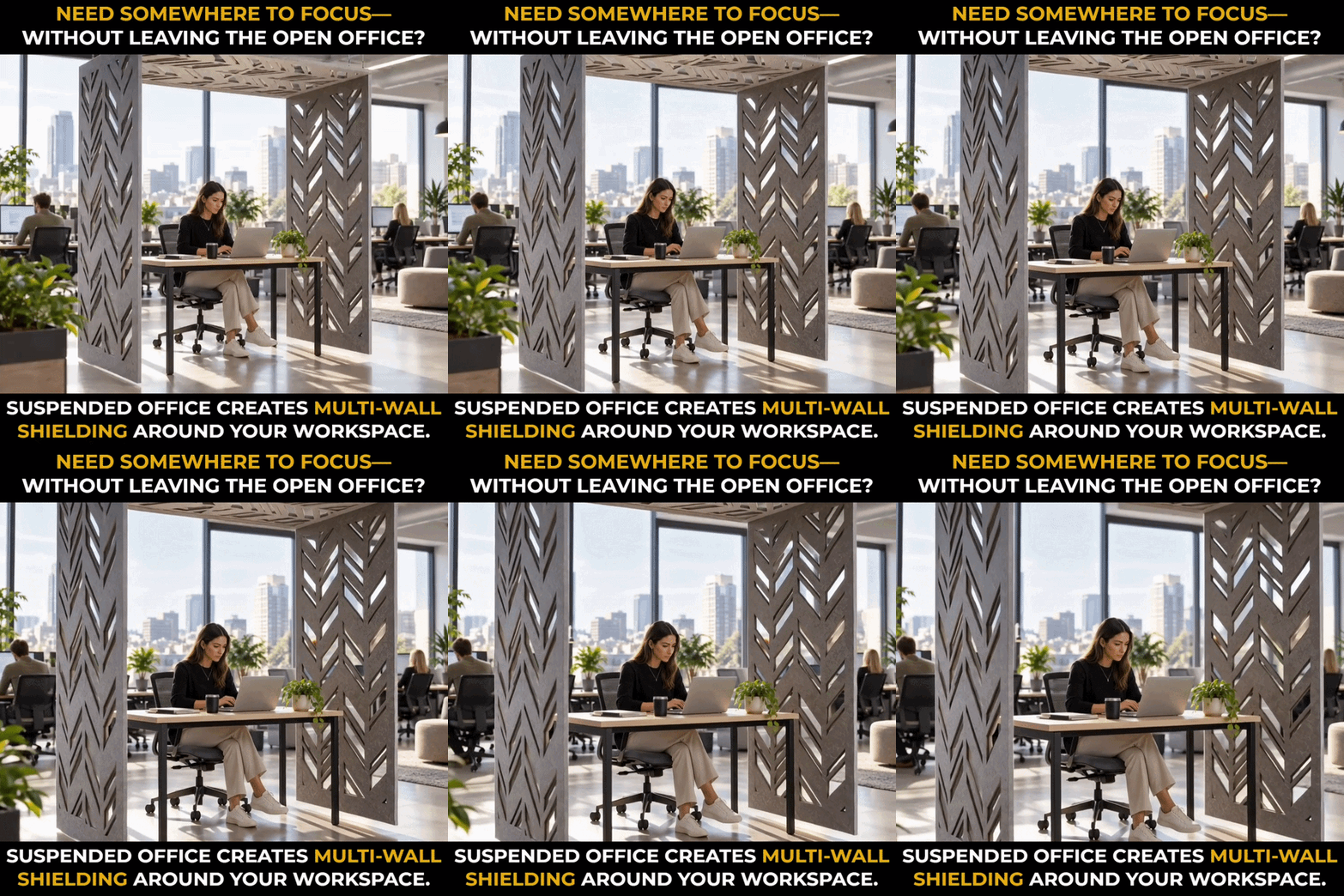
A person does not always need to leave the open office to do focused work.
Sometimes the immediate environment simply needs to become more defined.
That is where the vertical scale of Suspended Office becomes important.
A conventional desk divider usually addresses the area immediately around the work surface. Suspended Office extends acoustic surfaces upward and around the workstation, creating a larger spatial boundary.
EzoBord describes the product as providing three-wall shielding intended to support relaxation and focus.
The distinction between shielding and enclosure is important.
The employee is not sealed inside a room.
Sightlines remain available through the patterned panels and open portions of the configuration. The workstation remains part of the larger workplace. People can move in and out without crossing a door or entering a completely separate architectural space.
But the immediate environment feels different from the open floor around it.
That creates an intermediate layer of workplace planning.
Open workstation.
Semi-defined workspace.
Enclosed room.
Those do not have to compete with one another. A successful workplace can use all three depending on the activity being supported.
The value of Suspended Office is that it gives designers another point on that spectrum.
Sometimes focus does not require removing someone from the office.
It requires giving their workspace enough definition to let them remain part of it.
What Matters Most
Workplace privacy should not automatically be treated as a choice between an exposed workstation and an enclosed room.
There is useful space between those conditions.
Visual boundaries can reduce exposure.
Acoustic material can address sound within the immediate environment.
Tackable, impact-resistant surfaces can participate in everyday work rather than simply surrounding it.
Multiple configurations can give designers different ways to establish zones as the floor plan changes.
And patterned panels can make privacy part of the architectural language instead of something designers have to disguise.
That is what makes Suspended Office interesting.
It is not trying to recreate a private office without walls.
It gives designers another way to establish where individual space begins within a shared environment.
Because sometimes the workplace does not need another room.
It just needs a clearer boundary.
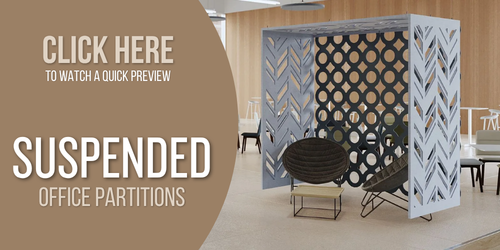
If you’re evaluating privacy, acoustic treatment, or workstation definition within an open workplace, The Ginger Grant Group can help explore EzoBord Suspended Office configurations, patterns, and applications that support the way the space needs to work.