The Weekly System, Vol 12: Quiet Earth Moss's Strata Acoustic Moss Panels
When Biophilic Design Finds Its Pattern
How preserved moss, layered EzoBord, customizable patterns, extensive color options, and acoustic support turn Strata into more than a decorative feature wall
Biophilic design is not a new idea.
Neither is the moss wall.
The challenge begins when every installation starts to look like the same uninterrupted field of green. While the material introduces natural texture, the design can lose some of the individuality that made it interesting in the first place.
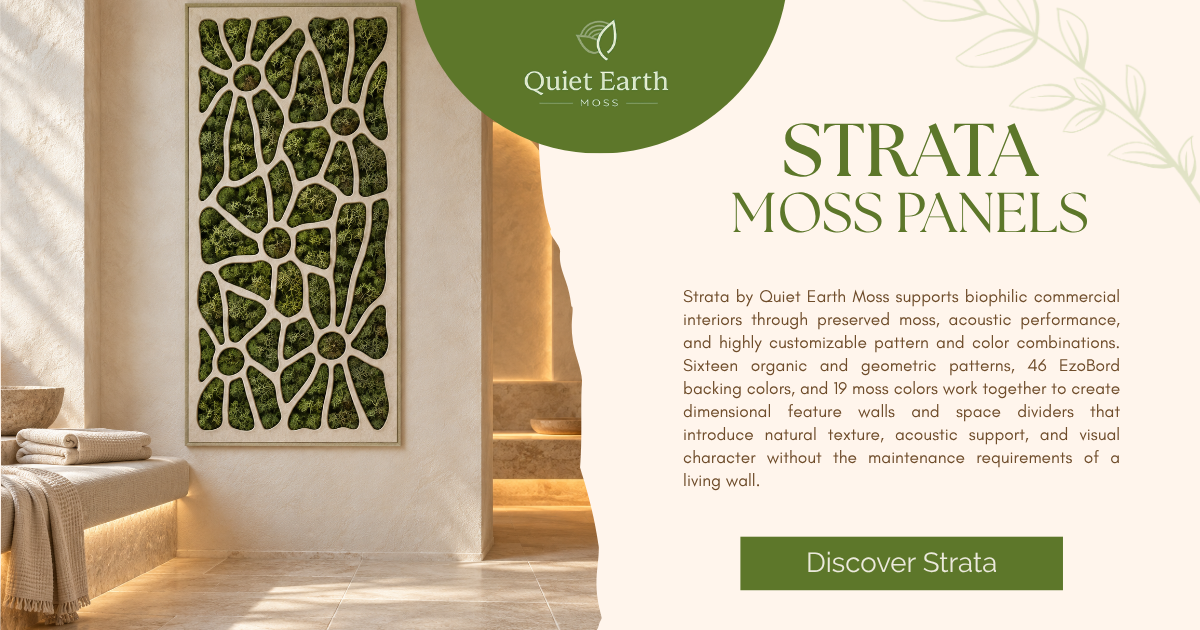
Quiet Earth Moss takes a more structured approach with Strata. Preserved reindeer moss is paired with layered EzoBord to bring pattern, color, texture, and acoustic support into one customizable architectural feature.
Rather than simply placing nature on the wall, Strata gives designers more control over the shape it takes.
One Feature Wall. Sixteen Starting Points.
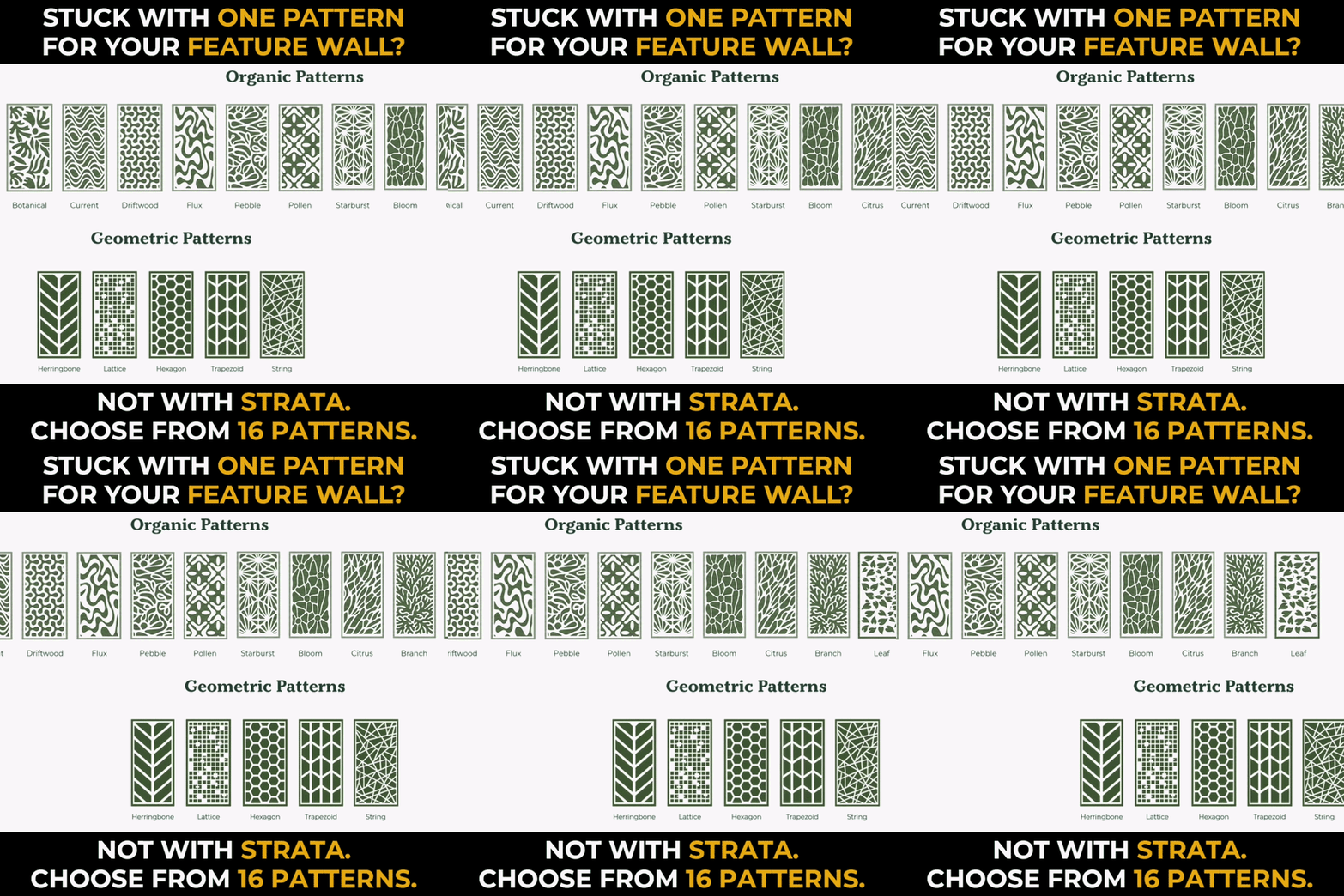
Stuck with one pattern for your feature wall?
Not with Strata.
The collection offers 16 standard patterns, along with custom options for projects that need a more specific visual direction. This gives designers a defined starting point without forcing every installation toward the same result.
Standard patterns range from fluid, nature-inspired compositions to precise geometric structures. Each one changes how the preserved moss interacts with the EzoBord layer, creating different balances of texture, negative space, repetition, and movement.
A larger pattern can give a wall a bold architectural rhythm. A finer, more intricate option can introduce detail without dominating the surrounding interior. Patterns can also be repeated across multiple panels to create a larger continuous feature or used as individual statements within a space.
For designers, the benefit is not simply having more choices. It is having pattern options that can respond to the architecture, brand identity, furniture, finishes, and overall mood of the project.
The moss may be natural, but the composition does not have to be left to chance.
Organic or Geometric?
Biophilic design is often associated with irregular forms, soft curves, and shapes taken directly from nature.
Strata can work that way—but it does not have to.
Its organic patterns use botanical, flowing, and naturally irregular forms to reinforce the relationship between the interior and the natural world. These options can work especially well in wellness, healthcare, hospitality, and restorative workplace environments where softness and visual calm are central to the concept.
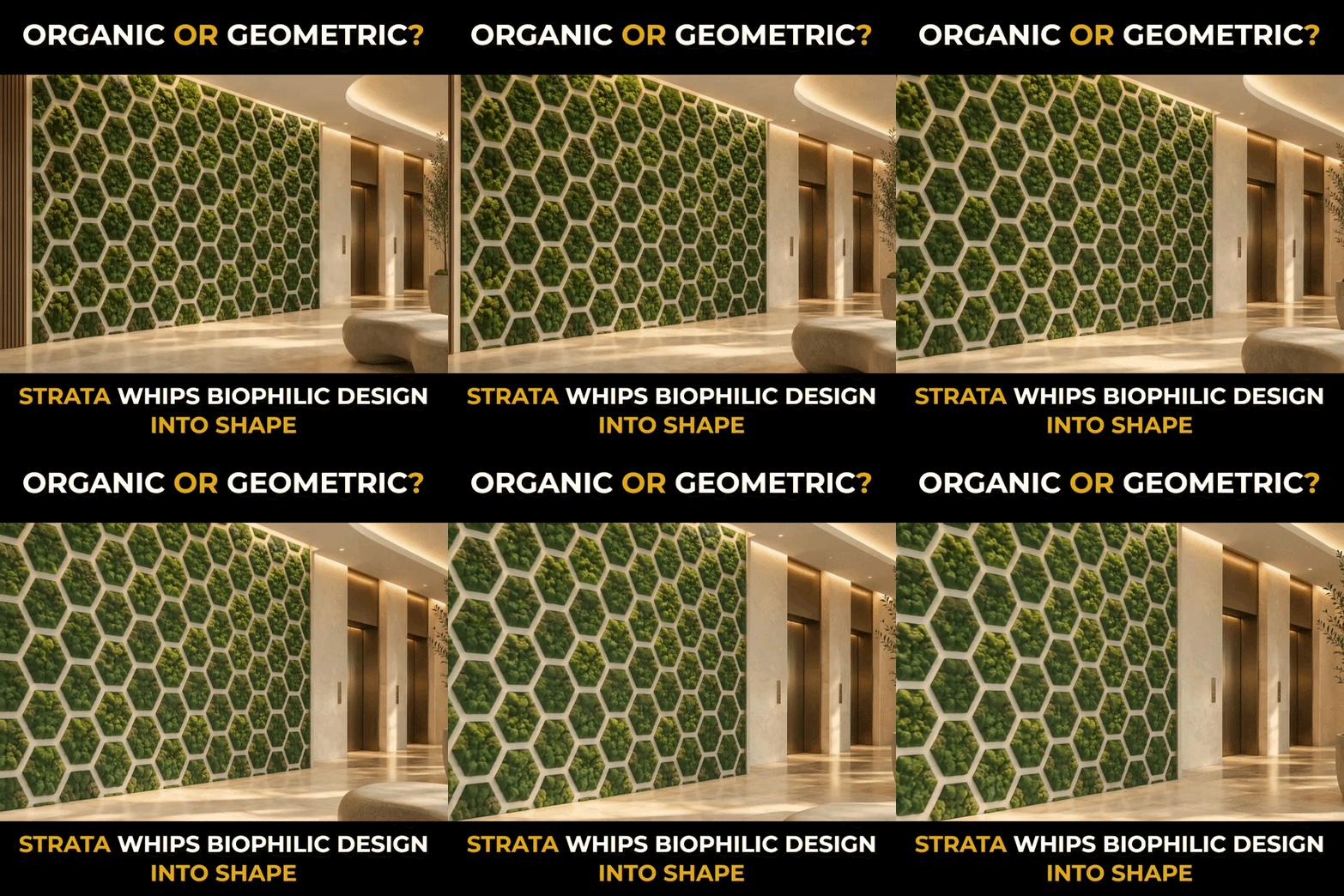
The geometric patterns create a different expression. Repeated lines, grids, hexagons, and angular structures bring order to the moss while allowing its dimensional texture to soften the precision of the pattern.
That contrast is part of what makes Strata interesting. The EzoBord establishes the structure, while the preserved moss introduces natural variation within it.
A geometric installation can complement contemporary architecture, linear lighting, modular furniture, or a strong brand system. An organic pattern can offset harder materials and introduce movement to spaces dominated by glass, metal, stone, or rectilinear planning.
The choice does not have to be between biophilic design and architectural structure.
Strata works both ways.
Specifying the Pattern Was the Easy Part
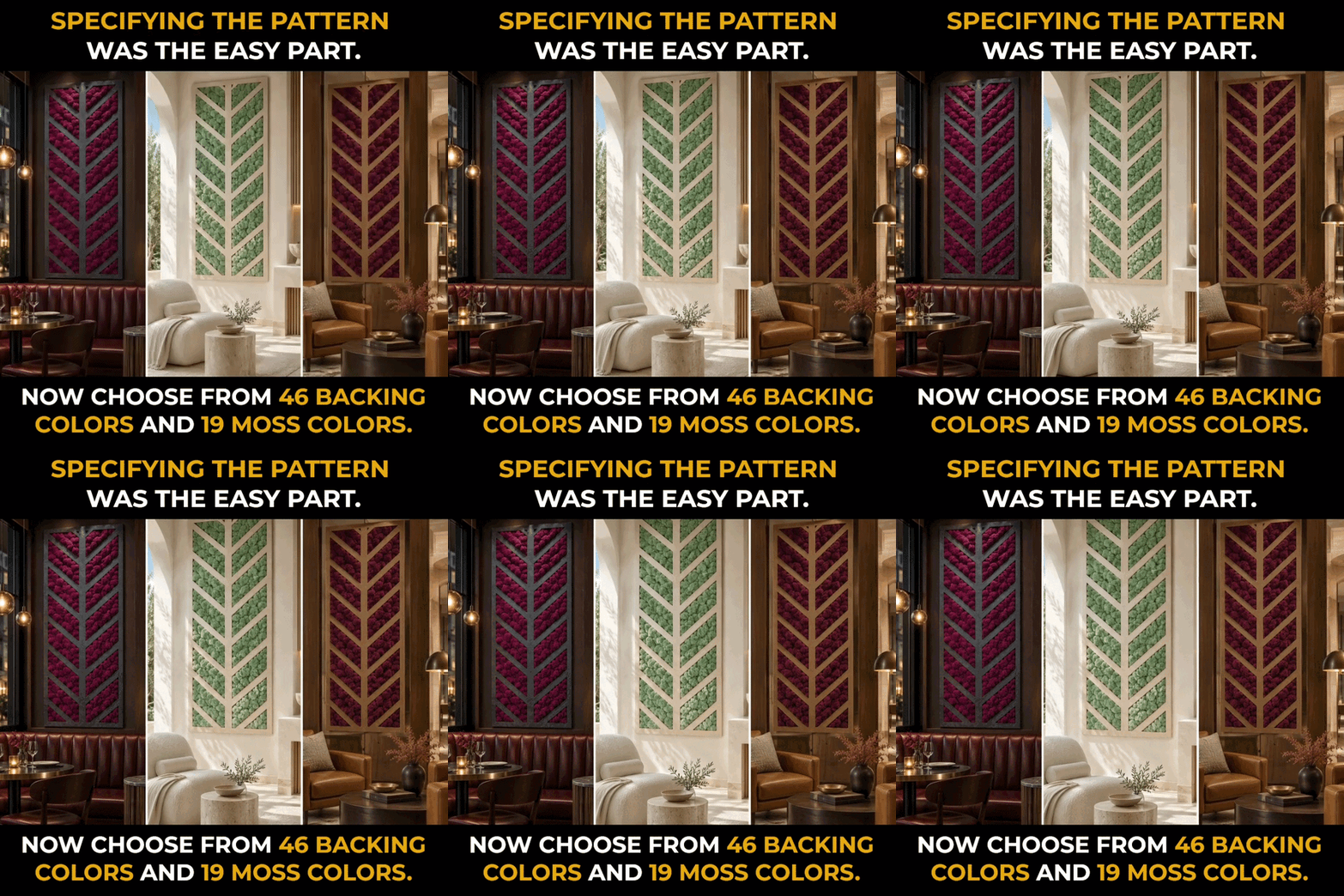
Choosing one of the 16 patterns establishes the form. The color specification determines how that form behaves within the room.
Strata is available with EzoBord in 46 backing colors and preserved reindeer moss in 19 colors, with custom moss available on request. That creates possibilities far beyond the expected combination of green moss and neutral backing.
A cream or pale neutral EzoBord can give the pattern a lighter, quieter presence. Dark backing can create stronger contrast and make the moss appear more dimensional. Saturated colors can connect the feature to a brand palette, furniture scheme, artwork, or other architectural finishes.
The moss can remain within familiar natural greens, but it can also introduce colors such as burgundy, fuchsia, blue, turquoise, yellow, orange, charcoal, or softer neutral tones.
This allows the same Strata pattern to take on entirely different personalities.
A rich, high-contrast combination might suit a restaurant or boutique hospitality environment. Muted greens and warm neutrals can support a wellness or healthcare setting. Deeper, more tailored tones can give a hotel lobby or corporate interior a refined architectural presence.
That flexibility helps Strata become part of the full material palette rather than something added after every other finish has already been selected.
The pattern is one decision. The relationship between moss, backing, and interior is where the specification becomes individual.
Divide the Space Without Flattening the Design
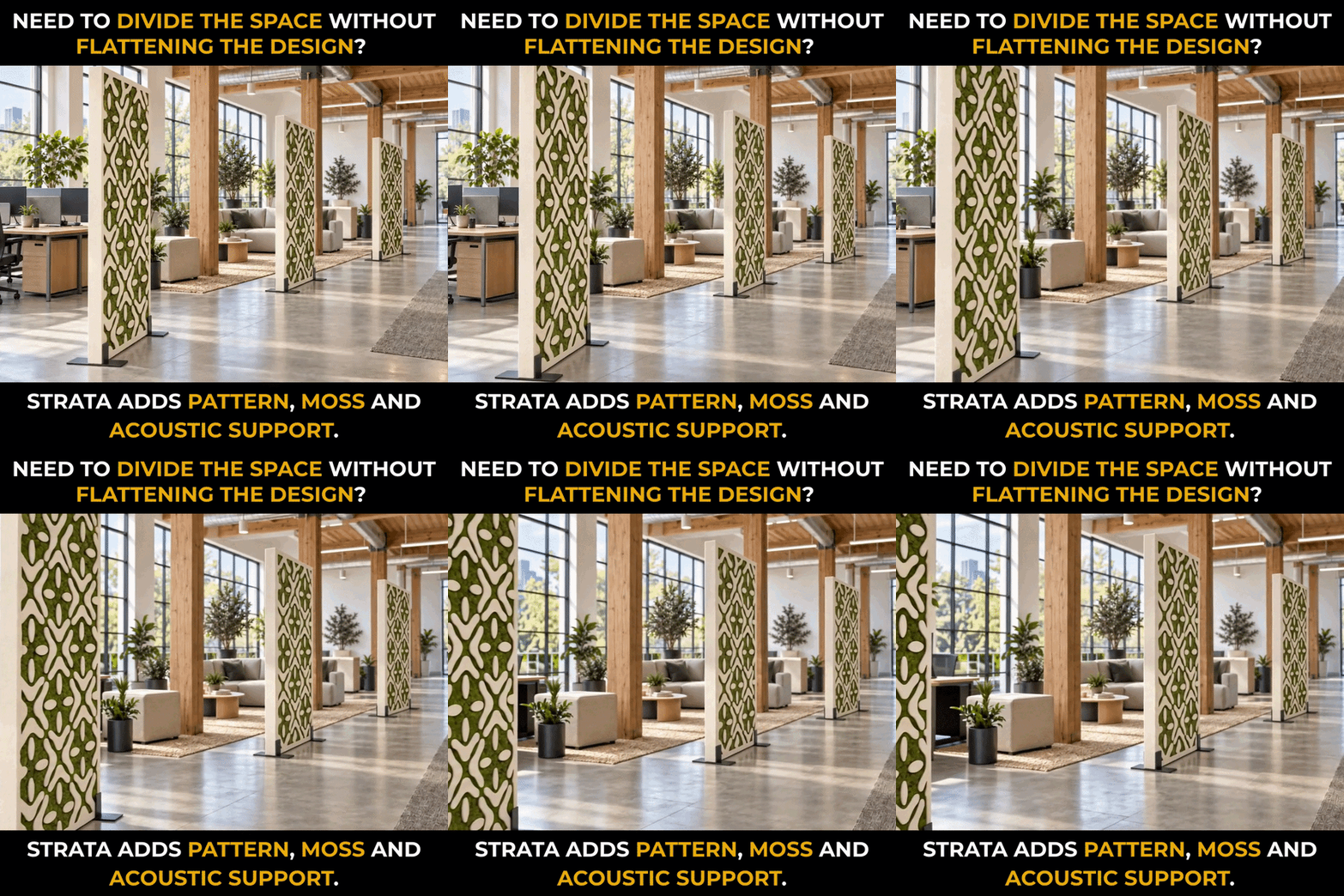
Open spaces often need more definition.
Workstations need separation. Waiting areas need a greater sense of privacy. Collaborative zones need boundaries that do not make the floorplate feel closed or disconnected.
The usual solution is to introduce a divider—but a purely functional panel can easily flatten the design.
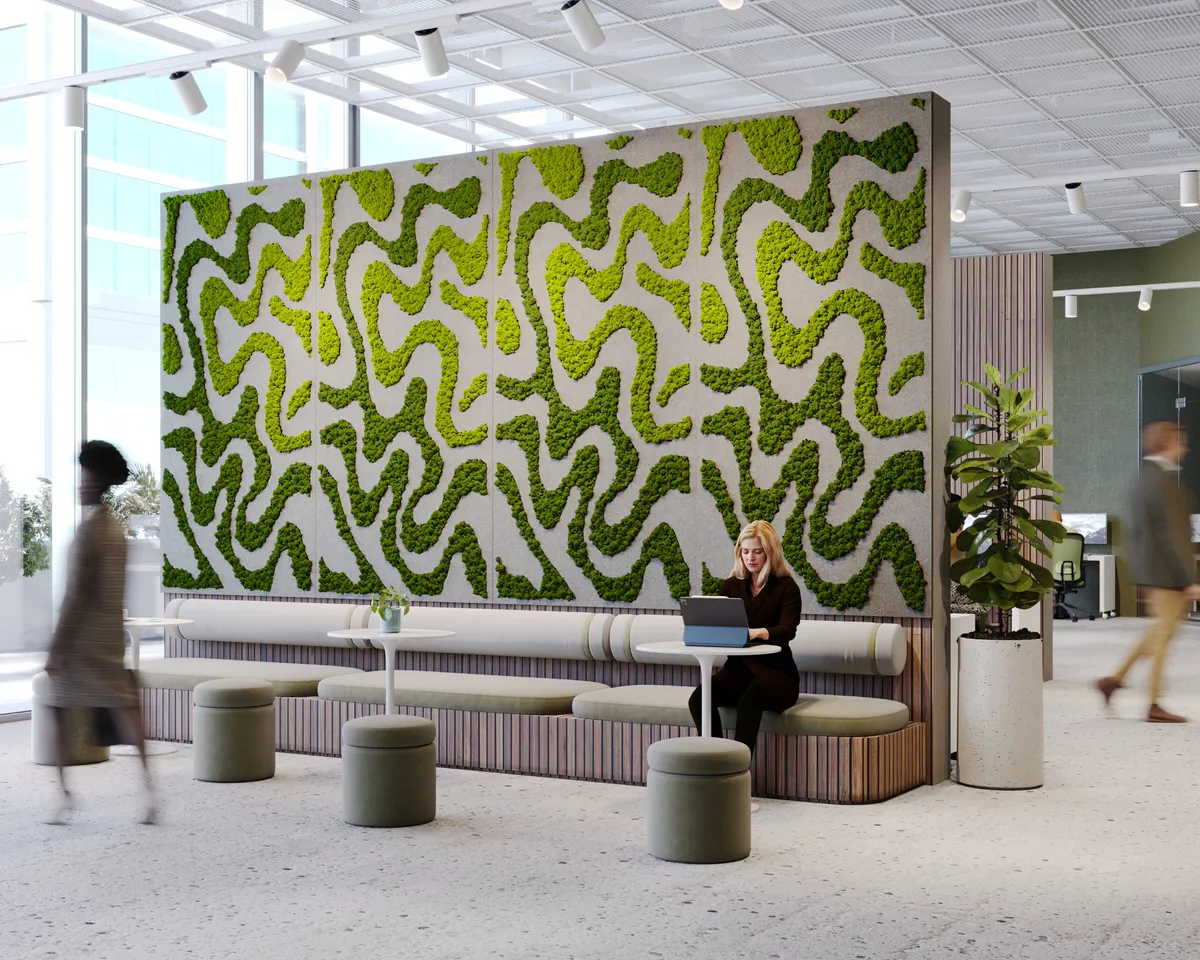
Strata can be used as a space divider as well as a biophilic wall feature. This allows designers to introduce separation while maintaining pattern, color, texture, and visibility through the broader space.
The combination of preserved moss and EzoBord gives the divider a softer visual character than a conventional solid partition. Patterned areas create rhythm across the surface, while the natural dimensionality of the moss helps the panel feel intentional from a distance and detailed at closer range.
EzoBord also contributes acoustic attenuation. In open offices, reception areas, healthcare waiting rooms, education environments, hospitality spaces, and shared amenities, that acoustic support can complement the divider’s physical role.
It is important to view this as acoustic support rather than complete sound isolation. Strata can help absorb sound within the room, but it is not intended to perform like a full-height constructed acoustic wall.
That distinction makes it useful for spaces that need visual zoning and improved acoustic comfort without losing the openness of the original plan.
Strata does not simply divide the room. It gives the division a reason to be there.
What the Material Combination Adds
Strata is constructed with preserved moss on an EzoBord backing, with a second patterned EzoBord layer creating its distinctive design.
The backer uses 12mm EzoBord acoustic panels, providing lightweight strength and acoustic attenuation. Standard Strata panels measure 4 feet wide by 8 feet high, giving the system an architectural scale appropriate for feature walls and divider applications.
Quiet Earth Moss describes each piece as individually handmade. The preserved moss maintains its natural appearance and texture without requiring watering or natural light, helping bring biophilic material into interior areas where living plants may be difficult to maintain.
This layered construction gives each material a clear role:
The EzoBord provides structure, color, pattern, and acoustic support.
The preserved moss provides natural texture, dimensionality, and the visual connection to biophilic design.
Together, they create a feature that operates somewhere between acoustic treatment, natural artwork, and architectural surface.
Customization Without Starting From Nothing
Fully custom design can be exciting, but it can also slow the specification process when every decision begins with a blank page.
Strata offers a useful middle ground.
The 16 established patterns provide a clear framework. The EzoBord and moss colors allow that framework to be adapted to the project. Custom patterns and custom moss options remain available when the standard collection does not go far enough.
This gives designers the efficiency of a developed product with enough flexibility to create an installation that does not feel standardized.
The same pattern can look dramatically different when specified for a workplace, restaurant, spa, hotel, boutique clinic, education space, or corporate lobby. Scale, orientation, panel placement, backing color, and moss color all influence how it relates to the surrounding architecture.
The result can be expressive without feeling arbitrary—and customized without requiring the entire system to be reinvented.
What Matters Most
Strata brings several normally separate design considerations into one system: biophilic texture, repeatable pattern, broad color choice, acoustic support, and the ability to function as either a wall feature or space divider.
Its value is not found in moss alone.
It is found in the control designers have over how that moss appears and how the finished feature participates in the space.
Organic patterns can soften the architecture. Geometric patterns can reinforce it. Neutral combinations can create calm, while stronger colors can establish identity and contrast. Divider applications can organize an open plan without reducing the solution to a flat functional partition.
Quiet Earth Moss positions Strata as a customizable, virtually maintenance-free acoustic moss feature, handmade with preserved reindeer moss and layered EzoBord.
The larger lesson is straightforward: bringing nature indoors does not mean giving up control of the design.
If you’re evaluating Strata for a workplace, healthcare, hospitality, education, wellness, restaurant, or commercial interior, The Ginger Grant Group can help you compare patterns, moss colors, EzoBord backing colors, wall applications, divider configurations, and acoustic requirements for your project.