The Weekly System, Vol 1: Solatube Skyvault Tubular Daylighting
Rethinking Daylight as a Building System
For decades, daylight has been treated as something architects simply work around.
If a building has enough windows, great. If it doesn't, electric lighting fills the gap.
The problem is that daylight isn't always available where it's needed most.
Warehouses, manufacturing facilities, distribution centers, gymnasiums, education spaces, and other large commercial environments often have expansive interior floorplates that sit far beyond the reach of perimeter windows. Even in buildings designed to maximize natural light, challenges like glare, solar heat gain, inconsistent illumination, and changing daylight conditions can limit the effectiveness of traditional daylighting strategies.
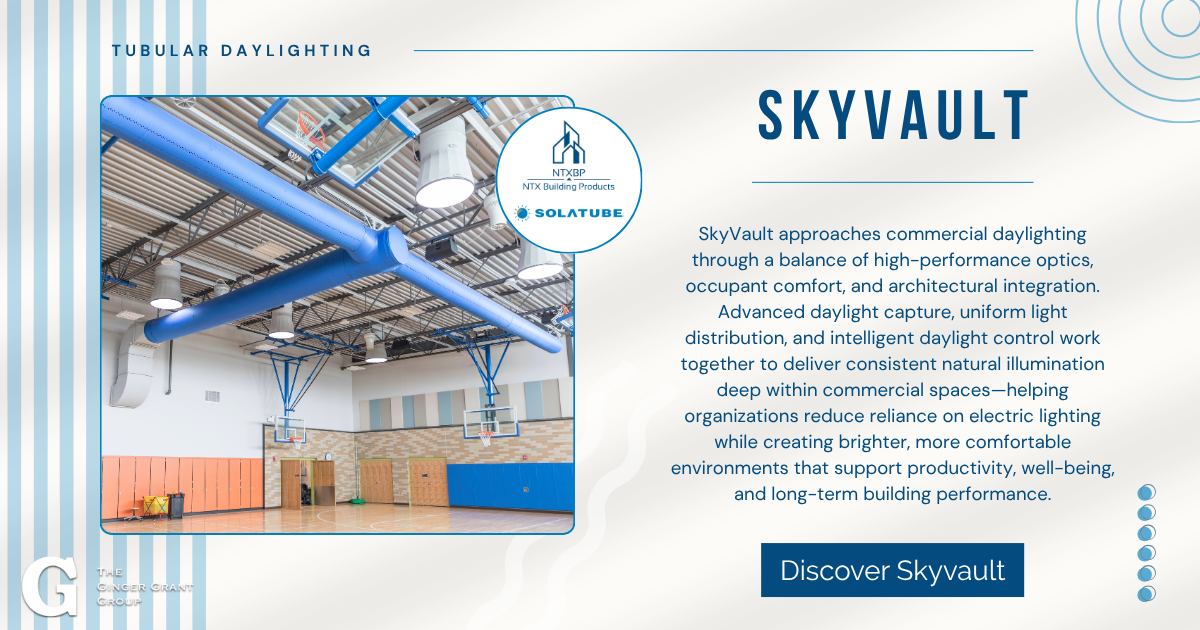
For our first volume of our new blog series, The Weekly System, we explore SkyVault by Solatube—a high-performance commercial daylighting system designed to capture, distribute, and manage natural daylight deep within large buildings. Rather than simply introducing sunlight into a space, SkyVault approaches daylight as an engineered building system that improves occupant comfort, reduces reliance on electric lighting, and supports more efficient building performance.
Throughout the week, we explored four common misconceptions about commercial daylighting—and how SkyVault challenges each one.
They're Both 2 PM. But They Don't Feel the Same.
At first glance, lighting seems straightforward.
If a space is bright enough to work in, isn't that enough?
Not necessarily.
The quality of light influences how people experience a space just as much as the quantity of light itself. Traditional electric lighting can provide consistent illumination, but natural daylight offers a visual quality that is difficult to replicate. It improves color rendering, creates a stronger connection to the outdoors, and contributes to environments that simply feel more comfortable and inviting.
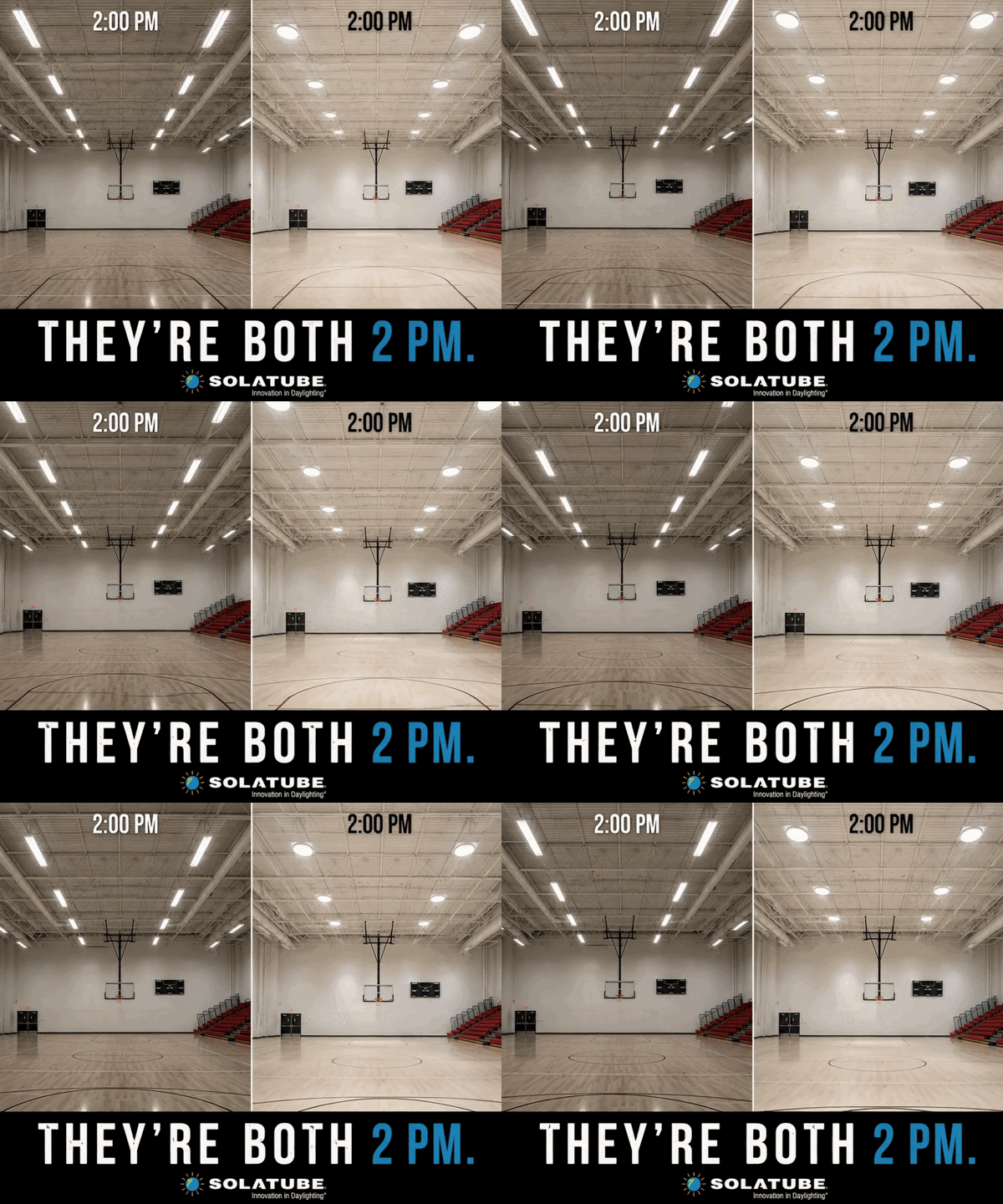
Our first meme compared two identical gymnasiums at the exact same time of day. One relied entirely on conventional fluorescent lighting. The other was illuminated by SkyVault daylighting.
The clock hadn't changed.
The experience had.
For architects and facility owners, daylight isn't simply another source of illumination. It's an opportunity to create spaces that feel healthier, brighter, and more engaging for the people who use them every day.
Daylight Doesn't Require Windows
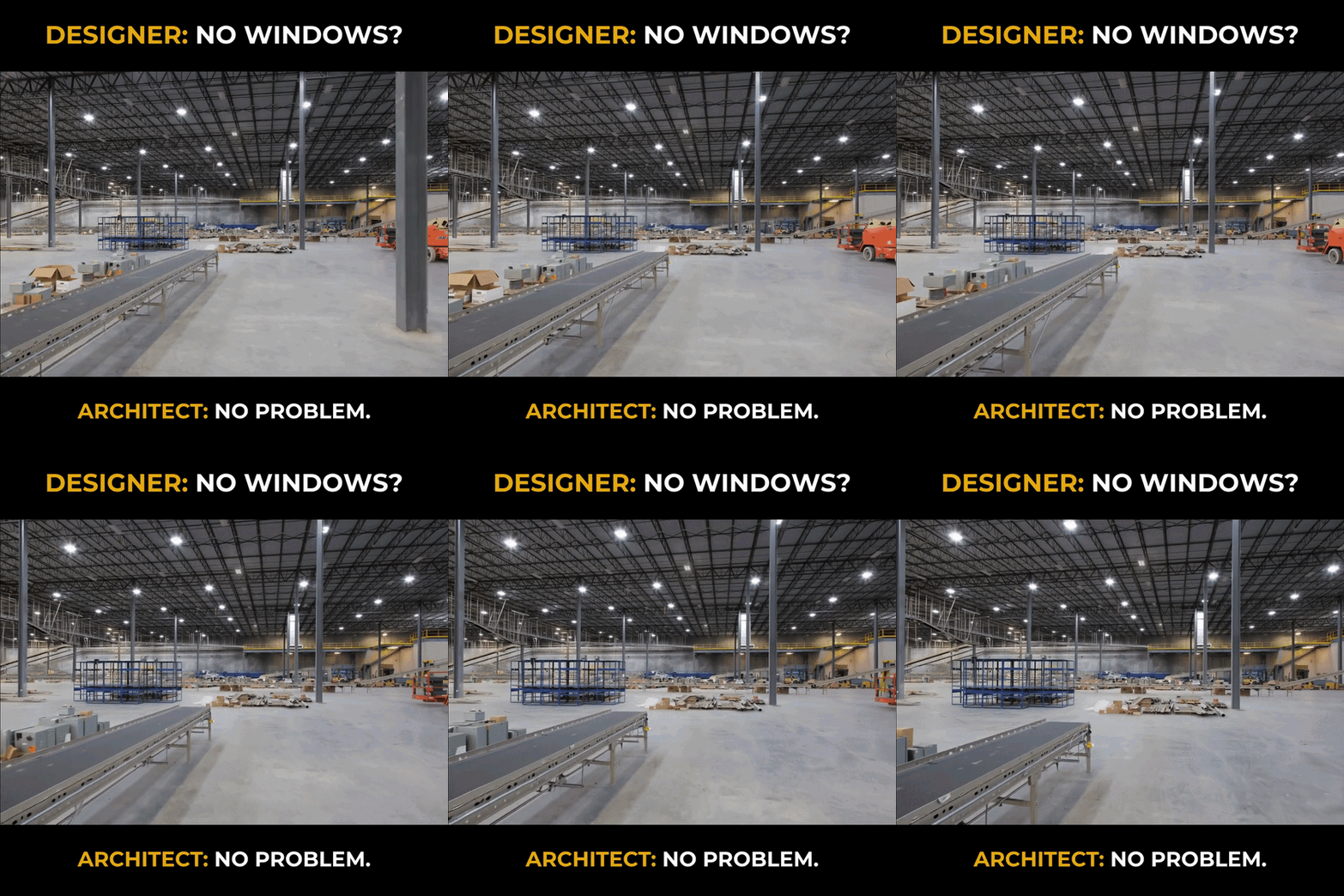
One of the most common assumptions about daylighting is that it depends entirely on perimeter glazing.
In reality, many of the buildings that benefit most from natural light have very few windows at all.
Warehouses, distribution centers, manufacturing facilities, gymnasiums, and large educational spaces often prioritize operational efficiency over exterior glazing. As buildings grow larger, significant portions of the floorplate become increasingly disconnected from natural daylight.
SkyVault addresses that challenge by capturing daylight at the roof and distributing it deep into the building through advanced optical technology. Rather than relying solely on exterior walls, architects can introduce daylight precisely where occupants spend their time—even in the center of expansive commercial spaces.
The result is greater design flexibility without sacrificing the benefits of natural illumination.
More Daylight Doesn't Have to Mean More Heat
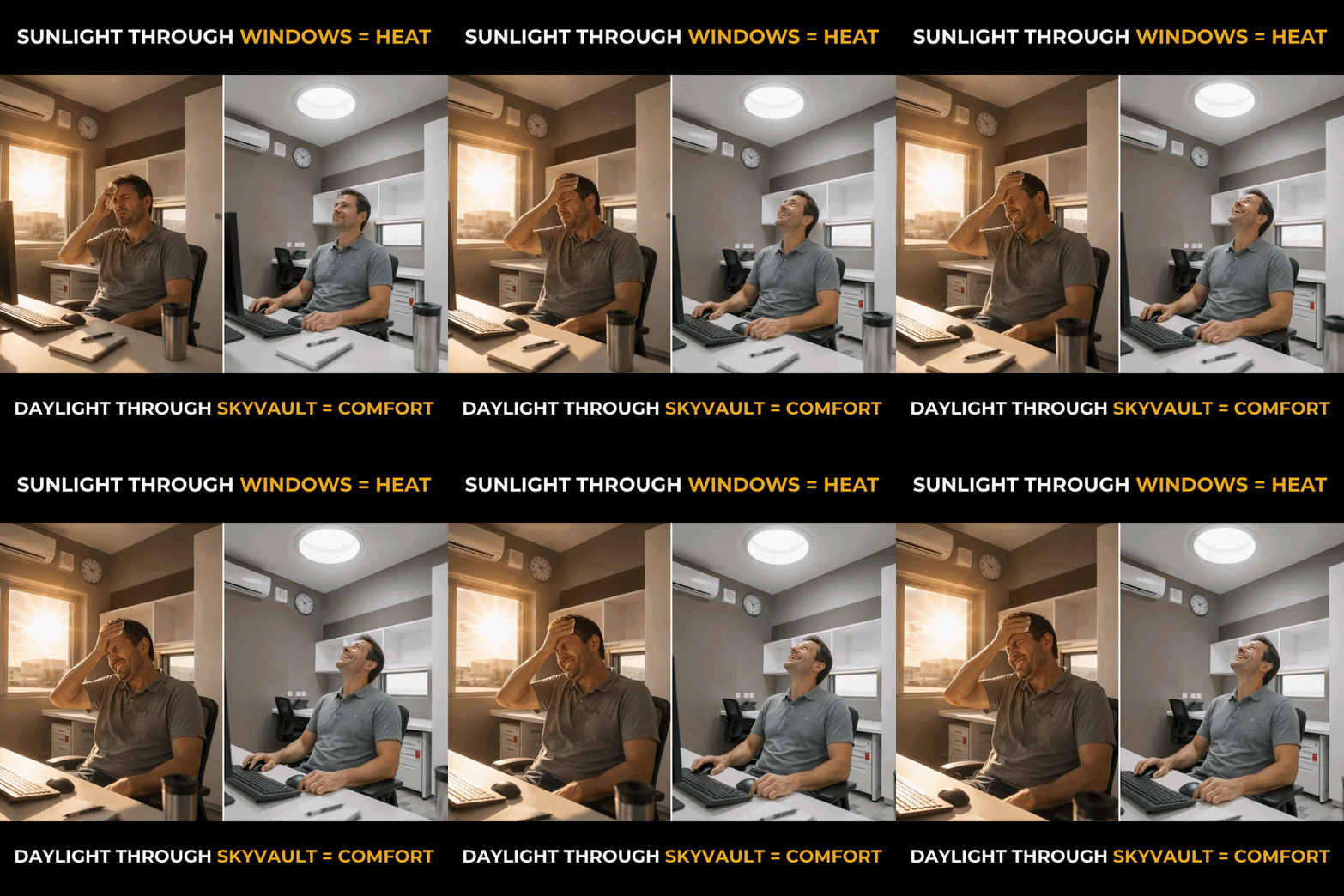
For many building owners, daylight comes with a compromise.
More windows often mean more solar heat gain, increased cooling loads, and reduced occupant comfort.
SkyVault approaches daylight differently.
Rather than allowing harsh direct sunlight to flood interior spaces, SkyVault utilizes advanced optical technologies—including Spectralight Infinity and optional thermal control components—to deliver diffuse natural daylight while helping reduce unwanted heat transfer and ultraviolet exposure.
The goal isn't simply brighter spaces.
It's more comfortable ones.
Occupants benefit from the visual advantages of natural daylight without many of the drawbacks traditionally associated with large expanses of glazing.
When daylight is engineered instead of simply admitted, comfort becomes part of the system.
Yes—You Can Control Daylight

Perhaps the biggest misconception surrounding daylight is that it cannot be controlled.
Electric lighting can be dimmed.
Daylight simply happens.
SkyVault challenges that assumption through its optional daylight dimming system, allowing facility managers and occupants to regulate incoming daylight based on changing conditions or operational needs.
This level of control introduces a flexibility that traditional daylighting systems simply cannot offer.
Whether supporting presentations, adapting to seasonal conditions, or creating a preferred lighting environment, occupants can fine-tune natural illumination without giving up its benefits.
The result is a daylighting system that behaves more like the building systems architects already expect to control.
What Matters Most
The biggest takeaway from this week's The Weekly System is simple:
Commercial daylighting isn't just about bringing sunlight indoors.
It's about delivering the right amount of daylight, in the right place, at the right time.
SkyVault approaches daylight as an integrated building system rather than a passive architectural feature. Through advanced daylight capture, even light distribution, thermal performance, and controllable daylight management, it helps architects create brighter, more comfortable environments while reducing dependence on electric lighting.
The result isn't simply a brighter building.
It's a smarter one.
If you're evaluating commercial daylighting strategies for a warehouse, manufacturing facility, educational campus, athletic venue, or other large-scale project, we can help determine where SkyVault fits based on your daylighting goals, energy objectives, occupant comfort requirements, and the realities of your built environment.