The Weekly System, Vol 9: Ezobord Rubik AV
When the Display Wall Becomes Part of the Design
How integrated cable management, acoustic performance and modular finishes help technology belong in the room
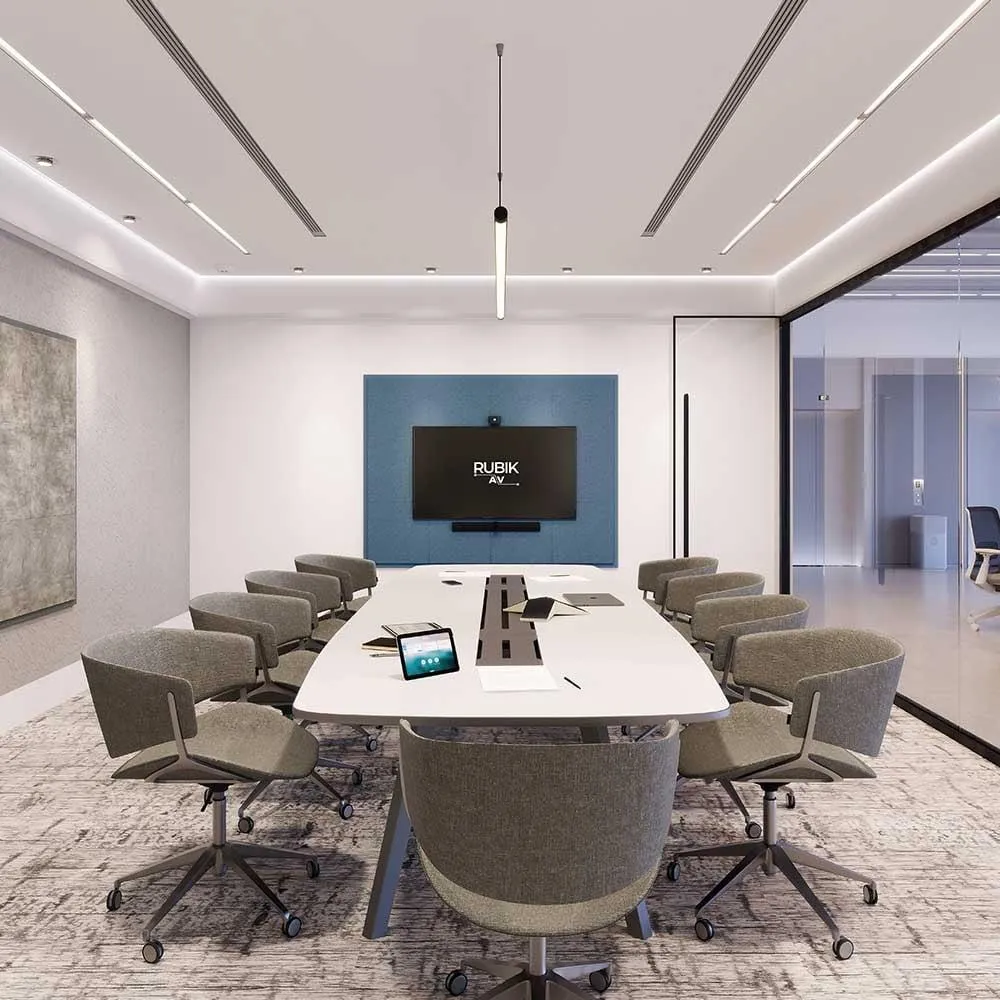
Meeting rooms depend on technology, but the technology is not always considered early enough in the design process.
A display is mounted. Cameras and speakers are added. Power, data and HDMI cables need somewhere to go. Before long, the most visually prominent wall in the room can feel more like a collection of equipment than a deliberate part of the interior.
EzoBord Rubik AV approaches the display wall as a complete architectural system. It combines modular acoustic tiles, concealed cable management and support for audiovisual equipment within one coordinated surface, helping meeting spaces perform properly without allowing the technology to dominate the design.
The Meeting Has Enough Connections
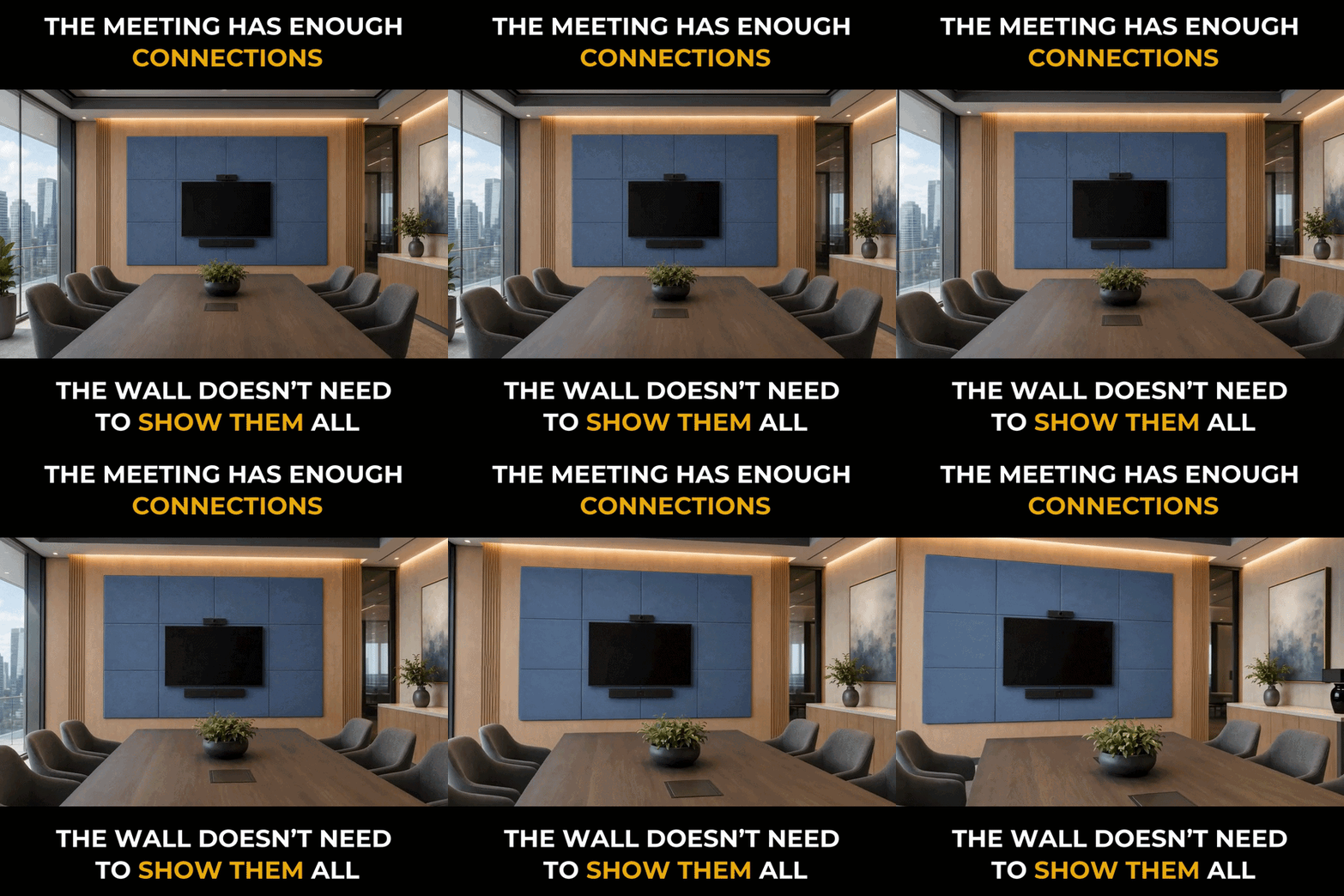
Modern meeting rooms require more connections than the finished space should reveal. Displays, cameras, speakers, controller pads and conferencing equipment can introduce power, data and HDMI cables across one of the room’s most visible surfaces.
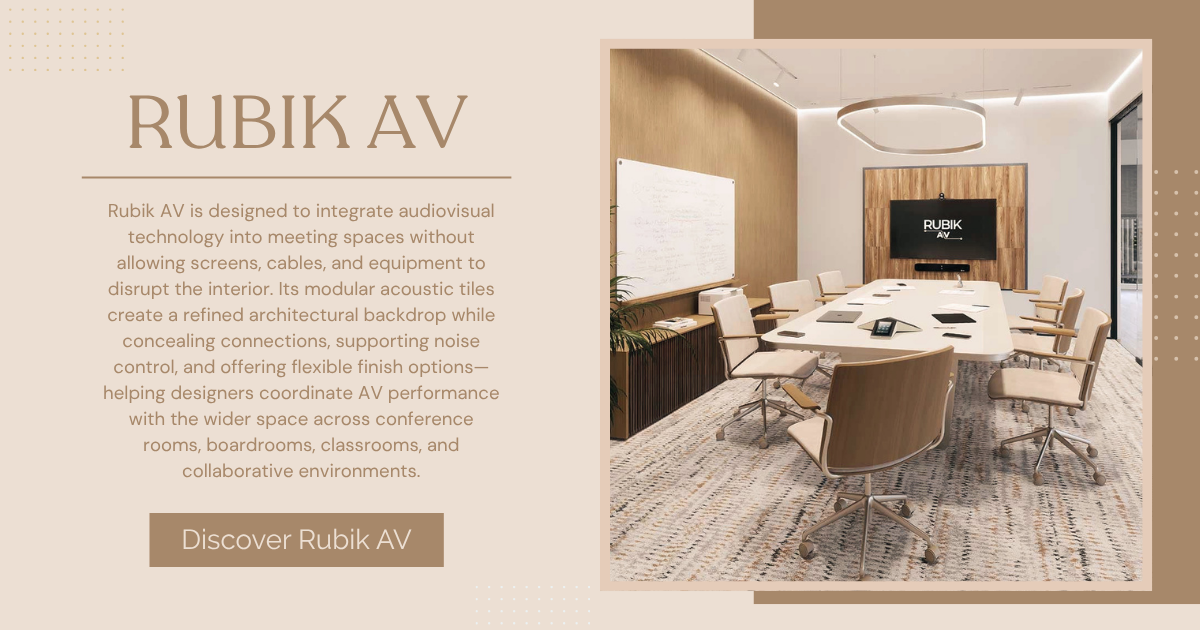
Rubik AV provides a more organized route for those connections. The system uses precision-cut openings within the acoustic tiles, allowing cables to pass discreetly through the surface and travel behind the finished wall.
A cable manager can organize excess power, data and HDMI cables beneath the tiles. Once the system is assembled, the screen and other equipment can be mounted to the supporting structure while the necessary wiring remains concealed.
This helps avoid exposed cable runs, loosely grouped connections and last-minute covers that can make an otherwise refined room feel unfinished. The technology remains accessible to the installation team, but it does not have to become a permanent visual feature for everyone using the space.
For designers and integrators, that creates a cleaner relationship between the AV package and the architectural interior. The wall supports the connections without needing to show them all.
More Than a Backdrop for the Screen
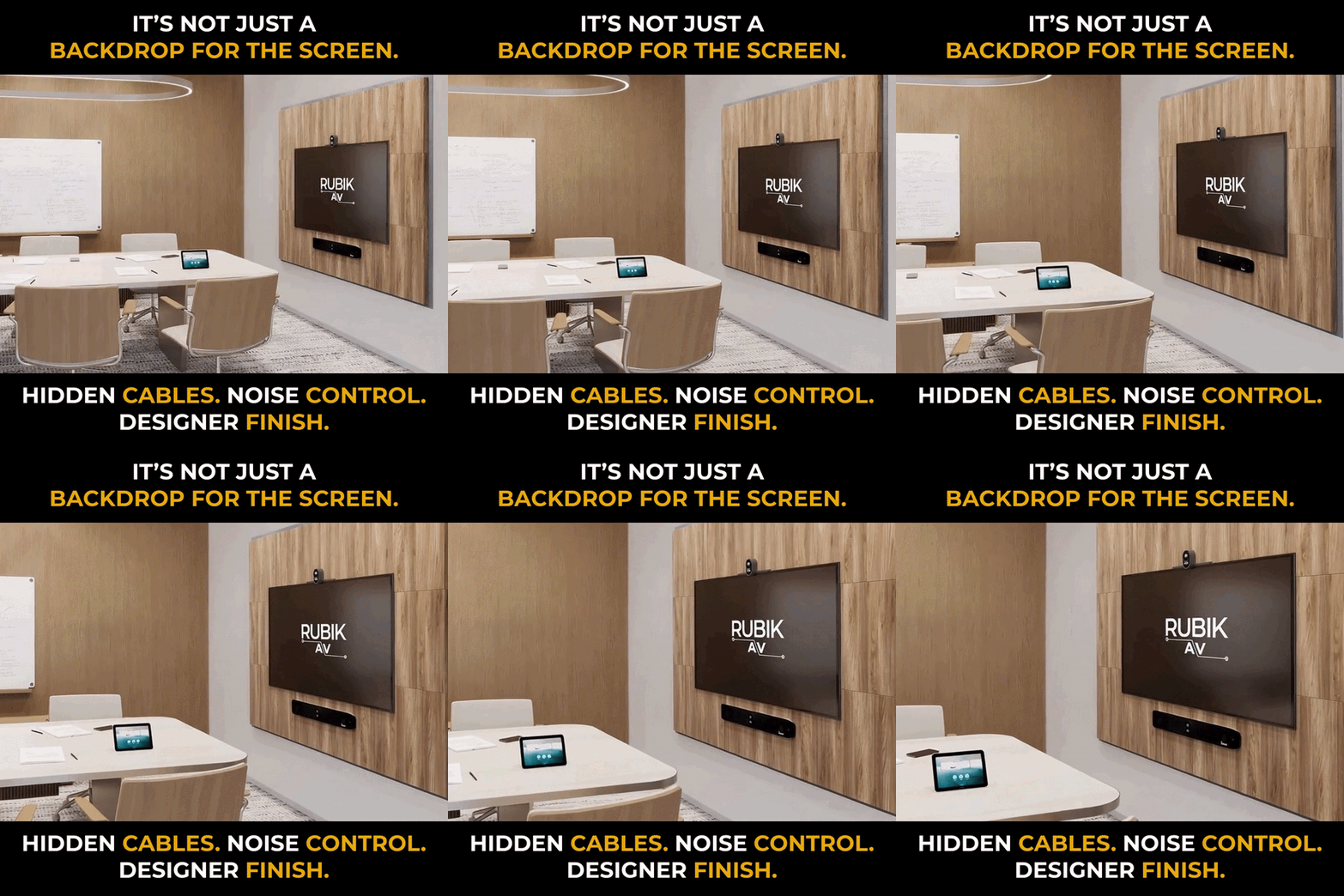
The wall behind a display has a practical role to play. It can help manage the equipment, contribute to the room’s acoustics and reinforce the overall material direction of the project.
Rubik AV is built on EzoBord’s modular Rubik acoustic wall platform. Its tiles create a finished surface around the display while introducing sound-absorbing material into meeting rooms, boardrooms, training rooms and collaborative environments.
That acoustic contribution is especially relevant in technology-driven spaces. Hard tables, glass partitions, displays and other reflective surfaces can allow sound to move around the room, making conversation and remote communication more difficult. Acoustic treatment can help reduce excessive reverberation and support clearer communication.
EzoBord provides recommended Rubik AV packages for small, medium and large rooms, with different tile quantities corresponding to “Good” and “Best” acoustic levels. The right configuration depends on the size, construction and intended use of the room, but the package approach gives specifiers a practical starting point.
The result is not simply a decorative surround for the screen. The same wall can hide cables, support AV components, contribute to acoustic control and provide a coordinated designer finish.
AV Should Not Look Like an Afterthought
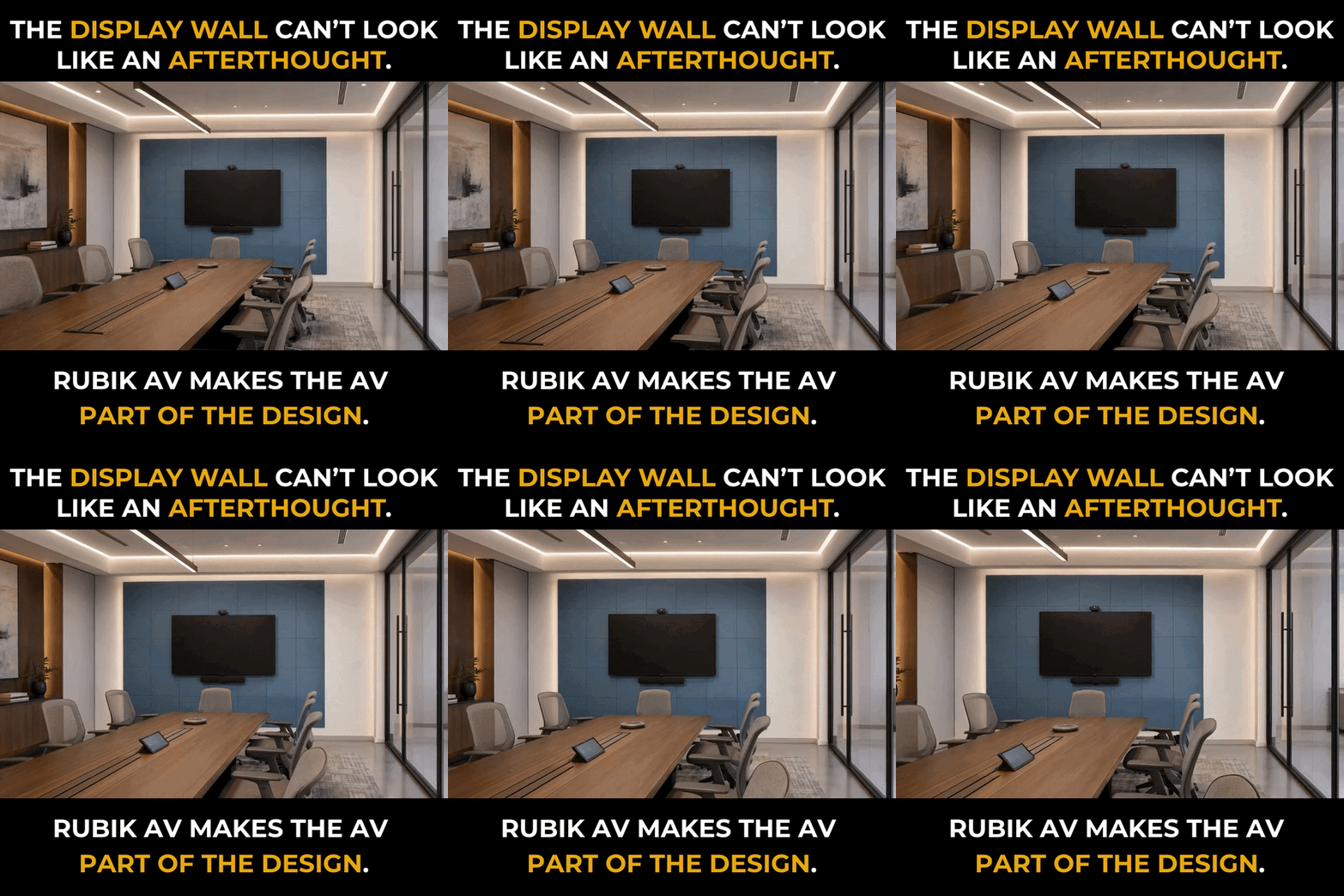
The display wall is often the natural focal point of a meeting room. Chairs face it, cameras frame it and both in-person and remote participants spend much of the meeting looking toward it.
That visibility makes visual integration important.
Rubik AV organizes the wall around a consistent grid of square acoustic tiles. The standard 4-by-3 wall kit includes a frame structure, bezel set and 12 tiles measuring approximately 19⅜ inches square and 2 inches deep. The system creates a deliberate composition around the display rather than leaving equipment to float against an otherwise unresolved wall.
Standard tile and frame colors include Light Gray, Silver Gray, Pure Black, Khaki, Eucalyptus and Steel Blue. Printed finishes extend the design options with concrete and woodgrain appearances, including Classic Ash, Nordic Ash, Honey Oak, Canyon Pine and Charcoal Oak.
That range allows the AV wall to relate more intentionally to millwork, furniture, flooring and other materials within the room. A corporate boardroom may call for a restrained woodgrain, while a classroom or collaborative space may benefit from a stronger color treatment.
The objective is not to disguise the fact that the room contains technology. It is to make the technology feel properly incorporated into the design.
The Technology May Change
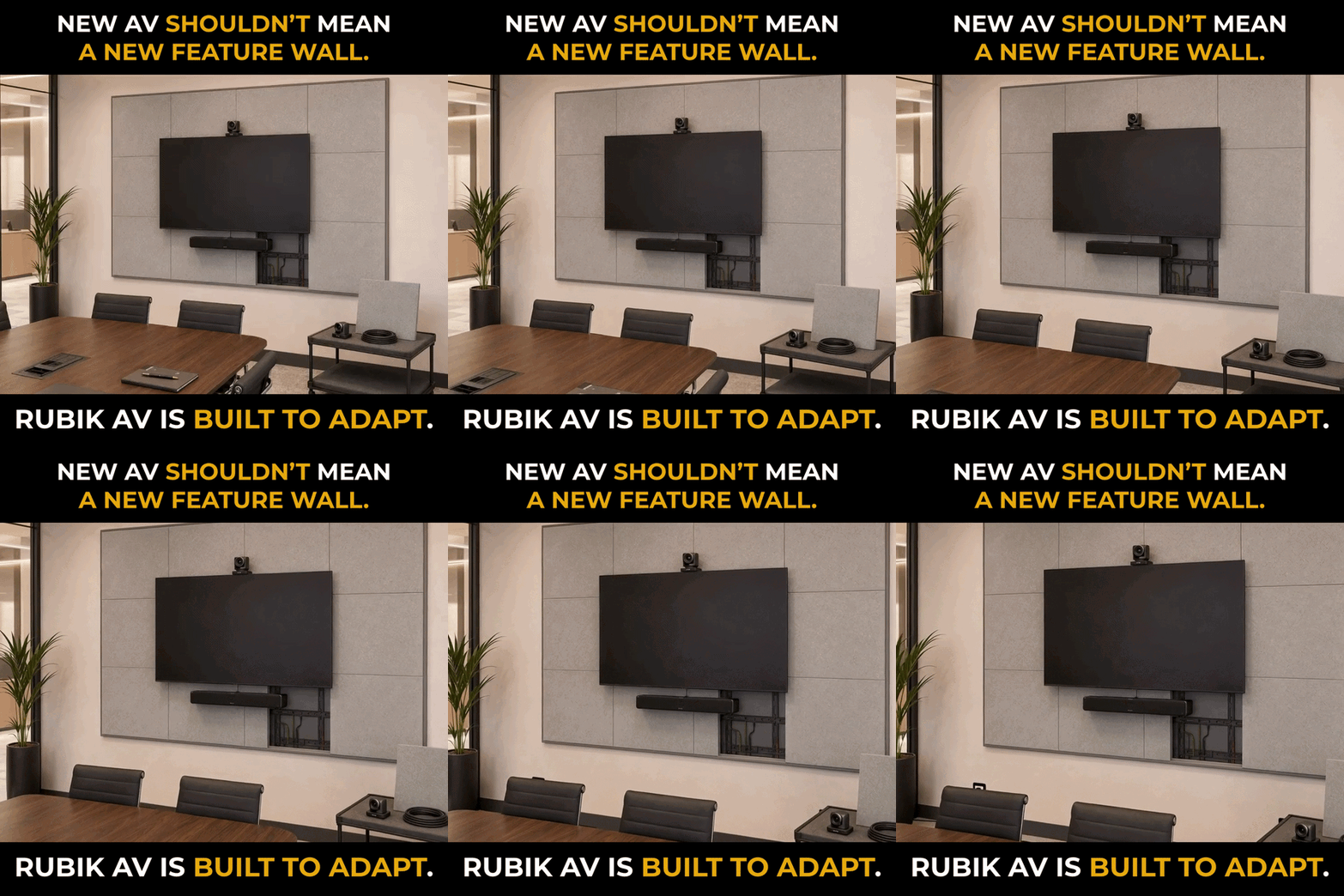
Displays and conferencing equipment rarely remain unchanged for the entire life of an interior. Screens are replaced, cameras are upgraded and control technology evolves as organizations adopt new platforms and ways of working.
A wall designed around one exact device can become difficult to update when that device changes.
Rubik AV uses a modular frame and pressure-fit tiles that can be installed without tools and adjusted on site. Individual tiles can be removed to reach concealed wiring or revise the arrangement without dismantling the complete wall surface.
Wall extension kits add a supplementary 3-by-1 frame and three additional tiles, allowing the installation to respond to larger rooms or broader wall compositions. Small and large bezels can accommodate openings around standard Decora-size switches, while air-gap spacers support tiles around surface-mounted controller pads, compact speakers or cameras.
This does not eliminate the need for careful AV coordination. Equipment locations, mounting requirements, cable pathways and service access should still be reviewed by the design and integration teams. The advantage is that the finished wall provides a more adaptable framework for those decisions.
Technology will continue to change. The architectural response does not have to begin again every time it does.
What Matters Most
Rubik AV brings several requirements that are often addressed separately into one modular wall system: acoustic treatment, display integration, concealed cable routing, equipment accommodation and finish selection.
Its pressure-fit tiles allow on-site access and adjustment. Cable openings and managers keep connections behind the surface. Bezels and spacers help accommodate switches and compact AV components. Standard and printed finishes allow the wall to support the interior concept rather than interrupt it.
Most importantly, the system encourages the display wall to be considered as part of the room from the beginning.
A successful meeting space depends on more than installing the right screen. People need to hear one another clearly, operate the technology easily and sit within an environment that feels intentional. Rubik AV gives architects, designers and AV integrators a shared architectural surface through which those priorities can be coordinated.
The larger design lesson is straightforward: technology may be essential to the meeting, but it does not have to become visual clutter. When acoustics, AV infrastructure and interior design are planned together, the display wall can perform several jobs while still looking like it belongs in the room.
If you’re evaluating EzoBord Rubik AV for a boardroom, conference room, training space, classroom or collaborative environment, GGG can help you compare wall kits, extension modules, acoustic coverage, accessories and finish options in relation to your room and AV requirements.