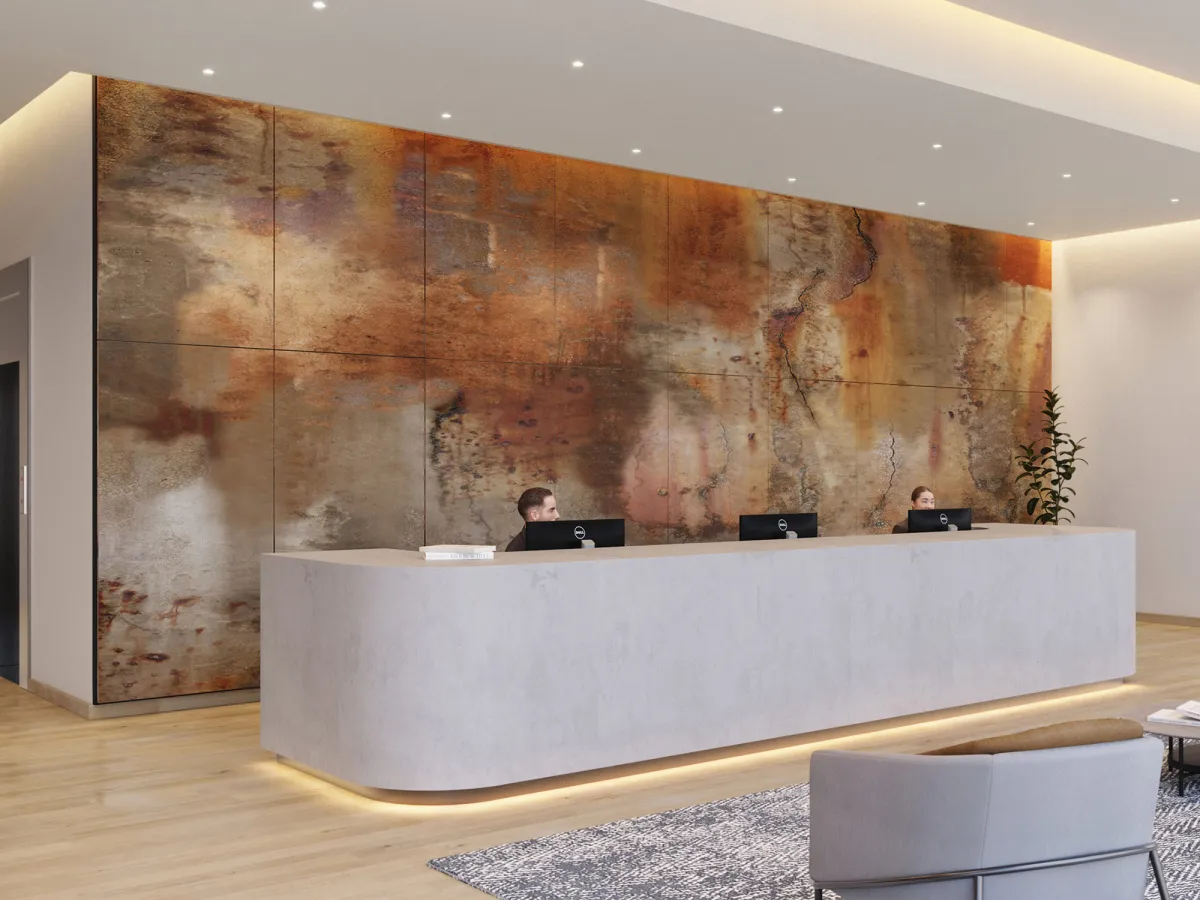
The Weekly System, Vol 3: Ezobord Rubik
Acoustic Performance That Becomes Part of the Architecture
Acoustic treatment has traditionally been viewed as a necessary compromise within commercial interiors. Architects and designers understand the importance of controlling reverberation and improving speech clarity, but many acoustic products have historically prioritized performance over appearance. The result is often a product that solves one problem while creating another—forcing designers to hide acoustic treatment or accept that it won't fully align with the architectural vision.
This Weekly Spec focuses on Rubik 2D from EzoBord—a high-performance acoustic wall system that approaches the challenge differently. Rather than treating acoustics as something separate from the design, Rubik 2D allows acoustic panels to become an intentional architectural feature through fully customizable printed graphics, patterns, branding, and artwork.
Throughout the week, we explored how acoustic treatment can improve both the performance and the personality of commercial interiors.
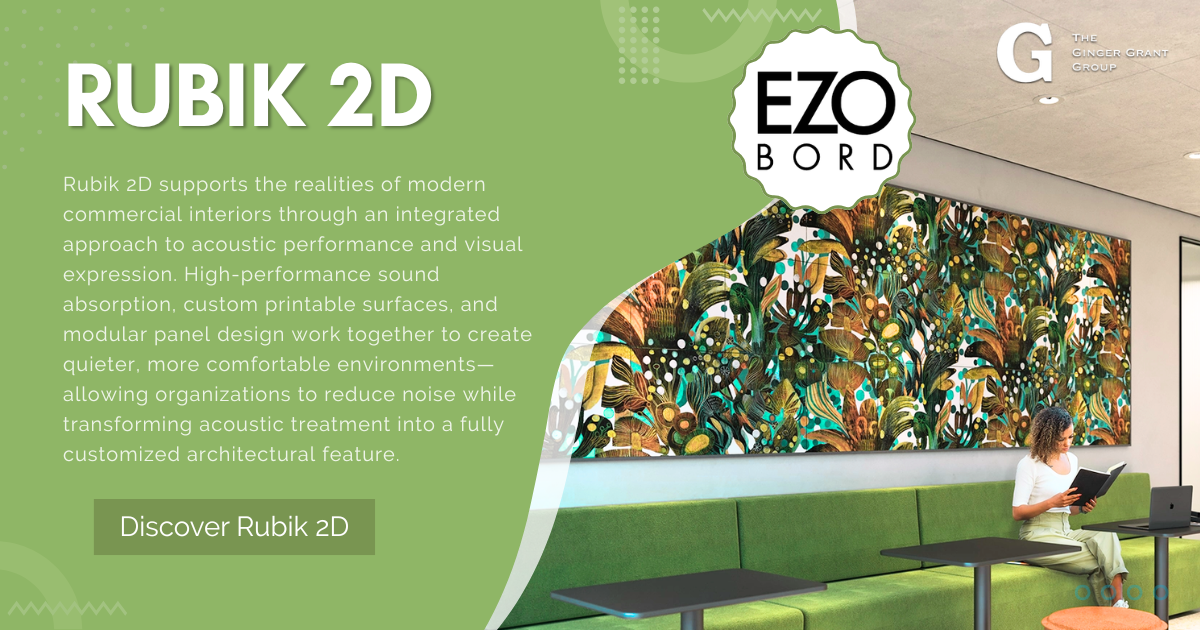
Why Acoustic Treatment Is Often an Afterthought
Noise affects nearly every commercial environment, yet it's often one of the last considerations during the design process. Open offices become difficult to concentrate in. Conference rooms suffer from excessive reverberation. Healthcare environments become more stressful. Education spaces struggle with speech intelligibility. Hospitality spaces lose the comfortable atmosphere they were designed to create.
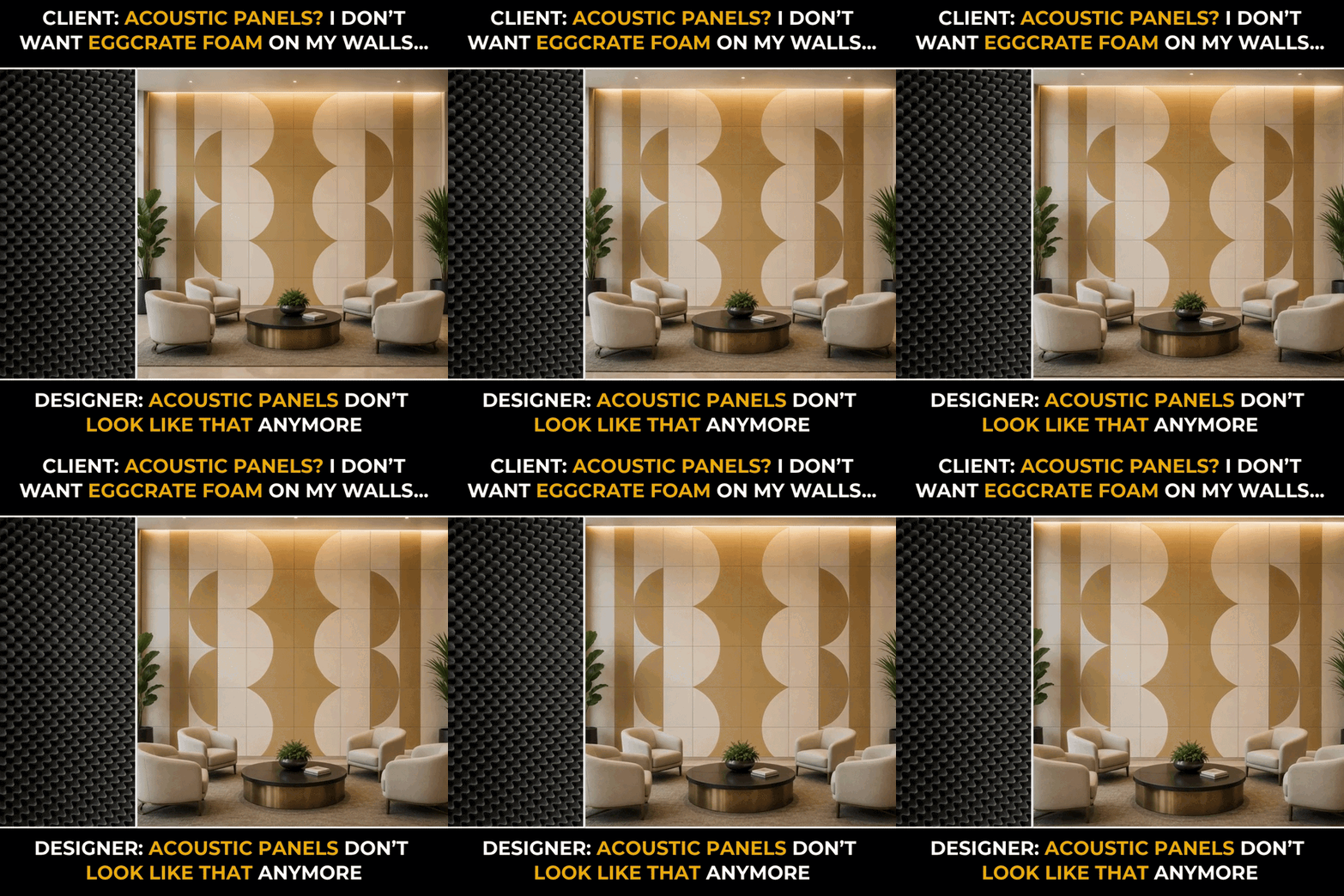
Despite these challenges, acoustic treatment is still frequently associated with exposed foam panels or visually intrusive solutions that conflict with carefully designed interiors.
Rubik 2D changes that perception by delivering meaningful acoustic performance through a clean architectural system that integrates naturally into the overall design language of a space. Instead of asking designers to choose between performance and appearance, it demonstrates that modern acoustic treatment can contribute to both.
Walls Can Do More Than Separate Spaces
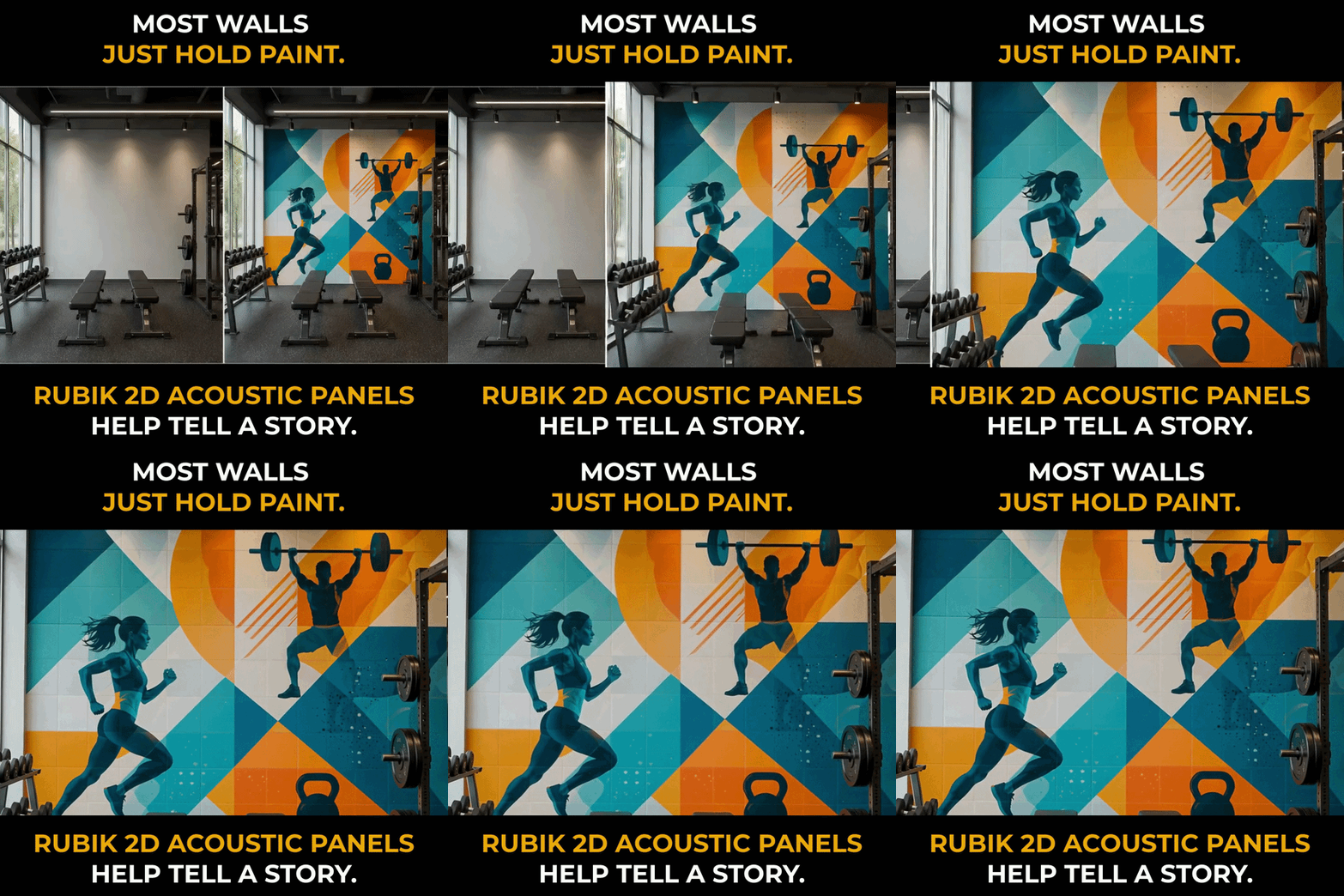
Walls represent some of the largest uninterrupted surfaces within an interior, yet they often become little more than painted backdrops. Flooring, lighting, furniture, and finishes receive extensive attention throughout the design process, while walls remain largely passive despite occupying so much visual real estate.
Rubik 2D introduces another possibility.
Because every panel can be digitally printed, acoustic treatment becomes an opportunity to reinforce branding, create environmental graphics, celebrate local culture, support wayfinding, or introduce artistic expression directly into the architecture. Whether installed in a corporate headquarters, fitness center, healthcare environment, education facility, or hospitality project, the wall itself becomes part of the story while simultaneously improving the acoustic experience.
Designing for Both the Eyes and the Ears

Great interiors engage more than one sense.
Visual design shapes first impressions, while acoustic comfort influences how people actually experience the space over time. A beautiful environment that echoes excessively can feel uncomfortable, distracting, and fatiguing despite its appearance. Likewise, an acoustically comfortable room that lacks visual character may never fully support the organization's identity or architectural intent.
Rubik 2D addresses both sides of that equation.
Its acoustic performance helps reduce reverberation and improve occupant comfort, while its printable surface allows designers to create feature walls that feel intentional rather than utilitarian. The acoustic treatment doesn't compete with the architecture—it becomes part of it.
The Best Acoustic Design Often Goes Unnoticed
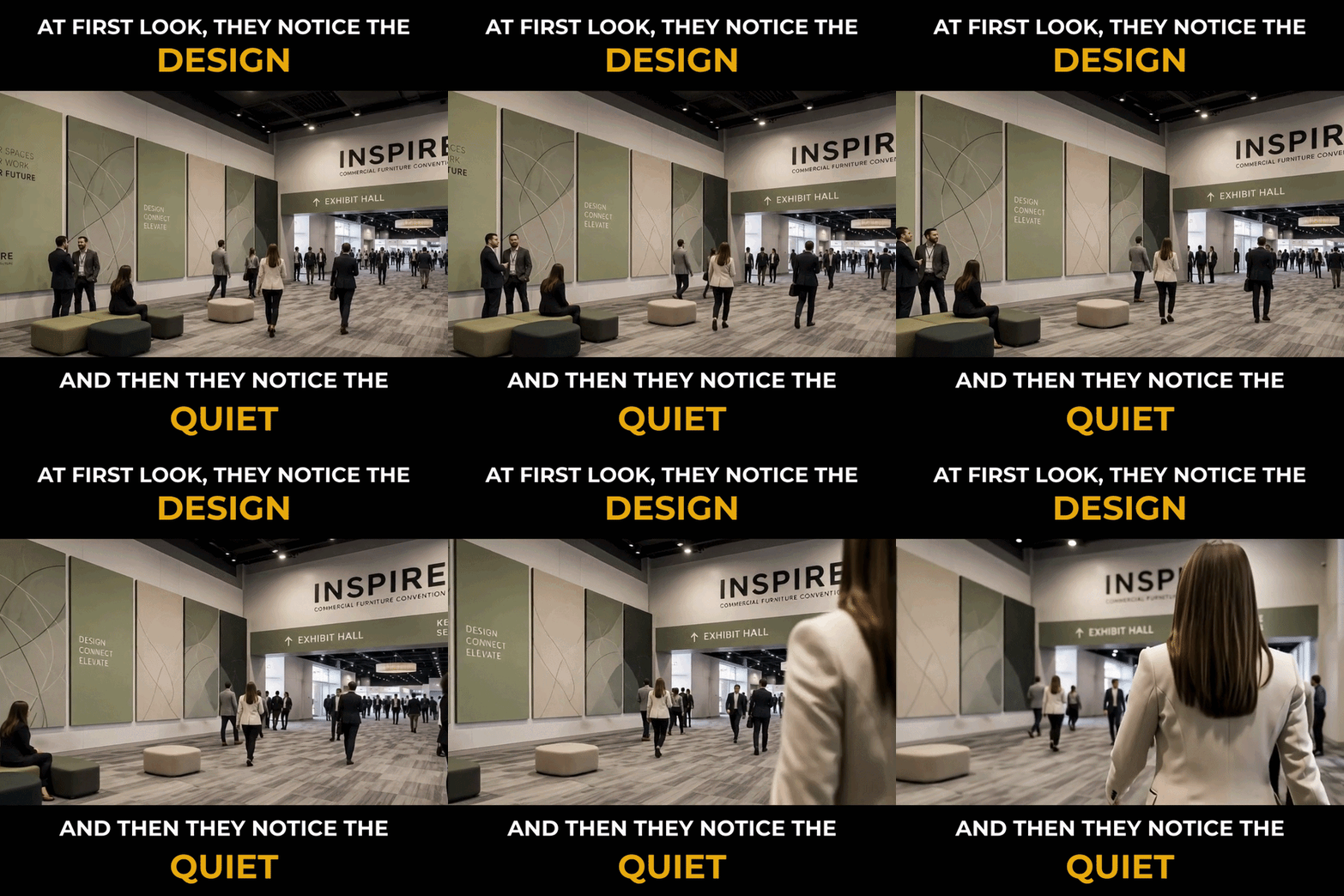
People rarely walk into a building thinking about reverberation times or sound absorption coefficients.
What they notice is how the environment feels.
Conversations become easier to follow. Collaborative spaces feel calmer. Lobbies become more welcoming. Open workplaces feel less distracting. Those improvements happen quietly in the background, but they have a measurable influence on comfort, communication, and the overall perception of a space.
Rubik 2D creates that experience by combining high-performance acoustic control with visual customization that elevates rather than conceals the solution. Visitors may first notice the design, but they're ultimately experiencing the benefits of better acoustics throughout their time in the space.
What Matters Most
The biggest takeaway from this week is simple: acoustic treatment no longer has to be something designers hide.
Commercial interiors increasingly demand spaces that perform as well as they look. Occupants expect quieter workplaces, more comfortable healthcare environments, better collaboration spaces, and interiors that reinforce an organization's identity rather than simply housing it.
Rubik 2D addresses those expectations through a balance of acoustic performance and unlimited visual customization. By transforming sound absorption into an architectural design element, it allows acoustic treatment to become part of the overall experience instead of an afterthought.
When acoustics and aesthetics work together, designers don't have to compromise. They create spaces that are quieter, more comfortable, and visually memorable—all with a single integrated solution.
Looking to incorporate Rubik 2D into your next project?
If you're evaluating acoustic wall systems for an upcoming workplace, education, healthcare, hospitality, or public interior project, we can help determine where Rubik 2D fits based on your acoustic goals, design vision, branding opportunities, and the broader experience you're creating within the built environment.