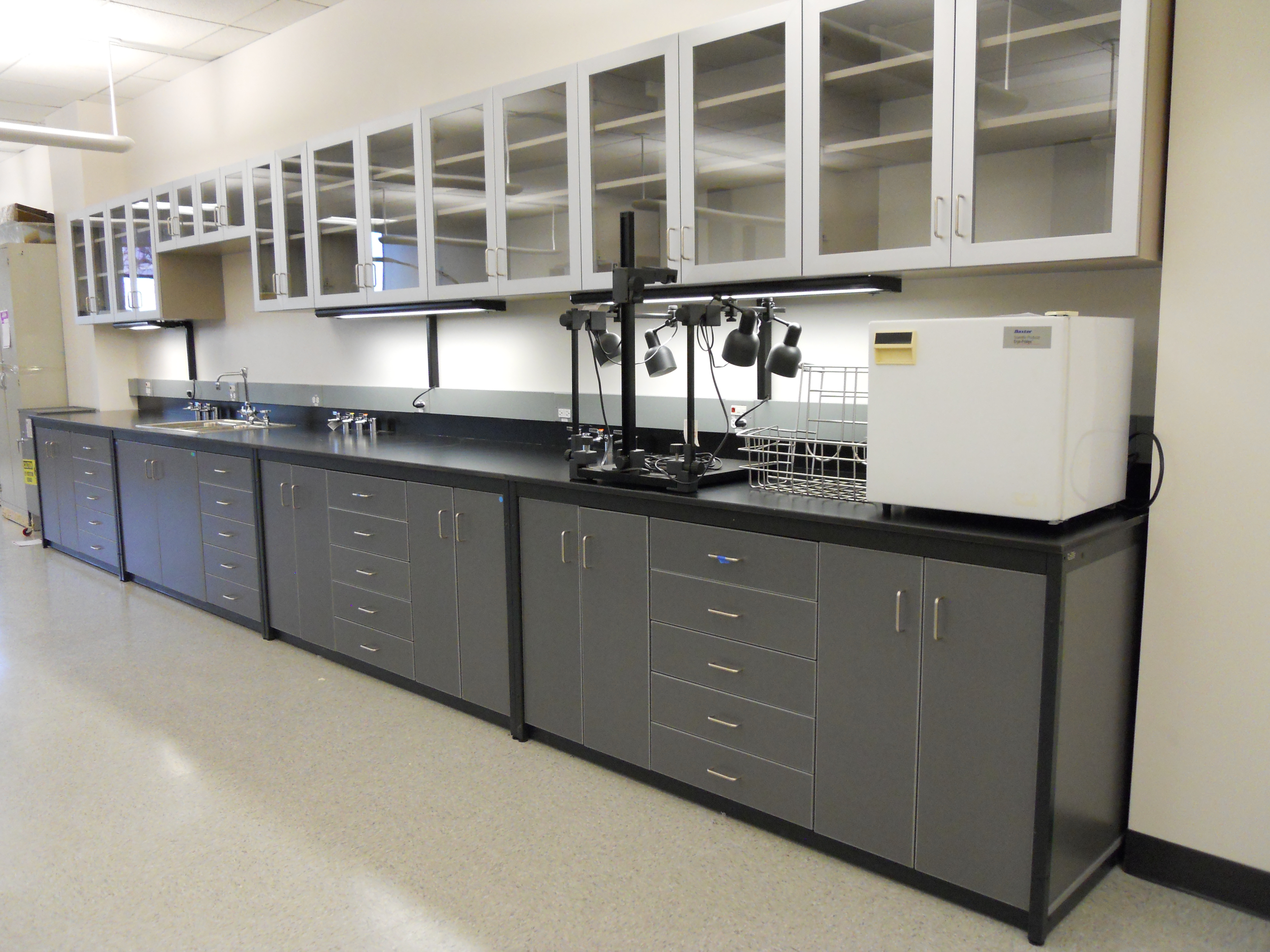
The Weekly System, Vol 10 Intensa Modular Lab Casework
A Laboratory Built for What Happens Next
How interchangeable components, workflow-specific storage and more adaptable infrastructure help laboratories respond to new research without rebuilding the entire room
Laboratories are designed around known requirements. The equipment has been selected. The workflow has been mapped. Storage quantities have been estimated, utilities have been located and workstations have been assigned a purpose.
Then the work begins.
New equipment arrives. Research priorities change. Storage requirements increase. A dry workstation needs access to utilities. One department expands while another contracts. A room originally designed for one discipline must begin supporting several.
These changes are not unusual. They are part of how laboratories evolve. The problem is that conventional built-in casework can make every adjustment feel like a construction project.
Intensa Essentials modular casework takes a different approach. Its interchangeable components allow designers and facility teams to create laboratory configurations around the current workflow while retaining more flexibility to assemble, remove, rearrange, refresh or replace individual elements as requirements develop.
The result is not simply casework that can move. It is a laboratory system designed to help the space remain useful beyond its original program.
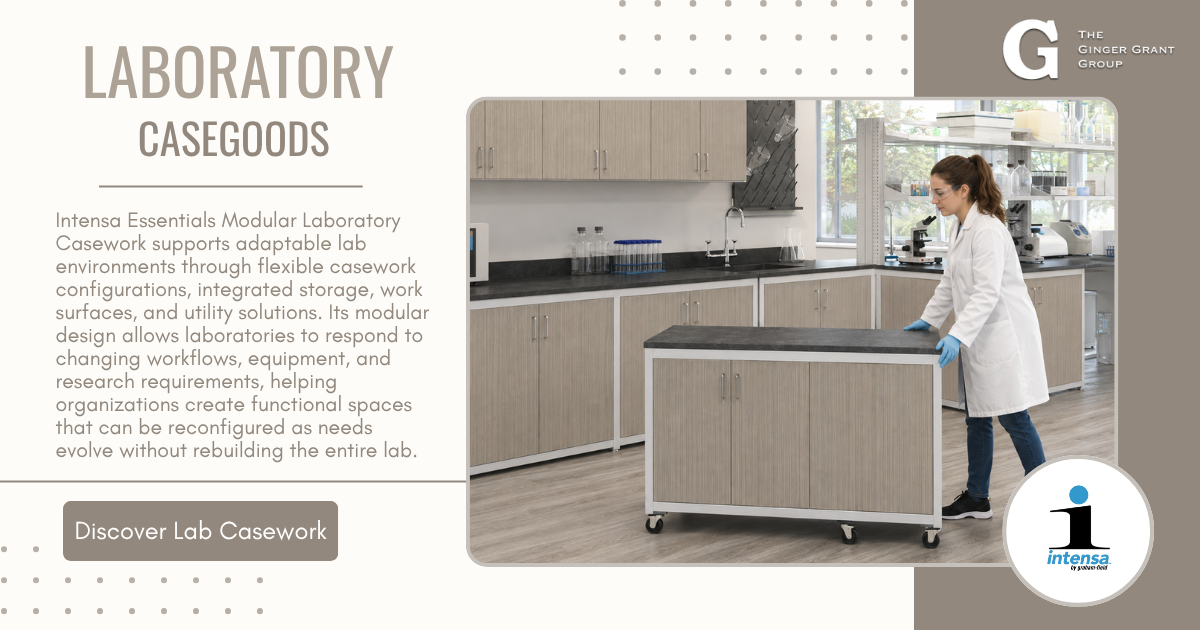
Research Keeps Moving Forward

Research rarely follows the exact path anticipated during laboratory planning. A promising result may introduce a new process. A new instrument may require more bench space. A growing team may need additional workstations, while an existing island may become more useful in another part of the room.
Fixed cabinetry assumes that the original layout will remain appropriate. Modular casework recognizes that the laboratory may need to respond.
Intensa Essentials is a system of interchangeable components that can be selected to suit a laboratory’s workflow, available space, chemistry and aesthetic requirements. Depending on the configuration, workstations, storage components and mobile elements can be repositioned or reconfigured as the work changes.
That flexibility can be particularly valuable in research environments where equipment and processes develop faster than the building around them. Instead of forcing a new workflow into an outdated furniture plan, the casework can be evaluated as one of the variables available to the design and facilities teams.
Movement should still be planned carefully. Changing a laboratory layout requires consideration of utilities, clearances, equipment loads, safety procedures and the relationship between clean and potentially contaminated activities. Modular casework does not eliminate those responsibilities. It provides a more adaptable physical platform through which they can be addressed.
For architects and laboratory planners, this changes the design question. The goal is no longer only to create the best arrangement for opening day. It is to establish a system that can continue supporting the laboratory when the original assumptions no longer apply.
Storage Should Follow the Work
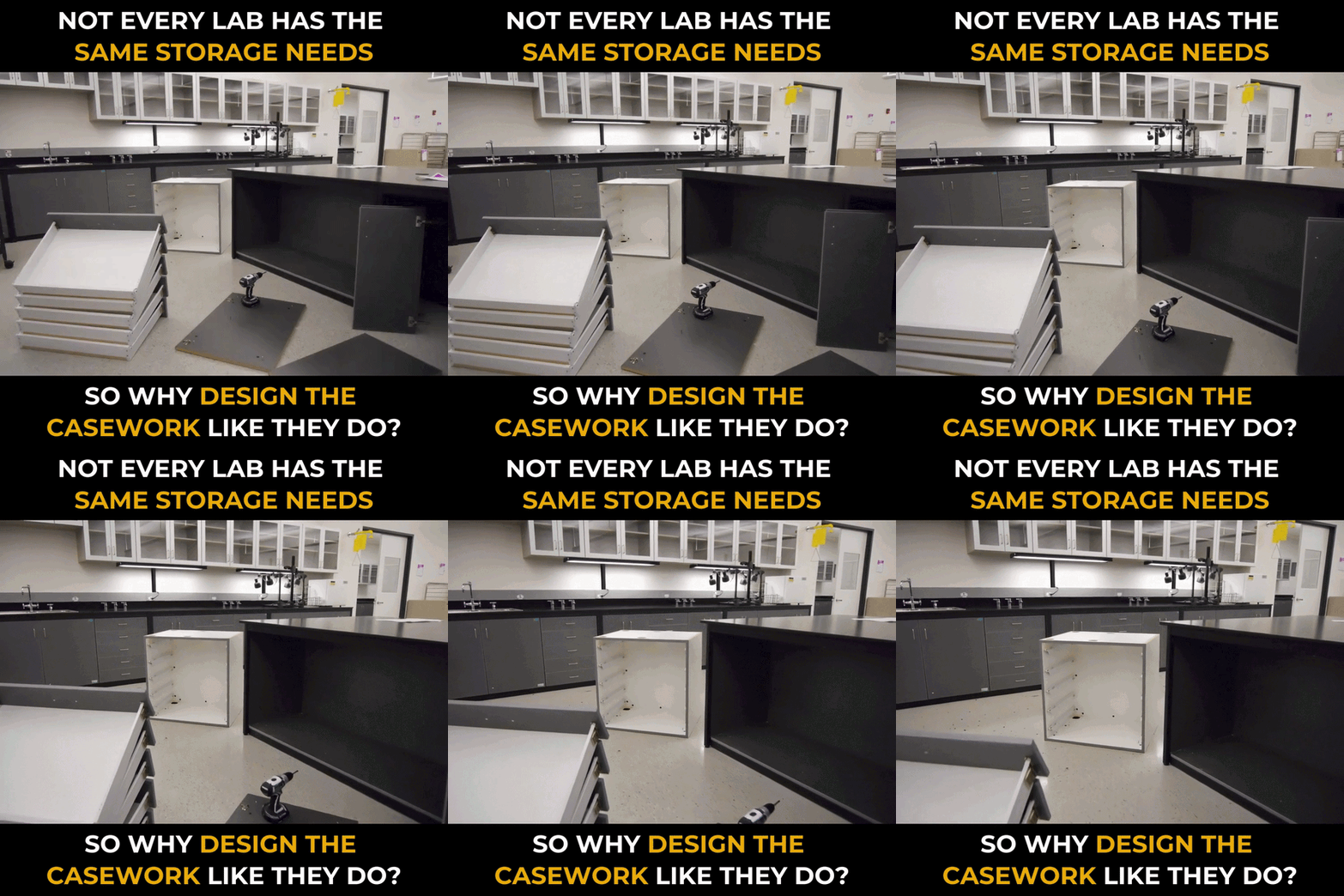
Two laboratories of the same size may require completely different storage strategies.
One may need rows of shallow drawers for small instruments and consumables. Another may need open shelving for frequently accessed supplies. A wet laboratory may require sink cabinetry and utility access, while a testing environment may need clear space beneath the work surface for equipment or seated tasks.
Specifying the same cabinet arrangement throughout the room may create visual consistency, but it does not necessarily create an efficient laboratory.
Intensa Essentials includes a range of open-front cabinets, door-and-drawer units, drawer cabinets, sink bases, wall cabinets and shelving elements. Components are available in multiple sizes and configurations, allowing storage to be planned around what users actually need to hold, reach and replenish.
This is important because storage influences more than capacity. The location of equipment, inventory and supplies affects movement through the room. Frequently used items placed outside the active work zone create repeated reaching, walking and searching. Poorly matched cabinet types can leave valuable space unused while the work surface becomes crowded.
In transaction-intensive environments such as pharmacies, Intensa specifically positions Essentials around improving the active “reach and pick” zone. The same planning principle applies more broadly: the most frequently used materials should be located in relation to the tasks being performed, rather than wherever a standardized cabinet schedule happens to place them.
For the designer, modular storage creates an opportunity to study the workflow at a more useful level. Who uses the workstation? What do they reach for repeatedly? Which items need to remain visible? What should be secured? What may change as the program develops?
The resulting casework can still maintain a consistent architectural language across the project. The internal functions, however, can be selected to serve the individual work areas rather than treating every laboratory as though it has identical storage requirements.
The System Begins Before the Cabinets
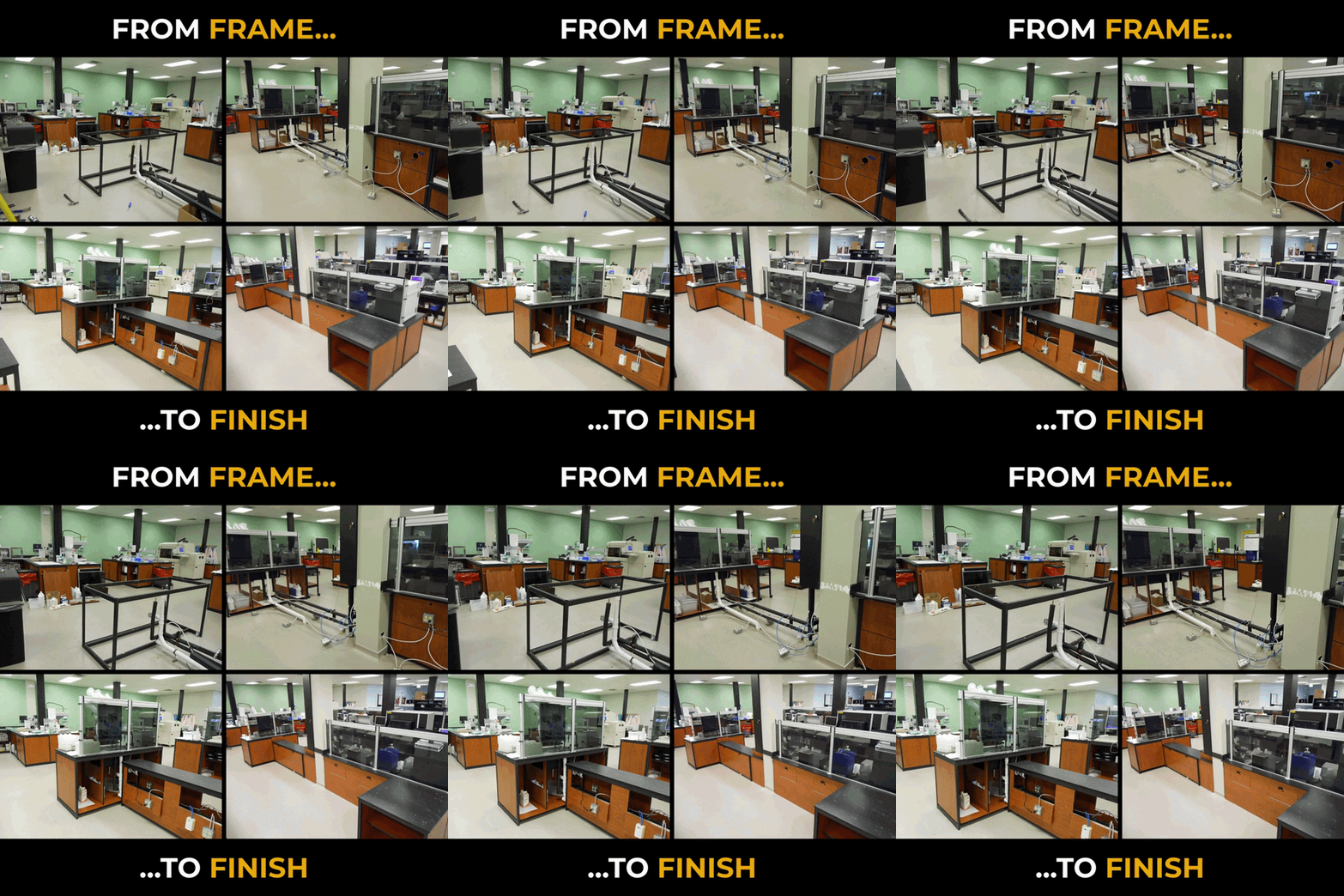
Laboratory casework is sometimes approached as a collection of individual cabinets beneath a work surface. In practice, the completed environment depends on a much larger relationship between structure, storage, work surfaces, utilities, equipment and the people performing the work.
Intensa Essentials provides a modular framework through which those elements can be coordinated.
The supporting structure establishes the footprint and working height. Storage components can then be selected and positioned according to the required tasks. Work surfaces, shelving and desktop productivity elements complete the workstation, while utility-access configurations help preserve access to the services that support the laboratory.
This frame-to-finish approach matters because laboratory efficiency is rarely created by one component. A well-positioned drawer is less useful if equipment blocks access to it. An open knee space cannot support seated work if power and data are located beyond reach. A generous work surface can still become inefficient if frequently used supplies have nowhere logical to go.
Planning the complete workstation as a system allows those relationships to be considered together.
It also gives architects and designers more control over the finished environment. Intensa offers choices across finishes, surfaces, components and productivity elements, allowing the casework to respond to the intended character of research, healthcare, pharmaceutical and educational spaces.
A high-performance laboratory does not have to appear improvised or purely utilitarian. The frame, cabinetry, surfaces and accessories can form a coherent interior while still responding to highly specific technical requirements.
The strongest result comes from early coordination. Equipment dimensions, utility requirements, accessibility, storage volumes, cleaning protocols and anticipated future uses should all inform the configuration before the final components are selected. Modularity provides options, but thoughtful programming determines which options will actually improve the laboratory.
Reconfigure the Casework, Not the Entire Lab
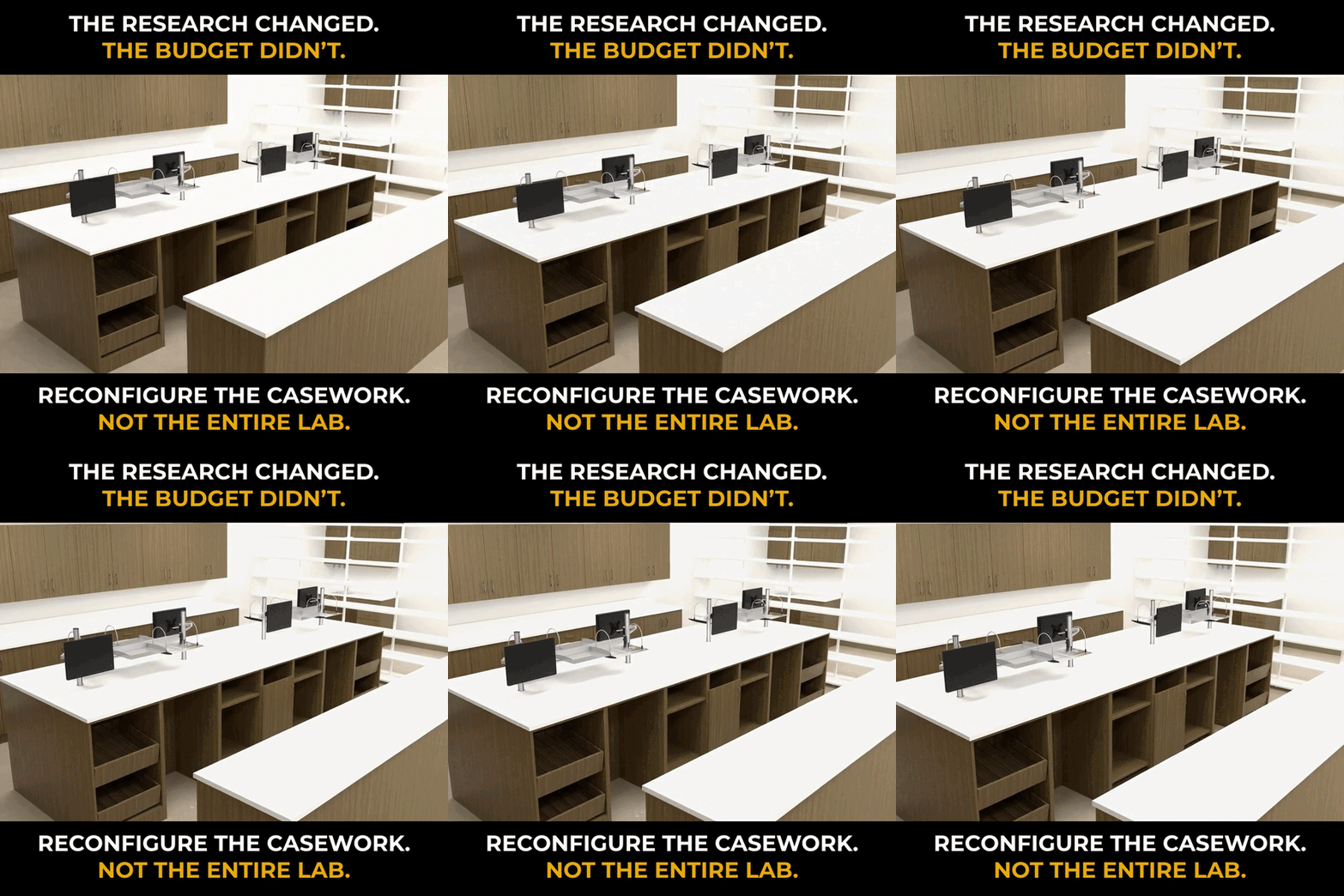
A change in research should not automatically require the laboratory to start again.
With traditional built-in cabinetry, modifying one workstation can affect countertops, storage, finishes and adjacent construction. Even a relatively contained change may introduce demolition, disposal, replacement materials and disruption to the work happening around it.
Essentials is designed so that individual components can be assembled, removed, rearranged, refreshed or replaced. If a cabinet becomes damaged or a workstation requires a different storage configuration, the project may be able to address the affected components without discarding the entire installation.
That distinction has practical consequences.
A laboratory may be able to add a different cabinet type where the workflow has changed. A workstation may be reassigned to another process. Mobile elements can support temporary requirements or provide shared storage where it is needed. Damaged components can be evaluated individually instead of forcing the replacement of an entire fixed run.
This does not mean every laboratory change becomes instant or construction-free. Work involving plumbing, gases, electrical services, ventilation or permanently connected equipment still requires appropriate professional coordination. The value of modular casework is that the furniture and storage system are less likely to become the reason the whole room must be rebuilt.
For facility teams, that can reduce disruption and help preserve more of the original investment. For architects and designers, it creates a strategy for addressing long-term adaptability during the initial specification rather than leaving it entirely to a future renovation team.
The laboratory can be designed for the current program without pretending that the current program will last forever.
What Matters Most
Intensa Essentials matters because it approaches laboratory casework as an adaptable working system rather than a permanent collection of cabinets.
Interchangeable components allow storage, workstations and supporting elements to be selected around the laboratory’s workflow, space, chemistry and visual requirements. A range of cabinet types makes it possible to respond to different storage needs, while modular construction supports future reconfiguration and individual component replacement.
The system also addresses everyday operational concerns. Intensa offers durable finish and work-surface options intended to withstand demanding cleaning requirements. Utility-access panels preserve access behind applicable base-cabinet configurations, and clearance beneath the cabinetry can make surrounding floor areas more accessible for cleaning.
Not every component will be appropriate for every laboratory. The specification must still respond to chemical exposure, equipment loads, utility connections, infection-prevention requirements, accessibility, ergonomics and the procedures performed within the room.
The larger design lesson is straightforward: flexibility should not be treated as a feature added after the laboratory has been planned. It should influence how the laboratory is organized from the beginning.
Research will continue to develop. Equipment will change. Storage needs will shift and budgets will remain finite. A modular casework system cannot predict every future requirement, but it can give the laboratory more ways to respond without beginning again.
If you’re evaluating modular casework for a research, pharmaceutical, healthcare, education or testing environment, GGG can help you compare Intensa Essentials configurations, cabinet types, work surfaces, finishes, utility requirements and workflow considerations in relation to your project.