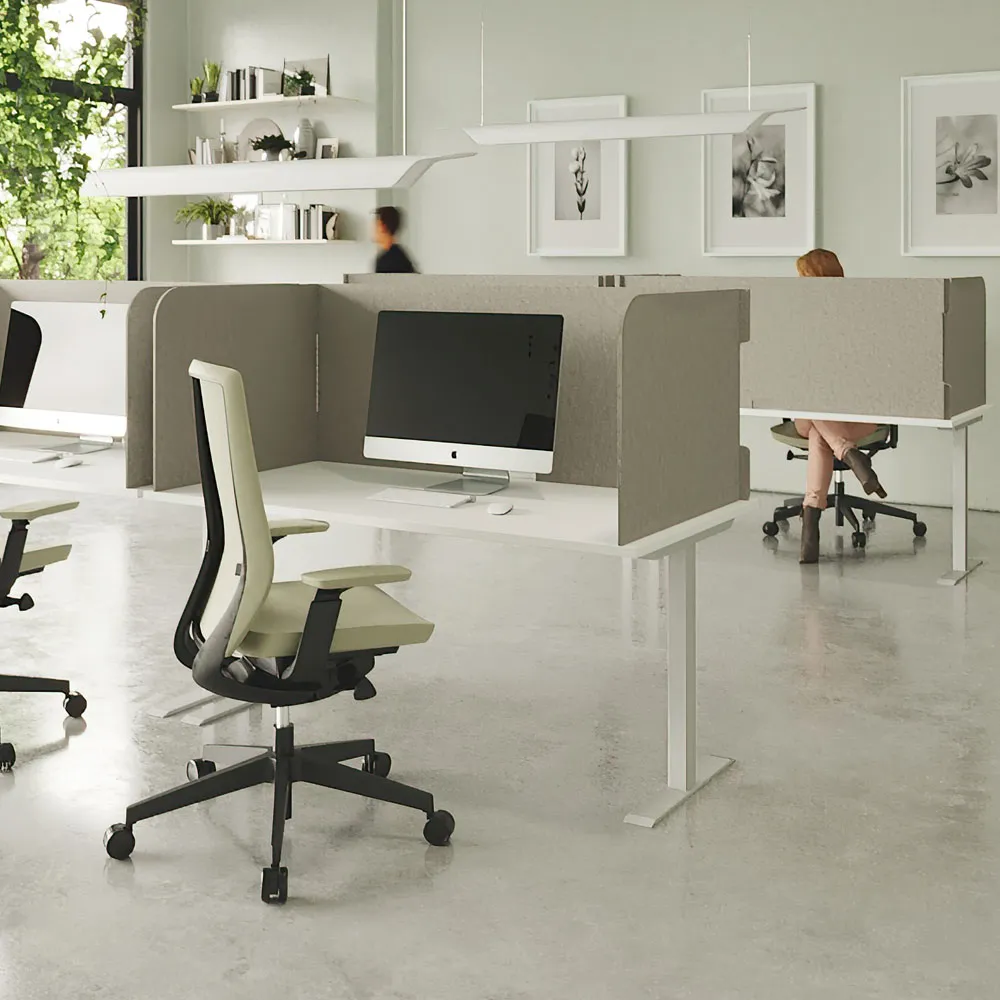
The Weekly System, Vol 19: Ezobord Desk Screens & Returns
Open Office, Better Focus: Designing Workstation Privacy with EzoBord
Featured Products: EzoBord Desk Screen System + Desk Return Screens
Open offices were designed to bring people together.
They encourage collaboration, make better use of available space, and create opportunities for teams to communicate throughout the day.
But there is a challenge that comes with removing walls.
When everyone shares the same space, everyone also shares the distractions.
Phone conversations travel between desks. Movement catches the eye. Nearby discussions compete with the work happening directly in front of us.
And while open offices provide flexibility, they don't always give people the sense of privacy they need to concentrate.
The solution doesn't necessarily require rebuilding the floor plan.
Sometimes, improving the experience begins at the workstation itself.
EzoBord's Desk Screen System and Desk Return Screens offer an approach to creating more defined workspaces while maintaining the openness that makes shared offices appealing.
Here's how these two products can work individually—and together—to address common open-office challenges.
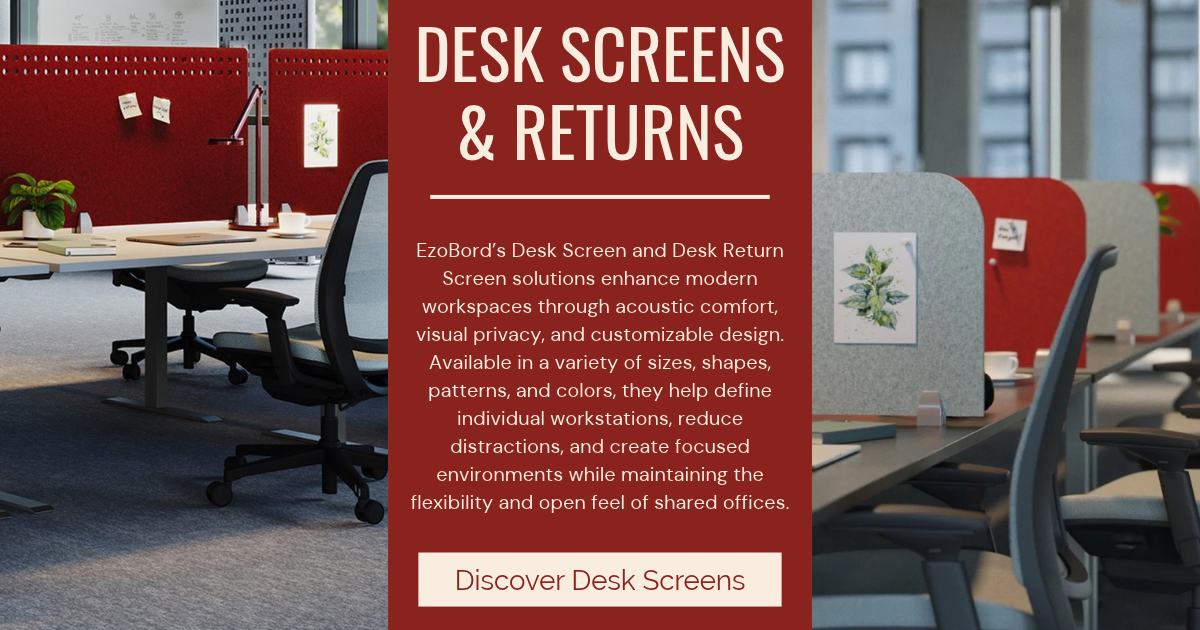
Open Office. Everyone Talking. Where Does the Sound Go?
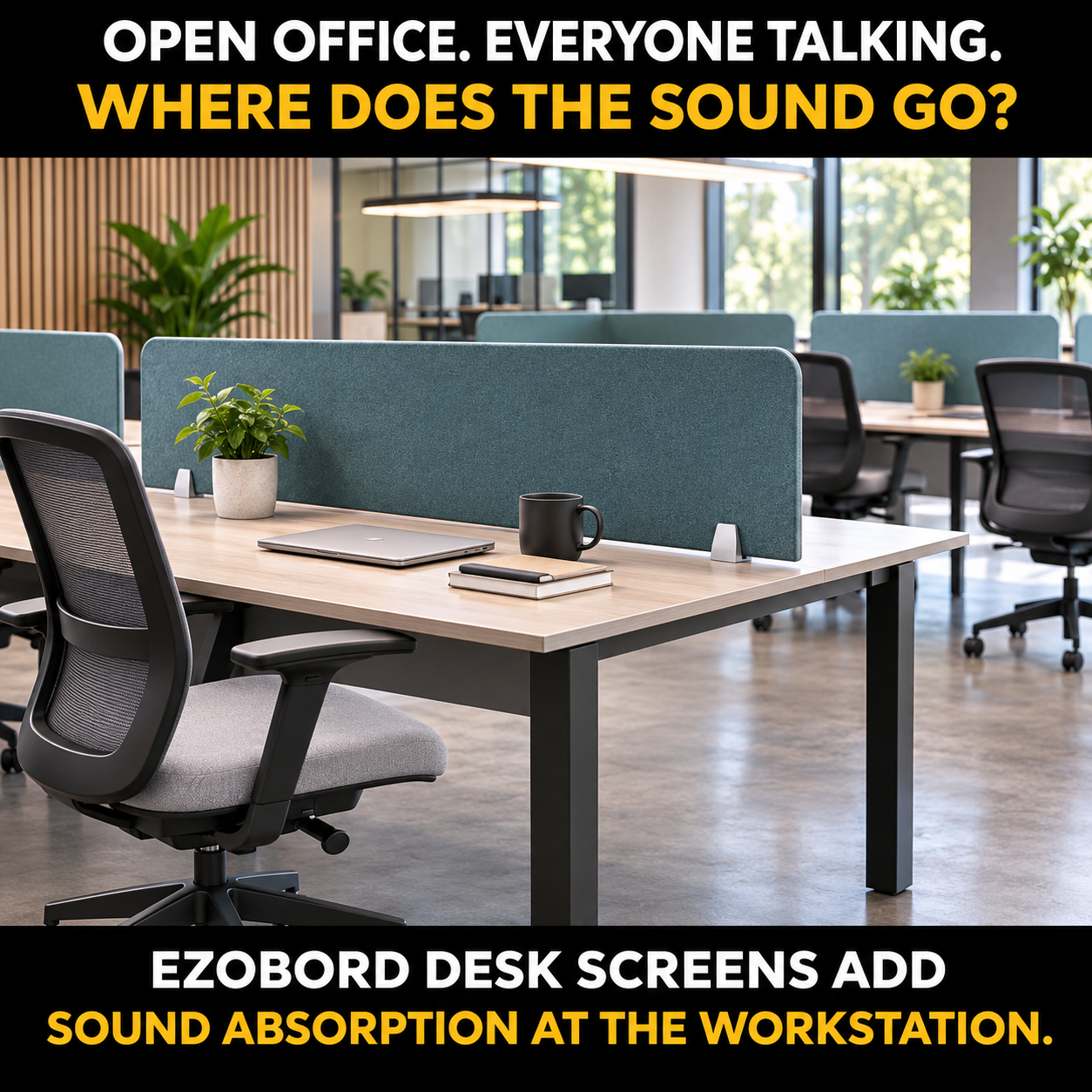
Sound absorption starts with considering the surfaces closest to the people making the noise.
In an open office, conversations happen everywhere.
One person is speaking with a client. Another is discussing a project with a colleague. Someone nearby is participating in a video meeting.
Each conversation adds sound to the shared environment.
Hard surfaces such as glass, walls, and furniture can reflect sound back into the space. When enough sound builds up, the office may begin to feel louder and more distracting than intended.
This is where acoustic materials become an important part of workplace design.
EzoBord's Desk Screen System introduces sound-absorbing material directly into the workstation environment.
Rather than relying exclusively on acoustic treatments across the ceiling or walls, desk screens place absorption close to everyday activity.
They can help reduce reflected sound while also creating a visual separation between neighboring desks.
That combination is useful because sound and visual distractions often occur together.
A person speaking nearby may create both an audible interruption and a visual one.
A desk screen helps address both conditions without requiring a permanent partition.
Why workstation-level acoustics matter
Acoustic design is most effective when considered throughout a space.
Ceiling treatments, wall panels, furniture, and workstation dividers each serve different purposes.
Desk screens provide a localized solution, adding acoustic material where people work.
They are particularly relevant in:
Open-plan offices
Shared workstations
Bench-style desk layouts
Administrative environments
Collaborative workplaces with individual focus tasks
An important distinction: sound absorption is not the same as soundproofing.
A desk screen will not eliminate a neighboring conversation or prevent every sound from traveling across an office.
Its role is to introduce sound-absorbing material and provide a degree of separation that supports a more comfortable workstation environment.
For designers, this means desk screens should be considered as part of a broader acoustic strategy—not as a replacement for one.
Private Focus Without Feeling Boxed In
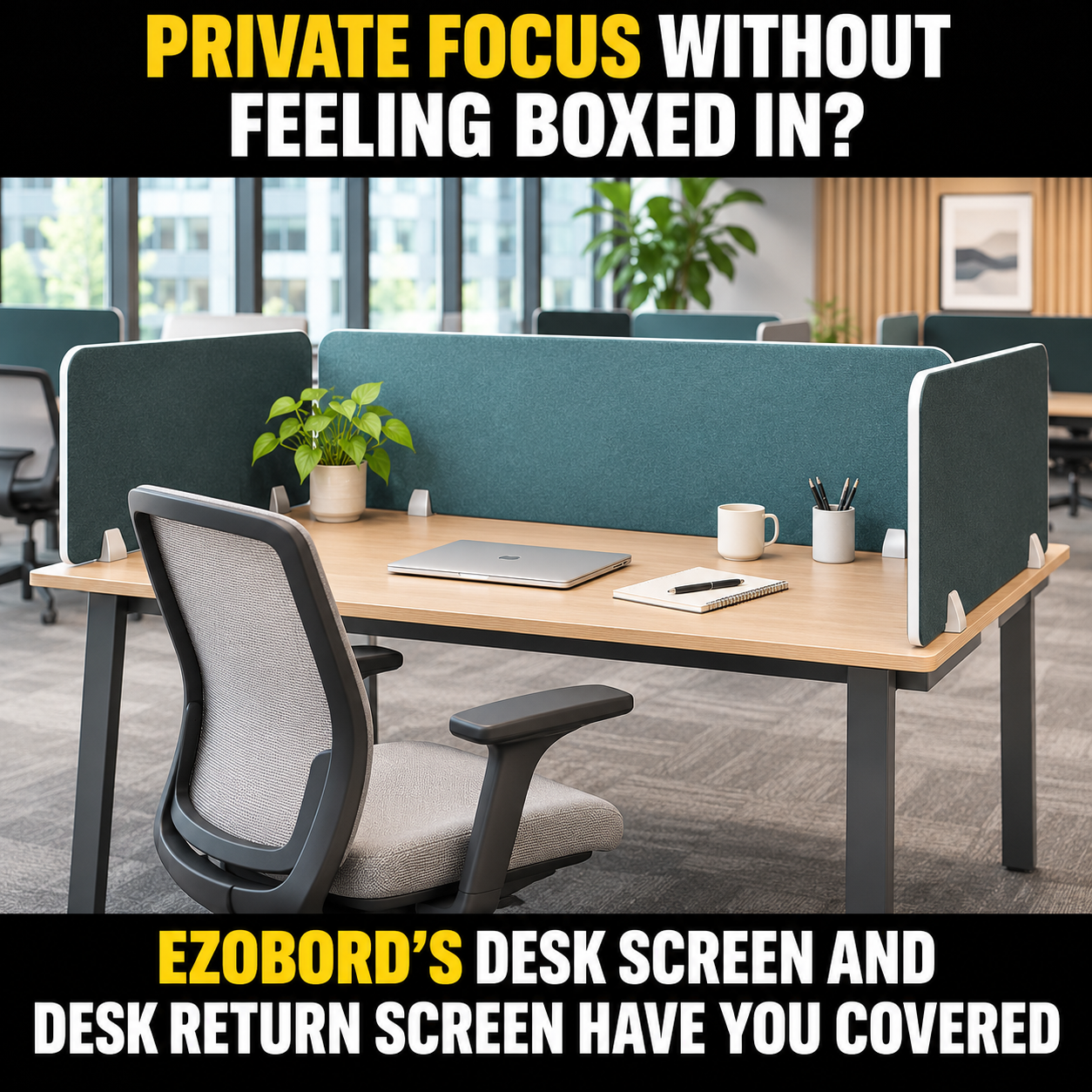
Privacy doesn't always require an enclosed office.
When someone says they need privacy at work, the immediate assumption may be that they need a door, four walls, and a dedicated room.
But privacy exists on a spectrum.
Sometimes, an employee simply needs fewer visual interruptions while reading, writing, reviewing drawings, or concentrating on a task.
At other times, they need a clearer separation between their workspace and the person seated beside them.
This is where EzoBord's Desk Return Screens become especially useful.
Desk Return Screens are designed to provide separation between bench-style desks and neighboring workstations.
Installed along the side of a desktop, they create a visual boundary without completely enclosing the person using the space.
Their relatively compact form allows the workplace to retain an open feel while introducing more definition at the individual desk.
A small addition with a practical purpose
Consider a bench of workstations arranged side by side.
Without side dividers, each employee may have a clear view of neighboring desks, monitors, accessories, and movement.
A return screen introduces a physical visual break between those work areas.
The workstation feels more distinct, even though the overall office layout remains open.
And because EzoBord's return screens use acoustic material, they also contribute sound absorption to the shared environment.
For architects and interior designers, this creates an opportunity to balance two competing priorities:
Maintain collaboration while providing space for concentration.
The goal is not to isolate employees.
It is to give them enough separation to perform focused work comfortably within a shared setting.
Distractions Don't Come from Just One Direction
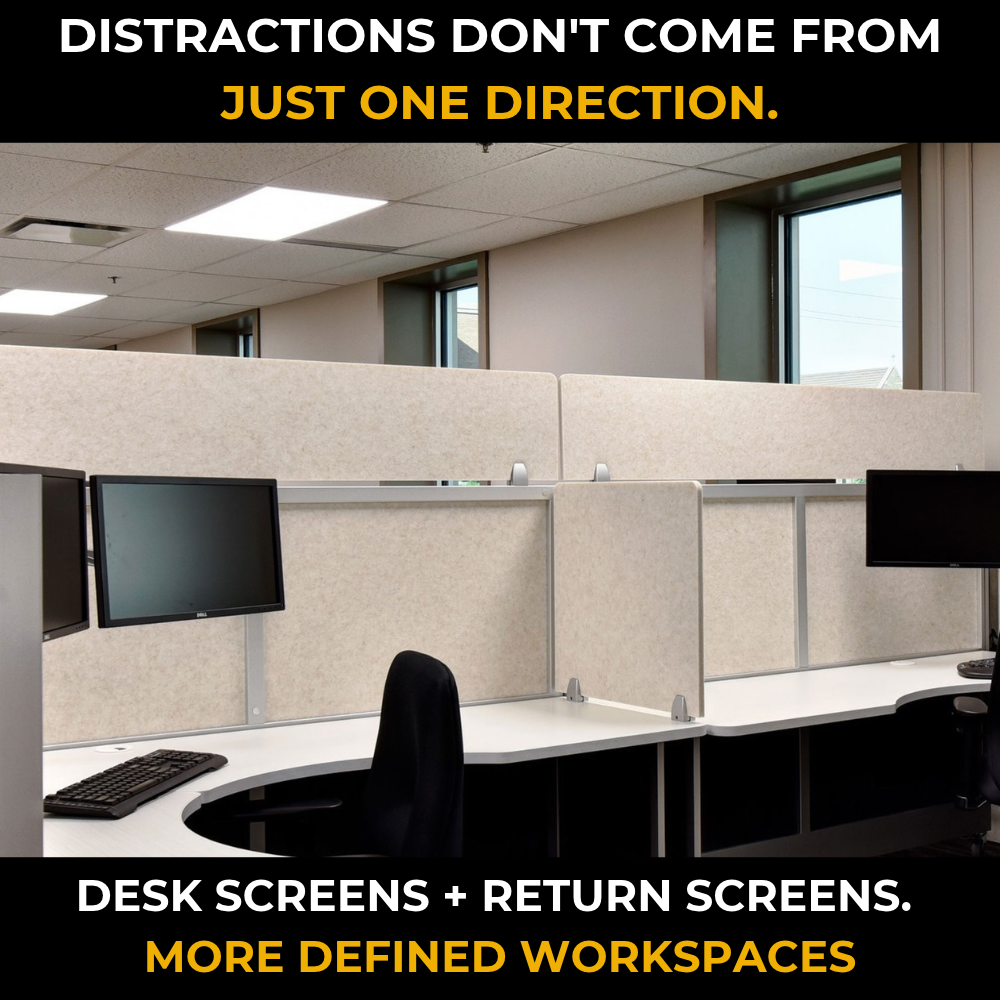
Combining desk screens and return screens creates a more defined workspace.
Think about where interruptions come from in a typical open office.
They don't always originate directly in front of a person.
Sometimes, movement or conversation comes from a neighboring desk. Sometimes, activity occurs across the work surface. In bench configurations, distractions can approach from several directions.
A single panel may address one part of the problem, but workstation planning often benefits from looking at the full desk arrangement.
EzoBord's Desk Screen System and Desk Return Screens can be used together to create a more intentional layout.
The main desk screen provides separation across the workstation.
The return screen adds separation along the side.
When configured at right angles, the panels help define the work area from more than one direction.
More definition without permanent construction
This approach can be especially beneficial when working with existing desk layouts.
Instead of immediately considering new architectural partitions, a design team can evaluate whether localized workstation screens would better suit the project's needs.
For example, a row of bench desks might use a consistent main screen between opposing work surfaces, with return screens added where employees sit side by side.
The result is a clearer distinction between individual work areas.
The screens can also help create a more coordinated appearance across the office.
That consistency matters in large environments where rows of furniture can otherwise feel visually repetitive or undefined.
Questions worth asking during space planning
Before choosing a screen configuration, consider:
Where do most distractions originate?
Which desks are adjacent or face one another?
How much visual separation do employees need while seated?
Does the workstation layout support a main screen, side return, or both?
Will the selected screen heights interfere with communication, sightlines, or equipment?
These questions help move the discussion beyond simply adding panels.
They make the screen arrangement part of the overall workplace design.
And that is where the greatest value lies.
A workstation should be defined by how people use it, not just by the size of the desktop.
Every Office Has Its Own Design. Why Should Every Desk Screen Look the Same?
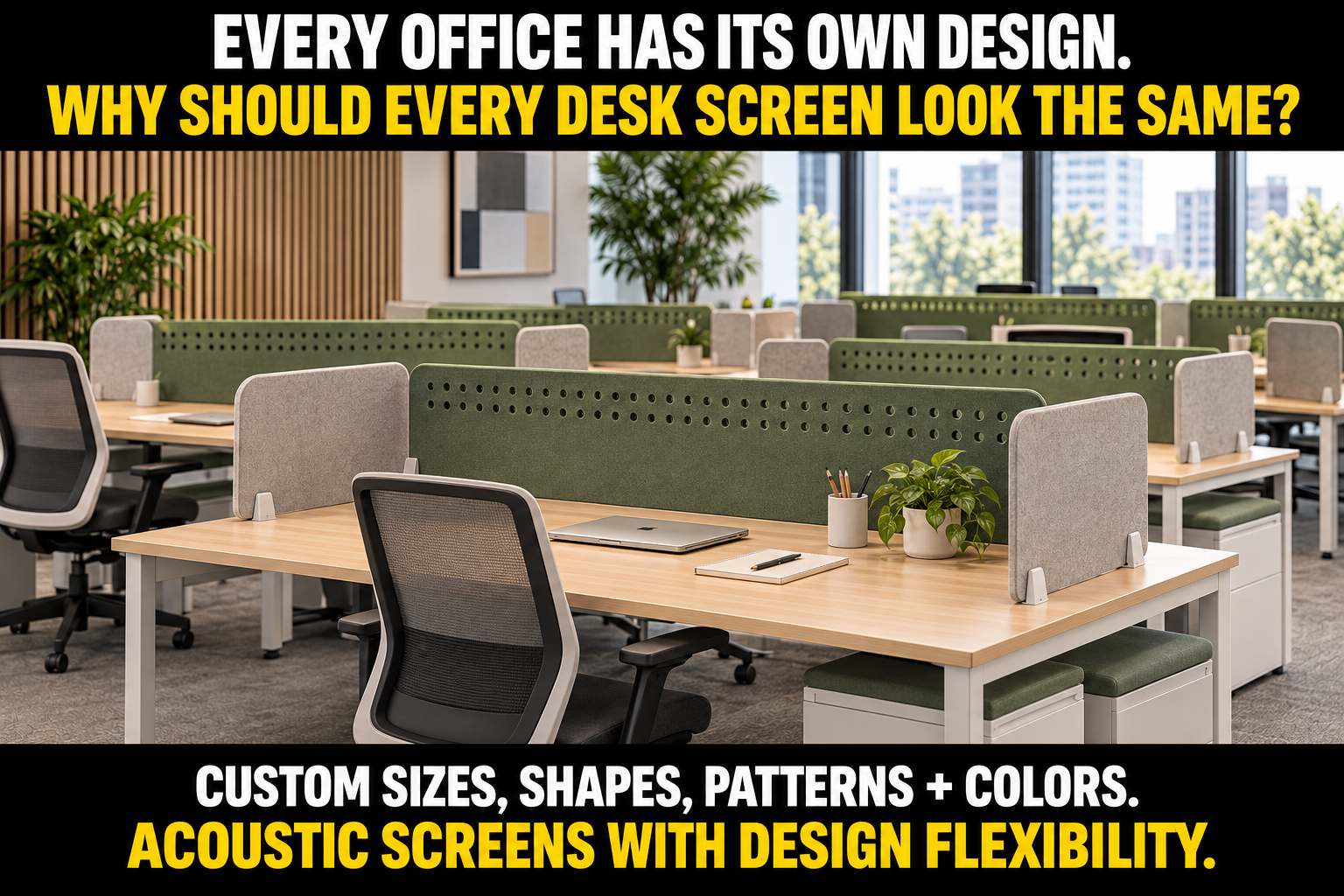
Acoustic performance and design flexibility can work together.
Every workplace has a visual identity.
Some offices are bright and energetic. Others are quiet and understated. Some use natural materials and neutral colors, while others rely on stronger colors and more expressive architectural details.
Workstation screens should be able to complement those environments.
EzoBord's Desk Screen System offers customization in size, shape, pattern, and color, giving designers more freedom to coordinate acoustic elements with the rest of the furniture plan.
The available desk screen designs include circular, elliptical, rectangular, and square style options, with perforated patterns available in selected configurations.
That means designers can explore different visual treatments without abandoning the basic function of a workstation divider.
For example:
A straightforward rectangular screen can provide a clean, minimal appearance.
A screen with an elliptical top profile can introduce a softer shape.
A perforated pattern can add visual interest while keeping the screen's fundamental form simple.
And color can help tie the workstation configuration into the surrounding interior.
Coordinating desk screens and returns
One approach is to use complementary colors rather than matching every panel exactly.
A deeper-colored main desk screen paired with a lighter return screen can create contrast without making the arrangement feel busy.
Alternatively, a neutral main screen with a colored return can introduce a subtle accent at each workstation.
The objective is to create a consistent design language across the office.
Screen heights, widths, shapes, patterns, and colors should be selected with the furniture layout and overall interior palette in mind.
EzoBord also offers customization opportunities for projects with specific design requirements.
However, custom configurations should always be reviewed with the manufacturer to confirm available dimensions, materials, patterns, and installation details.
Design flexibility still requires technical coordination
An attractive screen configuration also needs to work.
When specifying desk screens, teams should consider the relationship between the selected panels and the workstation itself.
Screen placement, dimensions, mounting hardware, and desk compatibility all affect the final installation.
Acoustic performance can also vary depending on material thickness, pattern, mounting method, and installation conditions.
This is especially important when comparing solid panels with patterned or perforated designs.
A successful specification coordinates appearance and performance rather than treating them as separate decisions.
What Matters Most
Desk screens and return screens are relatively simple products, but selecting the right configuration takes some thought.
For architects, designers, dealers, and project teams, the most important considerations are:
Acoustic contribution: Both products introduce sound-absorbing material into the workstation environment. They should be considered as part of the overall acoustic plan.
Visual privacy: Main desk screens and side return screens provide separation in different directions, helping define individual work areas.
Layout compatibility: Screen dimensions and mounting details need to coordinate with the desks, accessories, and intended seating positions.
Design flexibility: Color, shape, and pattern selections can support the visual character of the office.
User experience: The arrangement should provide useful separation without making the workstation feel unnecessarily confined.
The right solution may involve one screen, two return screens, or a coordinated combination—depending on the layout and how the workspace is used.
There is no single configuration that works for every office.
And that is precisely why flexibility matters.
The Bottom Line
A better open office doesn't necessarily need more walls. It needs more intentional workspaces.
EzoBord's Desk Screen System and Desk Return Screens provide an opportunity to address acoustic comfort, visual privacy, and workstation definition without abandoning the benefits of an open floor plan.
The main desk screen helps introduce sound absorption and separation across the workstation.
The return screen adds a degree of privacy along the side.
Together, they can create a more defined area for focused work while maintaining a cohesive office environment.
And with options for size, shape, pattern, and color, designers can integrate these functional elements into the overall interior concept.
The key is to think beyond the divider itself.
What does the person working at this desk need to do their best work?
That question should guide the specification.
Let's Talk About Your Next Project
Planning a new open office, updating an existing benching system, or looking for ways to improve workstation privacy?
The Ginger Grant Group can help you explore EzoBord's Desk Screen System and Desk Return Screen options and identify configurations that support your project's acoustic, functional, and design goals.