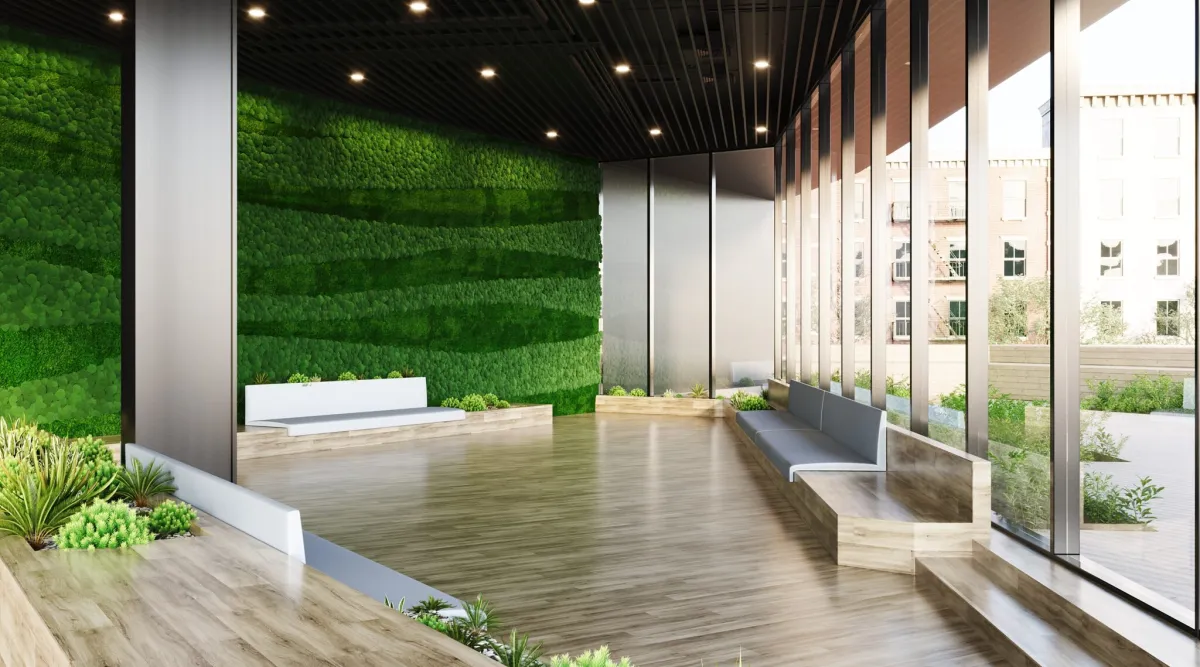
The Weekly System, Vol 4: QEM Acoustic Moss Walls
Quiet, by Design: What Acoustic Moss Walls Add to Commercial Interiors
How preserved moss can support acoustic comfort, biophilic character and visual identity without introducing the upkeep of a living wall
A feature wall is usually judged by what it adds visually. In a busy commercial interior, however, the wall can also influence how the room sounds, how easily people communicate and whether the space feels energetic or simply distracting.
This is especially relevant in open workplaces, reception areas, conference rooms, training spaces and other environments where hard surfaces and overlapping activity can allow sound to build. Acoustic treatment may be necessary, but it is not always easy to integrate without making the room feel overly technical or visually disconnected from the design concept.
Quiet Earth Moss acoustic moss wall panels address both sides of that problem. Preserved natural moss is applied to sound-absorbing ezoBord backing to create custom wall compositions that add texture and biophilic character while helping manage ambient noise. The product is visually expressive, but its primary role is still practical: improving acoustic comfort within the built environment.
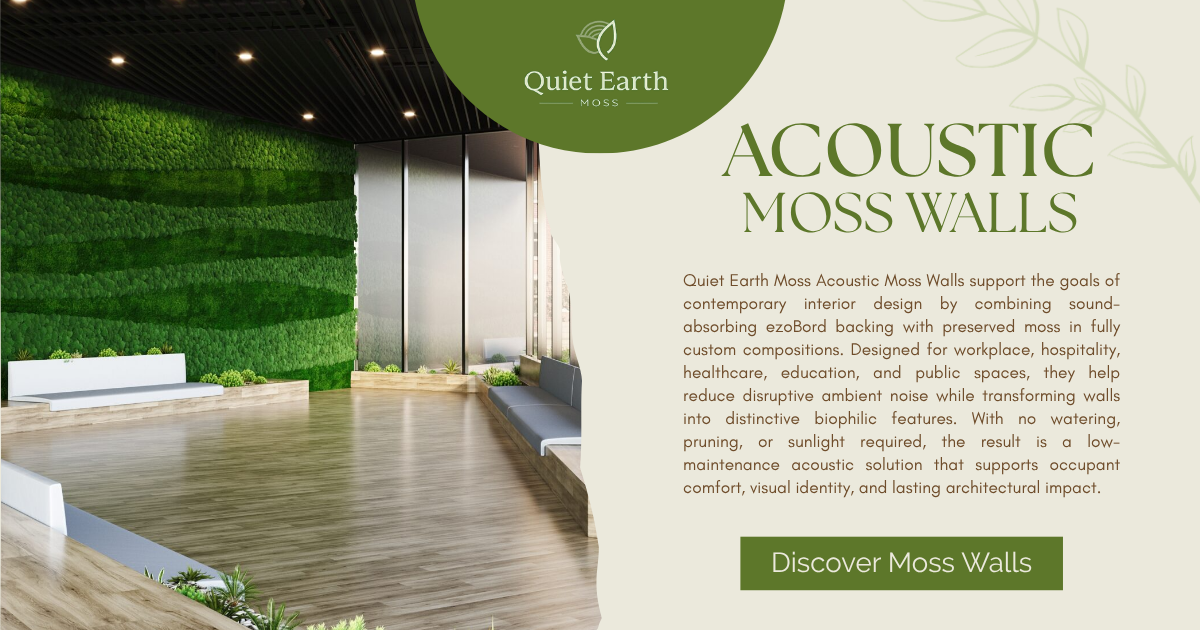
Acoustic Comfort Is Part of the Spatial Experience
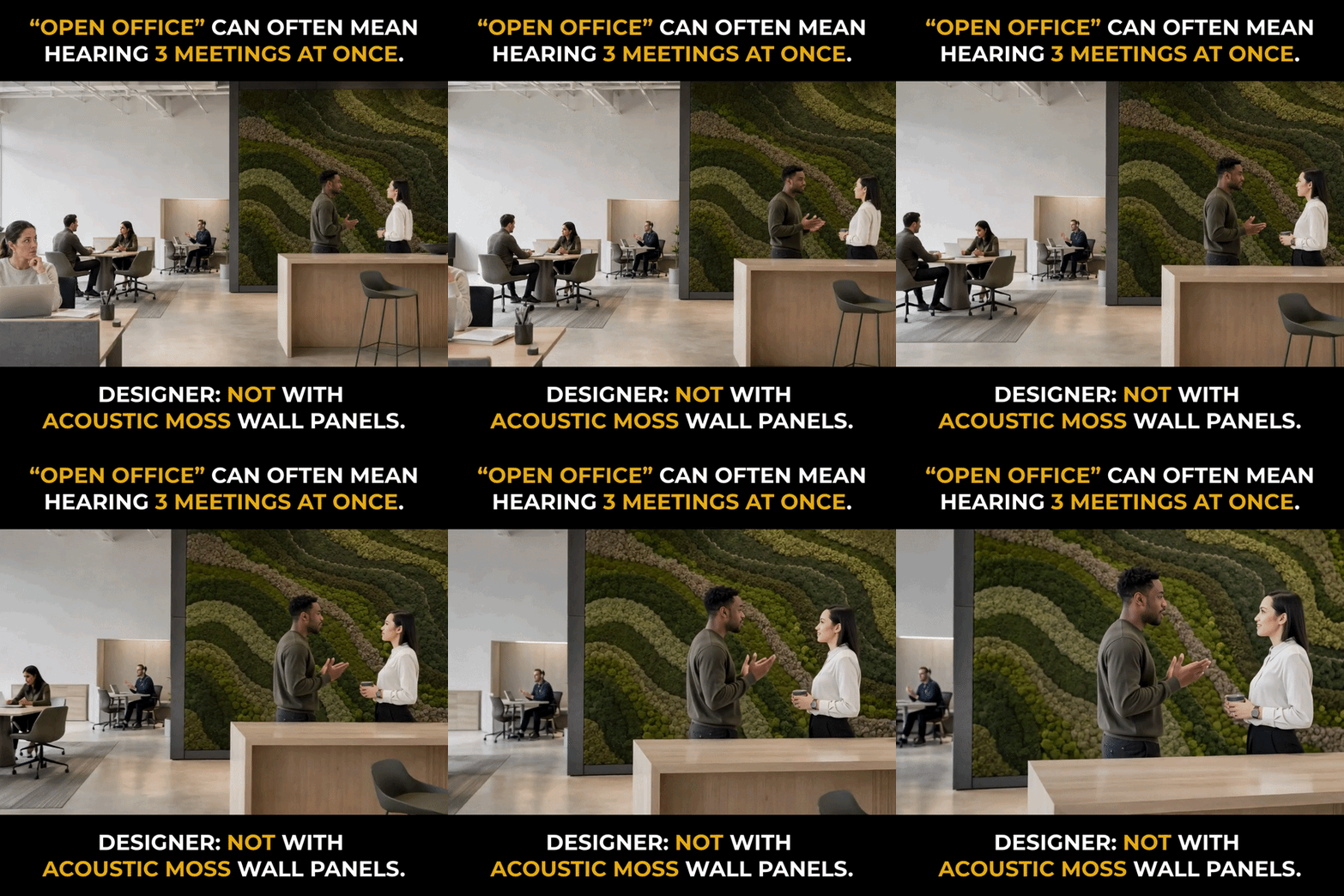
Noise is not limited to unusually loud rooms. In many commercial interiors, the larger issue is the accumulation of ordinary sounds: nearby conversations, virtual meetings, phones, equipment and movement. When those sounds overlap and reflect from hard surfaces, concentration becomes more difficult and communication requires more effort.
The acoustic strategy therefore affects more than decibel levels. It can influence privacy, focus and the ease with which occupants use the space. A collaborative office should support interaction without allowing every conversation to become part of everyone else’s workday. A reception area should feel active without making speech difficult to understand. A hospitality or public space should feel lively without becoming tiring.
Quiet Earth Moss panels are mounted on ezoBord acoustic backing made from polyester and recycled PET fibre. The product page reports a sound absorption value of .70 for the acoustic moss panel system, helping to reduce reflected sound while introducing a natural focal point. The value of this combination is that an acoustically useful surface can occupy a visually important location rather than being treated as a hidden technical layer.
For designers, placement still matters. Acoustic material should be coordinated with the room volume, reflective finishes, sound sources and communication zones. Moss panels can contribute to the solution, but the larger lesson is to make acoustic intent part of the design process early—when wall area, furniture planning and visual hierarchy can still work together.
Biophilic Design Can Carry a Practical Function
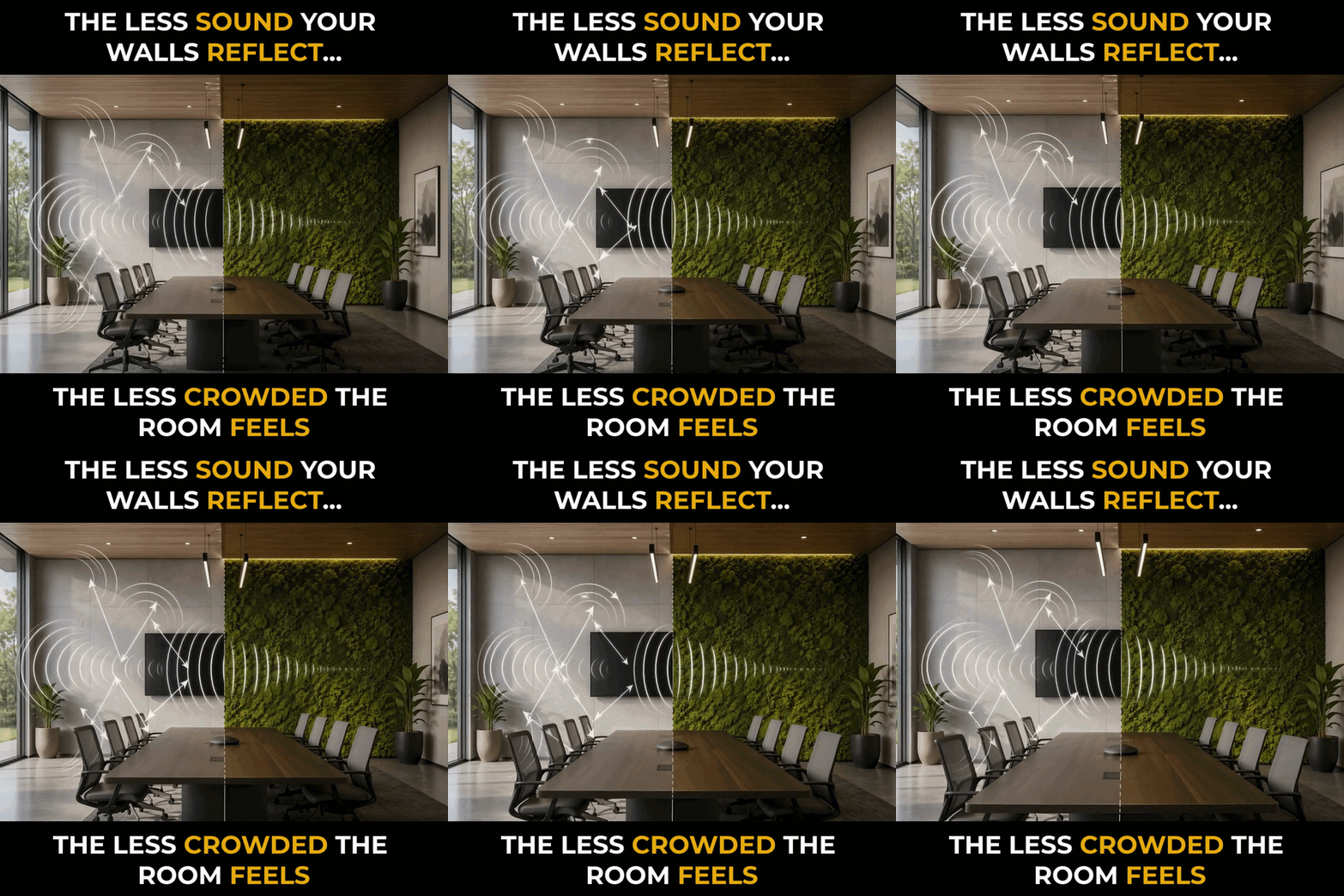
Natural materials are often introduced to soften commercial interiors and create a stronger connection to the outdoors. That visual role is meaningful, but biophilic design becomes more integrated when the natural element also contributes to how the room performs.
Preserved moss offers color, depth and irregular texture that manufactured flat finishes do not naturally provide. Quiet Earth Moss offers several moss types, including reindeer, pole, mood, mixed and sheet moss, with variations in height, texture and green tones. Those differences can be used to create layered fields, organic transitions or controlled geometric patterns depending on the architectural language of the project.
Because the moss is supported by an acoustic backing, the wall does not have to choose between being expressive and being useful. A reception feature can reinforce a brand experience while helping temper reflected sound. A workplace installation can introduce nature into a highly finished interior while supporting acoustic comfort. In hospitality, healthcare, education and public environments, the same material strategy can help make large wall areas feel more human and less institutional.
The design opportunity is to treat the panel as part of the architecture rather than applied decoration. Scale, proportion, surrounding finishes and viewing distance all affect whether the moss reads as a small art piece, a repeating system or a complete wall composition. When those decisions are deliberate, the natural material helps organize the room as well as enrich it.
Preserved Moss Changes the Maintenance Equation

The appeal of a living wall is easy to understand. The ongoing requirements are equally real. Irrigation, access to natural or supplemental light, pruning and plant replacement all have implications for operations, especially in spaces where maintenance staff cannot routinely tend a vertical planting system.
Quiet Earth Moss uses natural moss preserved by replacing the plant’s water with glycerine and applying natural oils and dyes. The preserved material requires no sunlight or watering, and the company describes it as virtually maintenance-free. It also does not require pruning. This allows the installation to retain its visual character through changing seasons without depending on windows, grow lights or an irrigation system.
Low maintenance does not mean no care at all. Quiet Earth Moss recommends carefully removing dust with low-temperature air or compressed air. The distinction is that routine care is focused on keeping the surface clean rather than keeping a living system alive. For owners and facility teams, that changes both the infrastructure and the ongoing responsibilities associated with the feature.
For architects and designers, this makes preserved moss relevant in locations where a living wall might be impractical: internal rooms without daylight, high-visibility areas where consistent appearance matters or projects where operational simplicity is a priority. The result still brings natural color and texture into the space, but the specification is less dependent on season, orientation and horticultural maintenance.
Acoustic Treatment Does Not Have to Look Standard
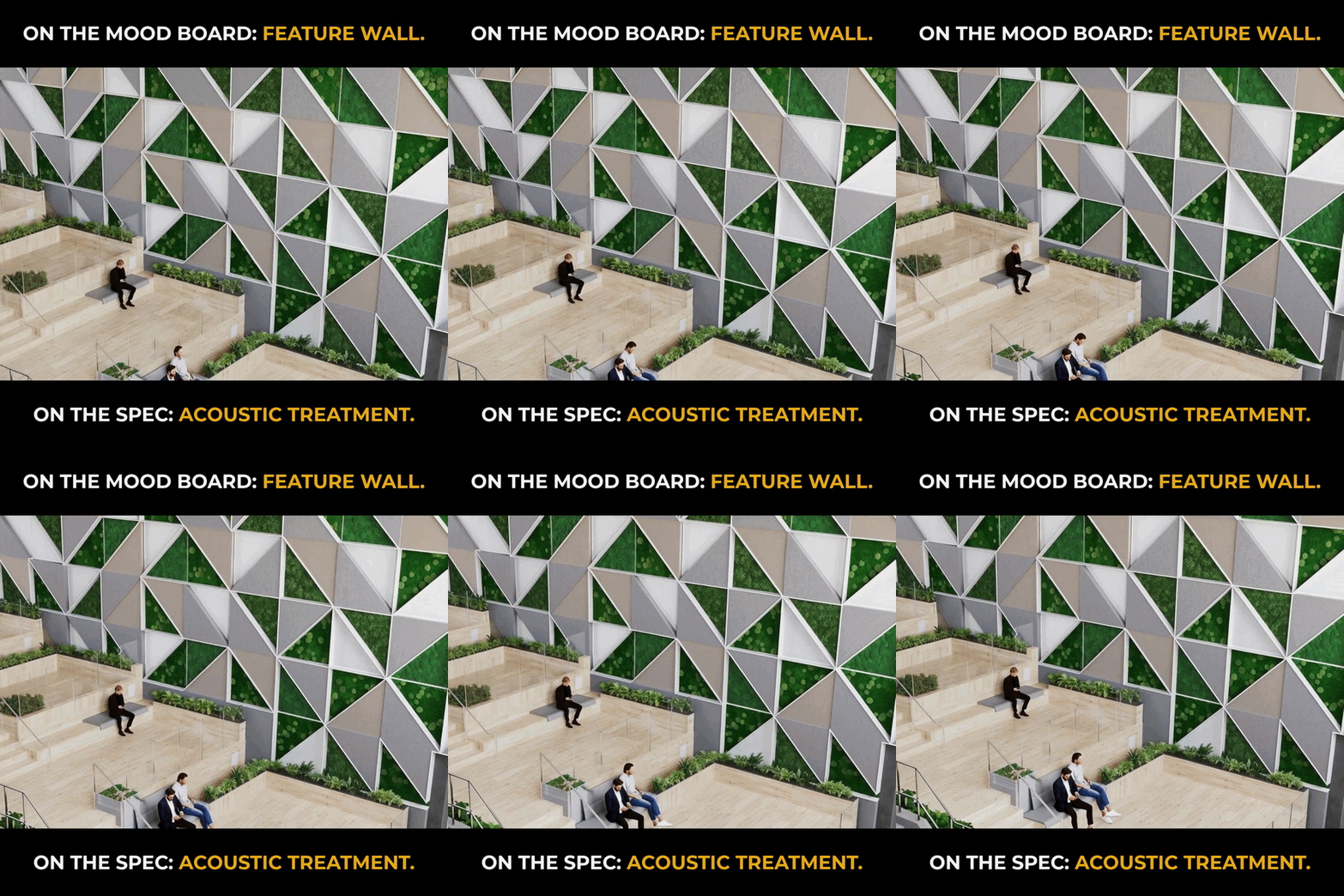
Acoustic products are often selected from a familiar set of panels, baffles and ceiling elements. Those systems can be effective, but they may not always support the identity or material story a project is trying to establish. Custom moss compositions expand the visual vocabulary available to the acoustic strategy.
Quiet Earth Moss can vary panel length, height, width and shape, with different frame options and custom logos or patterns available. The Ezobord component is offered in multiple thicknesses and colors, while the moss can be selected by type, tone and texture. That creates opportunities to combine soft neutral backing with varied greens, create a symmetrical geometric installation or use moss and exposed Ezobord together as complementary parts of one composition.
The system is also comparatively lightweight. Quiet Earth Moss lists moss panels at approximately 1.5 to 2 pounds per square foot and notes that panels can be screwed directly to appropriate drywall or plywood construction. Installation details, seams, substrate conditions and code requirements still need to be coordinated, but the system gives the design team flexibility to work at the scale of framed art, modular panels or a full feature wall.
This flexibility helps acoustic treatment participate in visual identity rather than compete with it. The strongest result is not simply a wall that contains more materials. It is a coherent composition in which moss, acoustic backing, pattern and architecture appear to have been designed together from the beginning.
What Matters Most
Acoustic moss walls matter because they resolve several design goals through one architectural surface. They help manage reflected sound, introduce natural texture, support biophilic character and provide a high-impact visual element without the watering, sunlight or pruning required by a living wall.
Quiet Earth Moss combines preserved moss with ezoBord backing to make that integration possible. Custom moss types, colors, shapes and patterns allow the acoustic treatment to respond to the project rather than forcing the project to respond to a standard panel language.
The broader specification lesson is to look for materials that do more than occupy a finish schedule. When acoustic performance, occupant experience and visual identity are considered together, the wall becomes an active part of how the space works—not simply how it photographs.
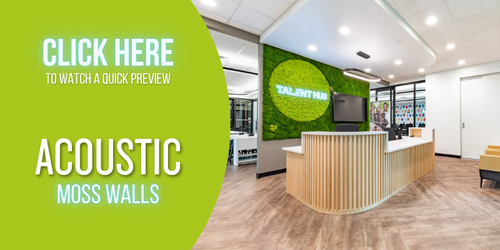
If you’re evaluating acoustic treatments for a workplace, hospitality, healthcare, education or public-space project, GGG can help you explore Quiet Earth Moss panel compositions, Ezobord options, moss types and installation requirements in relation to your acoustic and design goals.