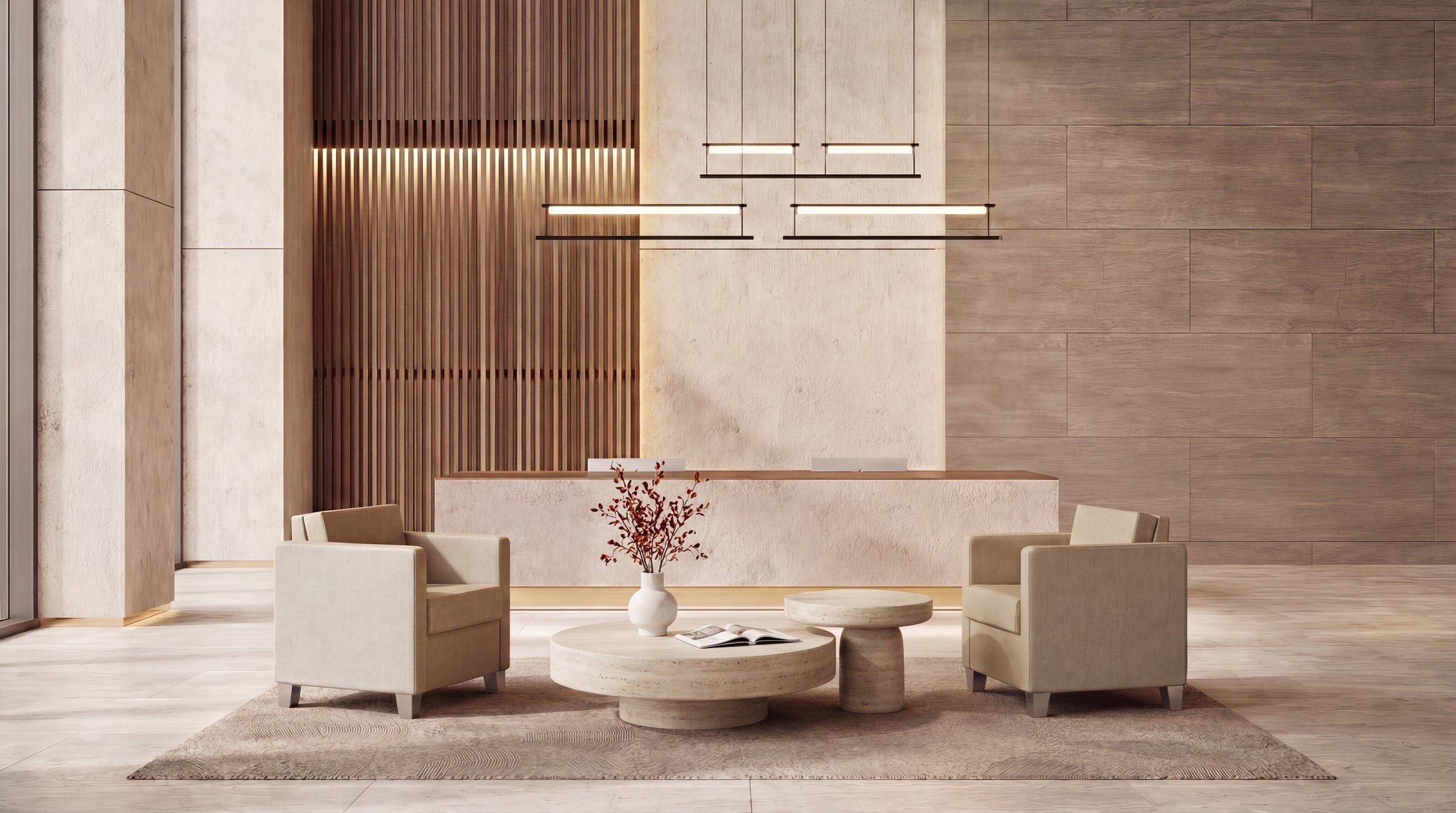
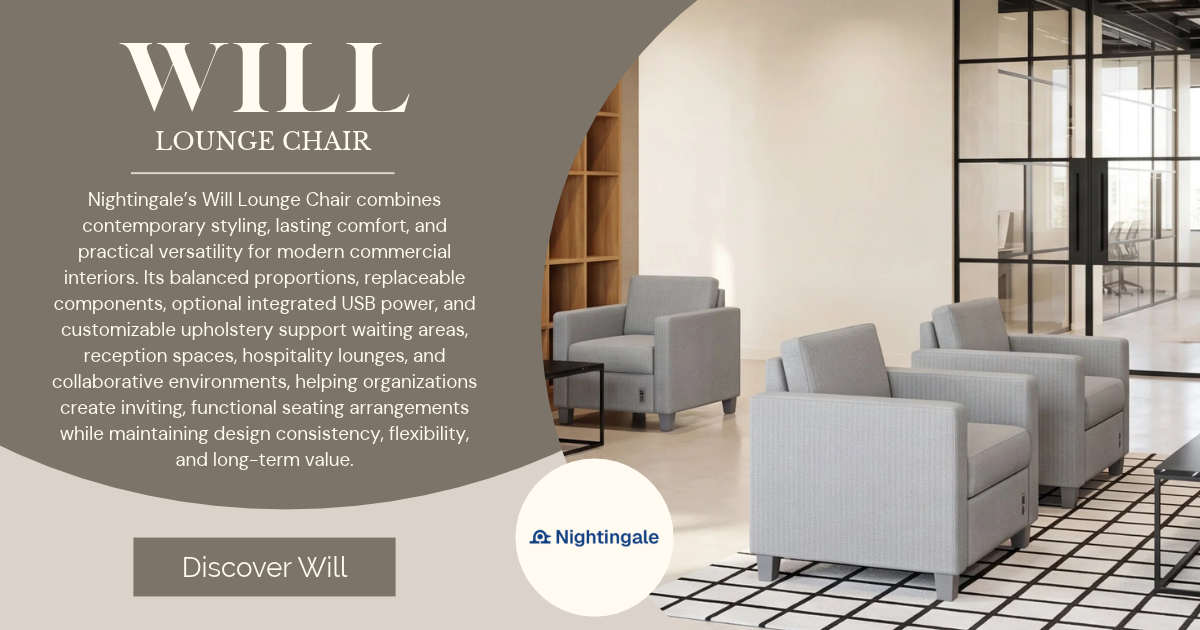
The Weekly Spec, Vol 32: Nightingale Will Lounge Chair
Nightingale Will: A Smarter Approach to Lounge Seating
One clean design. Multiple applications. Practical features that make lounge seating work harder.
Lounge seating plays an important role in the modern workplace.
It's where visitors form their first impressions. Where employees step away from their desks. Where informal conversations take place. And increasingly, where people expect to remain connected while they wait, work, or recharge.
Yet selecting the right lounge chair involves more than choosing attractive upholstery and a comfortable seat.
Designers also need to consider how furniture fits the available space, how it will perform over time, and whether it supports the changing expectations of the people using it.
That's where Nightingale's Will lounge chair offers a practical approach.
With clean architectural lines, balanced proportions, modular construction, and optional integrated power, Will demonstrates how a straightforward seating design can address several important specification considerations.
This week's edition of The Weekly Spec explores four reasons Will deserves consideration for commercial interiors.
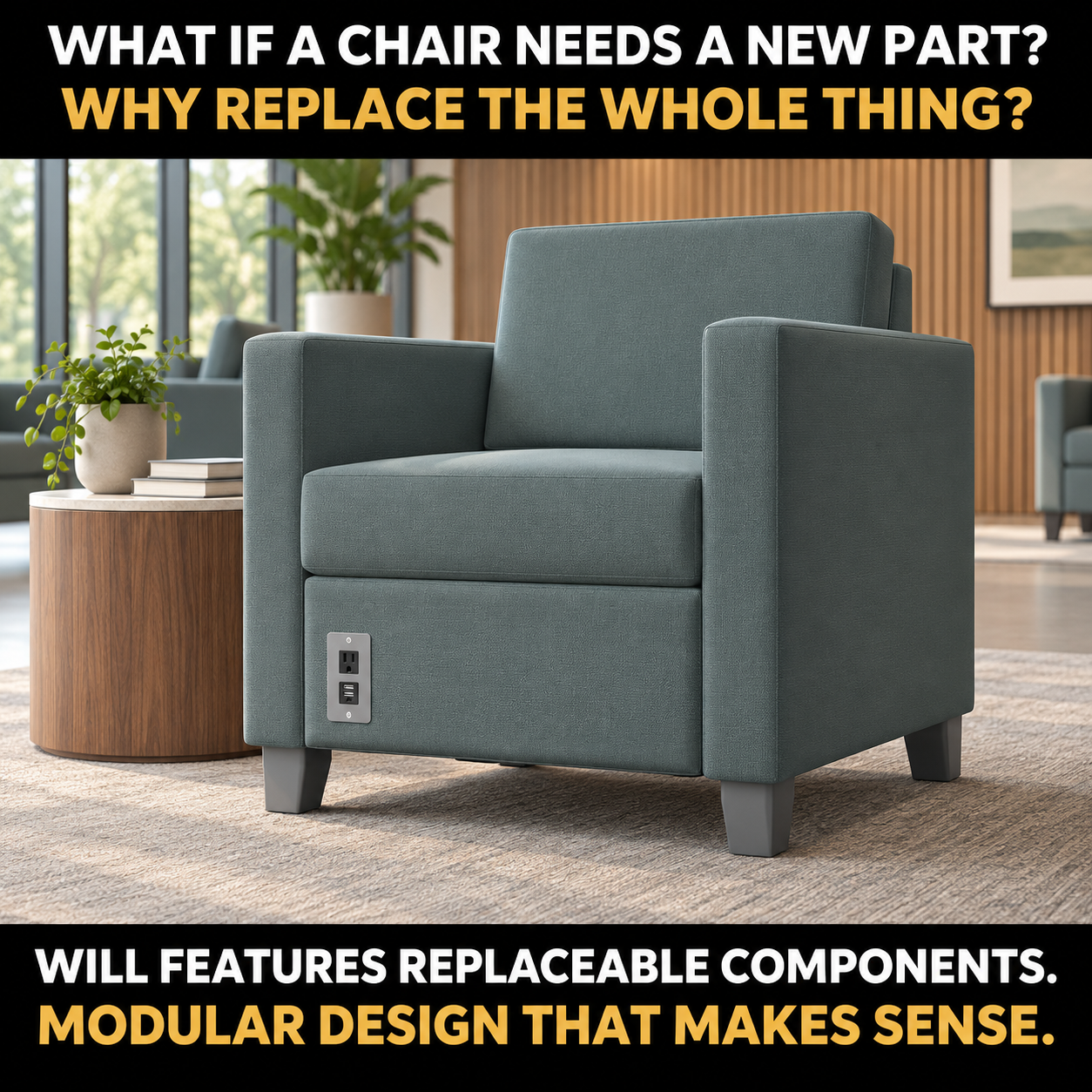
What If a Chair Needs a New Part? Why Replace the Whole Thing?
A More Practical Approach to Furniture Longevity
Commercial furniture experiences daily use.
In busy offices, waiting areas, and shared environments, seating may serve hundreds of different people over its lifetime.
Eventually, components can become worn or damaged. When that happens, the ability to address an individual part can influence how an organization maintains its furniture investment.
Traditionally, replacing an entire chair may seem like the simplest solution. But it isn't always necessary.
Nightingale Will features a modular design with easily replaceable components.
According to Nightingale, Will's components can be assembled in minutes without tools. Its fully upholstered modular wood frame is designed to provide strength and durability.
That approach introduces several practical advantages.
Maintenance flexibility
Individual components can be addressed without automatically requiring replacement of the entire chair.
Simplified assembly
Tool-free assembly reduces the complexity of putting the chair together.
Long-term furniture planning
For facilities managing multiple seating locations, serviceability becomes an important part of the specification conversation.
Consider a corporate reception area with several matching lounge chairs.
If one chair requires attention, the availability of replaceable components can help the facility team evaluate repair before considering complete replacement.
This doesn't eliminate wear or guarantee every component can be repaired indefinitely. But it creates an alternative worth considering.
For designers and facility managers, it's a reminder that durability isn't only about how furniture is built.
It's also about what happens when something needs attention.
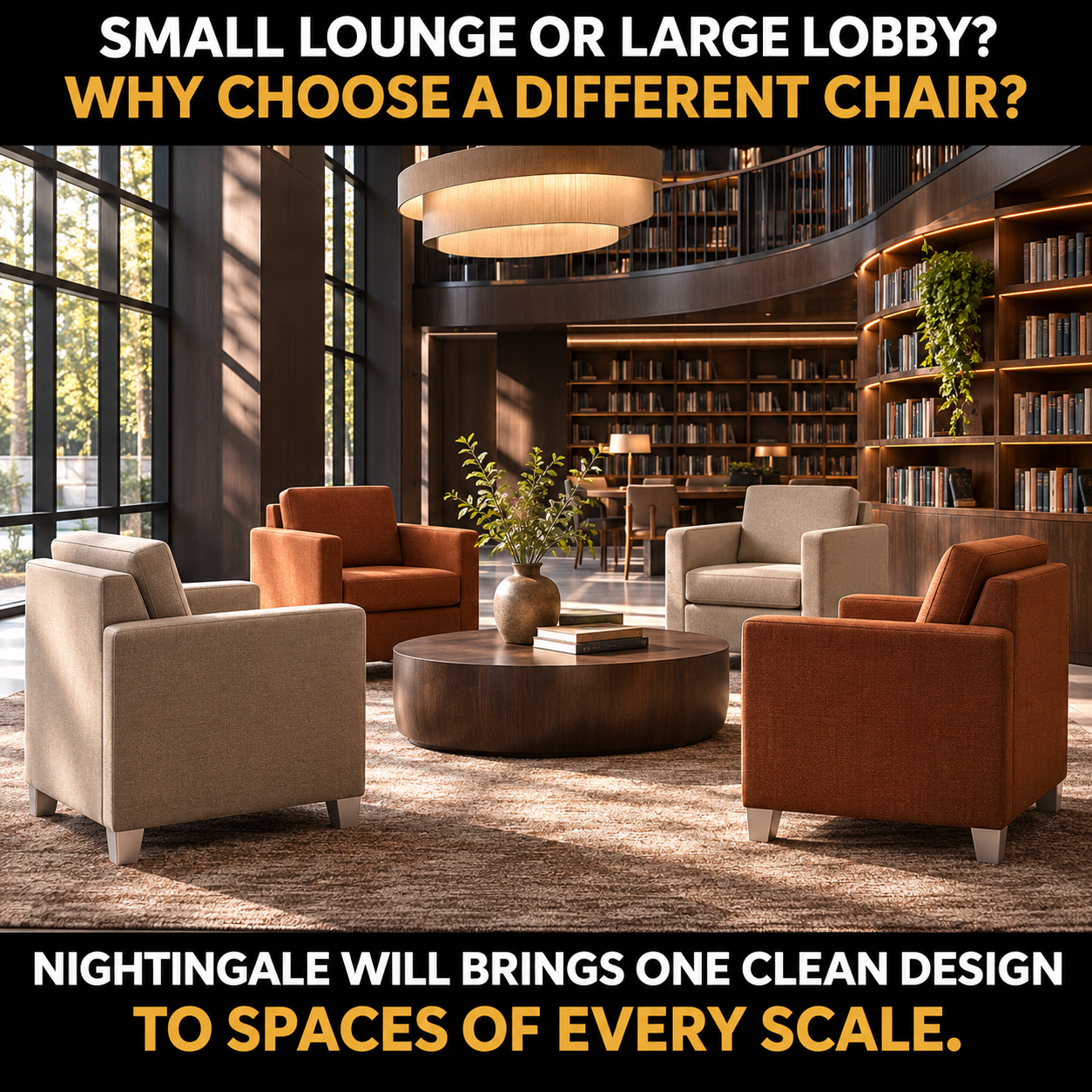
Small Lounge or Large Lobby? Why Choose a Different Chair?
One Design Language Across Multiple Spaces
Most commercial projects include more than one type of lounge environment.
A corporate headquarters might have a compact waiting area near a conference room, a larger reception lobby, and several informal collaboration spaces throughout the building.
Each area has different spatial requirements.
But that doesn't necessarily mean every space needs a different chair design.
Will's restrained appearance makes it suitable for a variety of interior settings without introducing unnecessary visual complexity.
Its squared arms, upholstered surfaces, and straightforward geometry create a clean, tailored look that can complement contemporary architectural environments.
The chair's balanced proportions also make it easier to consider in both smaller and larger seating arrangements.
In smaller spaces, a pair of Will chairs can establish a conversation area without requiring oversized lounge furniture.
In larger environments, multiple chairs can be arranged around tables or distributed throughout a reception space to create coordinated seating zones.
For designers, maintaining a consistent seating language offers advantages beyond appearance.
A coordinated furniture selection can connect different areas of a building, support a unified interior concept, and reduce the number of unrelated products involved in a project.
Upholstery selections can also help distinguish one location from another while preserving the same underlying design.
A neutral textile might suit a quiet professional waiting area, while a richer color could give a collaboration lounge more personality.
The seating remains recognizable even when the surrounding environment changes.
The goal isn't to make every space look identical. It's to create consistency without sacrificing flexibility.
our Guests Need a Place to Sit. What About a Place to Charge?
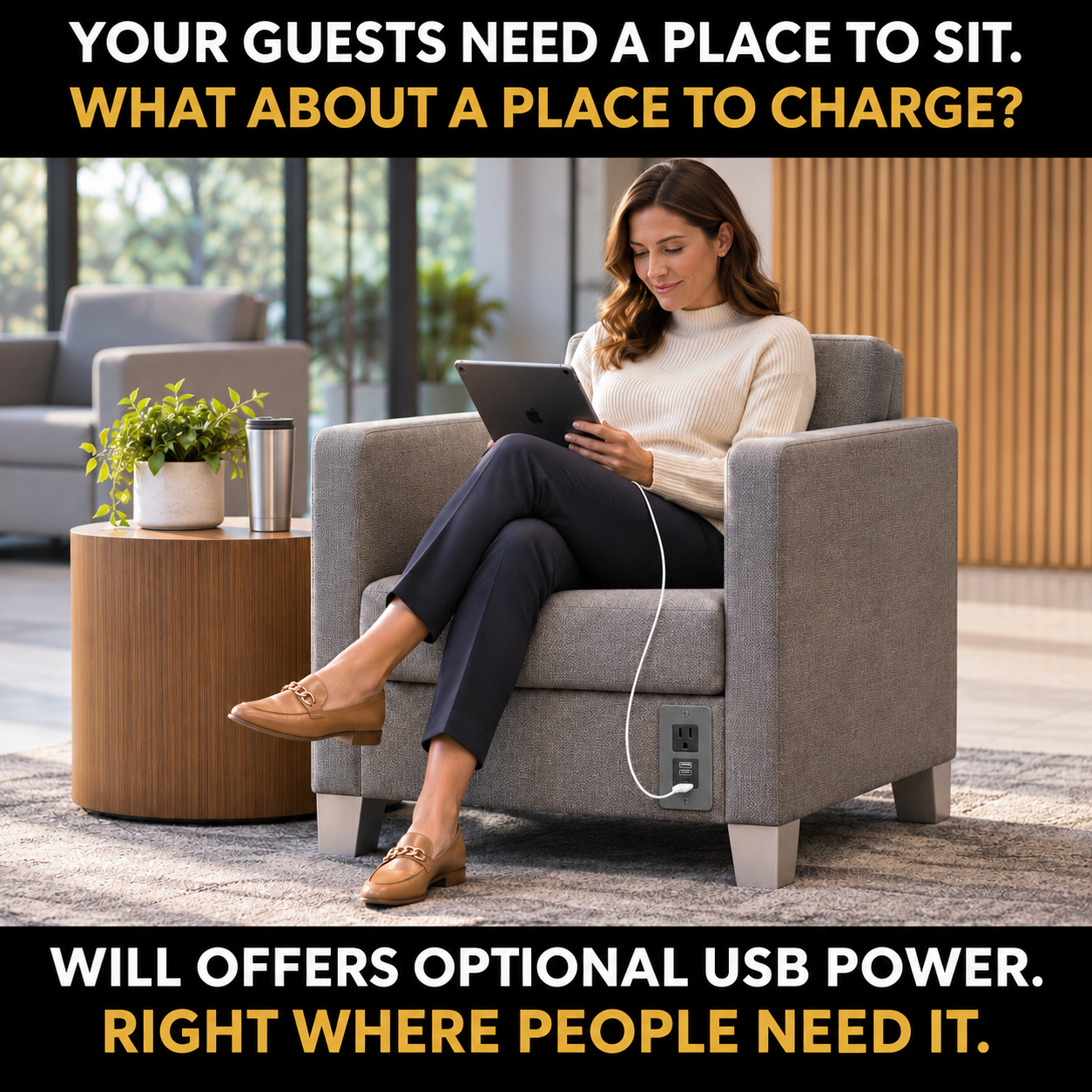
Integrated Power for Connected Environments
The expectations surrounding lounge seating have changed.
People don't always put their phones and tablets away when they leave their desks.
In many commercial environments, lounge spaces now accommodate activities that would previously have been limited to dedicated workstations.
Visitors review documents while waiting for appointments. Employees check messages between meetings. Guests use their devices during extended visits.
In these situations, access to power can make a meaningful difference.
Will offers an optional integrated electrical module featuring USB connectivity and a power receptacle.
The option can be specified on either the left or right side of the chair, allowing designers to consider how users will access the connection within a particular furniture arrangement.
This is a relatively small feature with practical implications.
Consider a healthcare waiting area.
A visitor who needs to charge a phone may otherwise have to locate a wall outlet, move seating, or remain close to an inconvenient location.
A lounge chair with integrated power provides another option.
The same consideration applies to corporate lobbies, shared workplace lounges, and other environments where people may spend time waiting or working.
Power integration also becomes part of the furniture planning discussion.
Rather than assuming devices will always be charged at desks, specifiers can identify which lounge locations would benefit from convenient access to electricity.
Not every chair needs this feature.
But in locations where device charging is valuable, specifying the appropriate power option can make the environment more useful.
It's important to confirm electrical requirements, outlet configuration, and placement during the specification process.
Good lounge design should account for what people actually do while seated—not simply where they sit.
Not Every Lounge Has Room to Spare. Why Should Comfort Take Over?
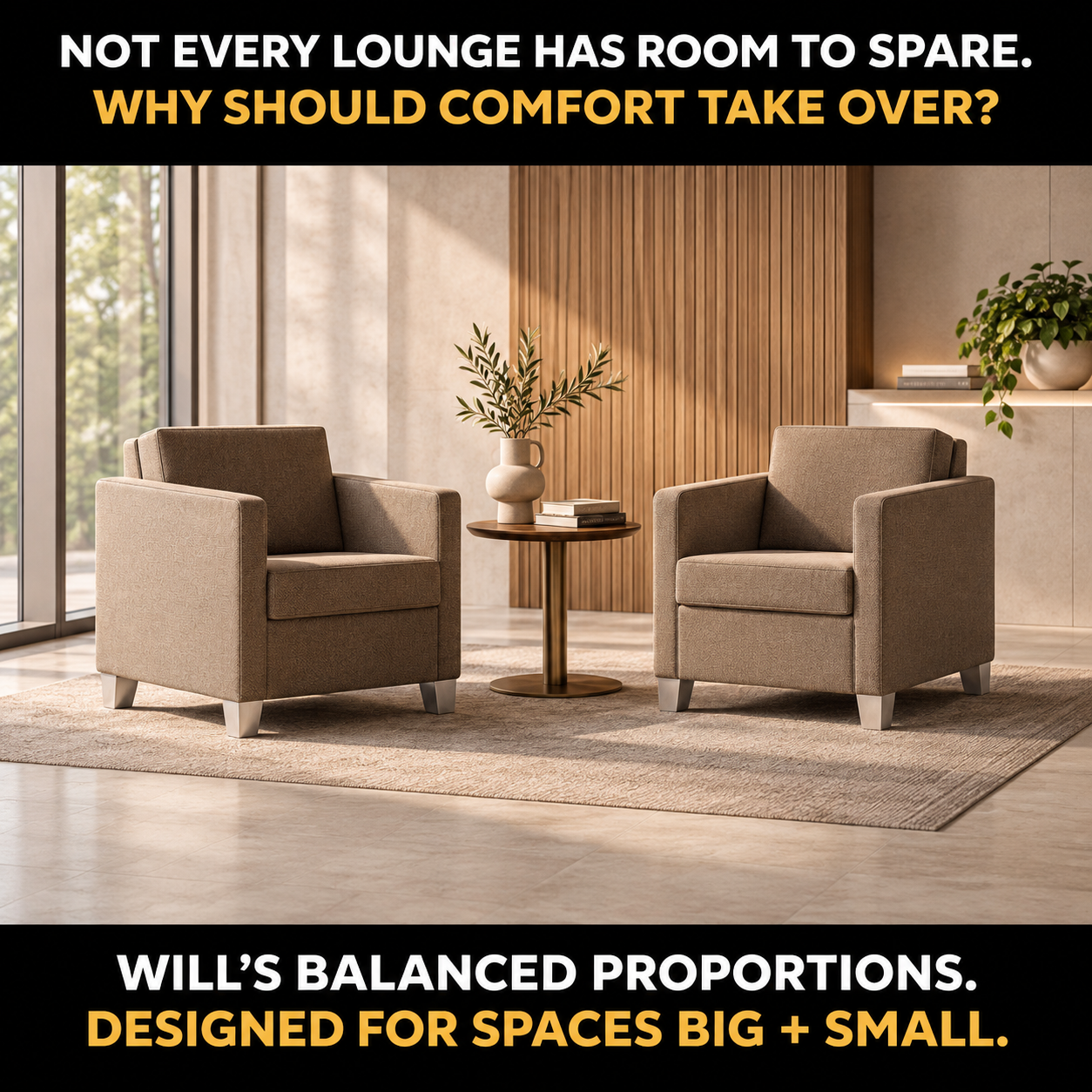
Balanced Proportions for Efficient Space Planning
Comfortable lounge seating sometimes comes with a spatial trade-off.
Deep seats, oversized arms, and large frames can create an inviting appearance, but they can also consume valuable floor area.
In a spacious hospitality lounge, that may be entirely appropriate.
In a compact workplace waiting area, however, furniture dimensions can influence circulation, accessibility, and the overall usability of the room.
Will takes a more measured approach.
Its design combines a substantial upholstered seat with defined arms and a relatively compact architectural form.
Rather than relying on exaggerated proportions, the chair uses straightforward geometry to establish a comfortable lounge experience.
The published dimensions for Nightingale Will model 950 are:
Overall width: 29 inches
Overall depth: 30 inches
Overall height: 28.5 inches
Seat height: 18 inches
Seat width: 21.5 inches
Seat depth: 20 inches
These measurements provide a useful starting point for designers evaluating furniture arrangements.
For example, imagine a small reception area where seating must coexist with a circulation path, side table, and entrance to an adjacent meeting room.
Selecting furniture based on verified dimensions makes it easier to establish appropriate clearances and determine whether a proposed arrangement works.
In a larger lounge, the same dimensions help designers plan groupings that feel intentional rather than overcrowded.
Of course, compact dimensions alone don't guarantee suitability for every space.
Clearances, circulation, user needs, and applicable accessibility requirements must still be considered.
But accurate furniture dimensions allow those decisions to be made early rather than discovered after installation.
The best lounge chair isn't necessarily the largest. It's the one that provides the right experience for the space available.
What Matters Most When Specifying Will?
The four considerations above point toward a broader lesson.
Commercial lounge furniture should be evaluated as part of the building's overall user experience—not simply as decorative furniture.
For architects, interior designers, dealers, and facility managers, the specification conversation should include several questions:
How will the space be used?
A brief waiting area and a workplace collaboration lounge may require different arrangements, even when using the same chair.
How much room is available?
Published dimensions should be considered alongside circulation routes, furniture spacing, and accessibility requirements.
Will users need access to power?
Optional electrical features should be evaluated based on the actual activities expected in the space.
What happens when the furniture requires maintenance?
Replaceable components and straightforward assembly can be valuable considerations for facilities responsible for long-term furniture management.
Does the seating support the overall design concept?
Consistent proportions, upholstery selections, and clean detailing can help connect different interior environments.
These questions make the selection process more intentional.
They also shift the conversation away from appearance alone and toward the practical value furniture delivers throughout its service life.
Additional Specification Considerations
Will model 950 includes a fully upholstered modular wood frame and standard brushed aluminum legs.
Nightingale also identifies optional braking casters, in addition to left- or right-side electrical configurations.
The product brochure lists ANSI/BIFMA approval and compliance with California TB117-2013.
As with any commercial furniture specification, project teams should confirm the selected configuration, finish, applicable documentation, and current manufacturer requirements before finalizing an order.
The Bottom Line
A Lounge Chair Should Do More Than Look Good
A successful commercial interior balances design intent with practical use.
The furniture needs to look appropriate for the environment, accommodate the people using it, and support the operational needs of the organization.
Nightingale Will demonstrates how thoughtful product design can address those considerations without unnecessary visual complexity.
Its modular construction supports serviceability. Its balanced proportions make it suitable for a range of lounge settings. Optional integrated power responds to modern device use. And its tailored appearance provides a consistent foundation for different interior design concepts.
Each feature contributes to a broader objective:
Creating lounge spaces that look intentional, function effectively, and remain practical over time.
For interior designers, architects, and dealers evaluating seating for commercial projects, Will offers a useful option worth exploring.
Let's Talk About Your Lounge Seating Project
Whether you're developing a corporate reception area, planning a workplace lounge, or evaluating seating for a shared public environment, The Ginger Grant Group can help you review Nightingale Will and determine whether it fits your project requirements.
Connect with The Ginger Grant Group to discuss available configurations, upholstery options, electrical features, and specification considerations.