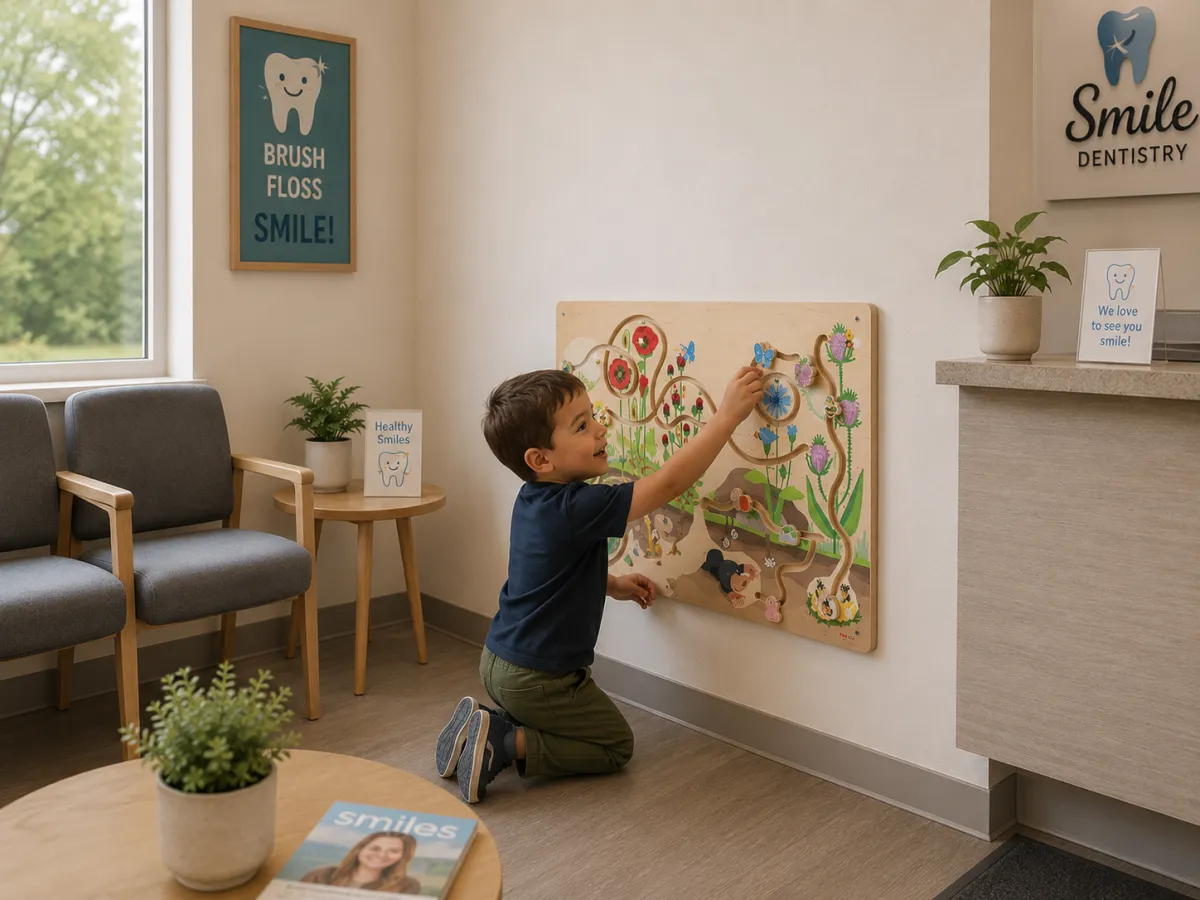
The Weekly Spec, Vol 7: Gressco Wall Activities
Designing Waiting Spaces That Actually Work for Families
Waiting areas are often treated as transitional spaces—places people simply pass through on the way to somewhere else. But in pediatric clinics, healthcare facilities, libraries, and family-focused environments, the waiting experience becomes part of the overall perception of care itself. When children are restless, overstimulated, or bored, the entire environment changes. Parents become stressed, circulation becomes chaotic, and the space begins working against the experience it was intended to support.
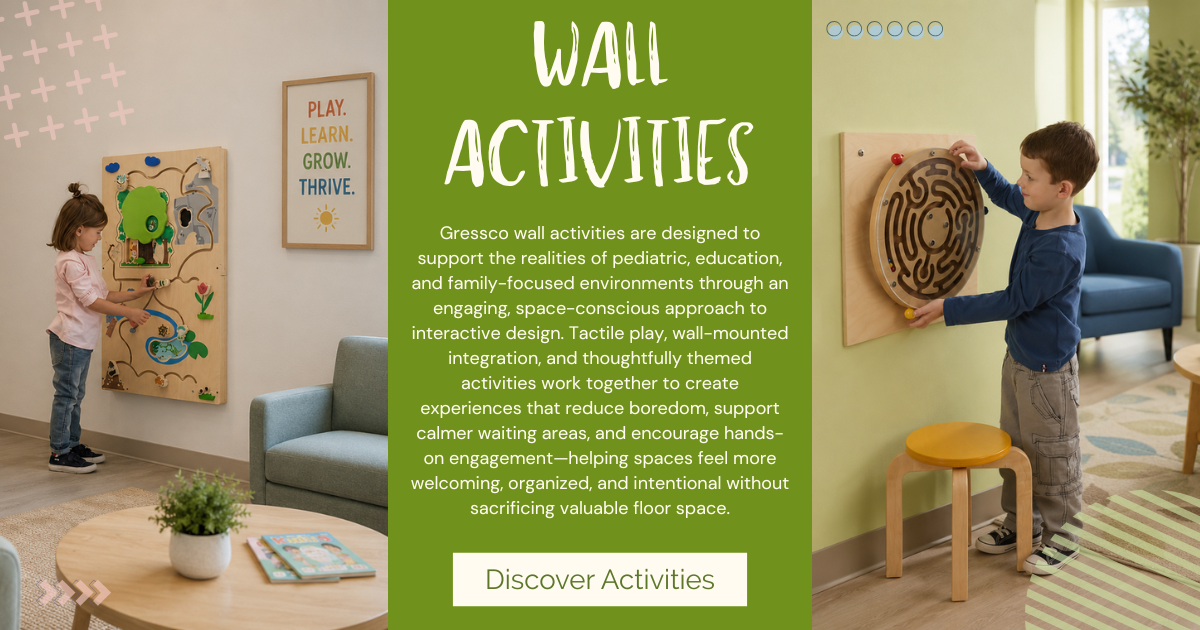
This week’s Weekly Spec explores how Gressco’s wall activities transform underutilized walls into engaging, interactive experiences that support calmer, more intentional environments. Through tactile play, space-saving integration, and screen-free engagement, these activities help designers create spaces that feel more welcoming, organized, and emotionally functional without sacrificing valuable floor area.
From Bored and Untamed to Mentally Engaged
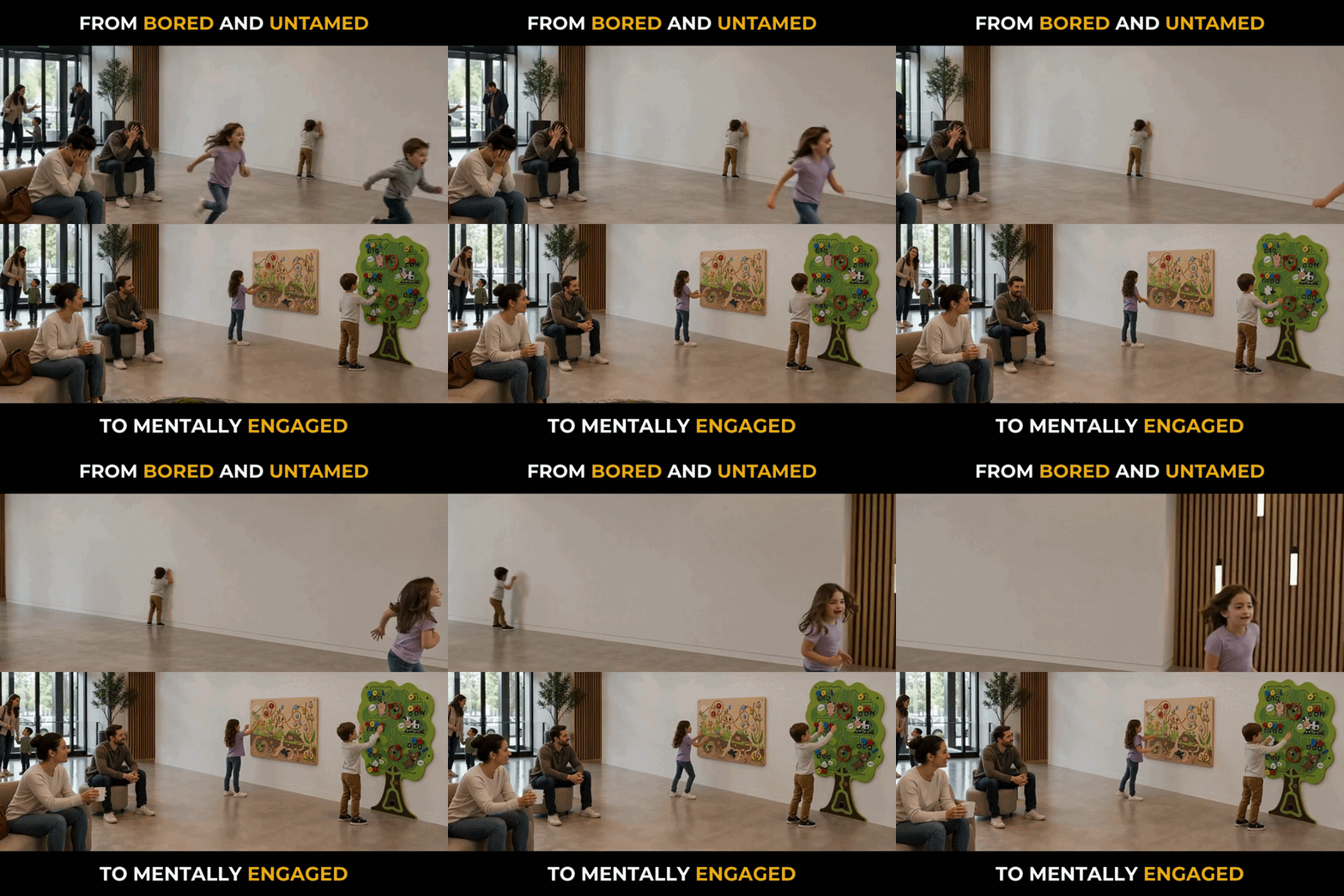
One of the biggest challenges in family-focused environments is managing energy levels in a way that doesn’t feel forced or chaotic. Children naturally look for stimulation, movement, and interaction—especially during periods of waiting. Without meaningful engagement, waiting rooms can quickly shift from calm to overwhelming.
What makes wall activities effective is that they redirect attention in a productive way. Instead of pacing, climbing on furniture, or becoming increasingly restless, children are given something tactile and mentally engaging to focus on. The environment itself begins supporting behavior rather than constantly reacting to it.
That shift impacts more than just the children in the room. Parents feel less stressed. Staff interactions become smoother. The overall atmosphere becomes calmer and easier to manage, even during busy periods.
When the Environment Becomes the Entertainment
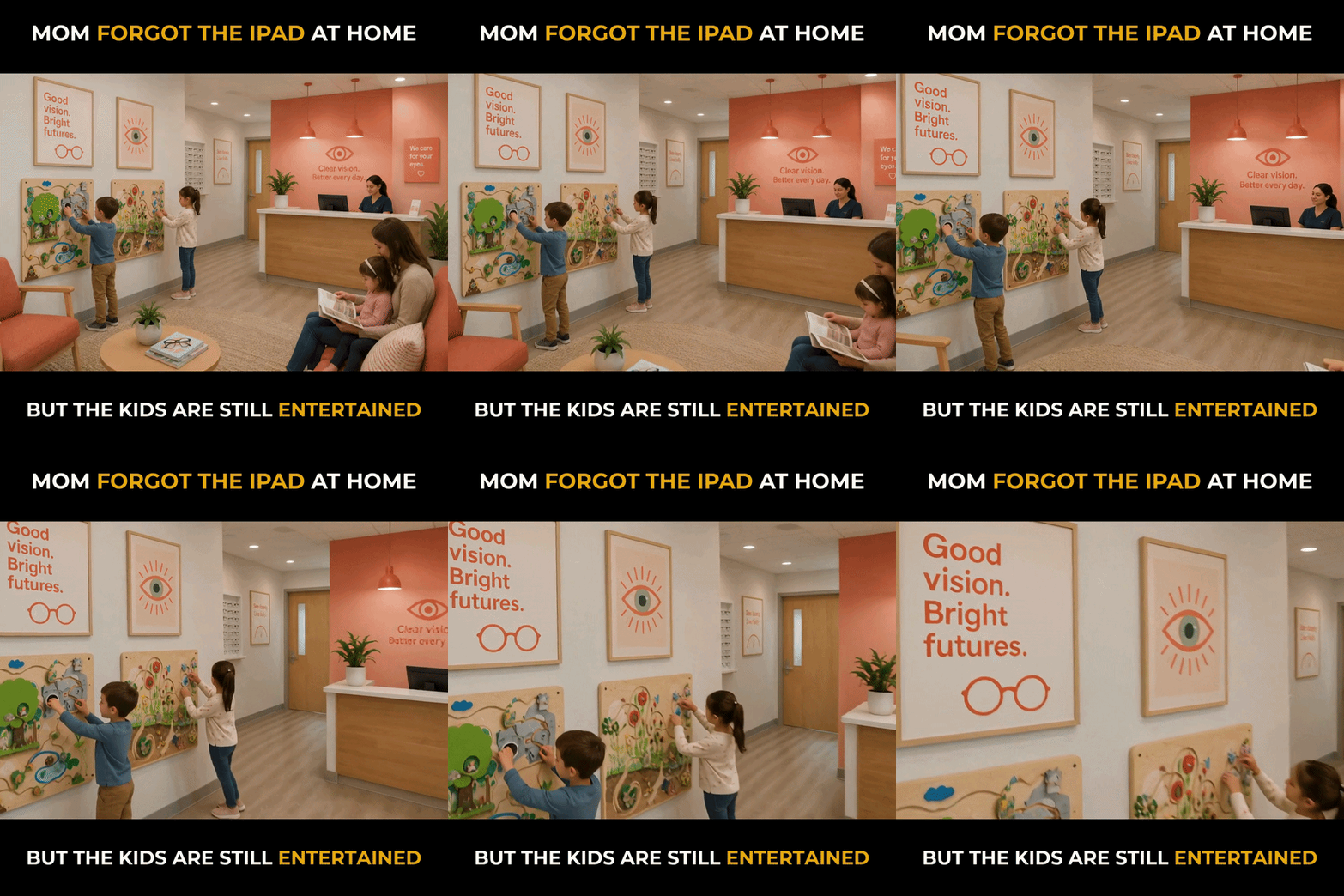
Modern waiting spaces often default to screens as the primary form of distraction, but that approach isn’t always ideal for pediatric and family-focused settings. More designers and healthcare facilities are looking for ways to create engagement that feels interactive, intentional, and integrated into the environment itself.
Wall activities create moments of focused interaction without relying on tablets or televisions. Tactile movement, visual exploration, and collaborative play encourage children to stay engaged naturally while helping the space feel more thoughtful and experience-driven.
Rather than adding more loose furniture, toys, or clutter into a room, the wall itself becomes part of the experience. The result is a cleaner, more intentional environment that still supports curiosity, movement, and play.
Where There’s a Wall, There’s a Way
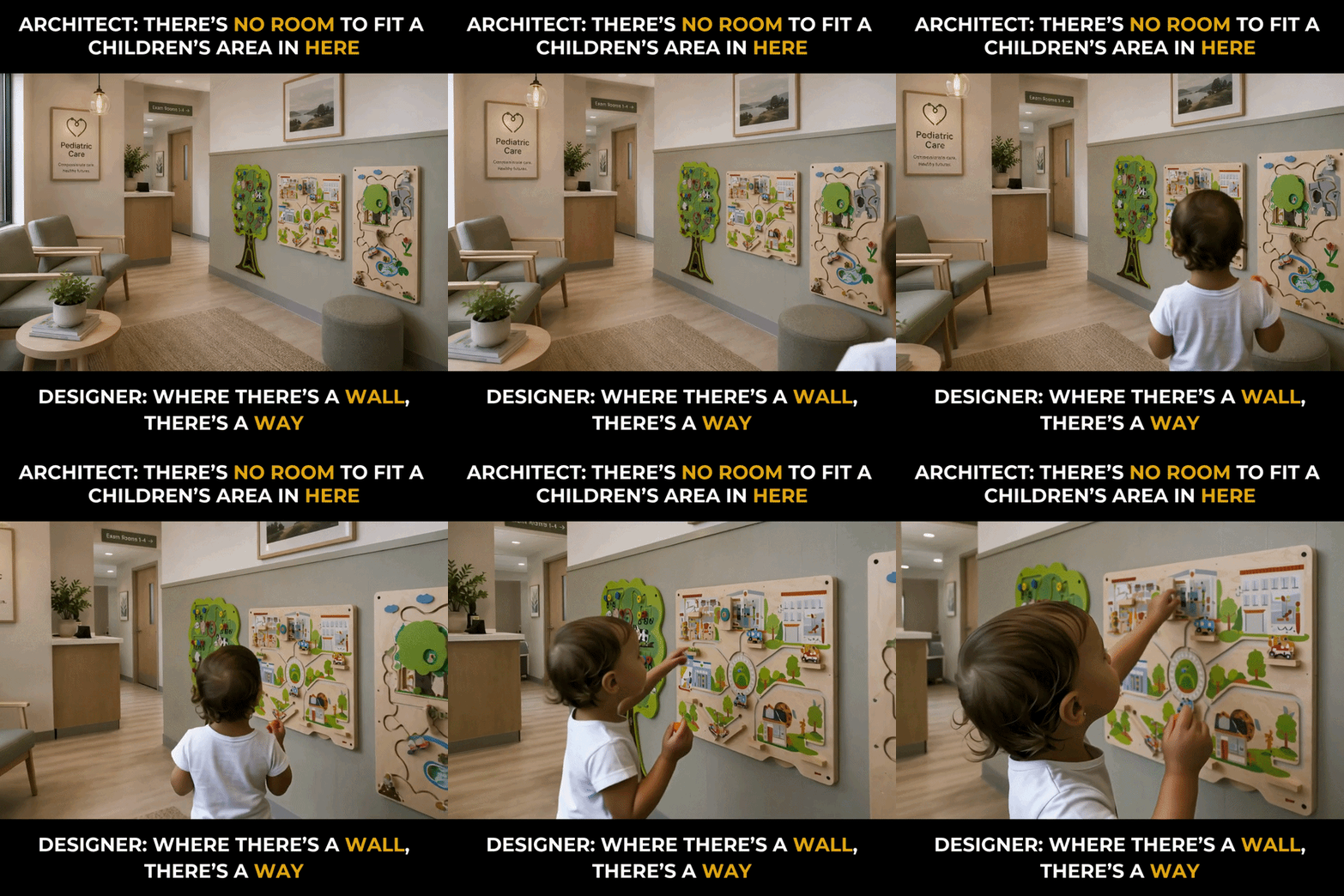
One of the most overlooked challenges in pediatric and family-focused design is balancing engagement with space efficiency. Many facilities simply don’t have the square footage to dedicate large portions of the floor plan to traditional play zones or oversized activity furniture.
That’s where wall-mounted activities become especially valuable.
By integrating interaction vertically instead of horizontally, designers can create meaningful engagement areas without disrupting circulation, overcrowding waiting rooms, or sacrificing seating capacity. This becomes especially important in healthcare clinics, libraries, and public environments where every square foot needs to serve multiple functions.
The best part is that these installations don’t feel like compromises. They still create moments of discovery, movement, and interaction while helping the overall environment remain organized, flexible, and visually calm.
Long Waits Feel Different in Better Environments
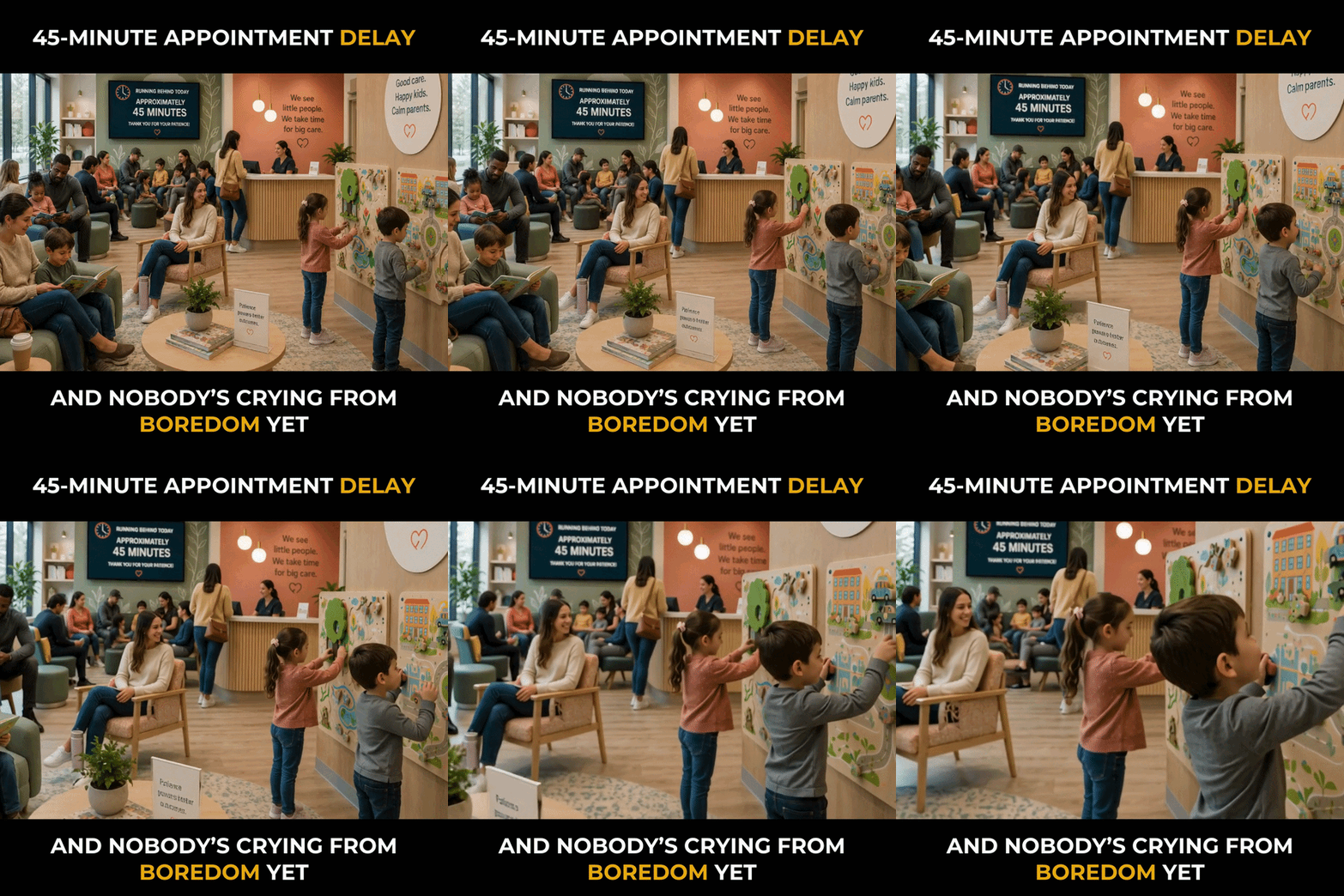
Children experience waiting differently than adults do. Even relatively short delays can feel overwhelming when there’s nothing to focus on, especially in unfamiliar healthcare settings. That emotional tension often spreads throughout the room, affecting parents, staff, and the overall atmosphere of the space.
Interactive wall activities help soften that experience by giving children something engaging and familiar to focus on during longer waits. Instead of boredom becoming the dominant experience, the environment creates moments of curiosity and interaction that make the space feel more human-centered and supportive.
The result isn’t just a quieter waiting room—it’s a more positive experience overall for everyone using the space.
What Matters Most
The biggest takeaway from this week is simple: the environments people remember most are the ones that actively support the experience of the people inside them. In pediatric clinics, libraries, and family-focused public spaces, small design decisions can dramatically influence comfort, stress levels, engagement, and perception of care.
Gressco’s wall activities help transform passive waiting areas into intentional, interactive environments through space-conscious design and tactile engagement. By reducing clutter, supporting calmer atmospheres, and creating meaningful moments of interaction, these solutions help spaces feel more welcoming, organized, and thoughtfully designed for both children and caregivers alike.
If you’re designing a pediatric clinic, library, healthcare facility, or family-focused environment, we can help determine where wall activities fit within the overall experience and how they can support both functional planning and user engagement goals.