The Weekly Spec, Vol 22: Nightingale's Tonik Lounge Chair
A Little Retro. A Lot More Versatile.
How a distinctive silhouette, multiple base options, responsive movement, and resilient comfort give Tonik a place in modern commercial interiors
There is no shortage of safe lounge seating.
Soft curves. Quiet upholstery. A silhouette designed to work almost anywhere—and be remembered almost nowhere.
Nightingale’s Tonik takes a more confident approach. Inspired by retro design but built for contemporary commercial spaces, Tonik brings character to lounges, reception areas, collaborative settings, meeting spaces, and hospitality-inspired workplaces without becoming a novelty piece.
Its shape catches the eye first. The specification possibilities and performance details are what allow it to stay useful long after that first impression.
Personality Without the Performance
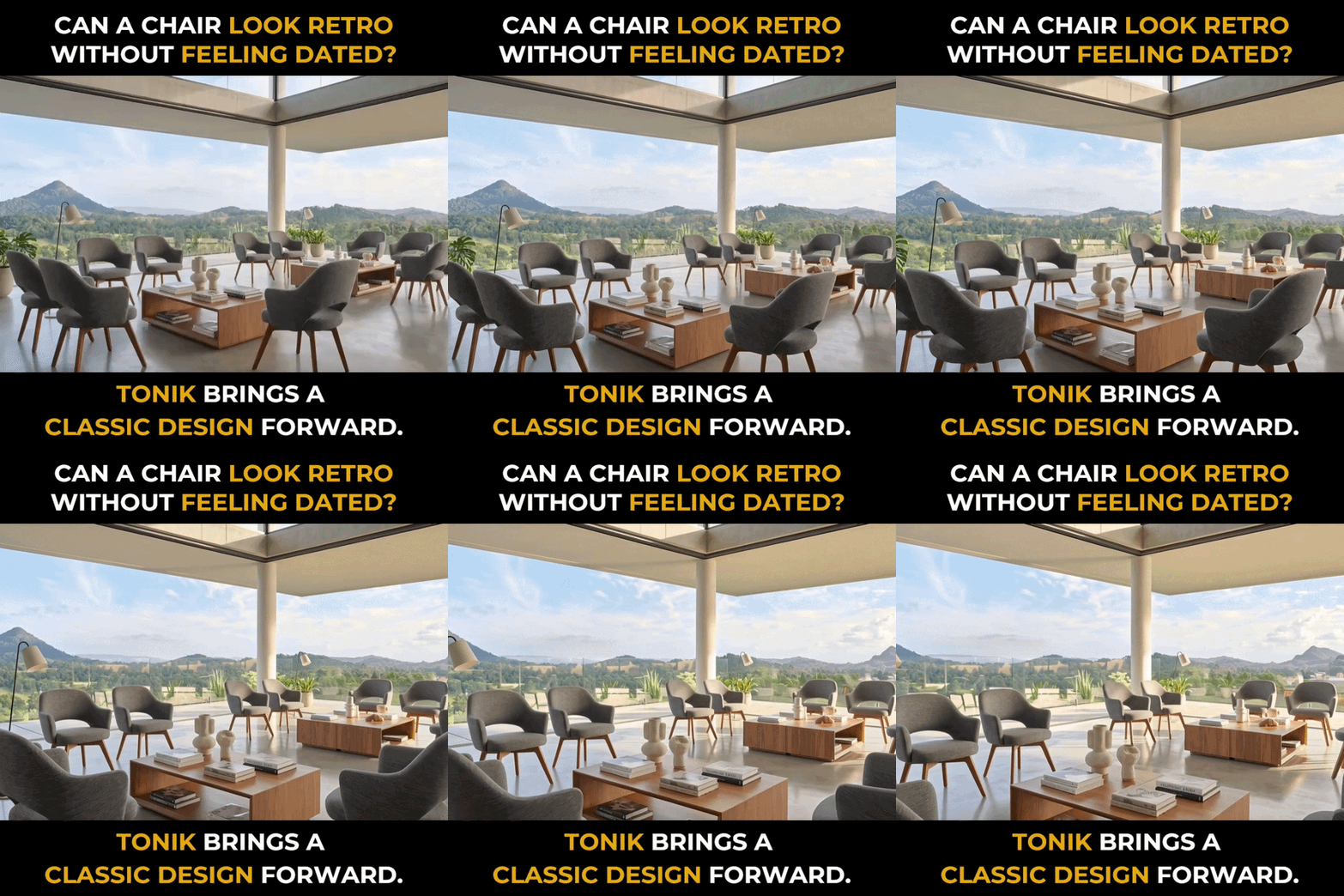
Can lounge seating have personality without taking over the room?
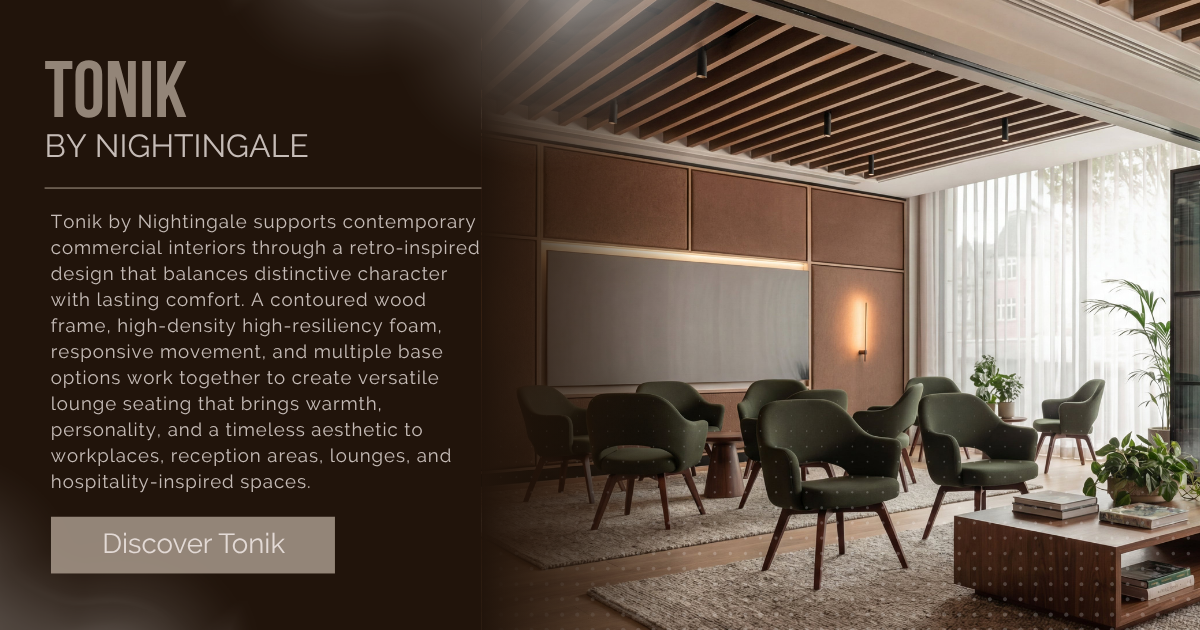
Tonik’s curved back, integrated arms, open lower profile, and compact proportions give it a distinct retro-inspired character. It feels familiar without looking like a reproduction, allowing designers to introduce a stronger silhouette without turning the entire room into a theme.
That balance matters in commercial interiors. A chair with too little character can disappear into the furniture plan, while one with too much can dictate every finish and furnishing around it.
Tonik sits comfortably between those extremes. It can become a focal point through colour and contrast or settle into a more restrained palette while still contributing shape and visual rhythm.
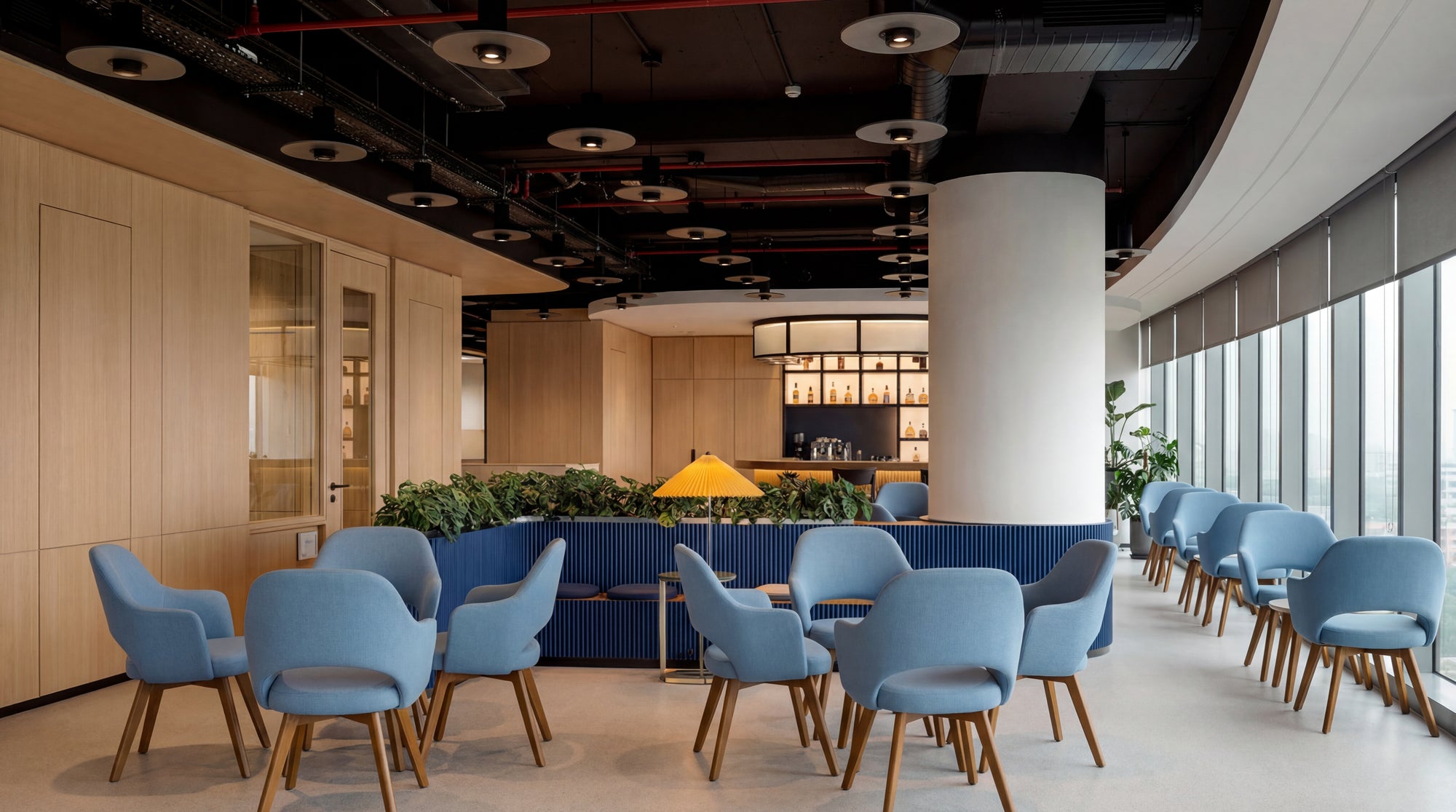
In a reception area, it helps create a memorable first impression. In a workplace lounge or collaborative space, it adds warmth to an environment that might otherwise feel overly task-oriented. In hospitality settings, its familiar curves can make the space feel inviting without sacrificing a current design language.
A little retro. A lot of character.
When the Conversation Moves
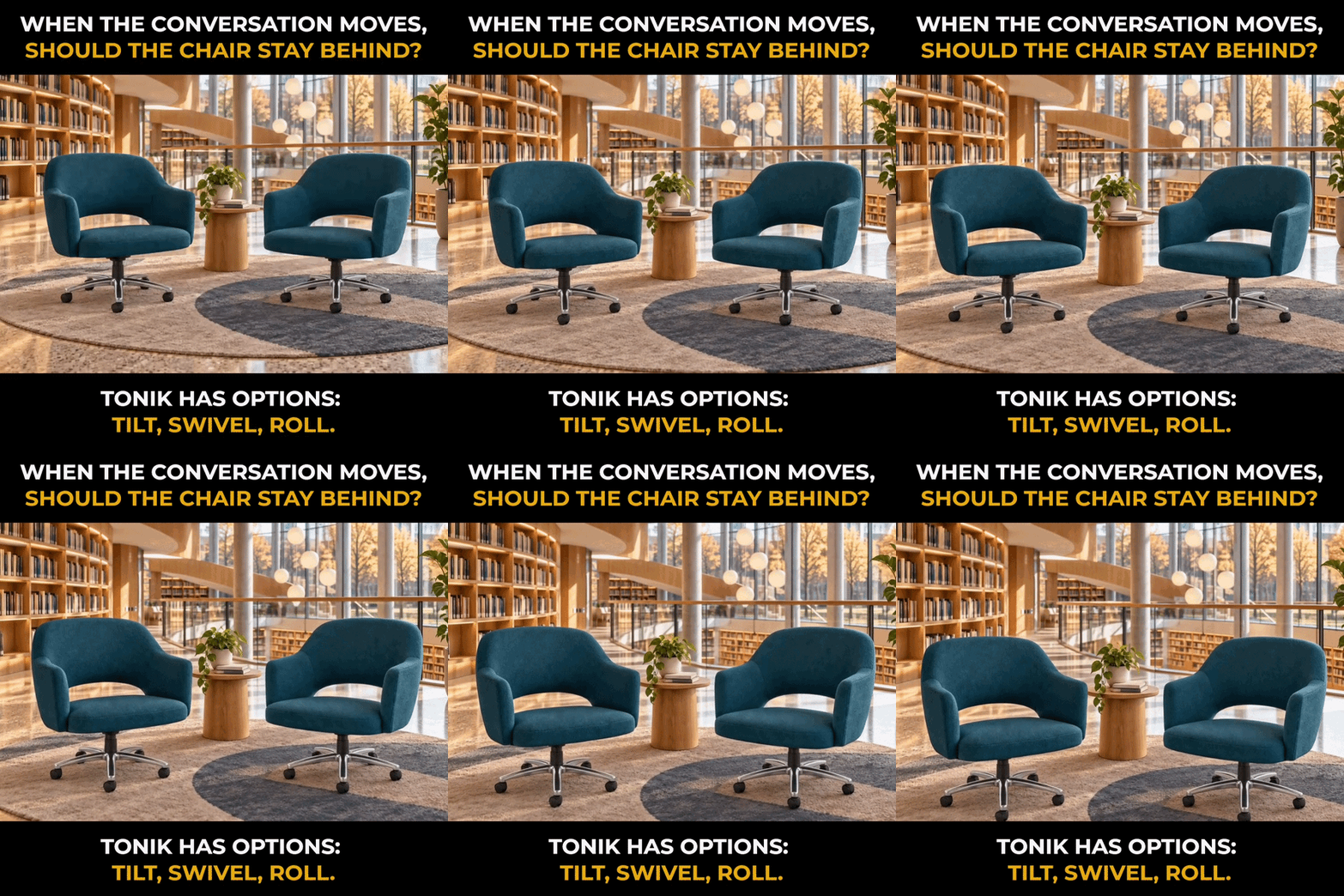
Lounge conversations rarely remain completely still.
Someone turns to include another person. A quick discussion becomes a longer meeting. Attention moves from a colleague to a screen and back again. Seating designed for these spaces should be able to respond naturally.
Tonik can be specified with a swivel-tilt mechanism that supports that movement. Its tension control can be tightened for a more secure feel or loosened to allow freer tilt, while a single-position tilt lock gives the user another level of control.
Those functions help Tonik move beyond the expectations of a conventional lounge chair. The user can reorient toward different people or activities without repeatedly lifting and repositioning the chair.
Caster options can add further mobility where the layout needs to change more frequently. This makes Tonik particularly relevant for collaborative offices, informal meeting zones, touchdown spaces, libraries, education environments, and multipurpose areas where seating needs to participate in the conversation rather than remain fixed at its edge.
When the conversation moves, the chair does not have to stay behind.
One Silhouette. Different Ways to Specify It.
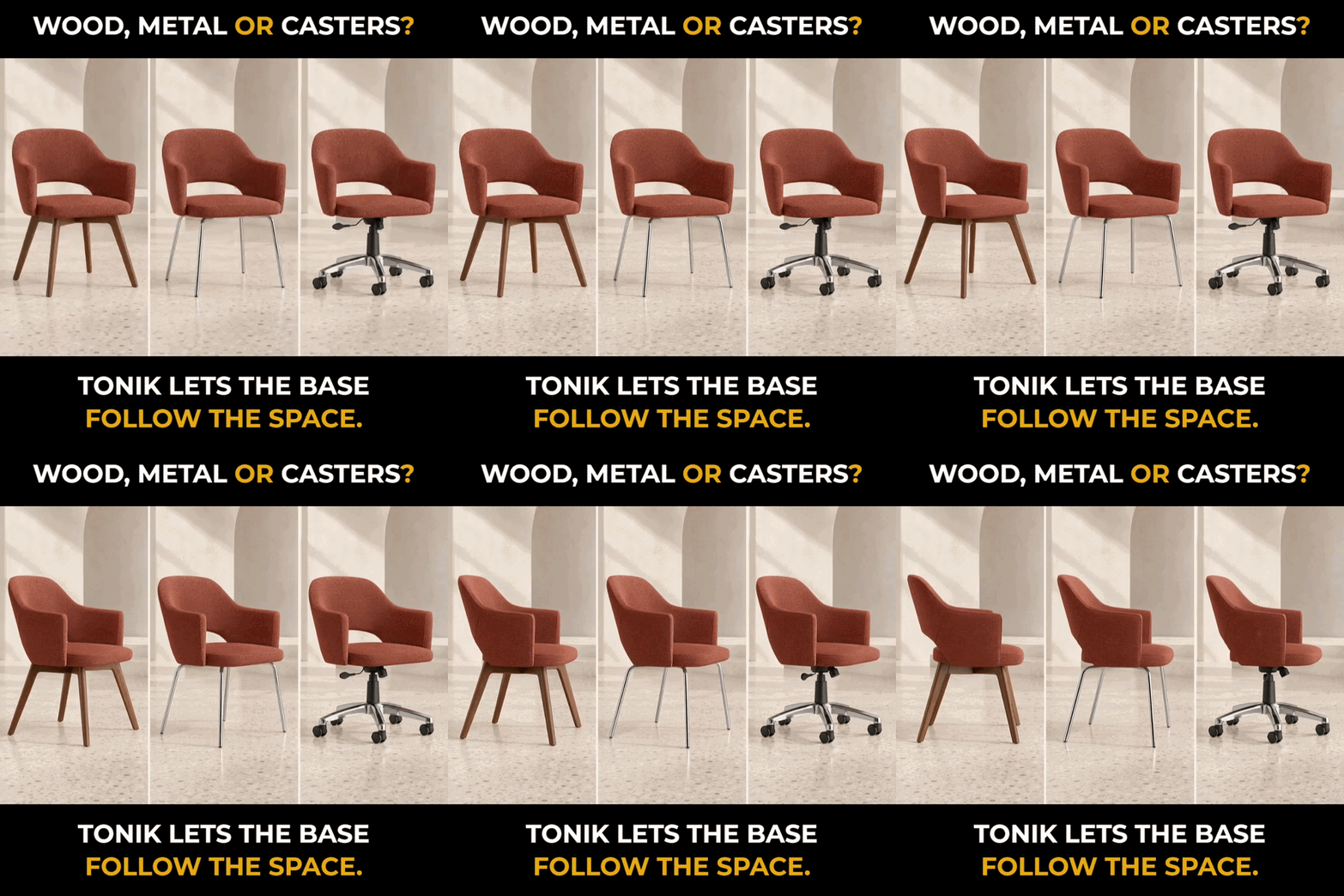
The right chair can still be the wrong specification if its base does not suit the space.
A lounge setting may benefit from the warmth of wood legs. A meeting or reception area may call for the lighter visual profile of metal legs. A collaborative environment may need the mobility of casters and the responsiveness of a swivel-tilt base.
Tonik allows the same recognizable upper silhouette to take on different roles through its base configuration.
Wood legs can reinforce the chair’s residential and hospitality character, particularly alongside natural materials, softer finishes, and warm architectural palettes. Metal legs create a cleaner, more streamlined expression that can sit comfortably within contemporary commercial interiors. The caster configuration introduces movement while maintaining Tonik’s upholstered, lounge-oriented presence.
For designers, this provides continuity without forcing every application to function identically. Tonik can appear across several areas of a project while being adapted to the practical requirements of each one.
For dealers and specifiers, that flexibility can also simplify the broader furniture story. Rather than selecting unrelated chairs for every setting, one consistent design language can move from waiting areas and private offices to collaborative zones and informal meeting spaces.
The chair remains recognizably Tonik. The way it works within the room can change.
Retro Look. Current Comfort.
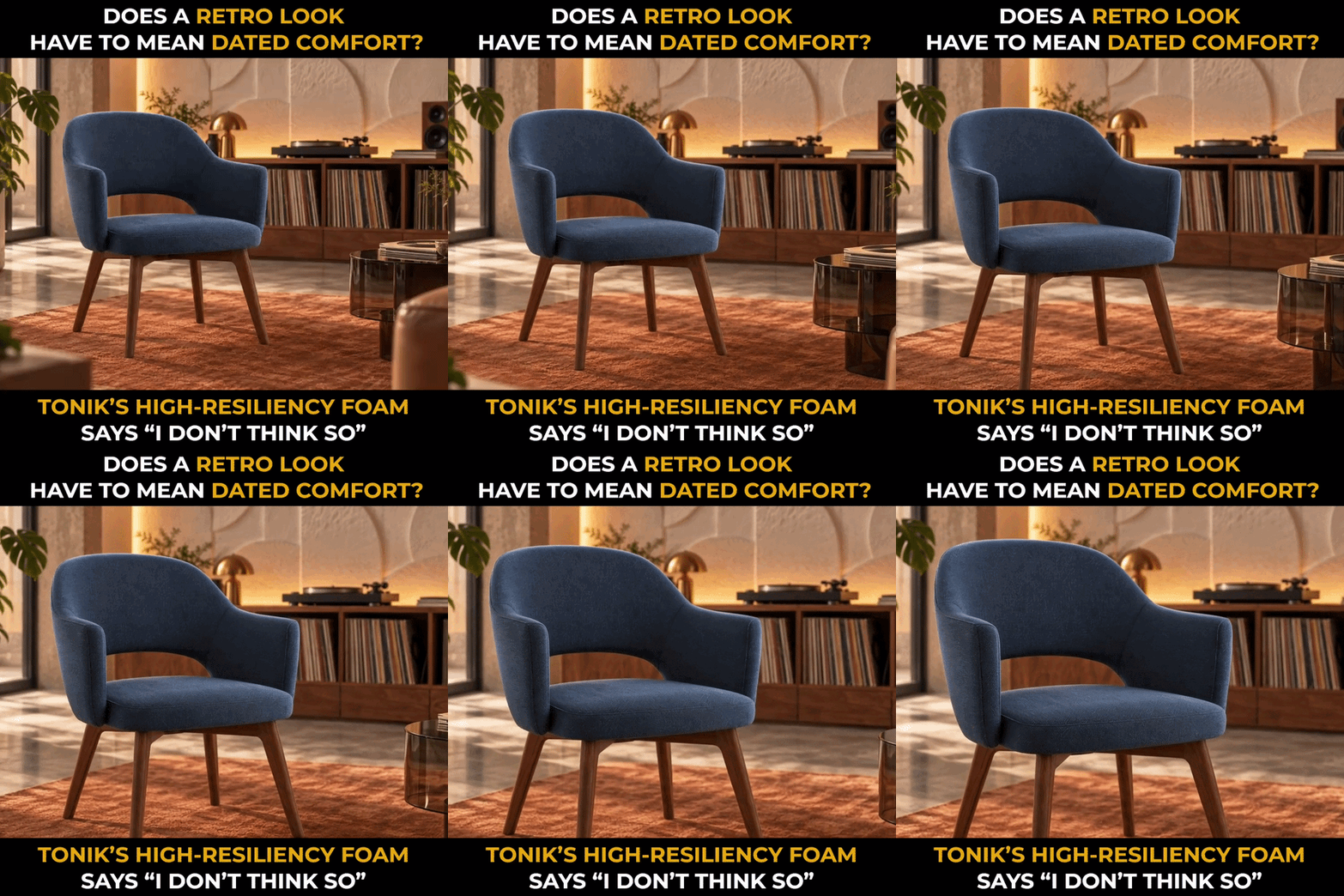
Retro-inspired furniture can introduce warmth and personality, but commercial seating cannot rely on appearance alone.
Tonik is built around a contoured wood frame designed to provide strength and support. The frame is covered with high-density, high-resiliency foam intended to maintain lasting comfort through continued use.
That construction matters because the first sit is only part of the comfort conversation.
A commercial chair may be used by different people throughout the day, particularly in reception areas, collaborative settings, libraries, education spaces, and hospitality environments. The cushioning needs to feel inviting while recovering its shape and continuing to support the next person who uses it.
High-resiliency foam helps Tonik maintain that balance. It gives the chair the softness expected from lounge seating without allowing the design to feel overly relaxed, shapeless, or visually tired.
The result is a chair that references the past without depending on outdated expectations of performance.
Retro look. Dated comfort? Not Tonik.
Quality That Goes Beyond the Silhouette
Tonik’s visual character may lead the conversation, but its construction gives specifiers additional reasons to consider it.
Nightingale states that the chair’s components are made and tooled in North America. The caster configuration uses a five-prong polished aluminium base with a clear lacquer finish, supporting both mobility and stability.
Tonik is also produced in a 100% waste-free manufacturing facility that is ISO 14001 and ISO 9001 certified. These details may not be immediately visible in an installation, but they contribute to the larger specification story surrounding manufacturing, quality management, and environmental practices.
What Matters Most
Tonik brings together several qualities that are not always found in the same lounge chair: a memorable silhouette, multiple base expressions, options for movement, resilient cushioning, and a design language that can cross between workplace and hospitality-inspired settings.
Its value is not simply that it looks different.
It is that designers can use that distinctive form in different ways. Tonik can feel warm on wood legs, streamlined on metal legs, or more active with casters and swivel-tilt functionality. Upholstery can make it quiet or bold, while the open lower back and curved profile give every configuration a recognizable identity.
That versatility makes Tonik more than a retro-inspired accent chair. It becomes a flexible seating family for spaces that need personality, comfort, and practical performance to coexist.
The larger lesson is simple: character does not have to come at the expense of specification flexibility.
If you’re evaluating Tonik for a workplace, education, hospitality, reception, library, or collaborative project, The Ginger Grant Group can help you compare base configurations, upholstery options, movement requirements, and application possibilities for your space.