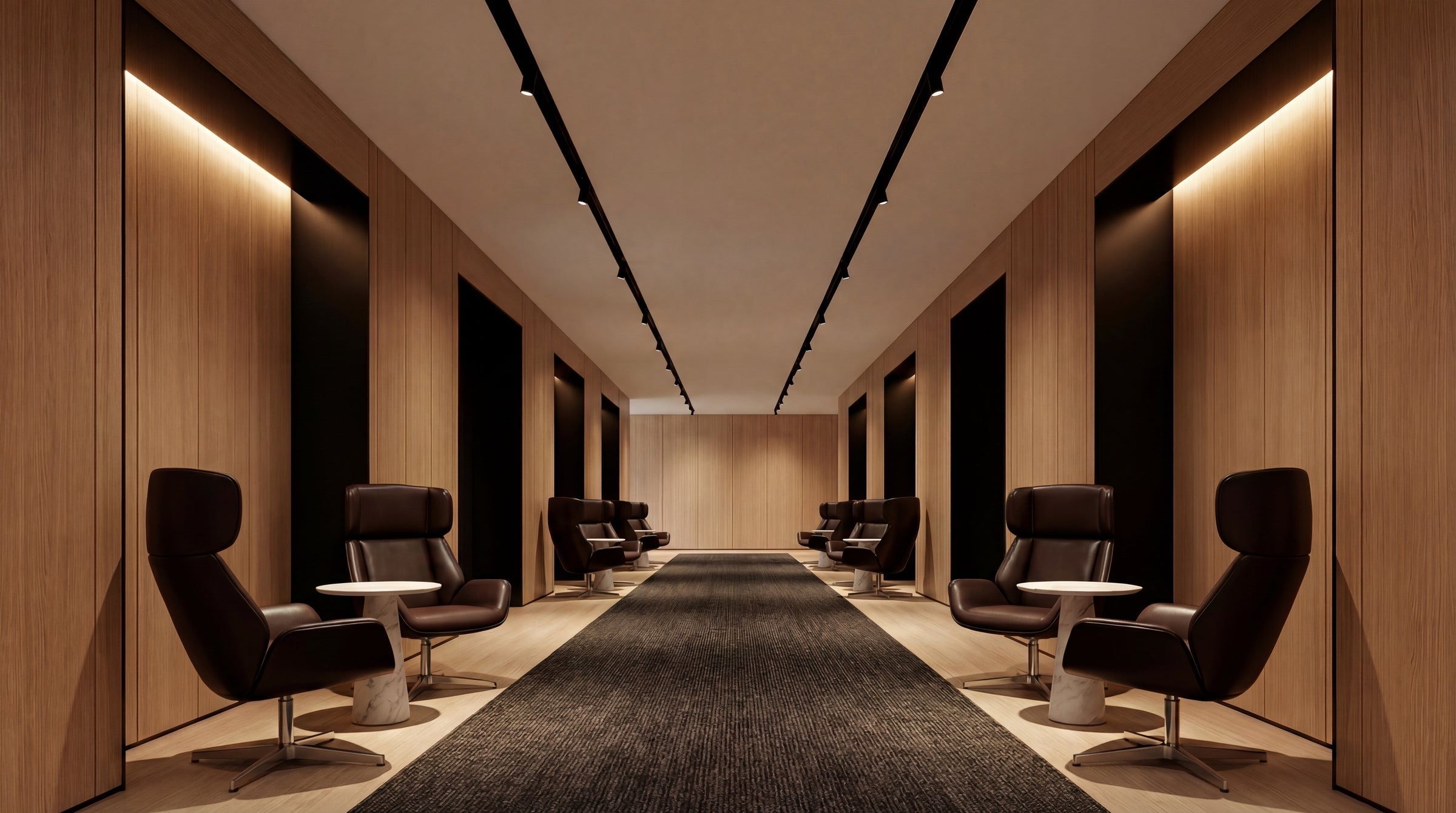
The Weekly Spec, Vol 31: Nightingale Stratford Lounge Chair
Nightingale Stratford: Where Modern Lounge Design Meets Everyday Comfort
A well-designed space does more than make a good first impression.
It creates an experience.
The materials establish the atmosphere. The lighting determines how the room feels. The furniture invites people to enter, stay, and engage with their surroundings.
And when the design is successful, everything seems to belong.
But one element can make the difference between a space that simply looks beautiful and one that people genuinely enjoy using.
Comfort.
In commercial interiors, comfort is not just about having somewhere to sit. It is about creating an environment that supports the way people use the space.
A corporate lounge might serve as a place to review documents, welcome guests, or hold informal conversations.
A hospitality environment may need seating that encourages visitors to relax.
An executive office may benefit from furniture that feels less formal without losing its professional appearance.
These environments call for seating that balances architectural character with everyday usability.
That is where Nightingale's Stratford lounge collection comes into the conversation.
With its sculpted high back, integrated headrest, generous upholstery, swivel functionality, and matching ottoman, Stratford brings a distinctly residential level of comfort into commercial environments.
Its clean geometric lines make it appropriate for contemporary interiors, while the range of upholstery options gives designers flexibility in how the chair complements the surrounding architecture.
Let's explore four reasons Stratford deserves a closer look.
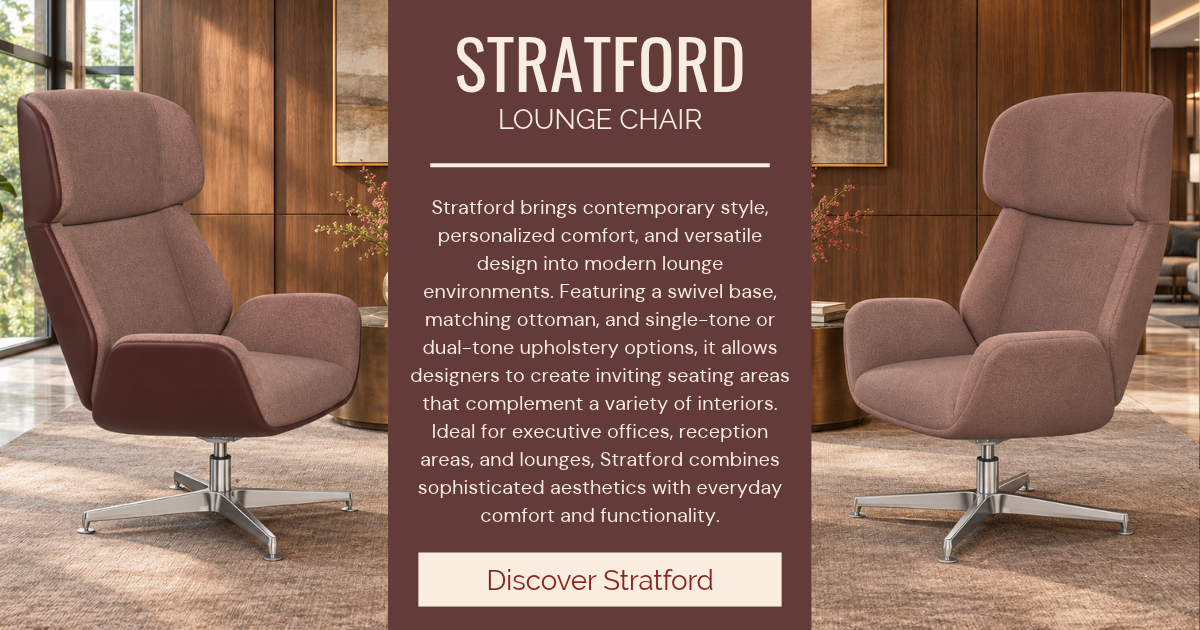
A Chair That Looks Inviting? It Should Feel That Way Too.
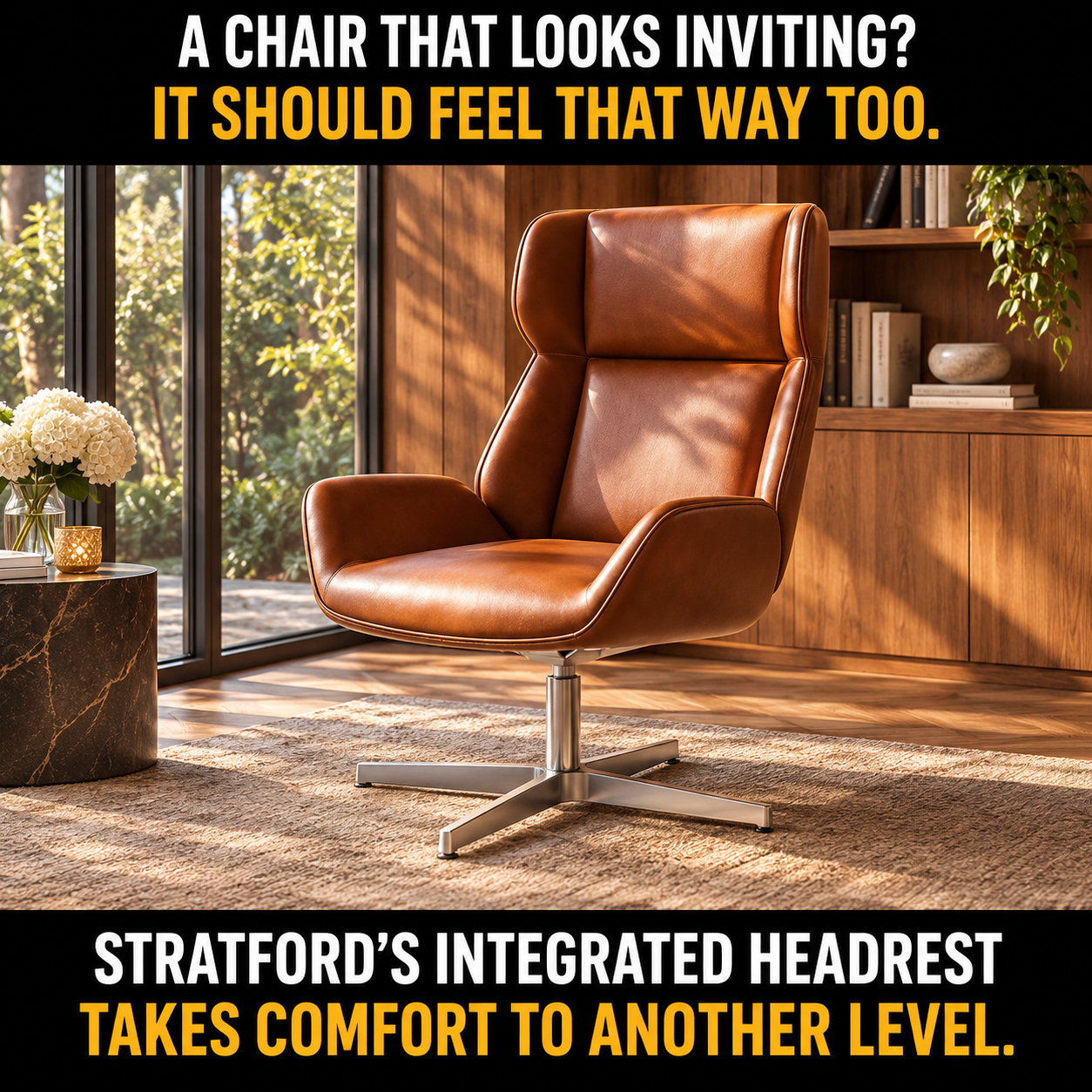
Stratford's integrated headrest takes comfort to another level.
Consider the seating in a typical corporate reception area.
Some chairs are selected primarily for their appearance. They complement the architecture, coordinate with the finishes, and look impressive in photographs.
But once someone sits down, the experience may be less inviting than the design suggests.
The seat might feel too firm. The backrest may be too low. Or the chair may offer little opportunity to settle into a more relaxed position.
That disconnect matters.
When a space is designed for waiting, relaxing, reading, or informal interaction, comfort needs to be considered alongside aesthetics.
A design that supports the whole seating experience
Stratford takes a different approach.
Its tall upholstered back extends into an integrated headrest, creating a continuous seating experience from the seat through the upper back.
The sculpted side panels add visual character while helping create a more sheltered seating position.
Rather than appearing as a conventional straight-backed lounge chair, Stratford's proportions suggest a more relaxed and supportive experience.
Nightingale uses high-density, high-resiliency foam in the seat and back, designed to provide cushioning and support.
The upholstered arms are integrated into the chair's distinctive geometric form.
Together, these elements help create a seating experience suited to environments where people may remain seated for more than a brief interaction.
Comfort influences the atmosphere of a room
A lounge chair communicates something about the space around it.
A minimalist upright chair may suggest a formal waiting area.
A deeply upholstered high-back chair can encourage a more relaxed experience.
Neither approach is automatically better.
The right choice depends on how the space is intended to function.
Stratford is particularly worth considering for:
Executive offices and private lounges
Corporate reception and waiting areas
Hospitality lounges and hotel suites
Quiet reading and relaxation spaces
Premium workplace amenity areas
Informal meeting environments
Its proportions make it an architectural presence without relying on excessive decoration.
The important takeaway: a chair should not only communicate comfort visually. It should deliver an inviting seating experience.
Stratford brings that consideration directly into its design.
Who Says a Lounge Chair Has to Sit Still?
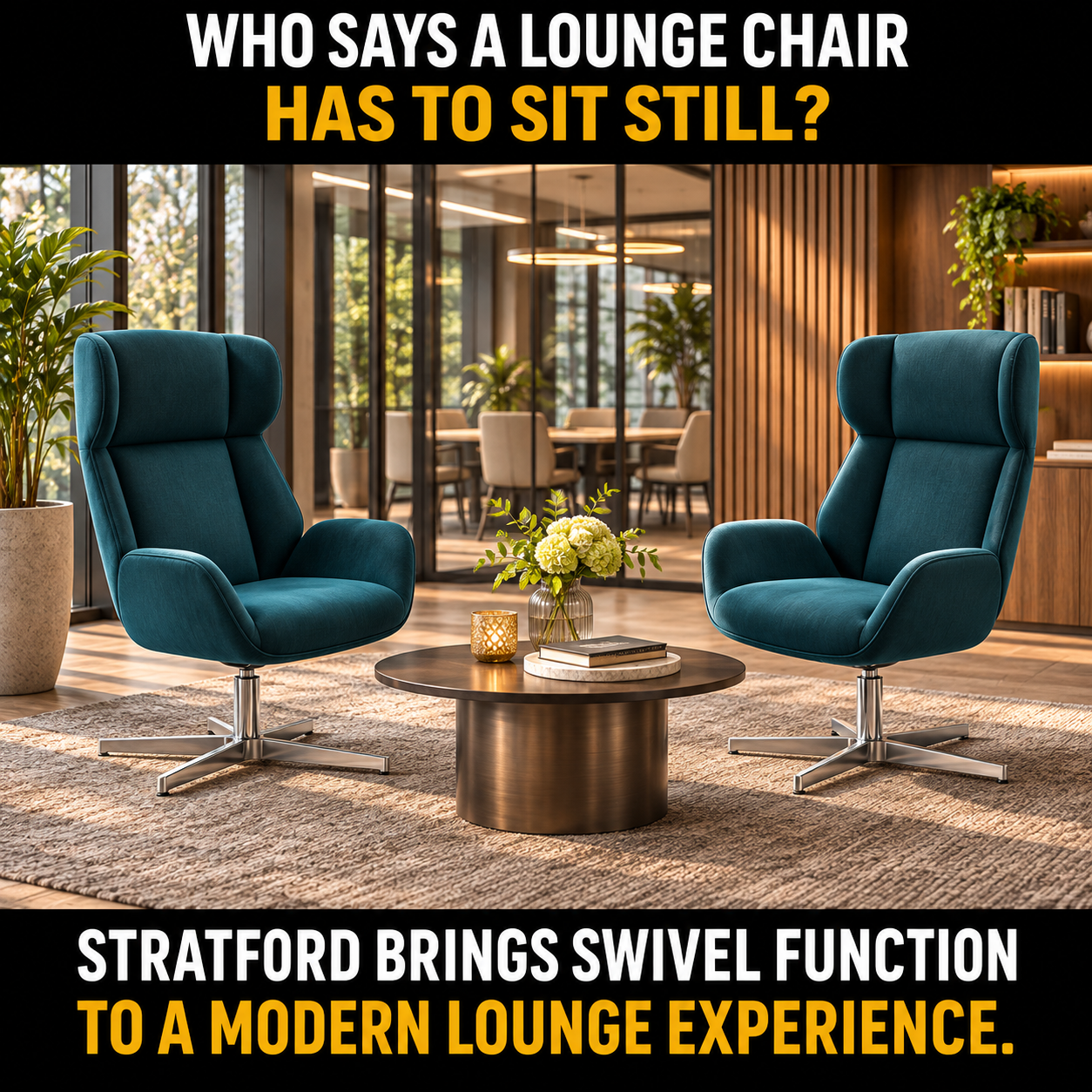
Stratford brings swivel functionality to a modern lounge experience.
Lounge seating is often imagined as something stationary.
A beautifully designed chair is positioned beside a table, arranged near a window, or placed opposite another chair.
The furniture establishes the layout, and the person using it adapts to that position.
But people rarely remain in exactly the same orientation throughout a conversation.
They turn to greet someone entering the room.
They face a colleague during a discussion.
They rotate toward a window, presentation, or nearby table.
These small movements are a natural part of how people interact with interior spaces.
Stratford accommodates that behavior through its swivel mechanism.
Movement without compromising the design
The Stratford lounge chair features a polished aluminum four-prong base with floor glides.
The base supports the chair's swivel functionality while maintaining a clean, contemporary appearance.
Unlike a conventional office task chair, Stratford does not rely on a wheeled five-star base.
Its form remains distinctly lounge-oriented.
That distinction is important in environments where designers want the flexibility of a swivel chair without introducing the visual character of workstation furniture.
The mechanism also includes a swivel-tilt function with a single-position lock and preset tension, along with pneumatic seat-height adjustment.
These features add functionality while preserving the chair's upholstered lounge identity.
Better suited to informal interaction
Imagine two Stratford chairs positioned across a low table in an executive collaboration lounge.
During a conversation, the occupants can turn toward one another.
If another person joins the discussion, the seating orientation can change without repositioning the entire chair.
When the conversation ends, the chairs can return to their original arrangement.
This may seem like a small advantage.
But details like these influence how naturally a space accommodates different activities.
In hospitality environments, a swivel lounge chair can provide similar flexibility.
Guests may orient themselves toward a companion, a view, or another area of the room.
The chair responds to the person rather than requiring the person to remain fixed in one direction.
The importance of the right application
Stratford's swivel function does not make it a substitute for a fully adjustable ergonomic task chair.
Its primary purpose remains lounge seating.
That means designers should evaluate it for environments where relaxed seating, occasional movement, and visual sophistication are the priorities.
For extended computer-based work, a dedicated task chair may be more appropriate.
The design opportunity is to introduce movement where a conventional stationary lounge chair might otherwise limit interaction.
Stratford shows how functional flexibility can exist within a refined upholstered form.
Comfortable Chair? Why Stop There?
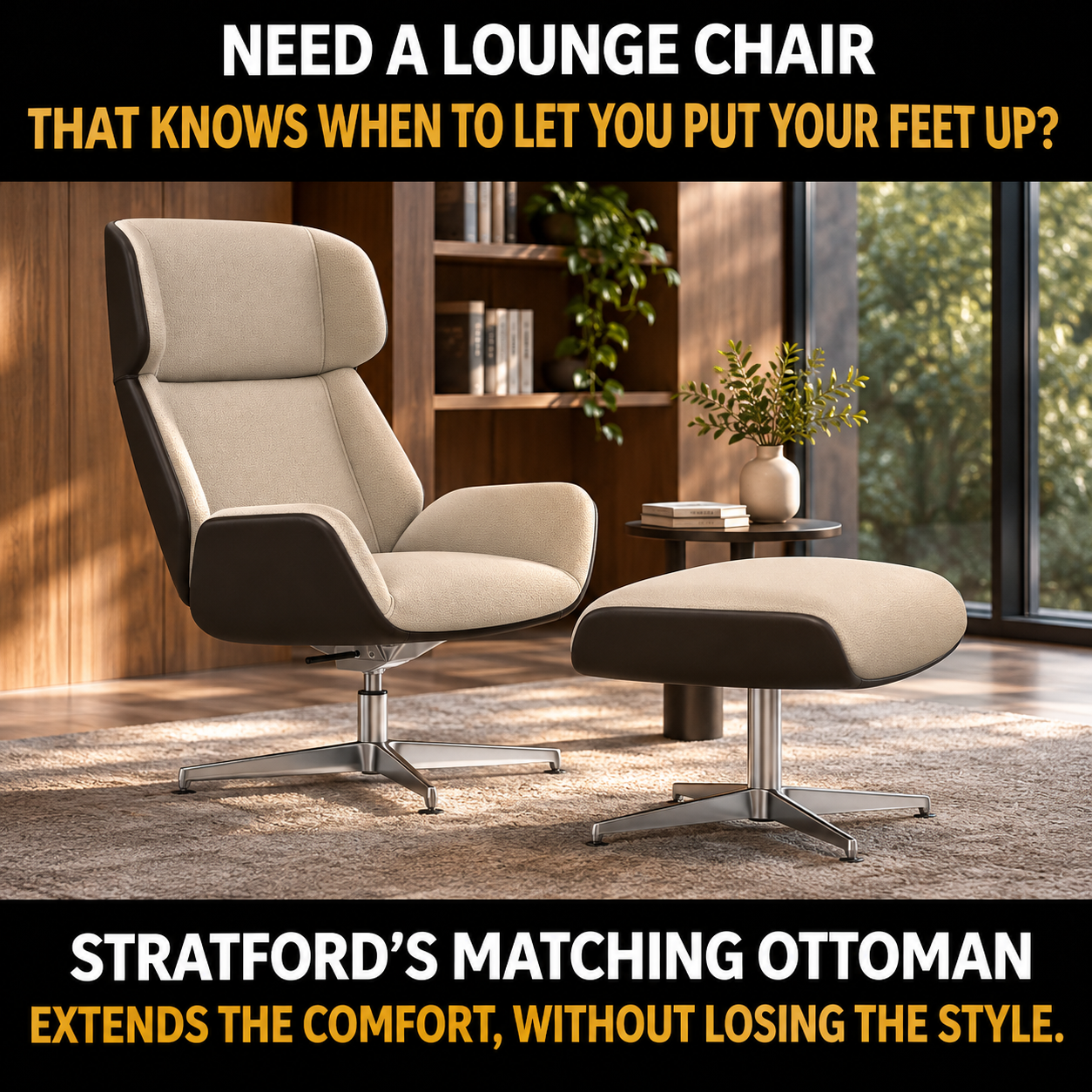
Pair Stratford with its matching ottoman to extend the comfort.
Some seating arrangements are designed for brief visits.
Others are meant to encourage people to settle in.
A private executive retreat, hospitality suite, or quiet workplace lounge may benefit from furniture that allows a more relaxed posture.
In these environments, the relationship between a chair and its surrounding furniture becomes especially important.
A lounge chair may provide the primary seating experience.
But a coordinating ottoman can extend that experience beyond the chair itself.
A companion piece designed to belong
Nightingale offers the Stratford lounge chair alongside a matching upholstered ottoman.
The Stratford 2001 chair and 2011 ottoman share a coordinated design language.
The ottoman features a generously upholstered cushion supported by a polished four-prong base.
Its proportions and styling complement the main chair without introducing an unrelated furniture form.
When specified together, the two pieces create a cohesive lounge arrangement.
The ottoman provides an opportunity to elevate the legs and adopt a more relaxed seating position.
That can be particularly appealing in environments where users have time to pause rather than simply move between meetings.
More flexibility in how the space is used
Consider a private executive office.
A traditional desk and task chair may occupy one side of the room.
On the other side, a Stratford chair and ottoman can create a separate space for reading, reviewing documents, or taking a brief break.
The arrangement establishes a clear distinction between focused desk work and more relaxed activities.
In a hospitality suite, the same pairing can help create a comfortable area for guests to unwind.
In a workplace amenity lounge, it may contribute to a quiet retreat away from more active collaboration areas.
The key is understanding how the furniture will be used.
A matching ottoman is not necessary for every installation.
But where relaxation is part of the design intent, it offers another way to support the experience.
A coordinated visual statement
There is also an aesthetic advantage.
When a chair and ottoman are designed as a collection, their proportions, detailing, and materials can be coordinated more easily.
The shared base design creates continuity.
Matching upholstery reinforces the relationship between the pieces.
And the arrangement can be integrated into a wider palette of tables, rugs, lighting, and architectural finishes.
The takeaway is simple: the right companion piece can make a lounge chair more versatile without disrupting the design.
Stratford's matching ottoman allows comfort and visual consistency to work together.
One Chair. Two Ways to Finish It.
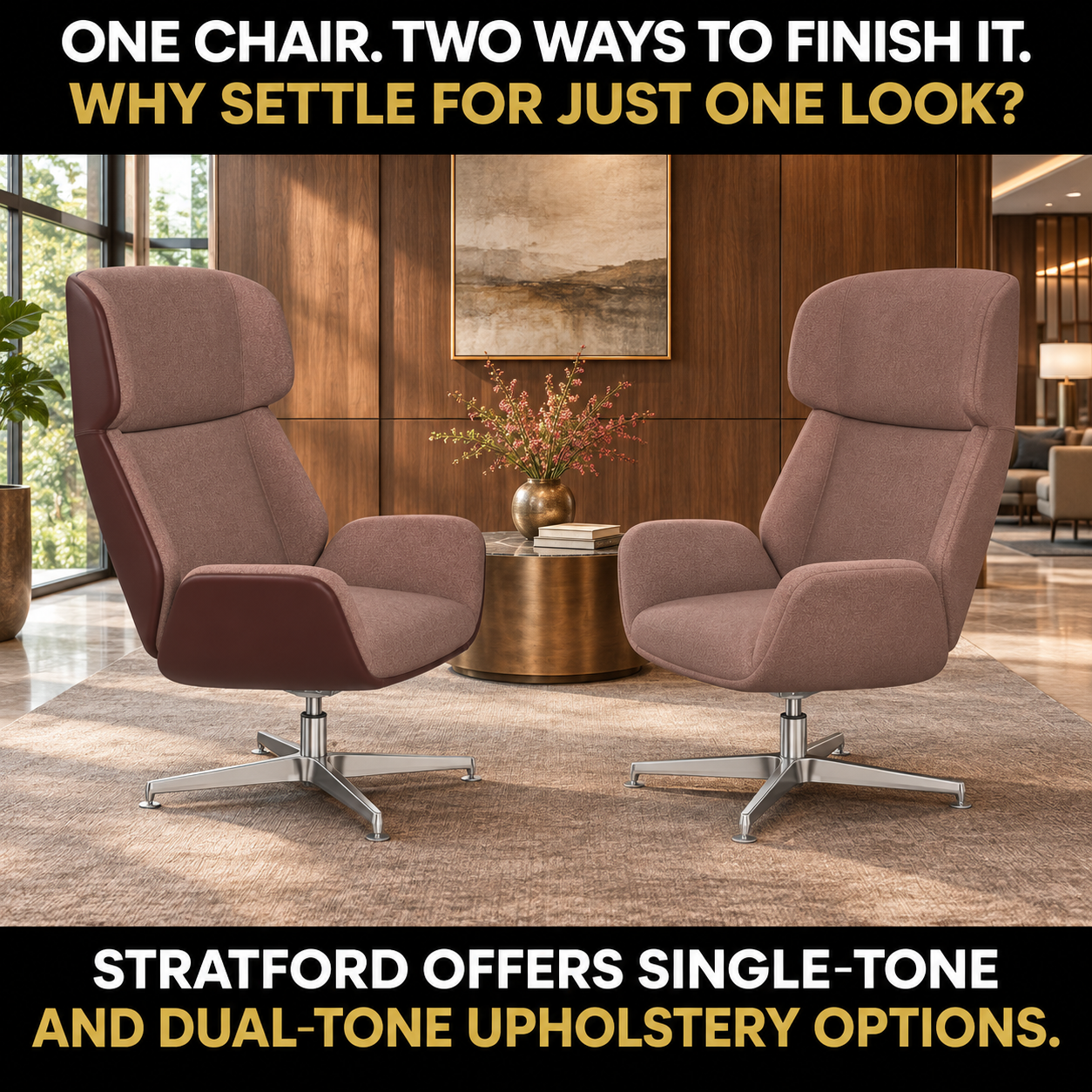
Single-tone or dual-tone upholstery gives designers more flexibility.
Furniture has a significant influence on the visual character of an interior.
Color, texture, material, and finish selection can change how a chair is perceived, even when its overall shape remains identical.
A warm leather lounge chair may create a classic executive atmosphere.
A richly colored textile can introduce personality into a contemporary office.
A neutral fabric may help establish a quiet and sophisticated hospitality environment.
Stratford offers designers the opportunity to explore these different expressions within the same chair design.
The simplicity of single-tone upholstery
Single-tone upholstery creates a unified appearance across the chair.
The seat, back, headrest, and exterior surfaces share a coordinated material direction.
This approach emphasizes Stratford's sculpted silhouette.
Its geometric lines become the focal point rather than the contrast between different upholstery materials.
Single-tone seating may be particularly effective when the surrounding architecture already includes strong patterns, textured walls, or contrasting finishes.
A restrained chair can help balance a visually complex space.
For example, Stratford upholstered in a warm neutral textile could complement a hospitality lounge with walnut wall panels, stone surfaces, and soft architectural lighting.
The chair becomes part of the environment without competing for attention.
Dual-tone upholstery introduces another dimension
Stratford also offers an optional dual-tone upholstery treatment.
This allows designers to distinguish between the chair's inner upholstered surfaces and its outer shell.
The result can highlight the product's sculpted form in a different way.
For example, a designer might select a softer textile for the seating surfaces and a contrasting darker material for the outer upholstery.
The difference between those materials can emphasize the chair's curved profile and integrated arms.
Alternatively, two closely related colors could create a subtler layered effect.
The decision depends on the visual direction of the project.
Material contrast should have a purpose
Dual-tone upholstery can be effective, but it works best when the selected materials relate to the larger design concept.
A strong contrast may create a statement piece in a restrained interior.
A subtle contrast may offer just enough definition to emphasize the chair's geometry.
Texture can also be important.
A combination of fabric and leather-like upholstery can create visual and tactile variation.
However, designers should review the manufacturer's approved material selections, upholstery grades, and configuration requirements before finalizing the specification.
Not every textile combination may be appropriate for every application.
Same chair. Different design identities.
Imagine two Stratford chairs positioned in the same commercial lounge.
One features a uniform muted rose textile.
The other uses the same general color family on its interior surfaces with a darker contrasting exterior.
The overall shape remains consistent.
The base, proportions, headrest, and integrated arms still identify both pieces as Stratford.
But the upholstery treatment changes the visual expression.
This is the opportunity illustrated by our fourth meme.
A consistent chair design can support different aesthetic directions without requiring an entirely different seating product.
For designers balancing furniture standards with project-specific finishes, that flexibility can be valuable.
What Matters Most When Specifying Stratford?
Stratford brings together several features worth evaluating when selecting lounge seating for a commercial interior.
Integrated headrest: The tall upholstered back and headrest help support a comfortable, relaxed seating experience.
Sculpted upholstery: High-density, high-resiliency foam and the shaped seat and back provide cushioning within a distinctive architectural form.
Swivel functionality: The polished aluminum base allows the chair to rotate, supporting more flexible positioning during informal interactions.
Additional adjustment: A swivel-tilt mechanism with single-position lock, preset tension, and pneumatic seat-height adjustment provides functions beyond those of a basic stationary lounge chair.
Matching ottoman: The coordinating upholstered ottoman offers a way to extend the seating experience in relaxation-focused environments.
Upholstery flexibility: Single-tone and optional dual-tone treatments allow the collection to complement a variety of commercial design palettes.
These attributes should be considered together rather than individually.
For example, a hospitality lounge may prioritize the chair's visual character, upholstery, and optional ottoman.
An executive office may place additional value on the swivel mechanism.
A reception environment may require particular attention to upholstery durability, cleaning, and maintenance.
The strongest specification responds to the actual needs of the space.
Practical considerations for project teams
Before finalizing Stratford for a commercial project, confirm the selected model, current dimensions, seat-height adjustment, upholstery grade, fabric performance, and relevant project requirements.
The Stratford lounge chair is identified as Model 2001, with the matching ottoman identified as Model 2011.
Nightingale also provides technical documentation and digital resources to support project planning.
Designers should review these materials when coordinating furniture clearances, construction documents, and upholstery specifications.
Particular attention should be given to the chair's overall footprint and the clearance needed for swivel movement.
Where the ottoman is included, sufficient floor area should be reserved to maintain circulation and allow the pieces to function as intended.
Good furniture selection considers not only the product itself, but how that product will interact with the people and spaces around it.
The Bottom Line
Comfort should never be an afterthought in commercial interior design.
Nightingale Stratford demonstrates how lounge seating can combine comfort, movement, and visual character within one coordinated collection.
Its integrated headrest and generous upholstery create an inviting experience.
Its swivel functionality supports natural interaction within workplace and hospitality environments.
Its matching ottoman offers another level of relaxation.
And its single-tone and dual-tone upholstery options give designers freedom to coordinate the chair with different architectural concepts.
The value of Stratford is not limited to one feature.
It is the combination of those features within a chair that feels appropriate for both sophisticated commercial interiors and more relaxed environments.
Because a well-designed lounge should do more than look inviting.
It should give people a reason to stay.
Let's Talk About Your Lounge Seating Project
Planning an executive office, hospitality lounge, reception area, or commercial interior where comfort and design need to work together?
The Ginger Grant Group can help you explore Nightingale Stratford configurations, compare upholstery options, and evaluate whether the chair and matching ottoman fit your project's design and functional requirements.
From individual statement seating to coordinated lounge environments, we can help connect your design intent with the appropriate product information.