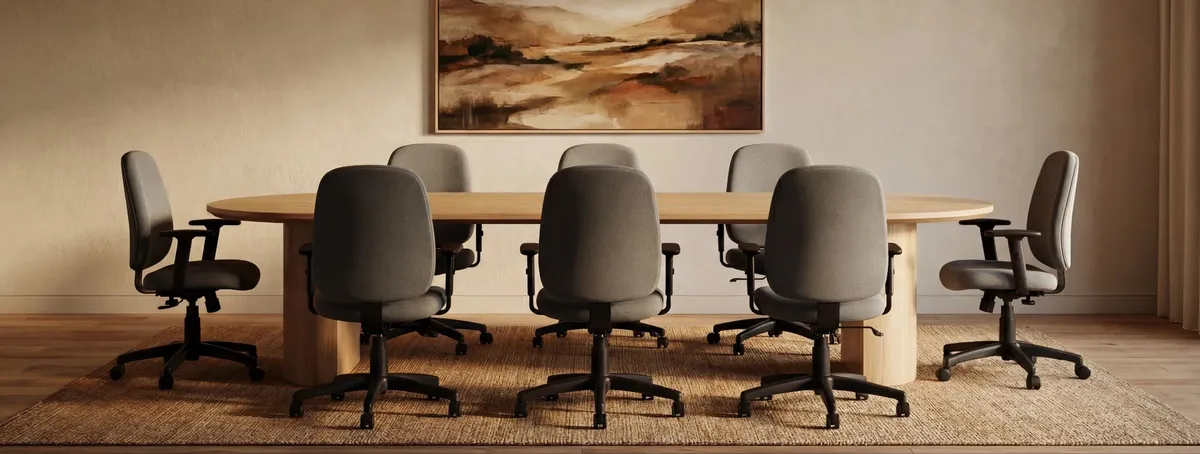
The Weekly Spec, Vol 29: Nightingale Sherman Task Chair
The Weekly Spec: Nightingale Sherman Heavy Duty Task Chair
Built for the Shift. Adjustable for the Person.
The Workday Changes. Your Chair Should Be Able to Keep Up.
Some chairs are designed for a typical workday. Others need to perform long after that workday ends.
In security operations, dispatch centers, law enforcement facilities, and other multi-shift environments, seating is not simply another piece of office furniture. It is equipment people depend on throughout the day and night.
That creates a different set of priorities.
The chair needs to withstand repeated use. It needs to accommodate different people. It needs to adjust to the way work actually happens. And when the workstation changes, the seating needs to keep up.
Nightingale's Sherman HD addresses these requirements through reinforced construction, adjustable components, fold-away arms, and a dedicated drafting stool option.
The result is a seating family worth considering when the workplace demands more than standard task seating.
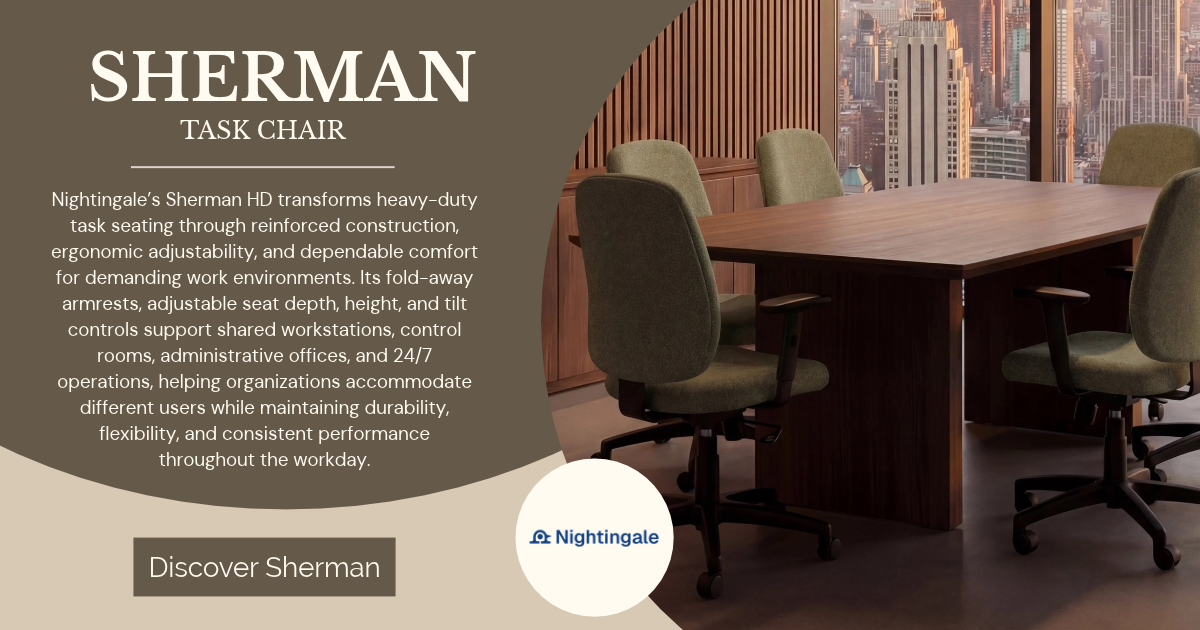
The Shift Ends. But the Chair Keeps Working.
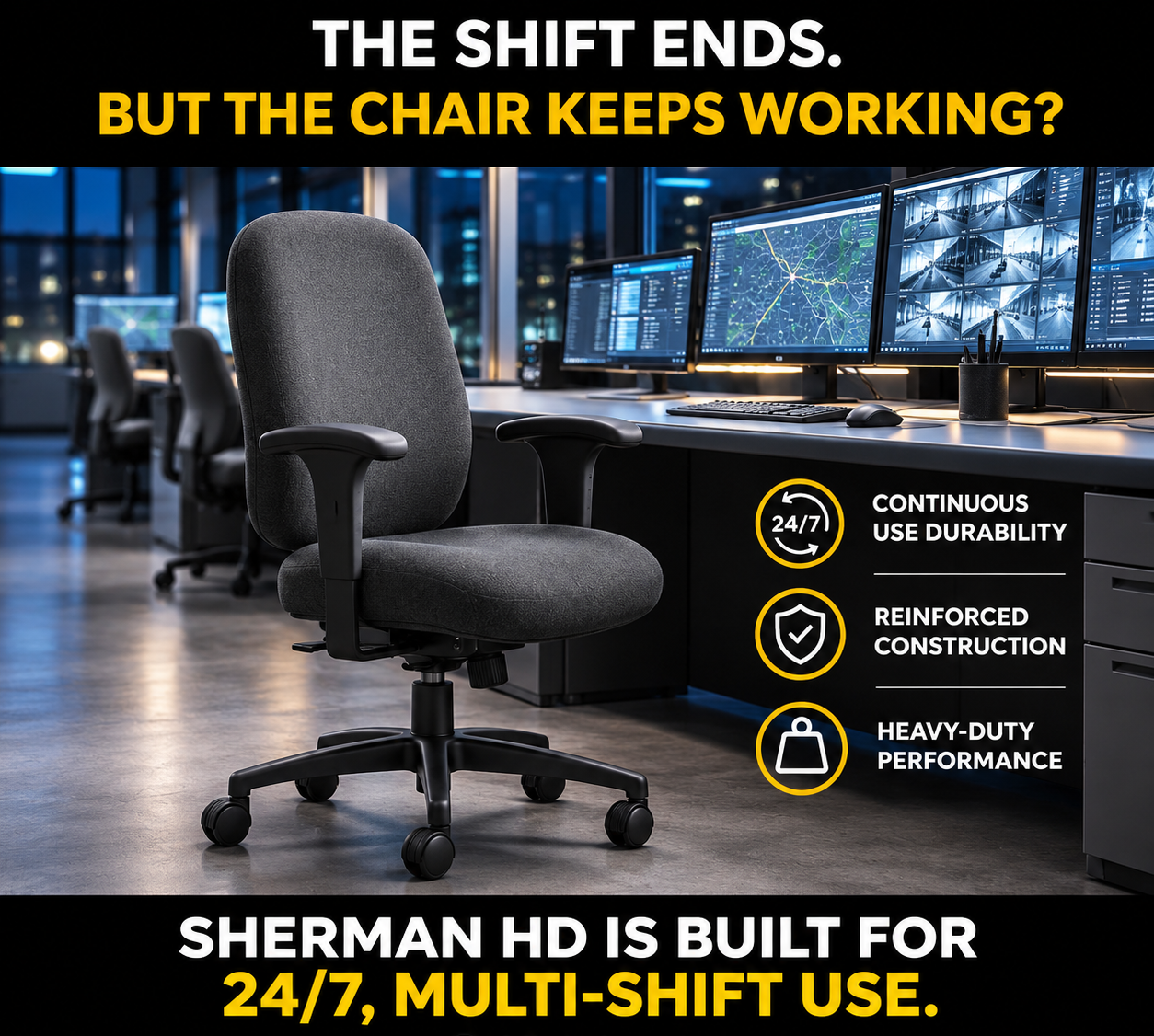
Designed for 24/7, multi-shift environments.
In a conventional office, a chair may be used by one person for part of the day. In a continuously staffed facility, that same chair could serve several users across multiple shifts.
The demands are different.
Each person brings a different body type, sitting preference, and working style. The chair is adjusted repeatedly, moved between tasks, and used for extended periods.
Sherman HD was designed and warranted for 24/7 use, making it especially relevant to high-activity workplaces.
Its construction includes reinforced steel in the seat and back, with molded foam for comfort. A structurally engineered five-prong aluminum base provides a durable foundation.
These are not simply specifications to list on a product sheet. They address the practical reality of seating that may rarely sit unused.
Where this matters:
Security monitoring and surveillance centers
Dispatch and communications rooms
Law enforcement facilities
Continuously staffed operational workstations
Other high-use environments with multiple users
For facility managers and designers, the important question is not only whether a chair looks appropriate for the space.
It is whether the chair was designed for the conditions in which it will be used.
That is the starting point for specifying Sherman.
Need to Move Closer? The Armrests Shouldn't Get in the Way.
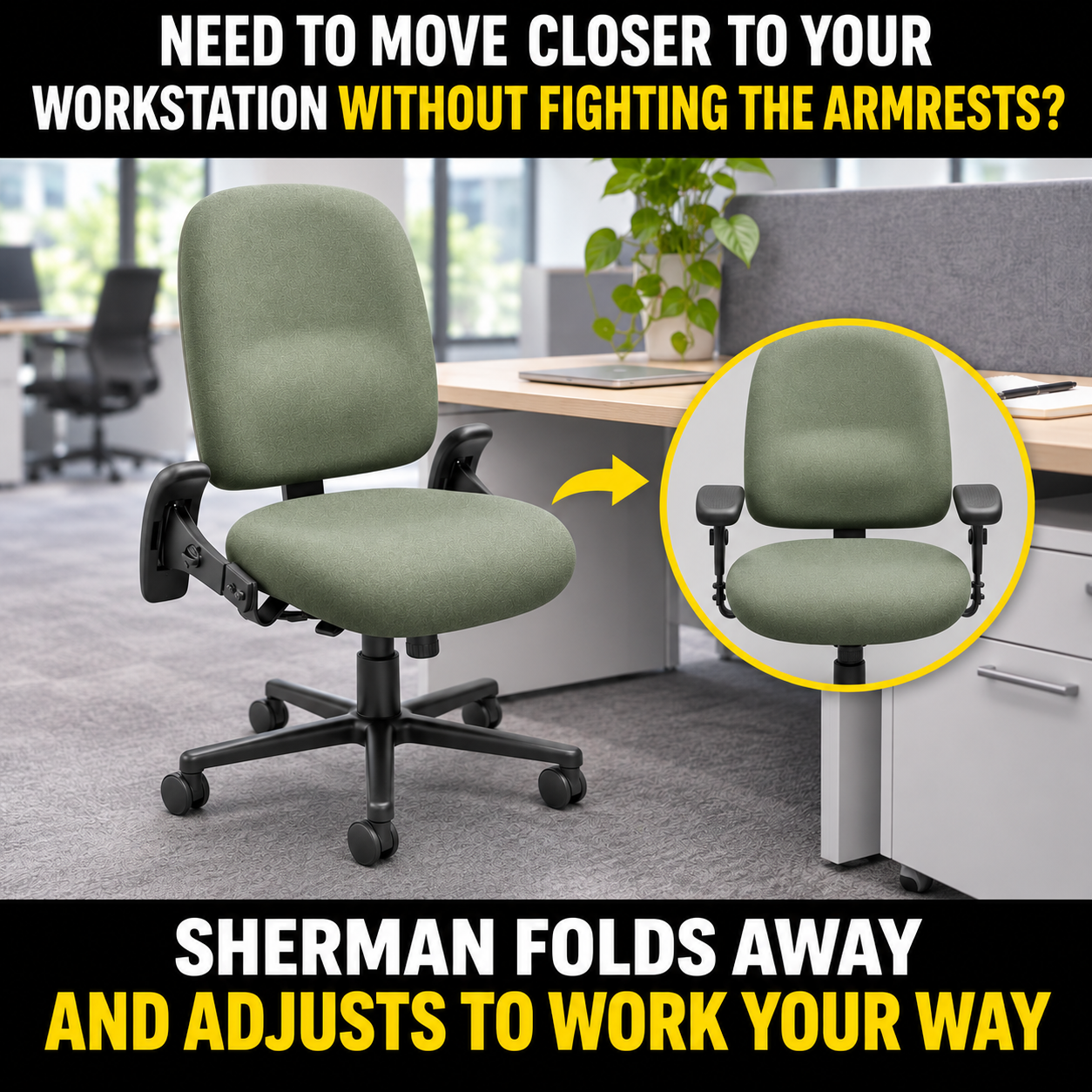
Fold-away arms create more flexibility at the workstation.
Armrests can provide valuable support, but they can also become an obstacle.
Consider a workstation where someone needs to pull close to a desk, reposition for a different task, or move between computer work and another activity.
Fixed armrests may limit how closely the chair can approach the work surface.
Sherman addresses this with heavy-duty steel arms that fold backward when additional clearance is needed.
The mechanism is straightforward: the user lifts the arm at its pad and moves it backward, out of the way. When arm support is needed again, the arm can be returned to its operating position.
The arms also offer height and width adjustment, allowing users to change their position to better suit their needs. High-durometer polyurethane arm pads provide a durable contact surface.
This combination offers two practical benefits.
First, the chair can accommodate different users without requiring everyone to accept the same armrest position.
Second, the armrests can move out of the way when a task calls for more room.
That flexibility is particularly useful in shared work environments, where the same chair may need to support several working styles.
The goal is not to eliminate arm support.
It is to make that support available when needed—and less intrusive when it is not.
Same Chair. Different Users. Why Settle for One Sitting Position?
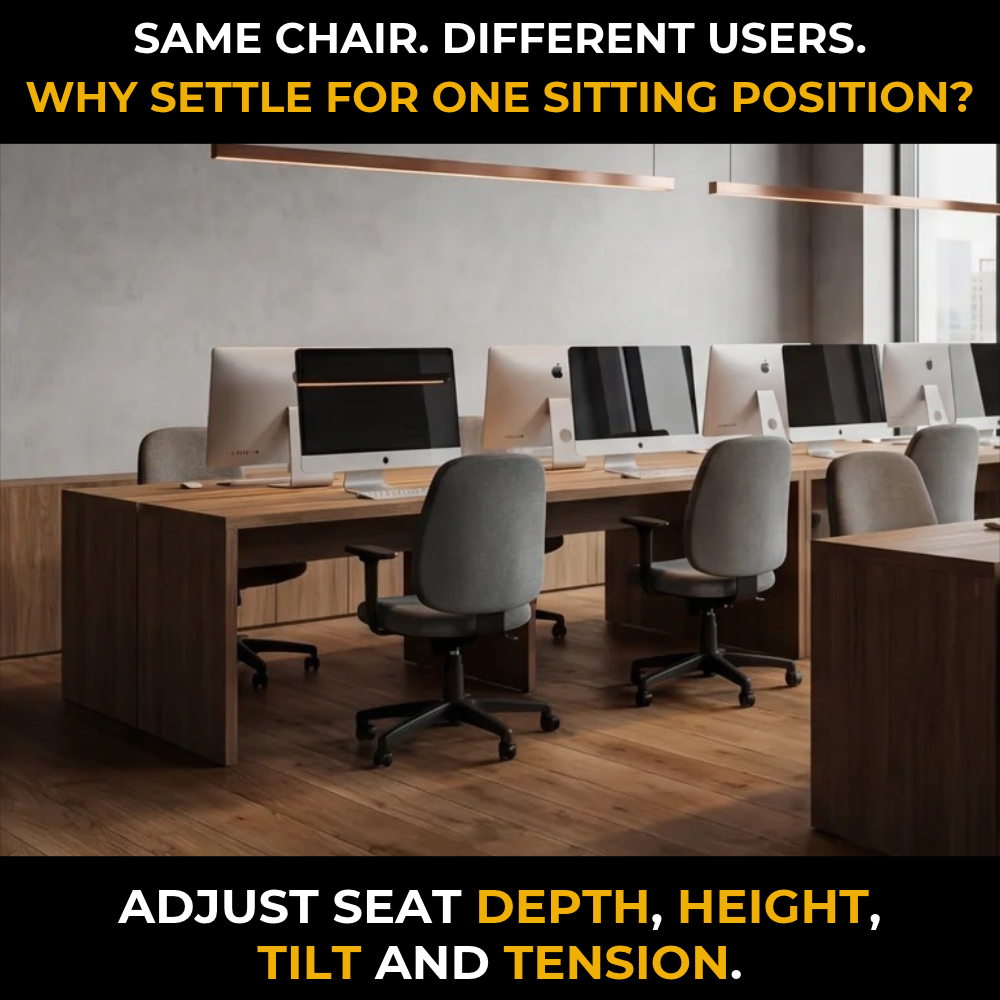
Adjustability matters when seating is shared.
A chair that feels comfortable to one person may not feel the same to another.
Seat height, seat depth, tilt, and arm position all influence how a person fits into a workstation.
In a multi-shift environment, those differences become especially important. The chair may need to be adjusted several times a day as one user replaces another.
Sherman provides multiple adjustment points to accommodate those changes.
Seat height can be raised or lowered to help position the user relative to the work surface.
Seat depth is adjusted by loosening a hand wheel and repositioning the chair back relative to the seat, then tightening the wheel again. This allows the user to change the available seating depth without requiring a separate sliding-seat mechanism.
Tilt tension can be increased or decreased to change the resistance felt when reclining.
Infinite-position tilt lock allows the user to secure the chair at a preferred tilt position or release it for movement.
The chair also includes built-in lumbar support in the backrest.
Together, these features provide a more adaptable seating experience than a chair with limited adjustments.
For designers, the specification consideration is straightforward: when a chair is intended for multiple users, the adjustment range and the ease of using those adjustments matter.
A chair may have several ergonomic features on paper, but those features are most useful when people understand how to operate them.
For shared workstations, providing clear adjustment instructions can be just as important as selecting the right chair.
The Workstation Is Higher. Why Is the Seating Still Standard?
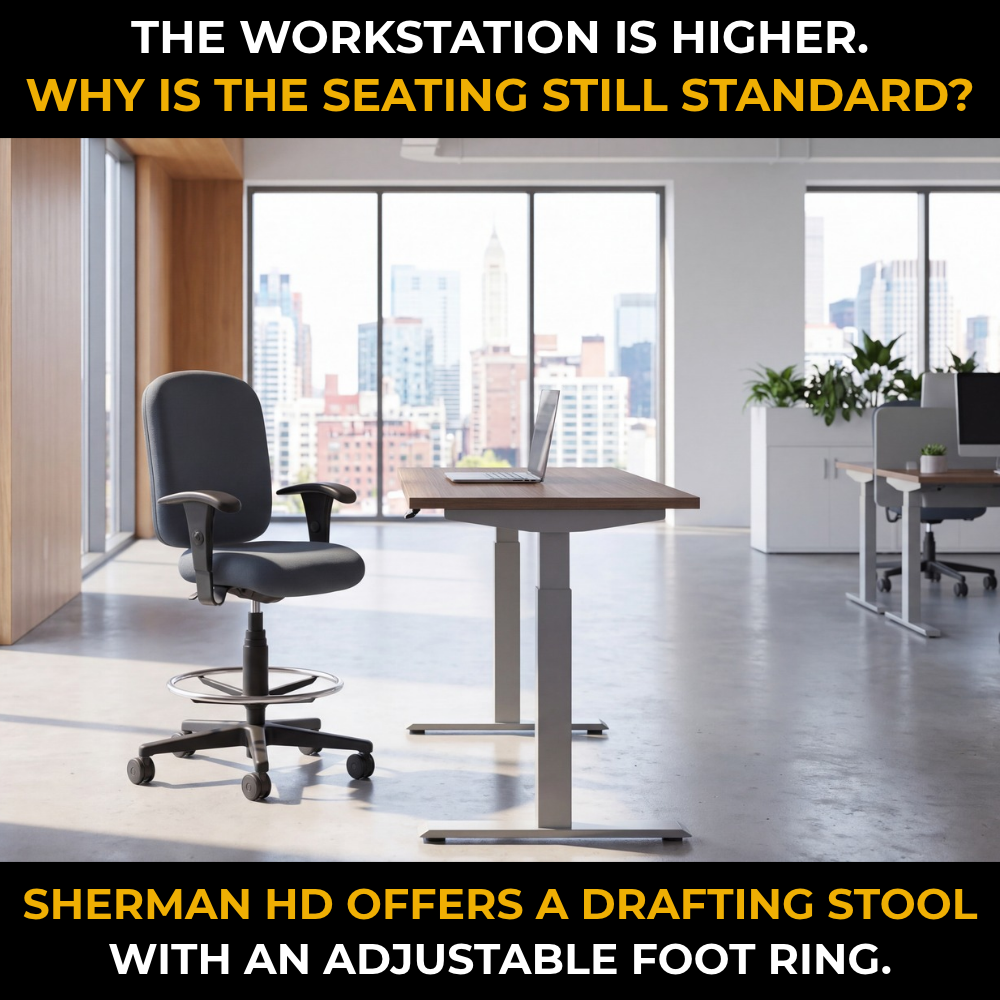
Sherman HD is also available as a drafting stool.
Not every workstation operates at standard desk height.
Some environments use elevated counters, technical work surfaces, or higher workstations that require a different seating configuration.
Using a conventional task chair in these settings can create an awkward relationship between the seat, the work surface, and the user's feet.
Nightingale offers the Sherman HD9000-DS drafting stool for applications where elevated seating is needed.
The drafting stool retains the Sherman family's heavy-duty seating approach while adding the height and support features needed for taller workstations.
One particularly important feature is the adjustable foot ring.
At an elevated seating height, users may not be able to place their feet comfortably on the floor. The foot ring provides a place to support the legs, and its height can be adjusted to suit the user.
That makes it an important part of the stool's overall configuration rather than a minor accessory.
The drafting stool option also gives specifiers a way to maintain a consistent seating family across workstations of different heights.
There is one important distinction to keep in mind when comparing models:
Sherman HD9000 task chair: rated for 450 lb.
Sherman HD9000-DS drafting stool: rated for 350 lb.
The two models should not be treated as interchangeable when evaluating capacity or workstation requirements.
For projects with a mix of standard-height and elevated workstations, confirming the appropriate model for each application is an essential step.
What Matters Most
Sherman HD is not defined by one feature.
Its value comes from the way several practical considerations work together.
Durability: Designed and warranted for continuous, multi-shift use, with reinforced construction suited to demanding environments.
Flexibility: Fold-away, height-adjustable, and width-adjustable arms accommodate different users and tasks.
Adjustability: Seat height, seat depth, tilt tension, and tilt locking allow users to personalize the chair's setup.
Workstation compatibility: Standard task chair and drafting stool configurations address different working heights.
Before finalizing a specification, consider who will use the chair, how frequently it will be occupied, whether multiple people will share it, and what type of workstation it needs to serve.
Also confirm the model's capacity, dimensions, upholstery, caster selection, and adjustment requirements against the current manufacturer's documentation.
These details can make the difference between simply placing a chair at a desk and selecting seating that genuinely fits the application.
The Bottom Line
Heavy-duty seating should do more than withstand heavy use.
It should also support the people doing the work.
Nightingale's Sherman HD brings together the construction required for demanding environments and the adjustability needed for individual users.
From 24/7 control rooms to elevated technical workstations, it offers practical options for spaces where seating performance cannot be an afterthought.
Let's Talk About Sherman for Your Next Project
Planning a project with demanding seating requirements?
Connect with The Ginger Grant Group to discuss Sherman by Nightingale, review available configurations, and determine which model best fits your project.