The Weekly Spec, Vol 24: Gressco Reading Nooks
The Weekly Spec: Gressco Reading Nooks
A Reading Area Isn’t the Same as a Place to Read
Libraries, classrooms, and learning environments are often designed around access to information.
There are shelves for books. Tables for activities. Open areas for groups. Circulation paths keep everything connected.
But there is another question worth asking:
Where does a child go when they actually want to read?
That distinction matters.
A reading area can technically contain everything required for reading and still compete for a child’s attention. Movement, conversation, visual activity, and other children are all part of active learning environments.
The design opportunity is not necessarily to eliminate those things. It is to create smaller environments within the larger space where the purpose of the area becomes more obvious.
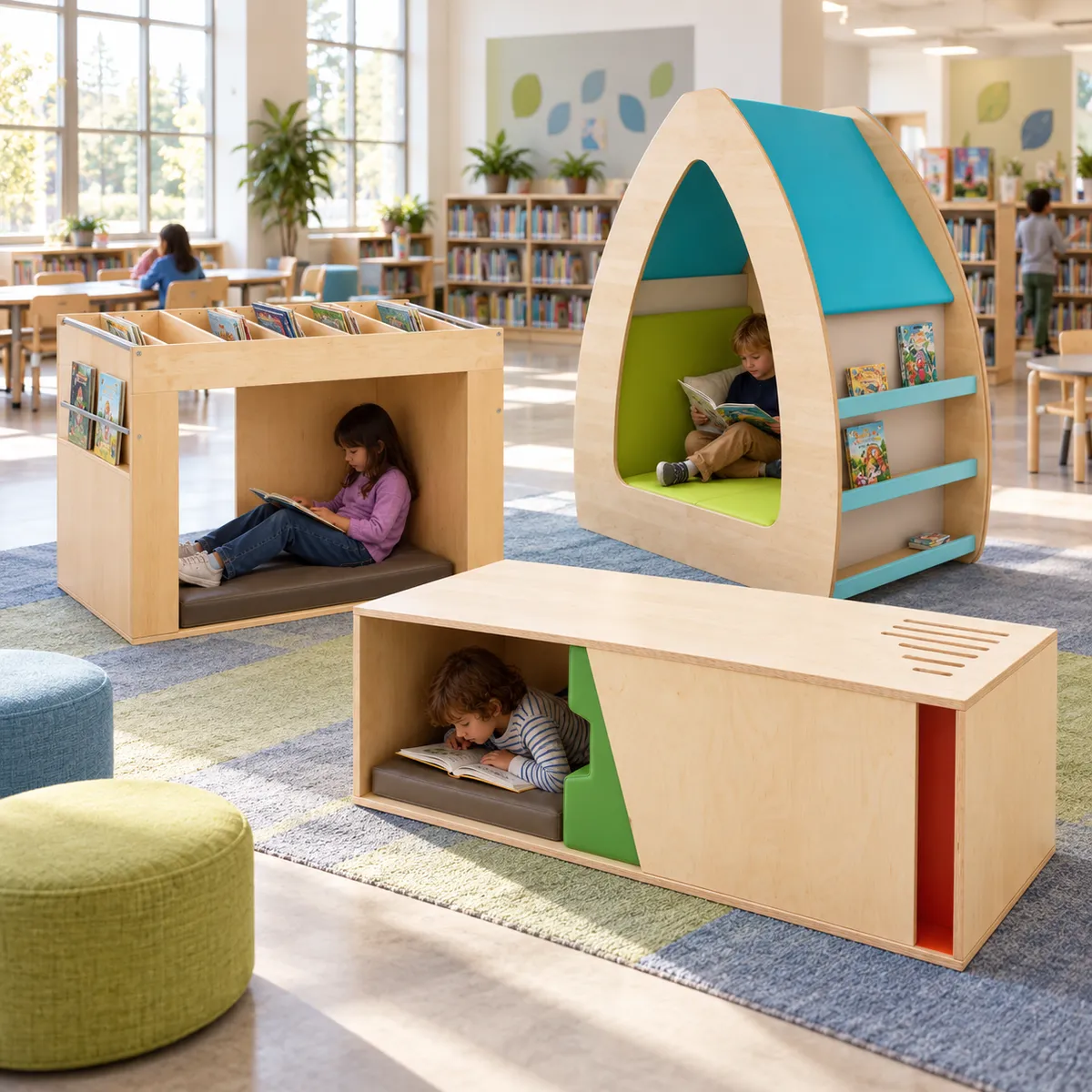
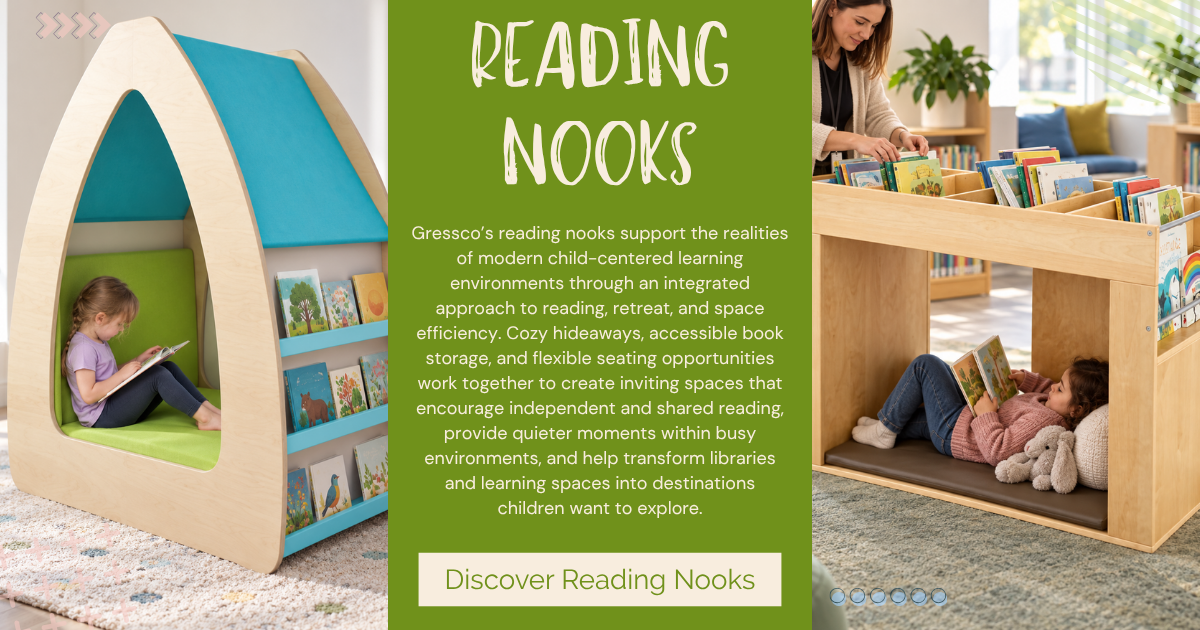
Gressco’s reading retreats and reading nooks offer one approach: use furniture itself to create recognizable places for reading, retreat, imagination, and connection.
The result is more than another place to sit.
It is a place with a purpose.
Focus Can Start With Spatial Definition
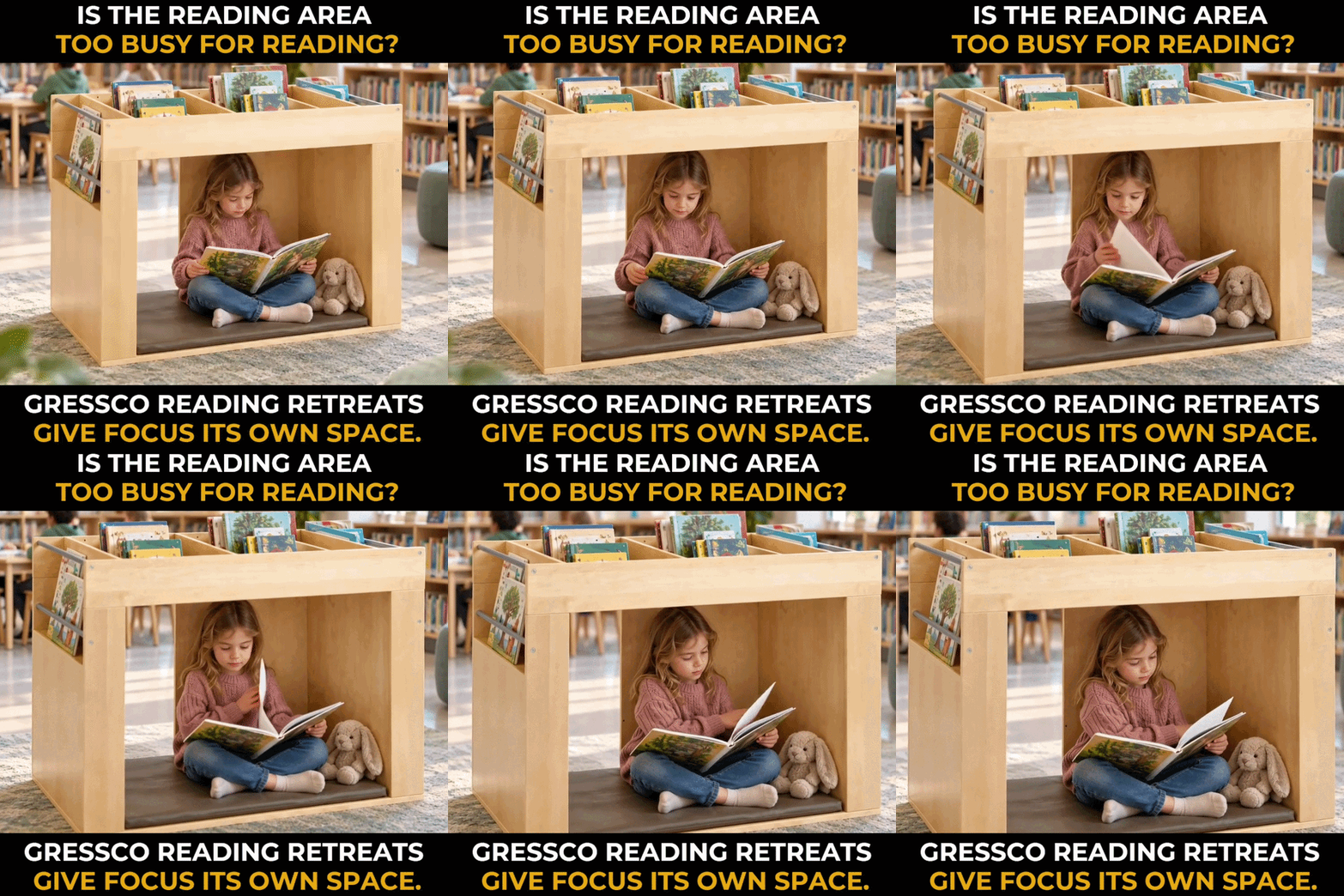
Children’s spaces often need to support very different activities at the same time.
One child may be reading while another group is working together nearby. Someone may be searching the shelves. Another child may be moving between activities.
The challenge is that an open floor plan does not automatically communicate where one experience ends and another begins.
Spatial definition can help.
A reading nook uses scale, enclosure, orientation, and furniture placement to create a smaller zone within the larger environment. The child crosses an understandable boundary without needing to enter a completely separate room.
That changes the experience.
Instead of placing a chair in the middle of everything happening around it, the designer can create a destination that visually communicates: this is a place to settle in.
Gressco describes microspaces as small, defined areas intended for specific activities such as reading, play, or art, with the goal of allowing children to engage with fewer distractions. Its early-childhood planning material similarly identifies a reading and calming area as a cozy, inviting environment where reading can feel enjoyable and relaxing.
That is an important distinction.
The goal is not isolation.
The goal is enough definition for the activity to make sense.
Space Can Work Harder When Furniture Serves More Than One Purpose
Every square foot matters in educational and library environments.
That makes single-purpose furniture harder to justify, particularly when a floor plan needs to accommodate books, seating, circulation, collaboration, technology, and multiple age groups.
Reading furniture can solve more than the seating problem.
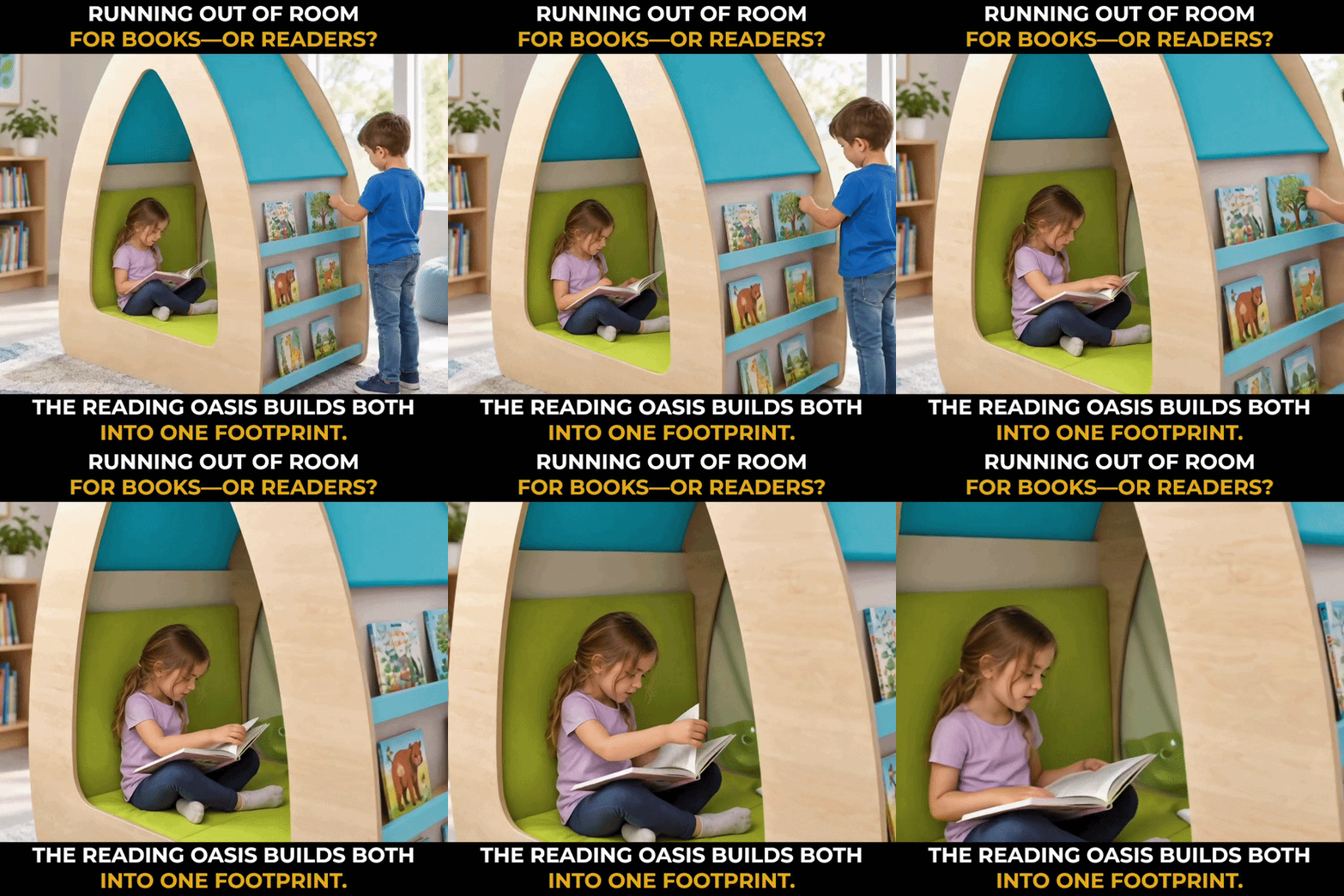
The Gressco Reading Oasis Library, for example, combines a defined reading environment with integrated book storage. Current product information lists three shelves on each outer side along with two padded seats with backrests inside the structure.
That relationship matters from a planning standpoint.
The books do not have to live in one location while the reading experience happens somewhere else. Storage and use can become part of the same footprint.
For designers, this creates another way to think about efficiency.
Efficiency does not always mean making furniture smaller or fitting more objects into a room.
Sometimes it means asking one object to perform more intelligently.
Can storage become part of the reading destination?
Can seating contribute to spatial definition?
Can the furniture help organize activity instead of simply occupying floor space?
When those functions overlap intentionally, the room can become easier for children to understand and easier for adults to manage.
The floor plan still has to accommodate circulation and supervision. But furniture begins doing some of the organizational work that might otherwise require separate elements.
A Quiet Zone Does Not Always Require Another Room
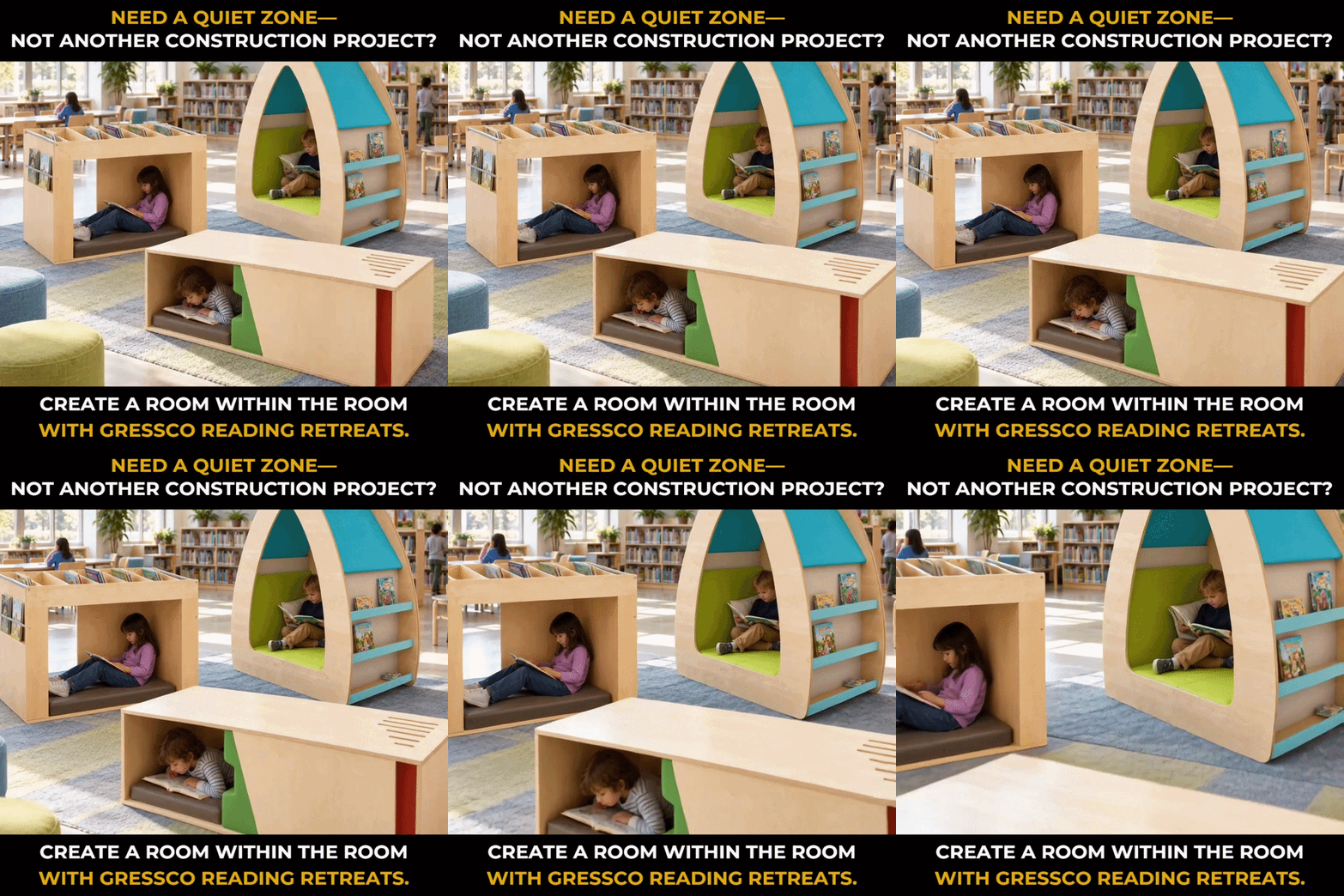
When a space feels too active, the instinctive architectural response can be to separate activities with walls.
Sometimes that is exactly what the program requires.
But not every moment of retreat requires full architectural enclosure.
Furniture-scale environments provide another option.
A nook can use sides, overhead elements, orientation, and a smaller interior scale to create a different experience within an otherwise open environment.
This is particularly relevant in libraries and educational spaces where visibility and connection still matter.
A child can have a place that feels distinct without being removed from the larger learning environment.
That middle ground is useful.
It allows designers to think about privacy and retreat as a spectrum rather than a binary choice between completely open and completely enclosed.
Gressco’s Reading Oasis illustrates that idea at a relatively compact furniture scale. Published specifications describe a structure approximately 71 inches high, 65 inches wide, and 31 inches deep, with integrated seating and exterior shelving.
That is furniture creating architecture-like definition.
The broader lesson is not that every reading area needs a roof or enclosure.
It is that scale and boundaries influence behavior.
When children can recognize that a space has been designed for a particular experience, the environment itself begins communicating how it can be used.
Good Reading Spaces Should Support More Than One Way to Read
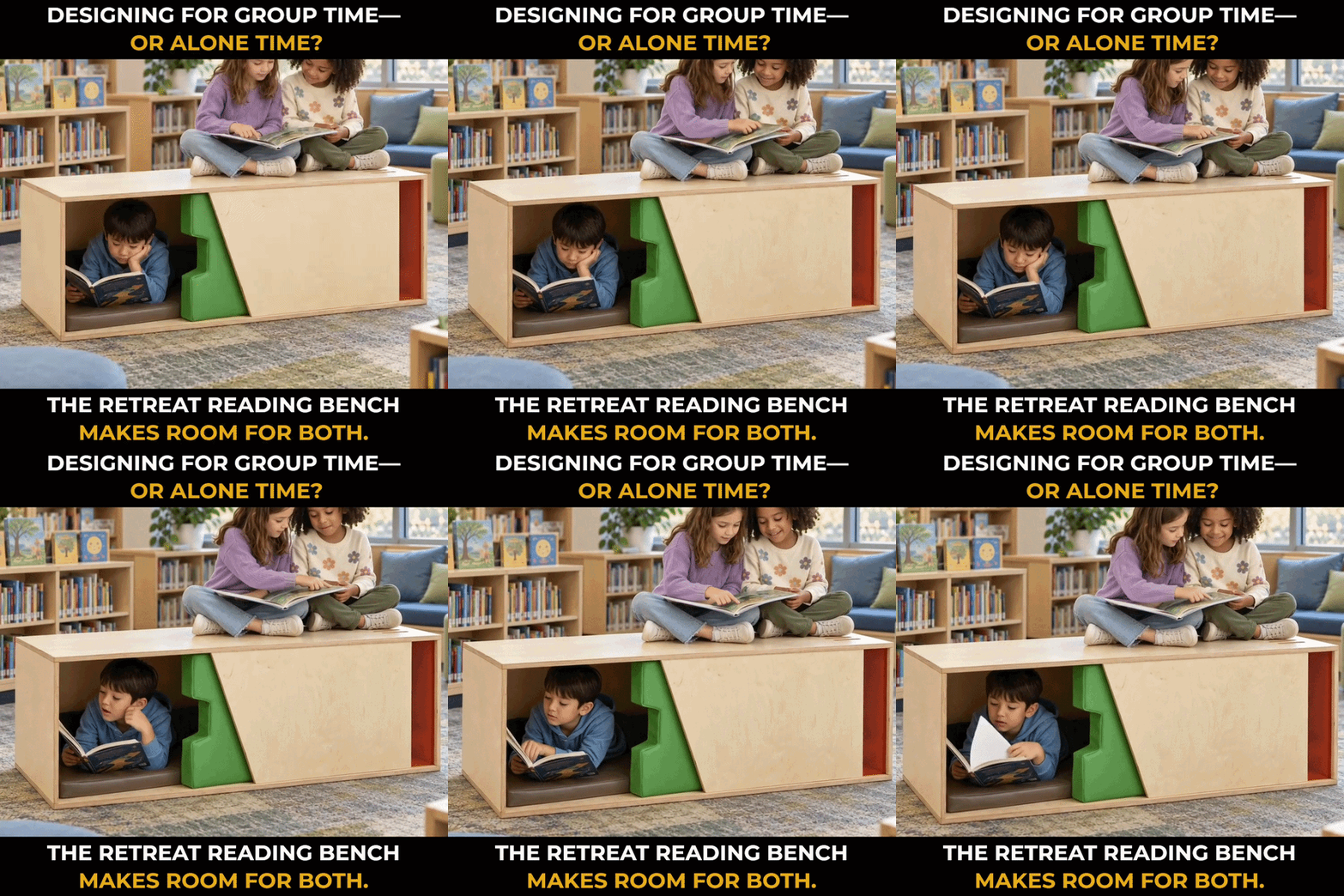
Reading is not always solitary.
Sometimes a child wants to disappear into a book alone.
Sometimes two children want to explore a story together.
Sometimes an educator needs a gathering place.
Sometimes a child simply needs a place to sit apart from the larger group for a few minutes.
A successful learning environment has to account for those different behaviors.
That is why a collection of reading environments can be more useful than treating the “reading area” as one standardized furniture setting.
Gressco’s Reading Retreat Bench illustrates the more open end of that spectrum. The current product specification describes a 12-inch-high, 57½-inch-wide bench made from 1-inch Baltic Birch. Six benches can also be arranged into a complete reading circle approximately 9 feet 8 inches in diameter.
That creates very different possibilities from an enclosed nook.
One piece can support an individual or small interaction. Multiple pieces can create a larger communal setting.
Meanwhile, more enclosed reading structures can give children a stronger sense of retreat.
Neither condition has to replace the other.
The opportunity is to give children choices.
A well-planned reading environment can provide places to gather, places to share, and places to retreat—all within the same overall learning landscape.
That flexibility acknowledges something adults already understand intuitively:
The environment we want when working together is not always the environment we want when concentrating alone.
Children deserve that same consideration.
What Matters Most
Designing for reading is about more than placing books and seating in the same area.
It is about creating conditions that make reading feel like a natural thing to do there.
Spatial definition can help establish focus.
Integrated storage can make the footprint work harder.
Furniture-scale enclosure can provide retreat without requiring another room.
And a range of open and more defined settings can give children different ways to engage with books, with one another, and with the environment around them.
That is where Gressco’s reading nooks become interesting from a design perspective.
The products are not simply places for children to sit.
They give designers another tool for shaping behavior, defining activity, and turning a portion of the floor plan into a recognizable reading destination.
Because the larger question is not simply:
Where can we put the reading area?
It is:
What kind of environment will make a child want to stay there and open a book?
If you’re evaluating children’s reading areas for a library, school, classroom, waiting space, or other learning environment, The Ginger Grant Group can help explore Gressco solutions that support the experience you are trying to create.