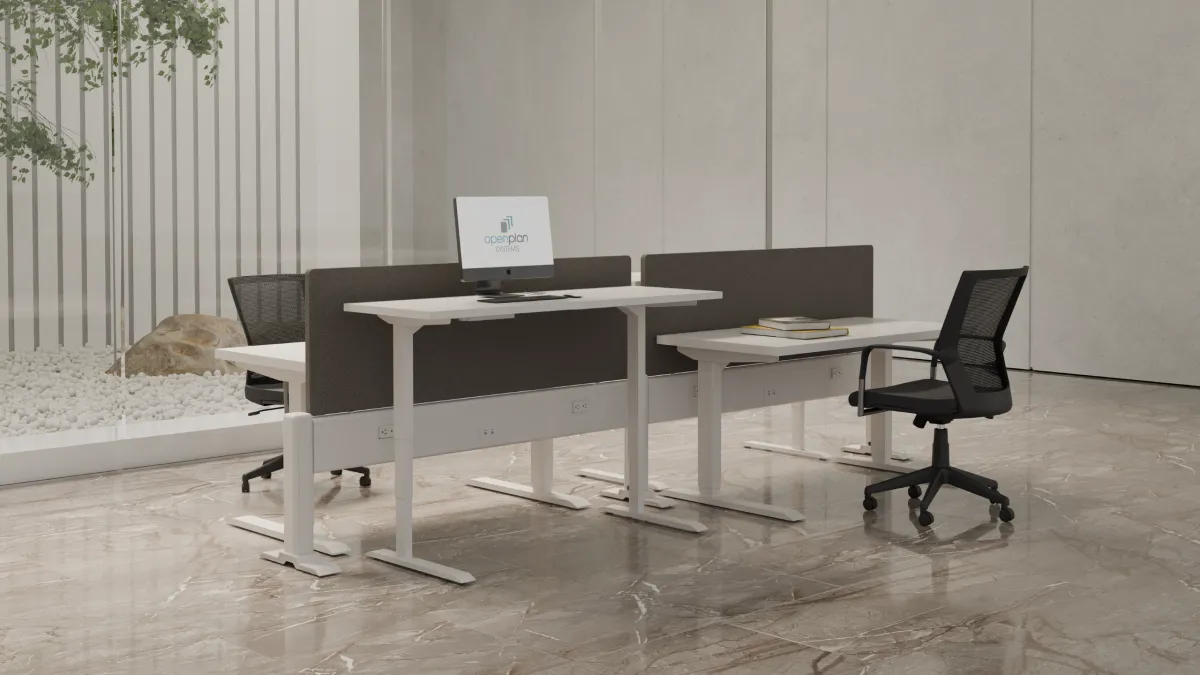
The Weekly Spec, Vol 6: Open Plan's Powerlink
When Power Access Starts Defining the Space
Modern environments are more connected than ever, but many spaces still rely on outdated approaches to power distribution. As devices multiply and workstyles evolve, power access has quietly become one of the biggest drivers of how people use a space. The challenge is no longer simply having enough seats, desks, or collaboration zones—it’s whether those environments can realistically support the technology people carry with them every day.
This Weekly Spec focused on how PowerLink by Open Plan Systems addresses that shift through integrated, accessible power designed to support real-world behavior across workplaces, healthcare environments, education settings, and collaborative spaces. Rather than treating power as an afterthought, PowerLink helps make it part of the planning process from the beginning—reducing clutter, minimizing workflow friction, and helping spaces function the way they were intended to.
The Reality Behind the “Perfect” Rendering
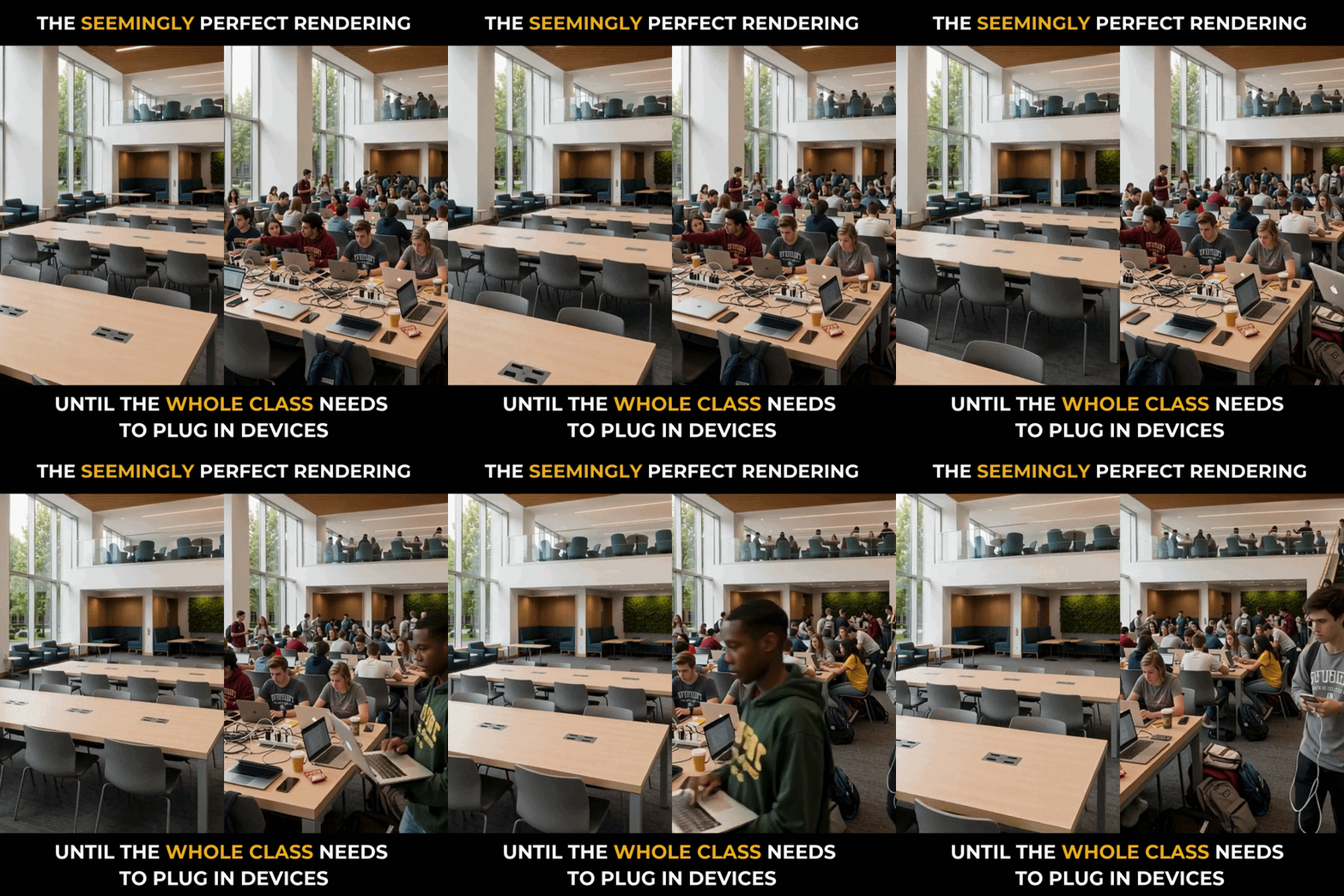
One of the biggest disconnects in workplace and education planning is the gap between a clean rendering and actual daily use. A beautifully designed space can quickly become overwhelmed once every user arrives with a laptop, tablet, phone, charger, and additional accessories all competing for limited access to power.
In education and shared collaboration environments especially, this creates an entirely different layer of crowding. People begin gathering around the few locations that support charging needs, which changes how the environment is occupied and often disrupts the intended flow of the space altogether. Instead of supporting flexibility and movement, the environment unintentionally funnels activity into small infrastructure bottlenecks.
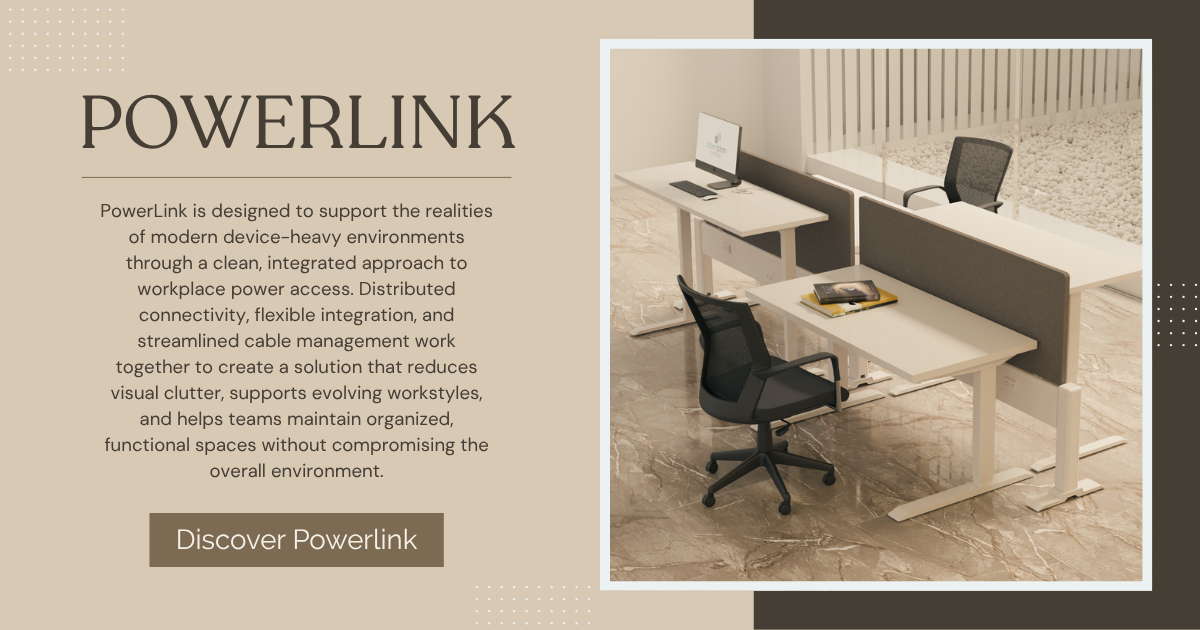
PowerLink helps avoid that issue by distributing accessible power more intentionally throughout the environment. When users can plug in where they already want to work, the space functions more naturally and avoids the congestion that often appears after occupancy.
When Infrastructure Becomes a Workflow Bottleneck
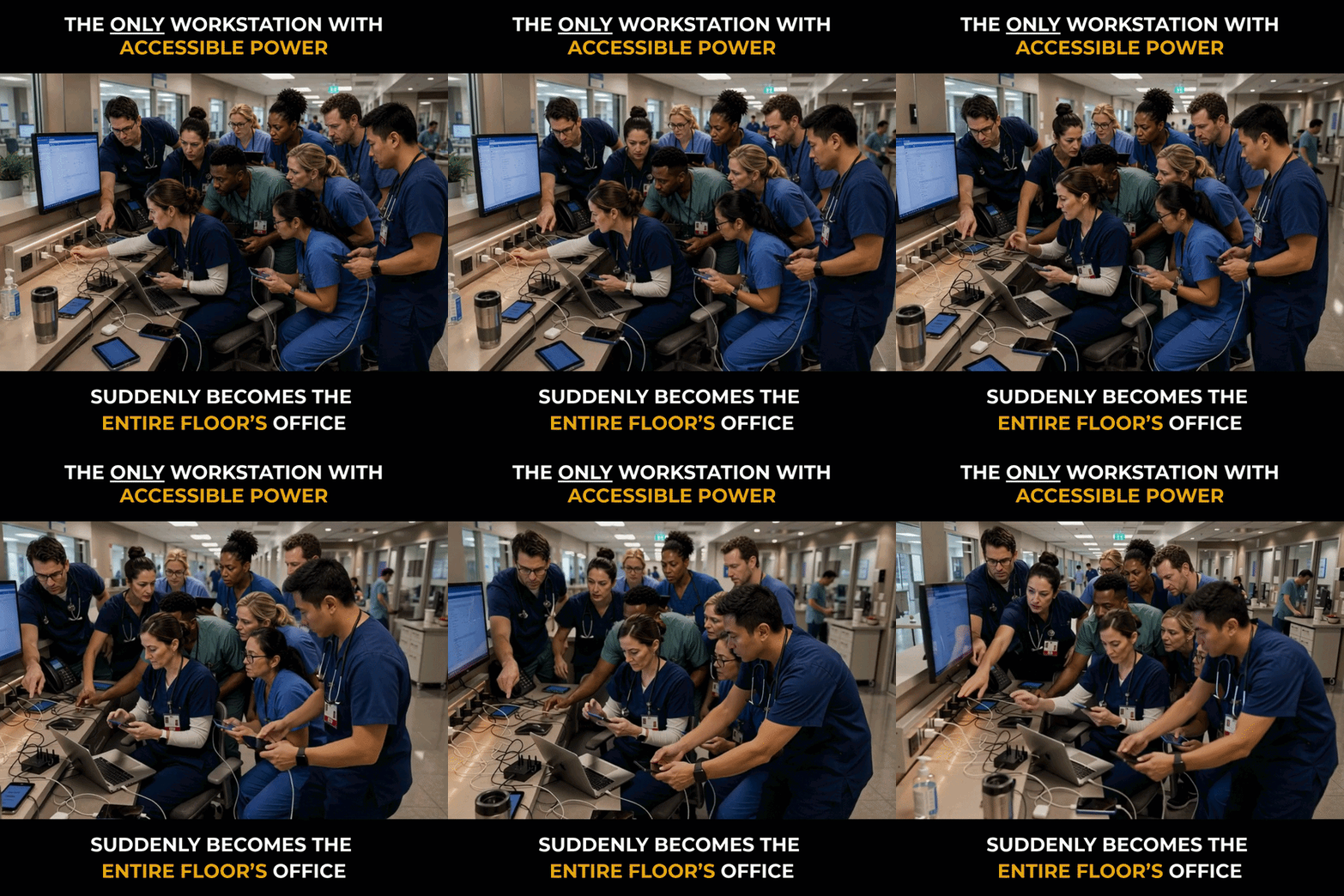
In healthcare environments, access to power isn’t just about convenience—it directly impacts workflow. As devices become increasingly central to communication, charting, and coordination, poorly planned power access can unintentionally create operational friction throughout the day.
Shared workstations often become overcrowded simply because they are the only places capable of supporting multiple devices at once. Staff cluster around the few available charging points, workflows slow down, and spaces designed for efficiency become harder to navigate during busy shifts.
What makes this especially important is that the problem usually develops gradually. Temporary charging solutions, adapters, and shared strips begin appearing over time until the workstation itself becomes a critical infrastructure point for the entire surrounding area.
Integrated power solutions help reduce that dependency by creating cleaner, more accessible connectivity throughout the environment instead of concentrating it in isolated locations.
Hot Desking Only Works When Infrastructure Keeps Up

Hybrid work has transformed how offices are planned, but many workplaces still approach hot desking as a furniture problem rather than an infrastructure one. In practice, employees quickly determine which desks are actually usable based on practical factors like access to power, charging convenience, and device connectivity.
That creates an important distinction between a desk that is technically available and one that fully supports modern work. When power access is inconsistent, employees naturally gravitate toward the few desks that provide reliable connectivity, which undermines the flexibility hot desking is supposed to create.
PowerLink supports more equitable workstation usability by integrating power directly into the planning strategy of the space. Instead of certain desks becoming more desirable simply because they happen to be near an outlet, the environment can function more consistently across the entire floorplate.
The result is a workplace that feels more adaptable, organized, and intentional while better supporting the realities of hybrid work.
Temporary Solutions Have a Way of Becoming Permanent
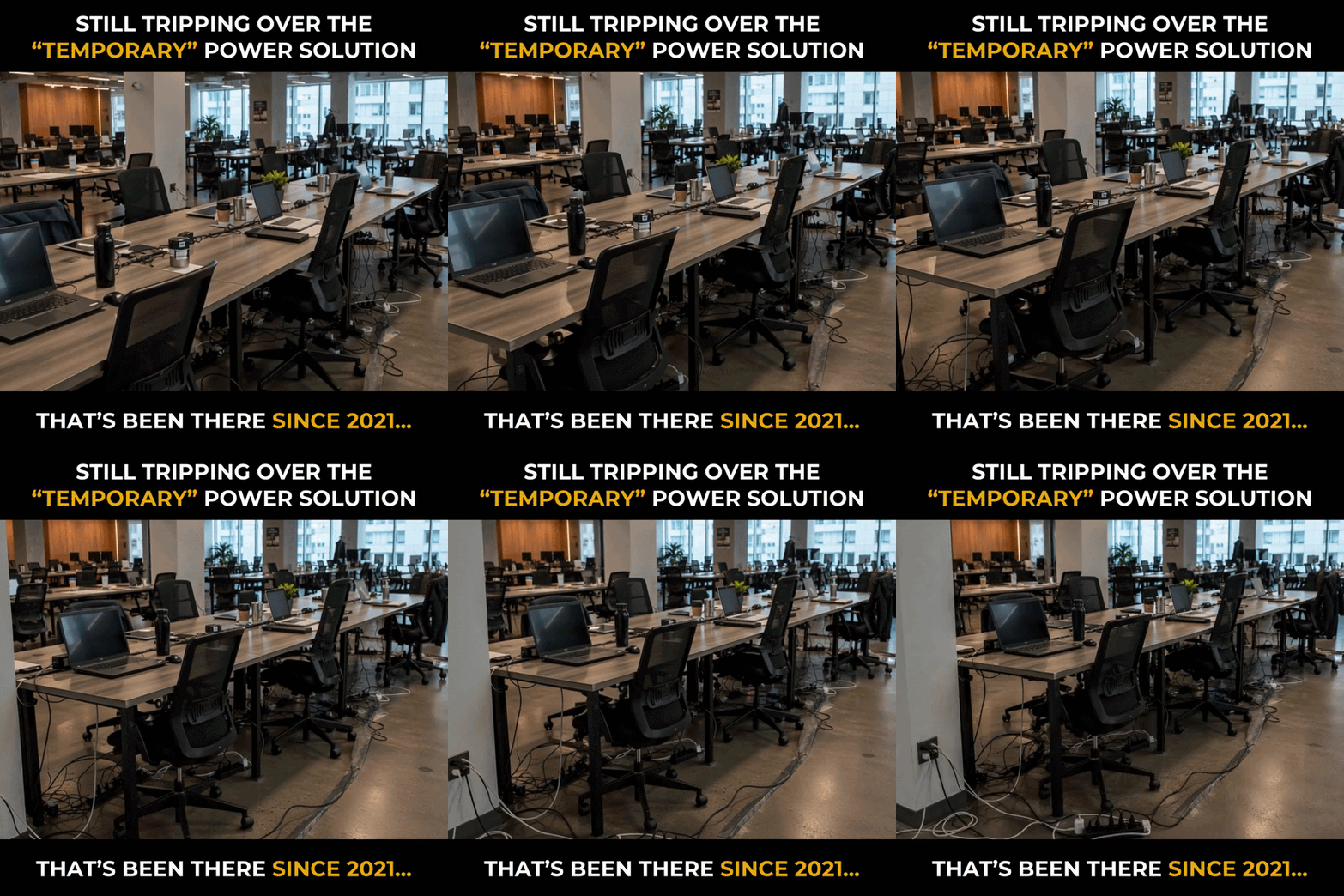
One of the most common patterns in evolving workplaces is the gradual accumulation of “temporary” infrastructure fixes. Extension cords, power strips, adapters, taped-down cables, and under-desk routing often begin as short-term workarounds but slowly become permanent parts of the environment.
Over time, this creates more than just visual clutter. It affects circulation, maintenance, safety, flexibility, and the overall perception of the space itself. Environments that were originally designed to feel clean and intentional begin carrying visible signs of compromise as technology demands outgrow the original infrastructure plan.
This is where integrated power planning becomes especially valuable. Instead of relying on reactive fixes after occupancy, solutions like PowerLink help environments accommodate evolving device needs while maintaining the visual clarity and usability the space was originally designed to achieve.
What Matters Most
The biggest takeaway from this week is simple: power access now shapes how people experience a space. It influences where people gather, how long they stay, how efficiently they work, and whether an environment continues functioning as intended once it moves beyond the rendering stage and into everyday use.
PowerLink addresses that reality through a cleaner, more integrated approach to workplace connectivity—supporting flexibility, reducing clutter, and helping environments adapt to modern device demands without compromising the overall experience of the space.

If you’re evaluating workplace, healthcare, education, or collaborative environments where power access and infrastructure flexibility matter, we can help determine where PowerLink fits and how it supports long-term functionality across real-world applications.