The Weekly Spec, Vol 23: AMG Portable LED Media Display
The Weekly System: AMG Portable LED Media Displays
The Event Changed. The Signage Can Too.
How foldable construction, modular display configurations, transparent media glass, and remote content updates give event signage more room to adapt
Event signage is often finalized before the event itself is finished changing.
A speaker moves to another room. A session runs late. A sponsor graphic is replaced. The registration desk changes location. A booth expands after the original display has already been selected.
Printed signage responds poorly to this kind of news.
Even conventional digital displays can introduce their own problems. Large screens may require freight access, fixed mounting, dedicated rigging, complicated transportation, or enough surrounding structure to make the display feel more permanent than the event.
Architectural Media Glass approaches portable event displays as a flexible system rather than a fixed sign.
Its E-Poster-M LED Poster Board combines a tall-format digital display with foldable construction, casters, remote content publishing, and the ability to connect multiple units. AMG’s Portable Media Glass provides another option when the message needs to remain visible without replacing an open sightline with a solid screen.
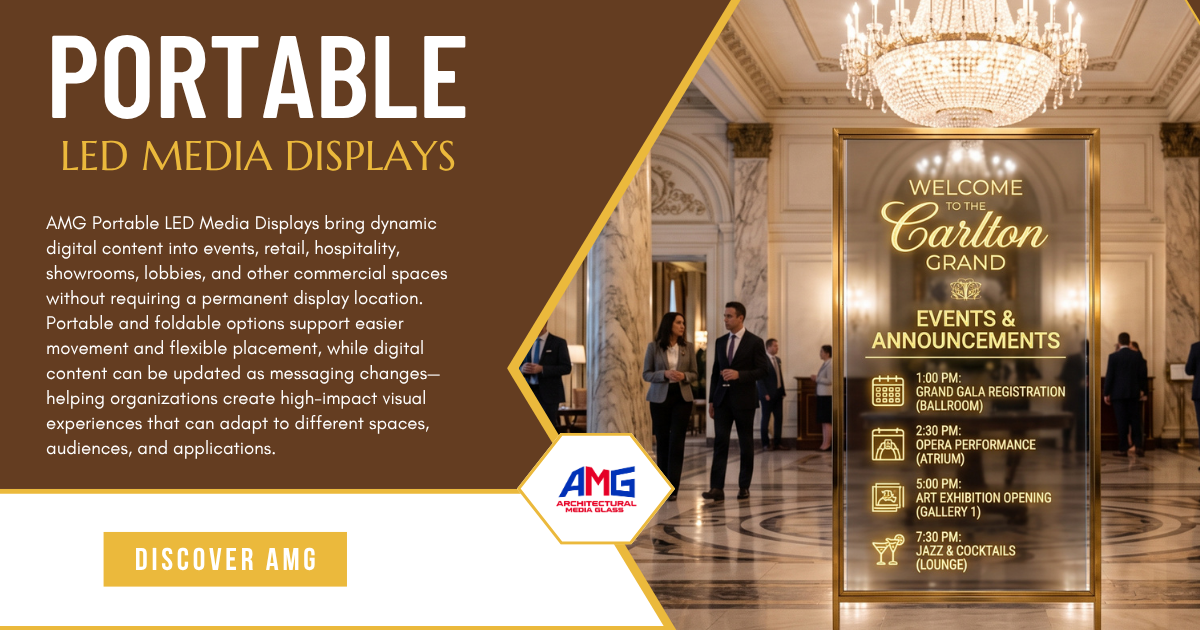
Together, the products create several ways to bring dynamic digital content into exhibitions, conferences, retail environments, corporate receptions, hospitality spaces, and temporary installations.
When the Display Has Its Own Logistics Plan
A display can be called portable and still create a substantial transportation problem.
Large-format screens may require oversized cases, loading docks, freight elevators, additional labour, or a route through the building that bears little resemblance to the route guests will eventually use.
That becomes particularly inconvenient in hotels, conference centres, historic buildings, corporate offices, and temporary venues where back-of-house access is limited.
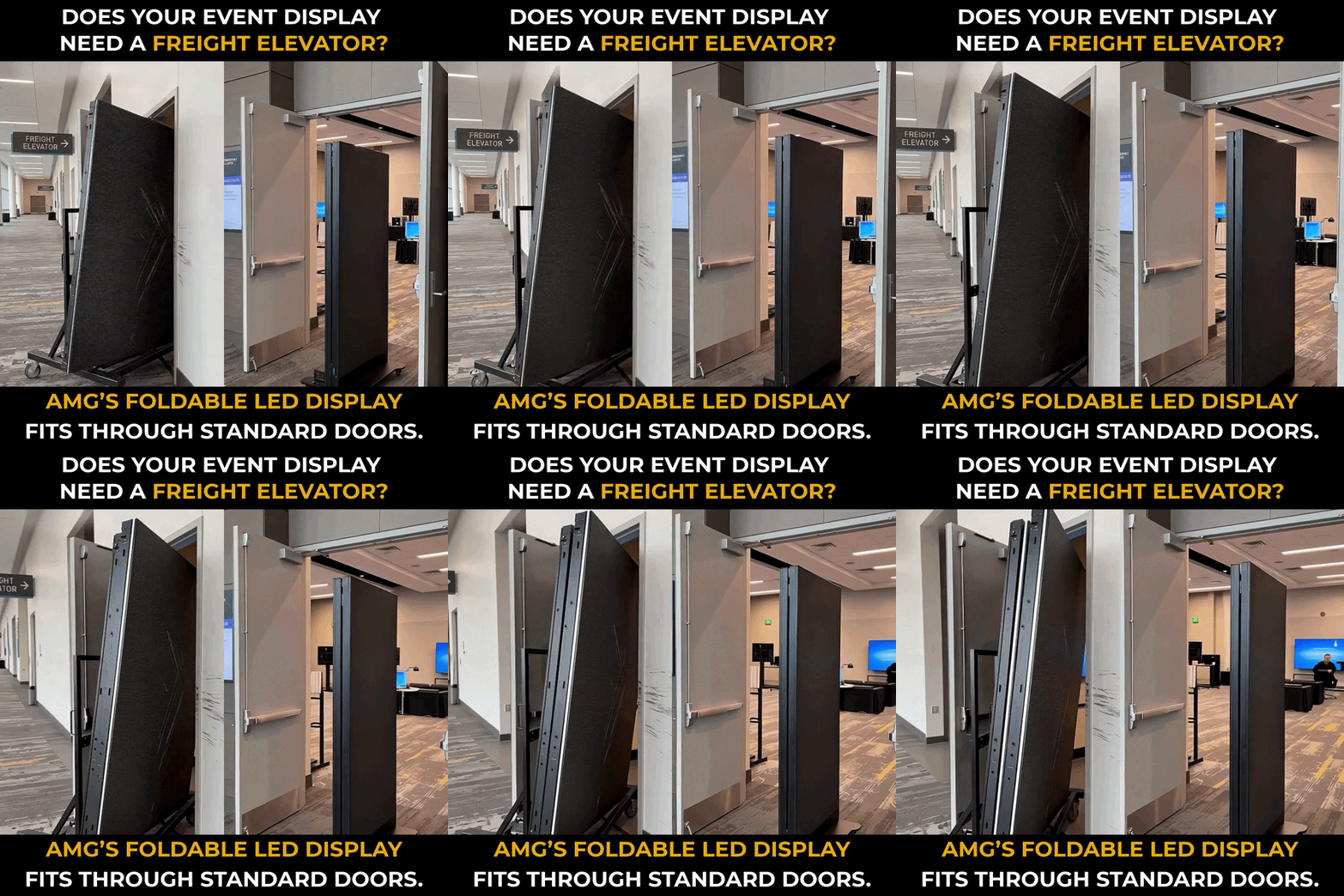
AMG’s E-Poster-M is designed to fold at its midpoint for transport. The screen can be collapsed into a more manageable vertical form, packed into a protective transportation case, moved through standard-sized doors and elevators, and then reopened at the installation location.
Once deployed, the unit provides a 640-by-1920-millimetre active display area in a narrow portrait format. The low base includes integrated casters, allowing the assembled display to be repositioned around an event space without mounting it to a wall or constructing a permanent enclosure.
This does not make the display a lightweight object that one person carries under an arm. The brochure lists the E-Poster-M at approximately 49 kilograms. Its portability comes from reducing the awkward dimensions and access requirements associated with transporting a tall digital sign.
For event teams, exhibitors, facilities staff, and AV partners, that can simplify the journey between delivery, setup, repositioning, packing, and the next event.
The display remains substantial when it is working. It becomes considerably more cooperative when it needs to travel.
When One Poster Is No Longer Enough
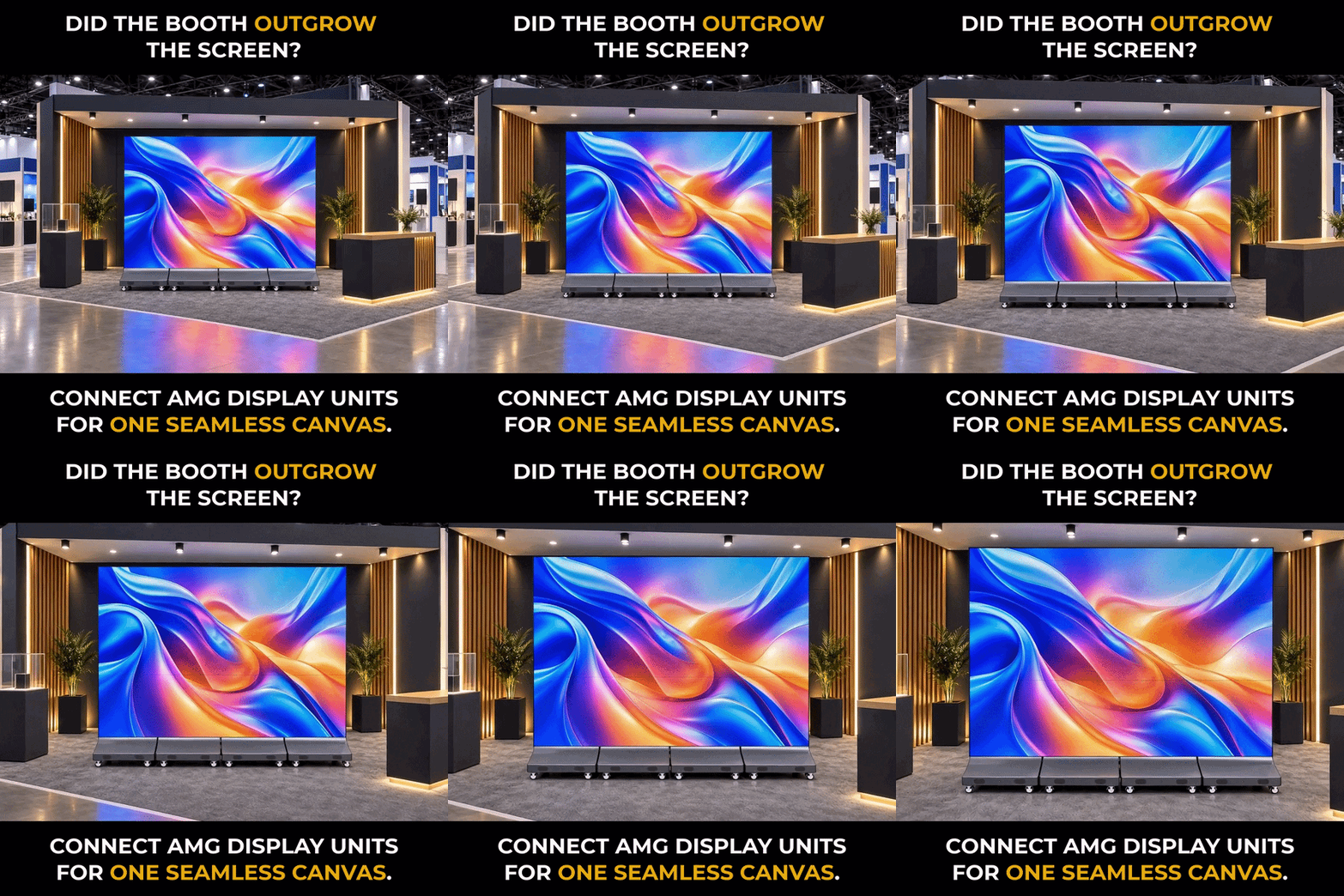
The display selected during early planning may not match the booth that arrives on the show floor.
An exhibit expands. The graphics become more ambitious. A narrow entrance feature becomes a wider presentation surface. The client decides that a single portrait display no longer has enough visual presence.
With many displays, solving that problem means changing products entirely.
The E-Poster-M supports creative splicing, allowing multiple units to be connected so their active display areas work together as one larger canvas. AMG states that as many as ten LED poster boards can be combined.
A single unit can operate as a portrait-oriented welcome sign, schedule board, directory, or campaign display. Two or more units can support wider imagery, panoramic motion graphics, large-format branding, or a coordinated multimedia feature.
That scalability can be valuable for organizations that participate in events of different sizes. The same display family can be used as individual signs at one event and assembled into a larger visual installation at another.
The physical bases remain part of the installation, but the content can extend across the connected active display areas rather than stopping and restarting as a collection of unrelated screens.
This gives designers and event teams more freedom to respond when the footprint, viewing distance, or creative direction changes. The hardware does not have to be abandoned simply because the visual idea became larger.
One display can carry the message. Several can become part of the architecture of the booth.
A Message Does Not Always Need a Wall Behind It
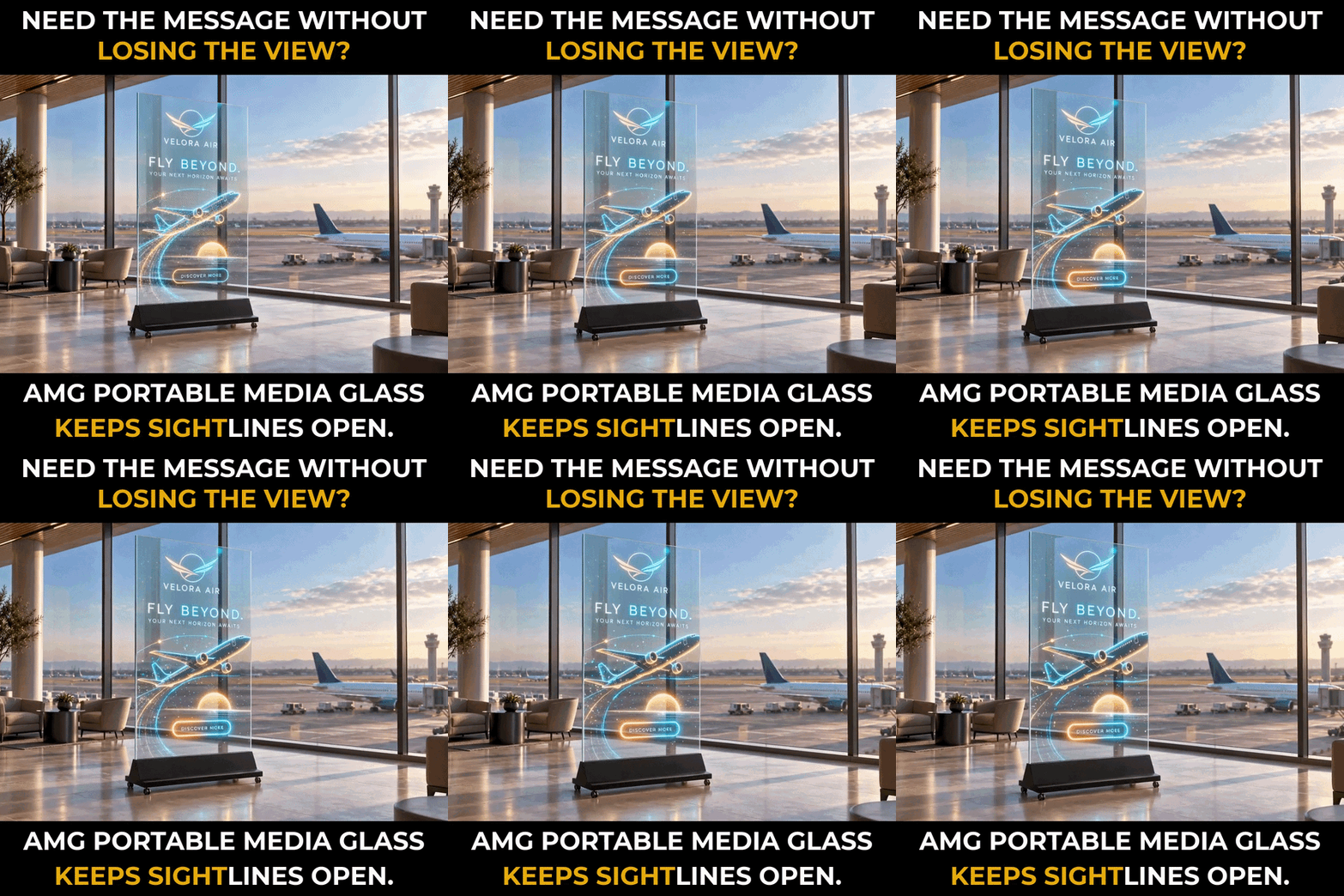
A conventional LED screen is visually solid, even when the content is minimal.
That may work well against a booth wall or inside a dedicated presentation zone. It can be less successful in a glass lobby, airport concourse, open retail environment, hospitality space, or exhibition where the architecture behind the display still matters.
A solid screen can interrupt circulation views, conceal merchandising, block an arrival experience, or make an open environment feel unnecessarily divided.
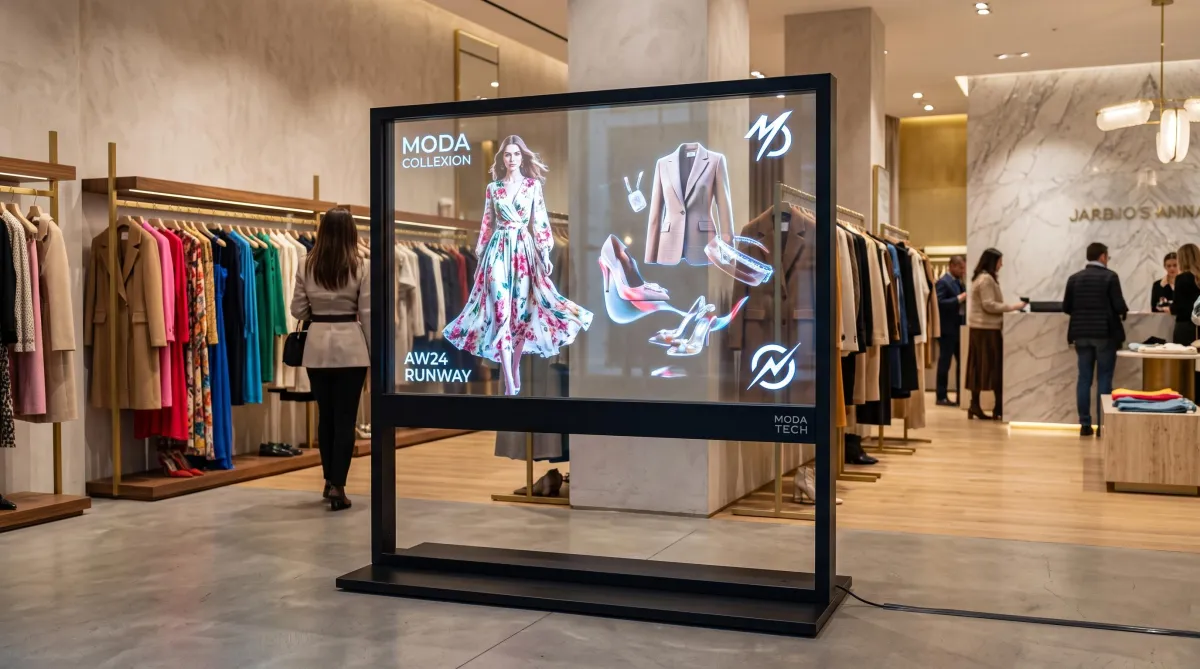
AMG’s Portable Media Glass places LED content on a transparent glass display. Imagery can appear across the active areas of the panel while the surrounding architecture remains visible through the screen.
This creates a different relationship between the content and the space. Instead of reading as a black rectangle placed in front of the environment, the display can layer graphics, motion, products, and digital information over the view behind it.
The brochure lists two configurations: MG-5 and MG-6. Both use a 1200-by-2000-millimetre display area mounted above a full-width wheeled base. The MG-6 provides greater physical transparency, while the MG-5 offers a denser pixel arrangement. That gives specifiers a choice between greater openness and greater image density based on viewing distance, content, and application.
The display is also transparent when powered off, helping it remain visually lighter between presentations or outside operating hours.
Portable Media Glass can be particularly effective for entrances, brand activations, product launches, shopping centres, showrooms, corporate receptions, art installations, and event environments where closing the sightline would undermine the design.
The message remains present. The room does not disappear behind it.
The Schedule Changed After the Printer Left
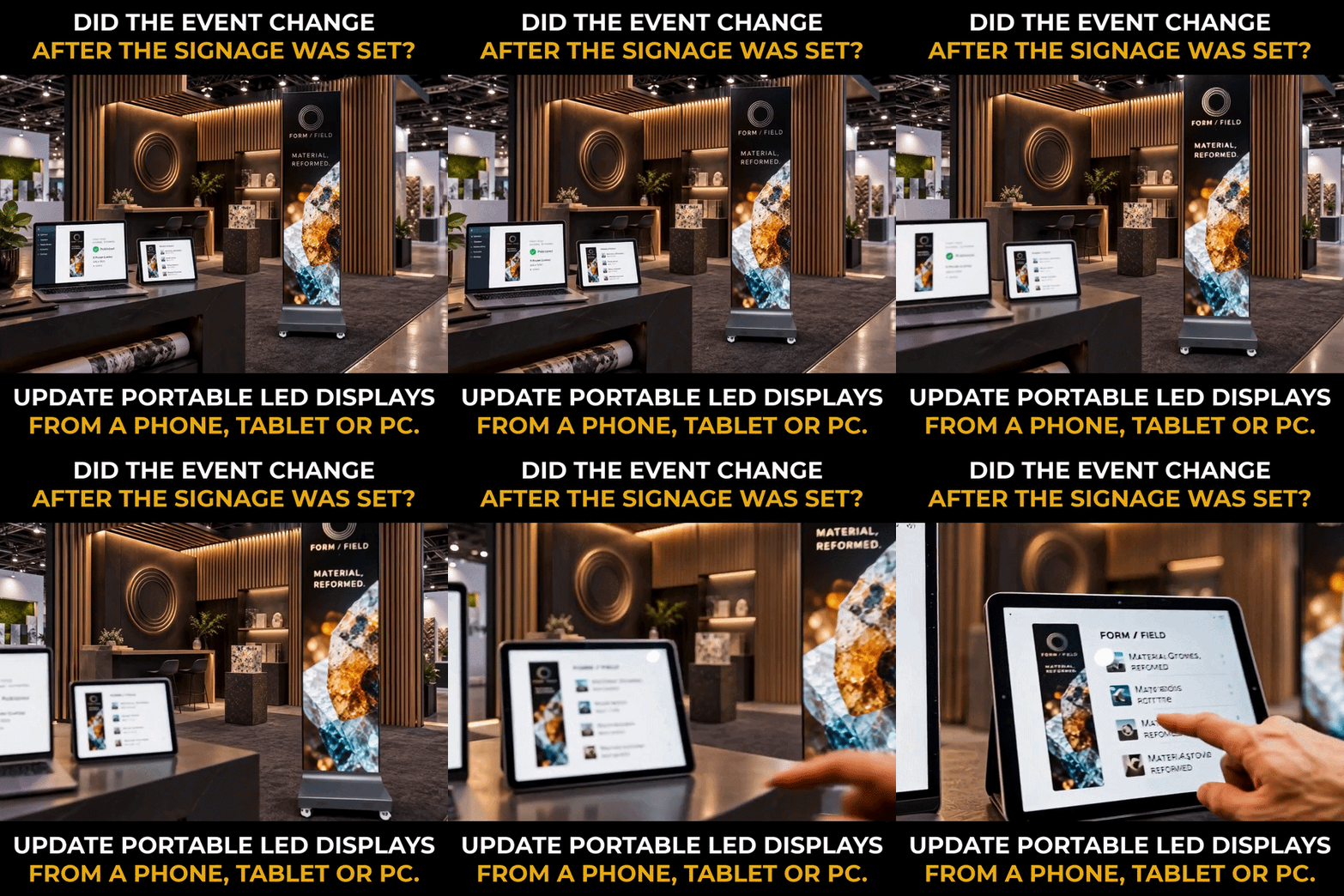
Static signage assumes the message will remain correct.
Events rarely make the same promise.
Room assignments change. Timetables move. Promotional content expires. A sponsor needs to be added. Directions that worked during registration may no longer make sense once the keynote begins.
Printed signs must be replaced, amended, or covered with the universally beloved piece of paper taped over yesterday’s information.
AMG’s portable displays support digital content publishing from mobile devices, tablets, and computers. The E-Poster-M brochure lists asynchronous publishing through USB, PC client, web client, and mobile client, with support for Wi-Fi and 4G transmission. It can also receive synchronous content through an HDMI input.
Portable Media Glass likewise supports mobile, tablet, PC, and remote display control, along with synchronous and asynchronous operating modes.
This gives event teams the ability to change the content while the display remains in position. A wayfinding graphic can become a session schedule. A registration message can be replaced with sponsor content. A booth display can move from an introductory animation to a product demonstration without changing the physical installation.
Digital signage does not eliminate the need for planning. Someone still needs to control the content, maintain the files, confirm the destination display, and approve the update.
What it changes is the cost of being wrong.
When the event moves faster than the original signage plan, the display can move with it—without another print order, another delivery, or another improvised correction at the entrance.
What You Are Actually Specifying
Portable display systems still require several technical decisions.
The E-Poster-M is available in multiple pixel-pitch configurations, including 2.5, 1.86, 1.538, and 1.25 millimetres. The appropriate option will depend on expected viewing distance, image detail, budget, and the type of content being presented.
The unit uses an Android operating system and supports common image and video formats. Front maintenance access can help simplify servicing, while AMG’s GOB protection is intended to improve resistance to moisture, dust, and physical impact—useful considerations for equipment that may be transported and installed repeatedly.
Portable Media Glass requires a different conversation. The MG-5 and MG-6 share the same overall display size but balance pixel density and transparency differently. Content also needs to be designed specifically for a transparent medium. Strong contrast, controlled negative space, and graphics that work with the architecture behind the panel will generally be more effective than simply transferring a conventional full-screen video.
Brightness, ambient light, viewing distance, floor loading, access routes, power, content management, storage, transportation cases, and the position of the wheeled base should all be considered during planning.
Portable does not mean dimensionless, weightless, or installation-free.
It means the display is designed to be deployed, repositioned, updated, reconfigured, and used again without becoming a permanent part of the building.
What Matters Most
AMG’s portable LED display products solve four different event problems.
The foldable E-Poster-M reduces the access challenges created by transporting a tall digital sign. Modular splicing allows multiple units to become a larger canvas when one display is no longer enough. Portable Media Glass presents digital content while preserving visibility through the space. Remote publishing lets event teams change the message after the hardware is already in position.
The value is not simply that the displays are digital.
It is that the physical and digital systems are both designed to adapt.
A unit can move through a standard door, roll into position, operate independently, connect with additional displays, preserve an architectural sightline, and receive new content as the event changes.
That flexibility can reduce the number of completely separate display types needed across a programme of events while giving designers, exhibitors, venues, and communications teams more options once the doors open.
The larger lesson is straightforward: event signage should not become obsolete every time the event plan changes.
If you’re evaluating AMG Portable LED Poster Boards or Portable Media Glass for an exhibition, conference, corporate reception, hospitality venue, retail environment, airport, product launch, or temporary installation, The Ginger Grant Group can help you compare formats, configurations, transparency, viewing distances, content requirements, and deployment needs.