The Weekly Spec, Vol 20: Intensa Lab Seating
Laboratory Seating Should Be Specified Like Laboratory Equipment
How stability, chemical-resistant construction, configurable ergonomics and an extensive color offering help seating respond to the realities of laboratory work
A laboratory stool may appear to be one of the simpler items in the room.
It does not process samples, measure results or control the surrounding environment. It sits beside the equipment that does.
Yet that stool affects how someone approaches the work surface, reaches equipment, maintains position and moves between tasks. Its height must relate to the bench. Its base must suit the floor. Its materials must respond to the environment, and its controls must provide the appropriate degree of adjustment without complicating everyday use.
A stool that works well at one station may be poorly suited to another only a few feet away.
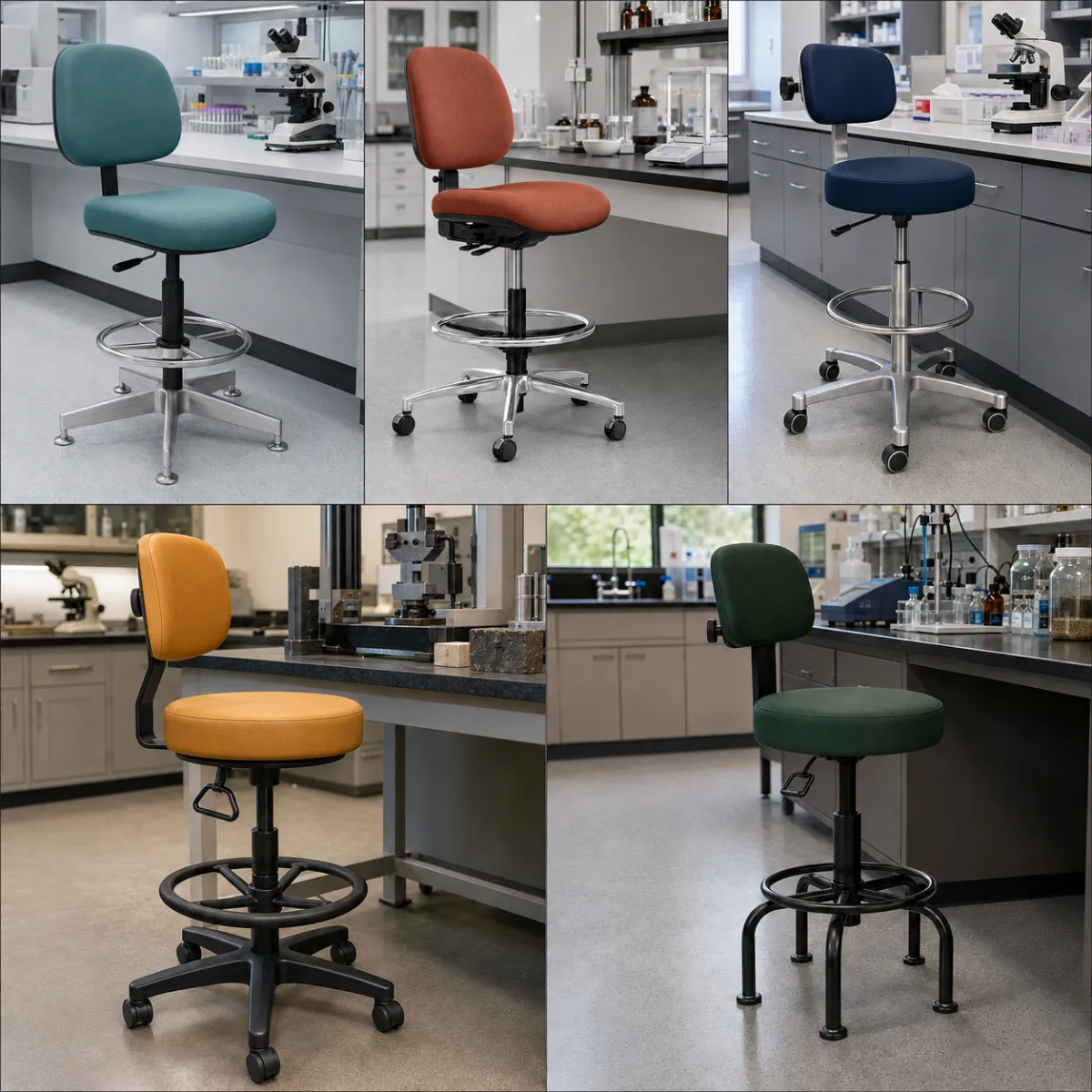
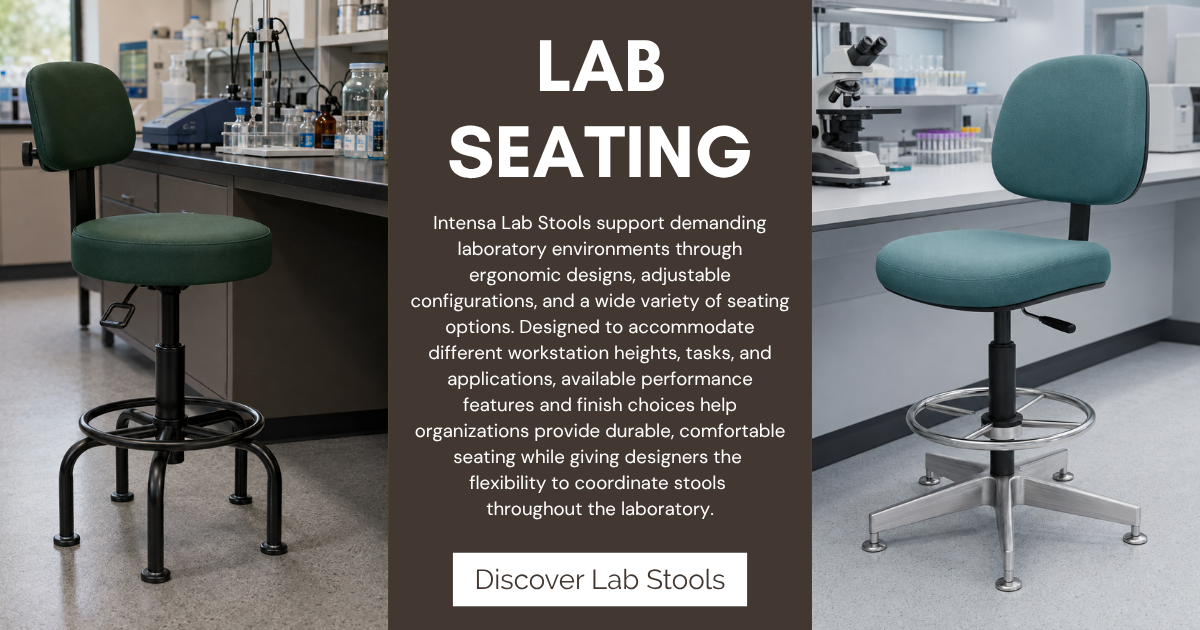
Intensa laboratory seating addresses these differences through multiple seating series, base options, control mechanisms, upholstery choices and caster configurations. The range includes upholstered ergonomic chairs and stools alongside self-skin urethane seating designed for particularly demanding environments.
The specification can therefore begin with the laboratory and its users instead of treating every workstation as though it requires the same chair.
The Stool Should Move When the User Wants It To
Mobility is useful in a laboratory until it becomes movement the user did not ask for.
A stool may need to roll away from the workstation for cleaning or repositioning. During focused work, however, unwanted movement can interrupt posture, reduce stability and force the user to repeatedly pull back toward the bench.
The correct solution depends on the workstation, flooring and expected pattern of movement.
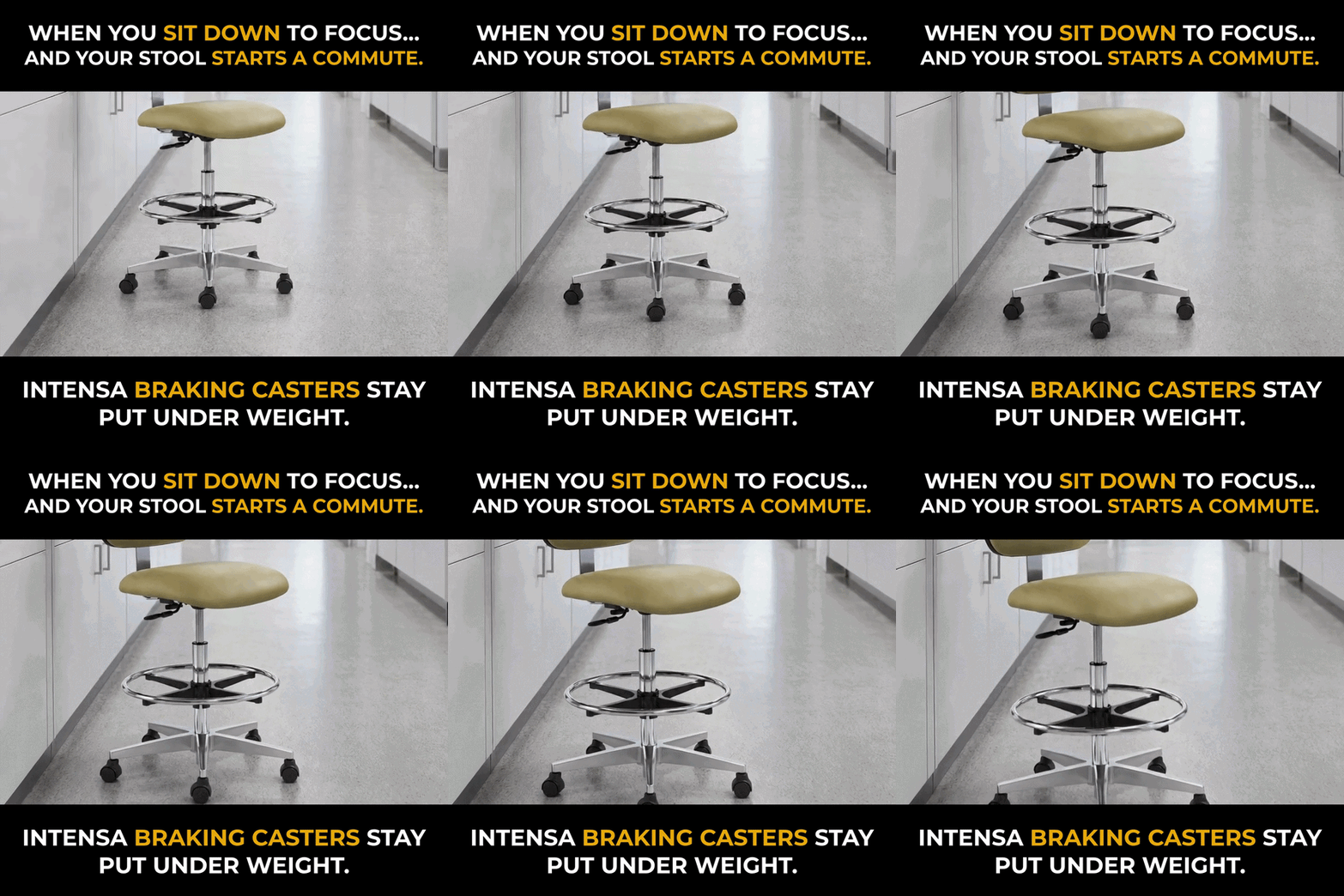
Intensa offers several floor-contact options across its laboratory seating range. These include hard-wheel casters, soft-wheel urethane-tread casters, braking casters, self-braking casters and stationary glides on applicable models. This allows the base to be specified according to how the seat should behave rather than applying one caster type throughout the project.
The self-braking option is particularly relevant where the user needs the stool to resist movement while occupied. It allows the seat to remain mobile when it needs to be repositioned while helping it stay in place when the user sits down to work.
That balance can matter at elevated laboratory benches, where a small amount of unintended rolling may feel more disruptive than it would in a conventional office chair. It may also benefit detailed tasks that require the user to maintain a consistent relationship with instruments, controls or the work surface.
Braking behaviour should not be selected in isolation. The specifier should consider the flooring material, whether users frequently move between adjacent stations, how often the seating must be relocated and whether the application would be better served by conventional casters or stationary glides.
The objective is not to eliminate movement. It is to make sure the movement supports the work.
Sterile Does Not Have to Mean Colorless
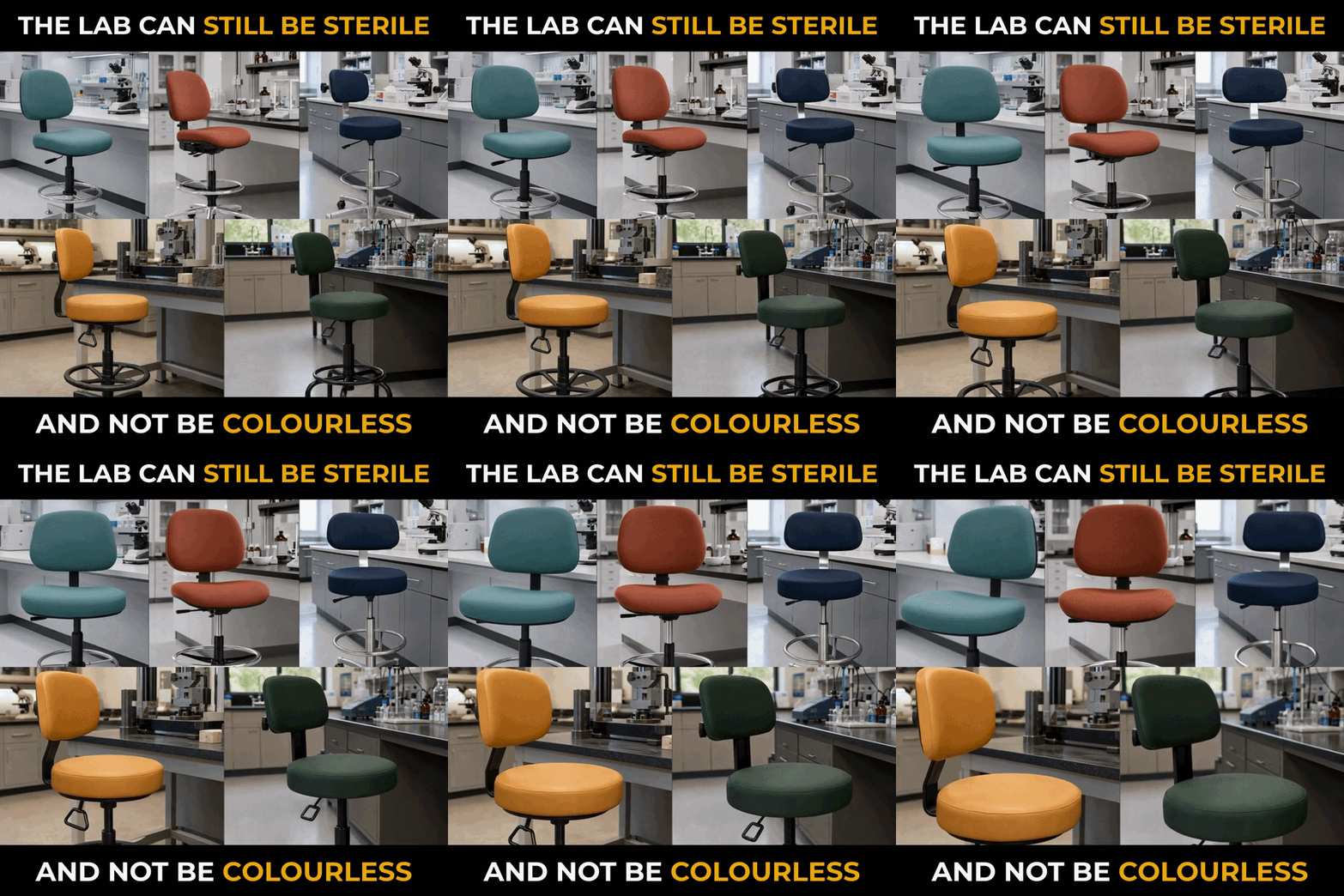
Laboratories have traditionally relied on a narrow material palette. White, grey, black and stainless steel communicate cleanliness and technical performance, but they can also make every area feel visually identical.
Color gives designers another way to organize and humanize the environment.
Different upholstery colors can help distinguish teams, departments, workstation types or functional zones. Color can reinforce wayfinding, coordinate with surrounding finishes or introduce warmth into spaces dominated by hard surfaces and technical equipment.
Intensa describes color as part of its design DNA. Its laboratory seating is available through multiple textile collections with extensive palettes, coordinating patterns and non-PVC vinyl options. Pre-approved customer material can also be considered when a project requires closer coordination with an established interior scheme.
The upholstered 810 and 830 Series chairs are available in 24 industry-standard vinyl colors, approved C.F. Stinson coverings or qualifying customer-supplied material. The 860 and 870 Series stools similarly offer a variety of patterns and colors, allowing the seating to participate in the design concept rather than being treated as an unavoidable technical accessory.
Color selection must still begin with performance. Upholstery should be evaluated against the chemicals, cleaners, disinfection procedures and regulatory requirements relevant to the laboratory. A finish appropriate for an educational science room may not be appropriate for a cleanroom, diagnostic environment or laboratory using more aggressive cleaning agents.
When those requirements have been satisfied, there is no reason the remaining aesthetic decisions must default to colorless.
Laboratory seating can support the visual identity of the project while still performing its practical role.
The Work May Be Delicate. The Seating Should Not Be.
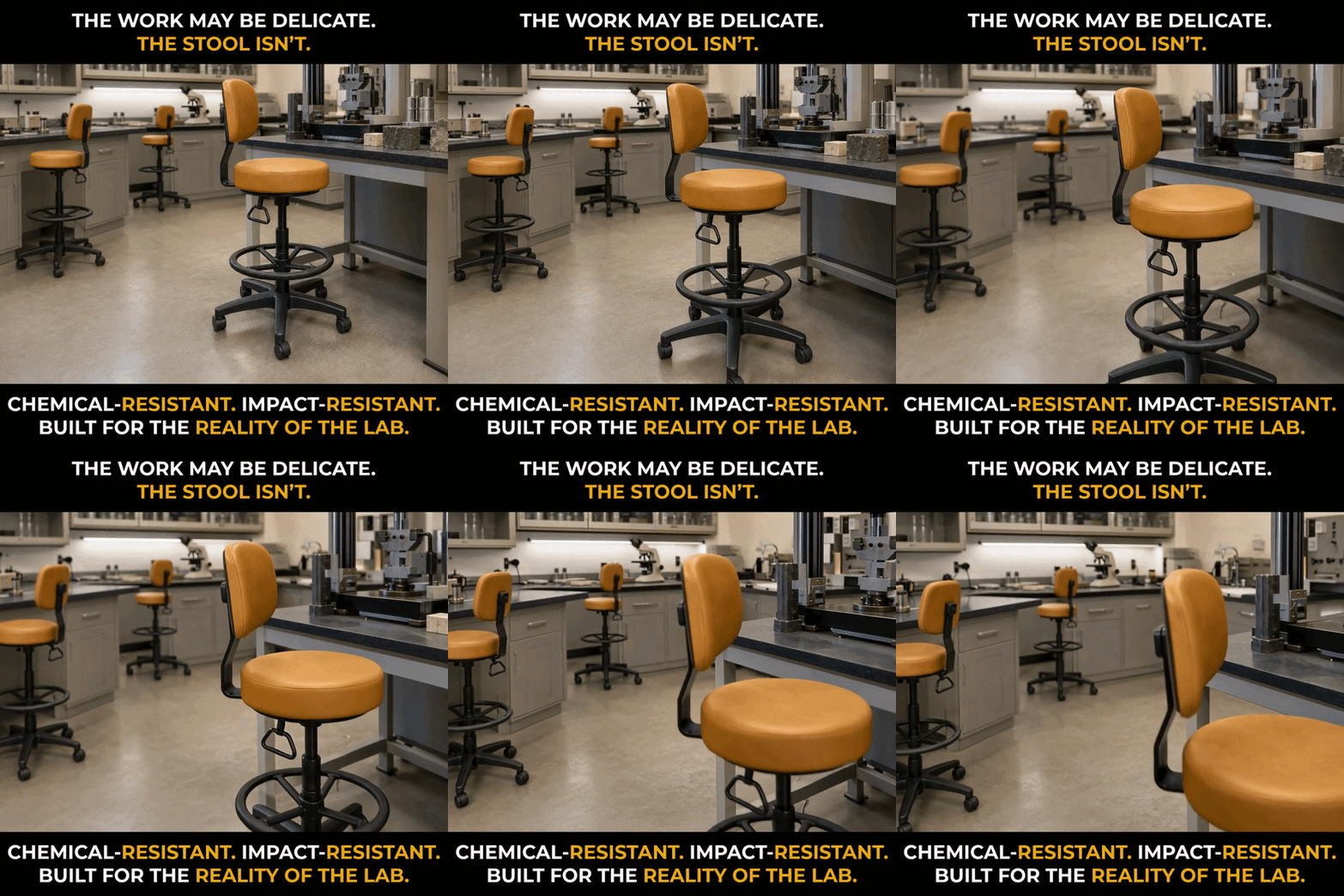
Laboratory work often involves fragile samples, calibrated equipment and carefully controlled procedures.
The seating exists in a less delicate reality.
It may be repositioned repeatedly, pushed beneath benches, exposed to cleaning chemicals or struck by equipment and surrounding furniture. A conventional upholstered stool selected primarily for appearance may not provide the material performance required for that environment.
Intensa’s 840 Series is designed for particularly demanding laboratory applications. The chairs use an all-steel inner frame wrapped in self-skin urethane. Intensa describes the material as impervious to harsh chemicals and impact-resistant, creating a seating surface suited to environments where durability and cleanability are central to the specification.
The series also incorporates pneumatic height adjustment, a 20-inch footring and a maximum weight capacity of 350 pounds when evenly distributed. Single- and dual-control configurations provide different levels of adjustment, while available base types allow the seating to respond to the application and surrounding finishes.
Self-skin urethane creates a different seating experience from conventional upholstery. It may be the stronger choice where chemical exposure, impact resistance and repeatable cleaning take priority. In another laboratory, upholstered seating may provide the preferred balance of comfort, appearance and adjustability.
The distinction matters because “laboratory seating” is not one uniform performance category. The anticipated exposure, cleaning protocol, duration of use and required ergonomic functions should all influence which construction is appropriate.
Specifying the most durable option everywhere can introduce unnecessary cost or compromise comfort. Specifying a conventional option where harsher performance is required can shorten the useful life of the product.
The best choice is the one that reflects what the seat will actually encounter.
One Laboratory Can Contain Several Different Workstations
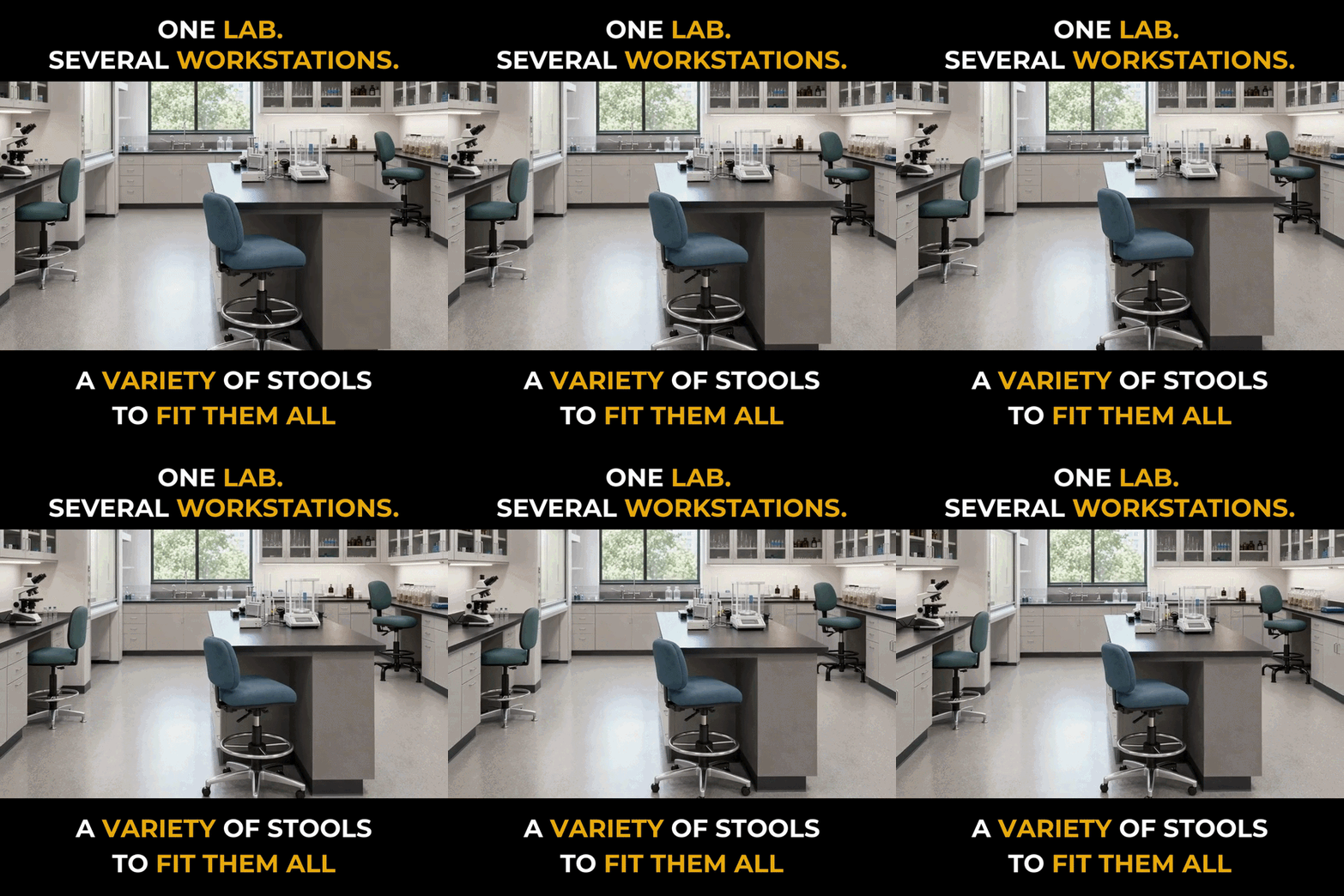
A laboratory may include seated documentation areas, elevated testing benches, microscopy stations, equipment counters and shared work surfaces within the same room.
Those stations do not necessarily require the same seat height, controls or base.
Intensa’s upholstered 860 and 870 Series stools include pneumatic height adjustment, lateral backrest adjustment and a 350-pound maximum weight capacity when evenly distributed. Applicable options include a lower-range cylinder and a crescent-style backrest, while different bases allow the visual and functional specification to respond to the workstation.
The 860 Series uses single-lever hardware. The 870 Series uses a D-ring release control. Intensa also offers laboratory chairs through the 810 and 830 Series, providing lower seating configurations where a stool-height product is not appropriate.
Across the broader range, designers can consider polished or brushed aluminium bases, black nylon composite bases and tubular steel configurations, alongside the available caster and glide choices. Some seating designs also support cleanroom or electrostatic-discharge applications, although those requirements must be confirmed for the selected model and configuration.
This variety allows one laboratory to maintain a coordinated seating family without forcing every user into an identical specification.
A tall stool with a footring may support work at an elevated bench. A lower chair may be more appropriate for a desk-height station. A self-skin urethane model may serve a harsher testing environment, while upholstered seating may suit longer periods of seated work in another zone.
The user should also be considered directly. Seat height is only one element of fit. Backrest position, control access, foot support, movement and the duration of each task all affect how successfully the seat relates to the person and the workstation.
For designers and laboratory planners, the goal is consistency without false uniformity: a coordinated specification that still acknowledges the different work happening throughout the room.
What Matters Most
Intensa laboratory seating offers a broad set of choices because laboratory environments place different demands on the people and furniture within them.
Caster and glide options allow movement to be specified according to the workstation and flooring. Upholstery collections introduce colour, pattern and material choice into spaces that do not need to be visually sterile simply because they are technically controlled.
For demanding environments, the 840 Series combines an all-steel inner frame with chemical- and impact-resistant self-skin urethane. Upholstered chairs and stools provide alternative combinations of adjustment, comfort and visual flexibility. Across applicable products, different controls, backrests, bases, height ranges and application-specific options help the seating respond to different users and workstation types.
The value is not found in specifying every available feature. It comes from understanding which features matter at each position.
A stool used for short periods beside a shared counter should not automatically be specified like one used throughout an entire shift. Seating for a harsh chemical environment should not be selected using the same criteria as seating for an educational laboratory. A station where movement is useful may require a different caster from one where stability is the priority.
Laboratory seating performs best when it is treated as part of the workstation rather than a product added after the benches and equipment have already been planned.
The bench establishes the working height. The task establishes the posture. The environment establishes the material requirements. The user establishes the need for adjustment and support.
The seat must bring those requirements together.
If you’re evaluating laboratory seating for research, healthcare, pharmaceutical, education, cleanroom or testing environments, GGG can help you compare Intensa seating series, materials, bases, caster options, controls and ergonomic requirements in relation to your workstations and users.