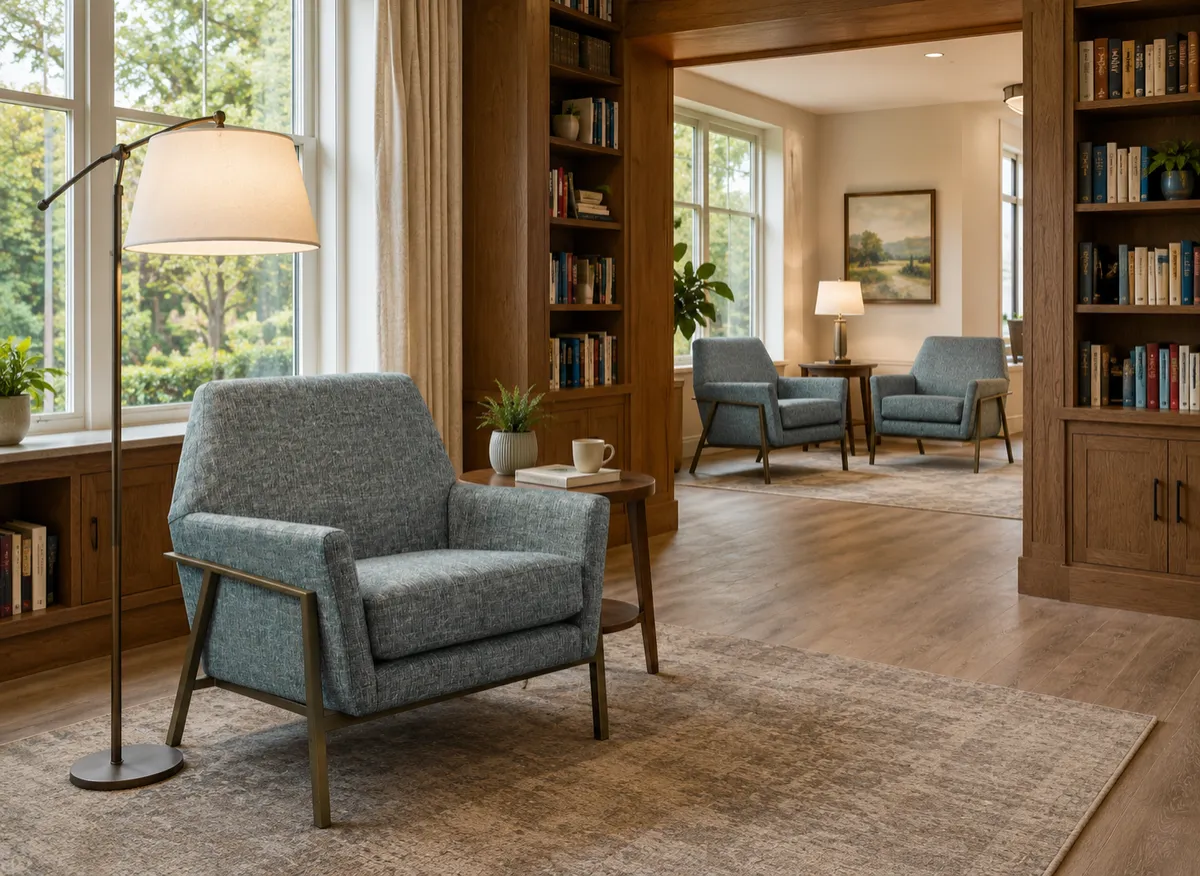
The Weekly Spec, Vol 21: Dor-Val's Helix Armchair
Comfort Without the Visual Weight
How residential warmth, an open silhouette and multi-space versatility help commercial interiors feel more comfortable without becoming visually heavy
Comfortable lounge seating often comes with a tradeoff. The deeper the cushion, the broader the arms and the more generous the proportions become, the more visual space the chair can appear to occupy.
That can create challenges in hospitality and senior living environments. Guestrooms, lobbies, lounges and visiting areas all need seating that feels inviting, but they also need to remain open, easy to navigate and visually connected. A chair can be comfortable without becoming the largest object in the room.
The Helix armchair from Dor-Val is designed around that balance. Its upholstered form provides softness and presence, while its exposed frame and open base keep the silhouette lighter. The result is a lounge chair that can contribute warmth and character without overwhelming the surrounding interior.
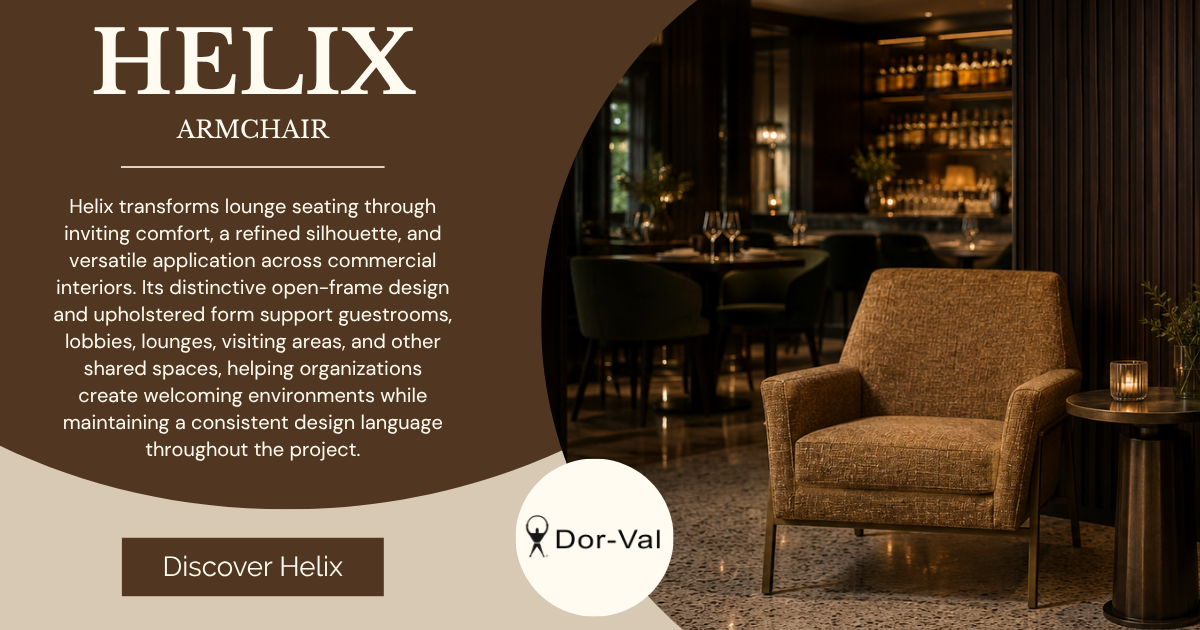
Comfort Does Not Have to Feel Bulky
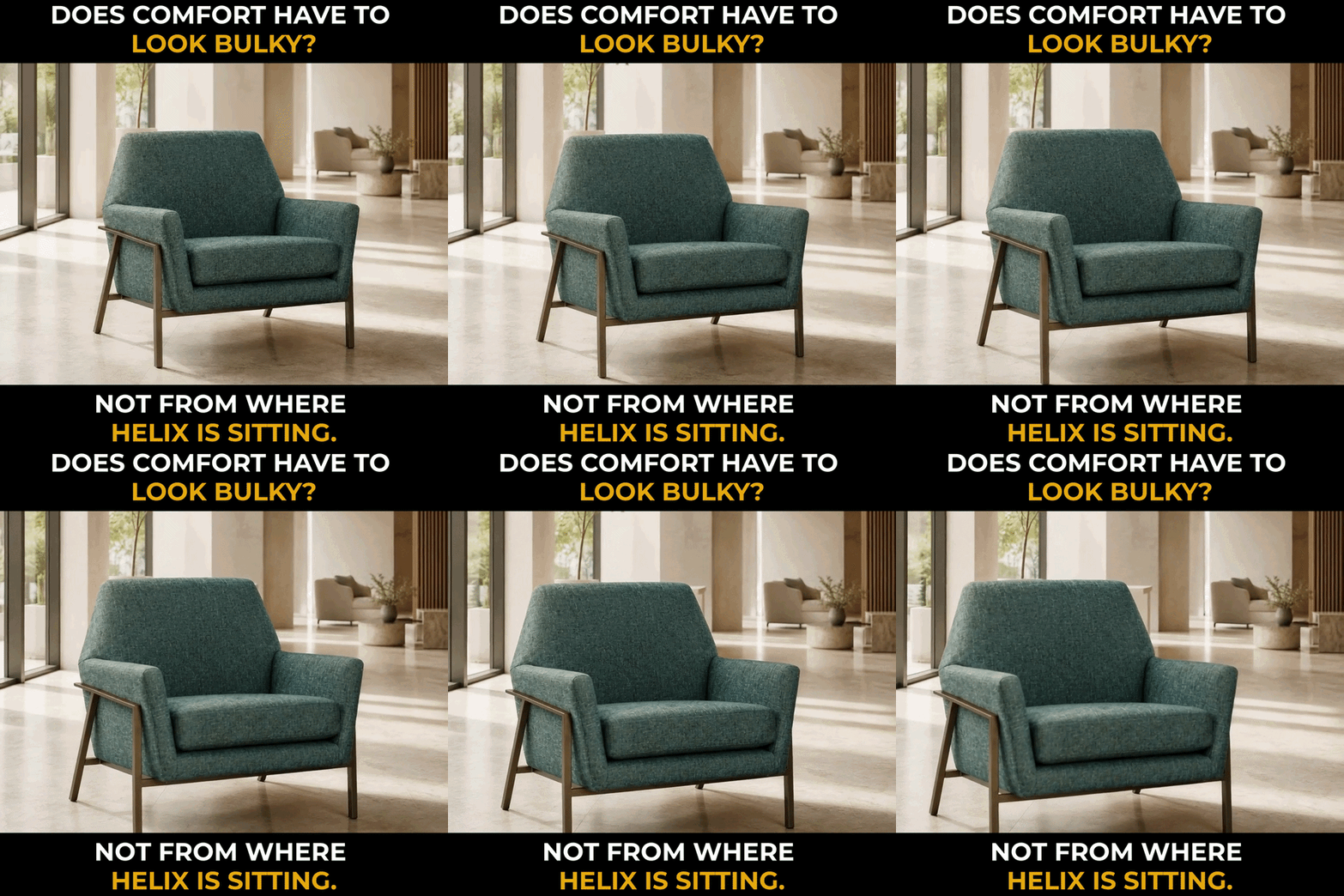
The perceived size of a chair is not determined by dimensions alone. The amount of upholstery, the openness beneath the seat, the relationship between the arms and frame and the way the chair meets the floor all affect how heavy it appears within a room.
Helix uses a broad upholstered back, supportive seat cushion and low arms to create an inviting place to sit. Around that softness, the exposed frame introduces definition and negative space. Instead of reading as one solid upholstered block, the chair has a more open architectural outline.
That distinction becomes important in compact guestrooms, reception areas and shared lounges where every piece contributes to the overall sense of space. Seating still needs to feel substantial enough for extended use, but it should not make circulation paths or furniture groupings feel crowded.
For designers, Helix offers a way to specify comfort while maintaining a lighter visual composition. The chair can anchor a seating area without appearing to consume it.
Senior Living Should Still Feel Like Living
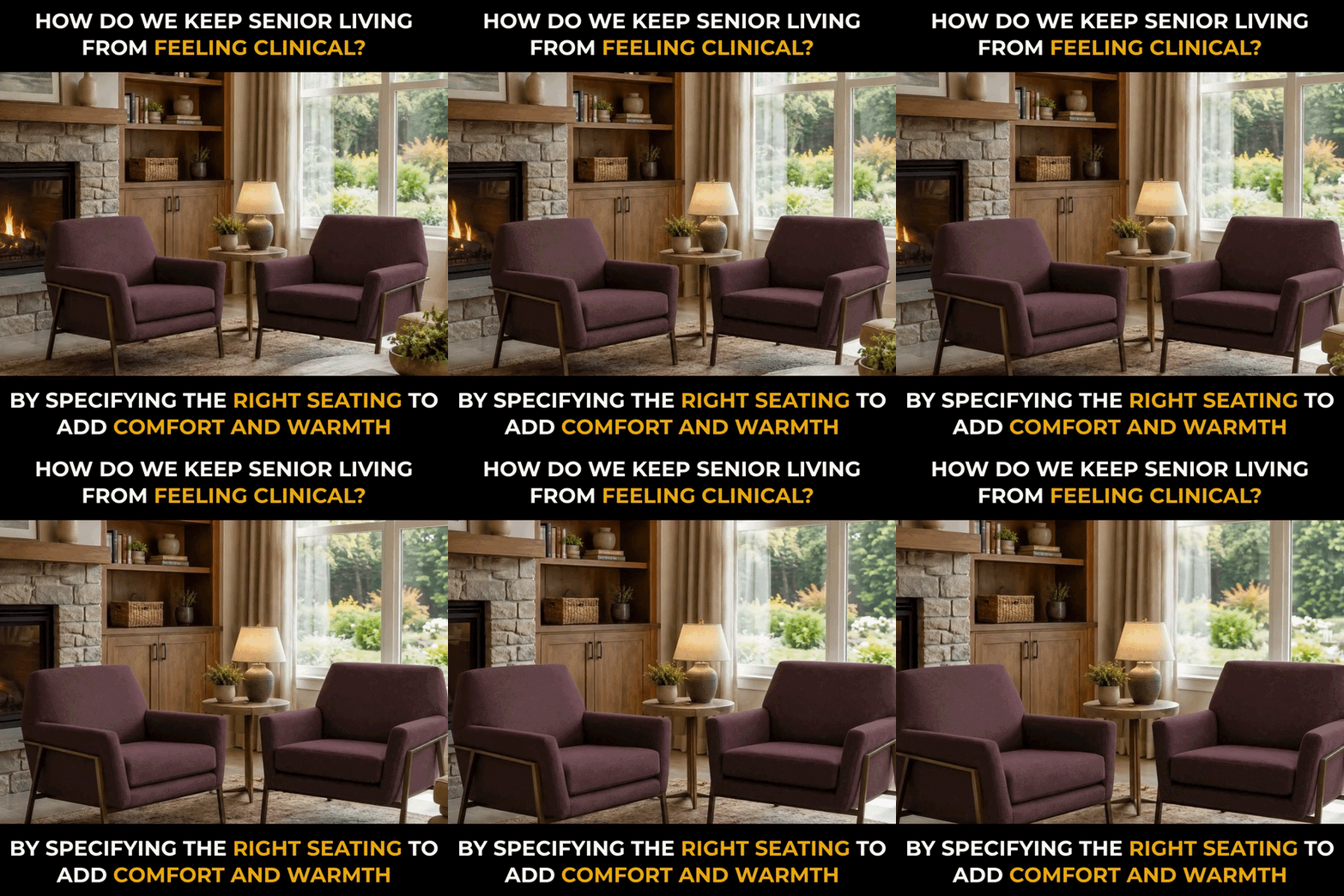
Senior living spaces must support practical daily use, but practicality should not become the entire visual identity of the interior. Residents, families and visitors experience these environments as places to gather, rest and spend meaningful time together—not simply as facilities.
Furniture plays a direct role in shaping that experience. Seating that feels overly institutional can make even a carefully designed room feel clinical. Residential-inspired proportions, warm upholstery and familiar lounge forms help shared spaces feel more relaxed and personal.
Helix brings that softer character into commercial applications. Its tailored upholstery and defined silhouette can sit comfortably alongside warm woods, layered textiles, artwork and domestic-scale lighting. The chair supports the atmosphere of a living room while remaining appropriate for hospitality and senior living specifications.
The upholstery selection is part of that decision. A calm neutral can help the chair blend into a quiet guestroom, while a deeper colour can give a lounge or visiting area a stronger focal point. In either case, the chair becomes part of the emotional tone of the room.
Good senior living design does not disguise function. It balances function with dignity, familiarity and warmth. Helix gives designers another way to make that balance visible.
One Chair, More Than One Kind of Space
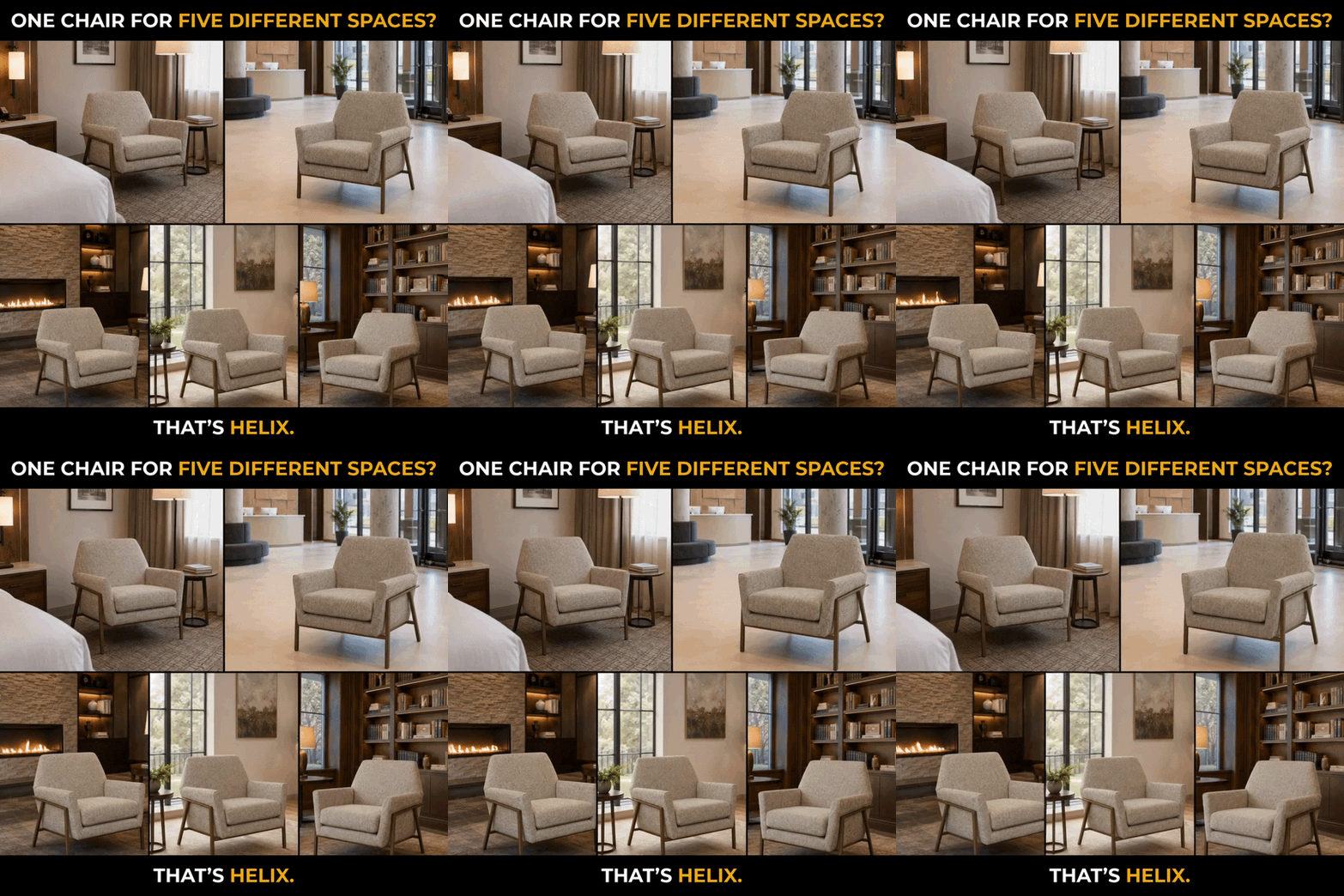
A hospitality or senior living project rarely needs lounge seating in only one location. Guestrooms may need a comfortable reading chair. Lobbies need places for short waits and informal conversation. Lounges support longer visits, while libraries, fireside rooms and shared living areas each have their own atmosphere.
Specifying a completely different chair for every setting can fragment the design language and add complexity to furniture schedules. Using one recognisable form across several applications can create continuity while upholstery and surrounding materials respond to the character of each room.
Helix has a versatile visual language that supports that approach. Its silhouette is distinctive enough to contribute to the design, but restrained enough to work across different palettes and planning conditions. The same chair can feel quiet in a guestroom, conversational in a paired lounge arrangement or more expressive when used as an accent piece.
This does not mean every space should be furnished identically. It means the chair can become a consistent thread across the project. Designers can vary colour, texture and placement while maintaining a cohesive family resemblance from one area to the next.
For operators and project teams, that consistency can also make future furniture decisions more straightforward. A familiar seating form is easier to repeat, reposition within the design plan or incorporate into later phases without introducing an unrelated visual element.
Let the Silhouette Do the Talking
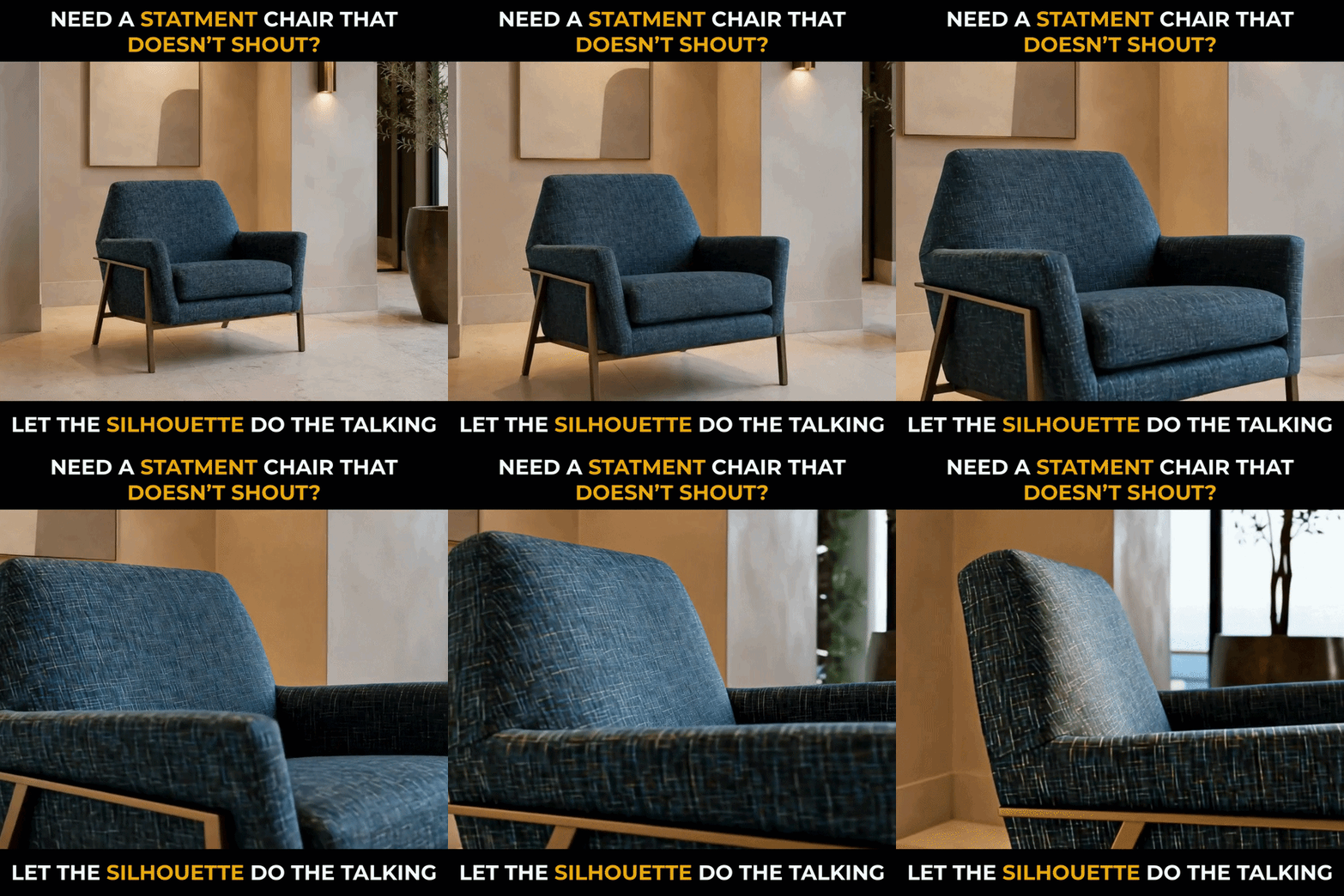
A statement chair does not need an exaggerated shape, oversized scale or loud pattern. Sometimes the strongest visual impact comes from proportion, line and the way a piece holds its place within the architecture.
Helix creates that presence through contrast. Soft upholstery sits within a clearly expressed frame, while the angled rear supports and open base give the chair a recognisable profile from more than one direction. The silhouette remains legible even when the upholstery is specified in a restrained colour.
That makes the chair useful in interiors where the furniture should contribute character without becoming a distraction. A single Helix chair can punctuate a reception area or guestroom corner. A pair can establish a composed conversation setting. Repeated chairs can create rhythm across a larger lounge without making the space feel overly busy.
The surrounding interior still matters. Scale, sightlines, side tables, lighting and upholstery all influence how strongly the chair reads. The opportunity is to let the form participate in the design rather than relying on colour alone to create interest.
For specifiers, that is a quieter kind of statement: one built through silhouette and material instead of volume.
What Matters Most
Helix brings together several qualities that commercial lounge seating is often asked to balance: visible comfort, residential warmth, a lighter architectural profile and enough versatility to work across multiple settings.
Its value is not limited to one room type. The chair can support guestrooms, reception spaces, lobbies, lounges and visiting areas while helping the project maintain a consistent visual language. Upholstery choices can shift the mood, but the recognisable silhouette continues to connect the spaces.
Most importantly, Helix demonstrates that comfort does not have to look bulky and commercial seating does not have to feel institutional. A chair can provide softness, structure and visual character while still allowing the room around it to breathe.
The larger design lesson is simple: the most useful statement pieces do not demand attention. They earn it through proportion, material and how well they belong in the space.
If you’re evaluating Helix for a hospitality, senior living, multifamily, healthcare or commercial interior, GGG can help you compare upholstery directions, applications and specification considerations in relation to your project and its users.