The Weekly Spec, Vol 26: Gressco Farmyard Fun Mural
The Weekly Spec: Gressco Farmyard Fun Mural
When the Wall Becomes Part of the Experience
Gressco Farm Yard Fun Modular Mural Kit | Interactive Play, Early Learning, and Acoustic Design
A children's space has to do more than look welcoming.
In a pediatric waiting room, it needs to give children something to engage with while families wait. In a library, it needs to support exploration without taking valuable space away from books, seating, and circulation. In an early learning environment, it should encourage discovery while still functioning as a practical, well-planned interior.
And in all these environments, designers must think about the sounds that come with children learning, playing, and interacting.
These are not separate challenges. They frequently exist in the same room, competing for the same square footage and project budget.
What if one wall could contribute to several of those needs at once?
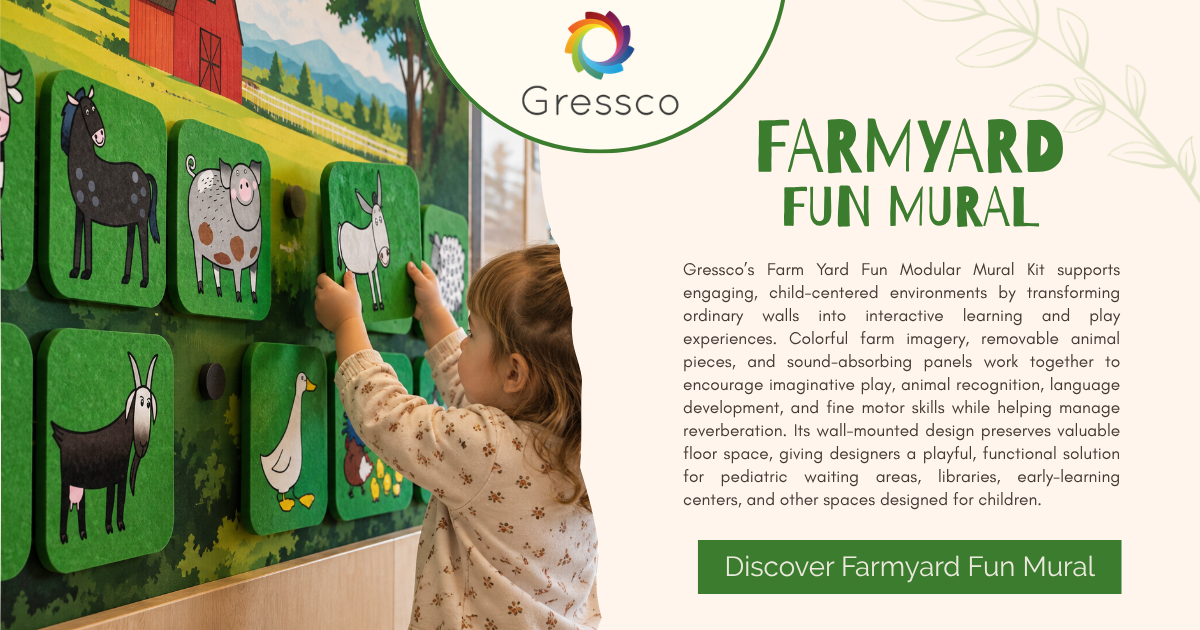
That's the opportunity behind Gressco's Farm Yard Fun Modular Mural Kit, developed with acoustic PET material.
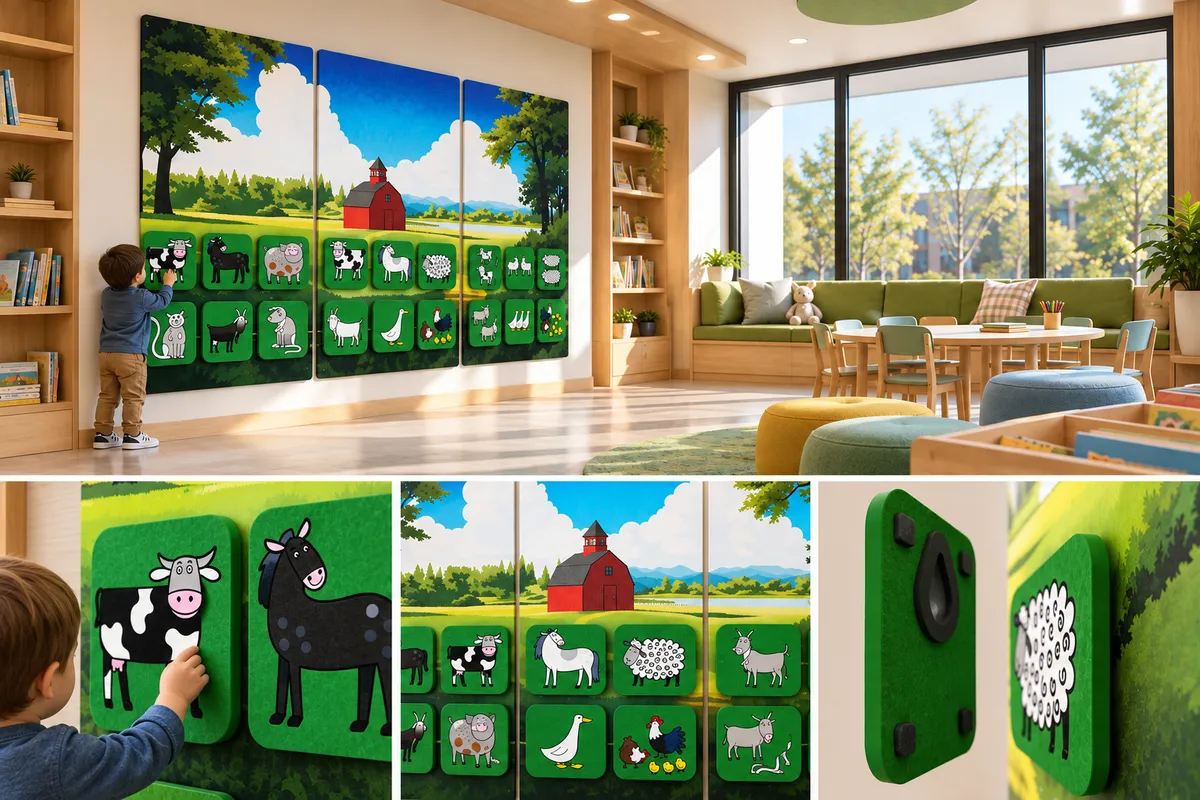
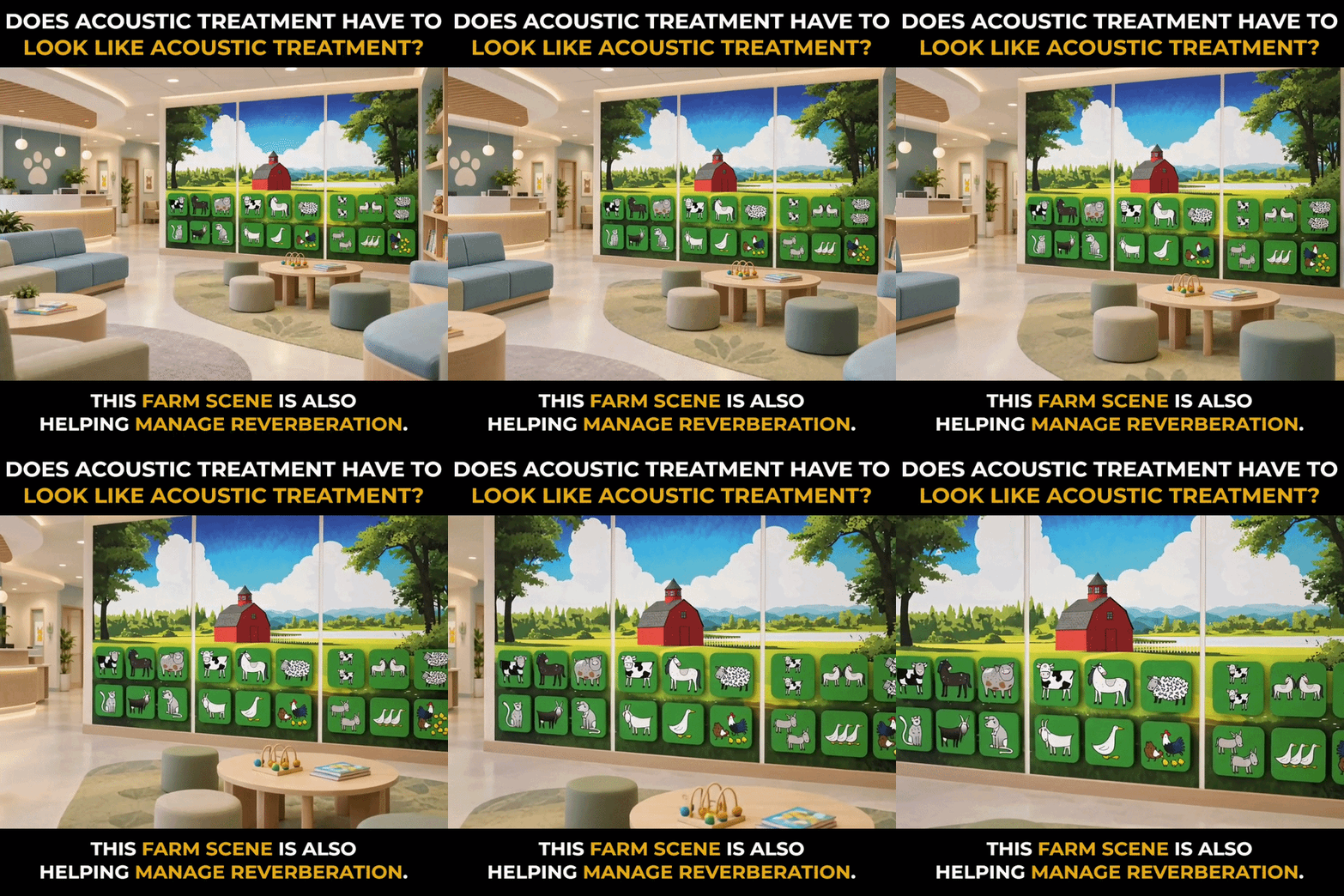
At first glance, it is a colorful farm scene. A red barn sits among green fields, rolling hills, trees, and a bright blue sky. Familiar farm animals add a playful, approachable quality that fits naturally into spaces designed for young children.
Look closer, however, and the product becomes more interesting.
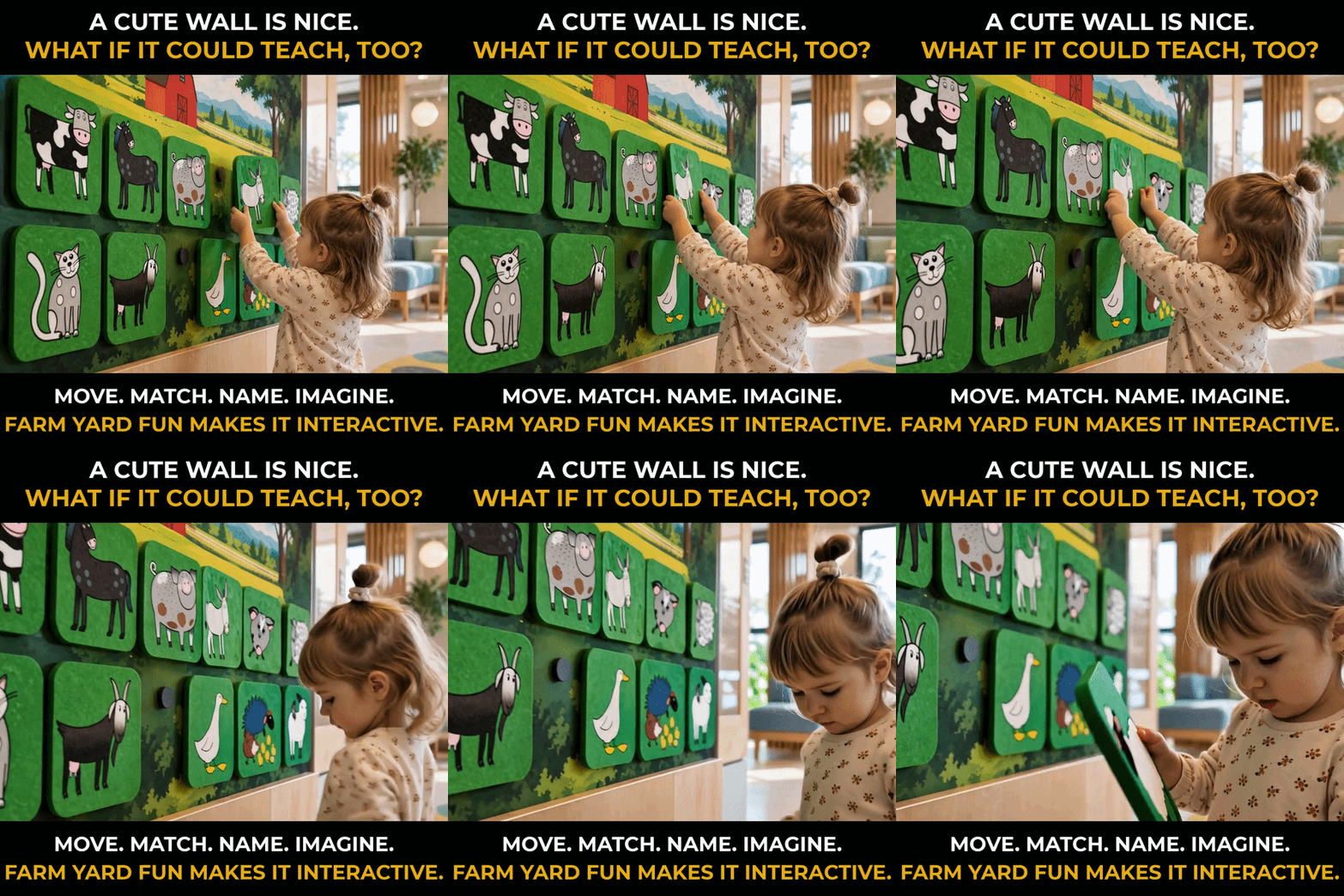
The animal illustrations are printed on removable, repositionable cards. Children can move them around the mural, giving the installation a hands-on function rather than making it something to observe from a distance.
The mural also incorporates sound-absorbing PET material, contributing to acoustic treatment while maintaining its playful appearance.
The result is a wall system designed to support interactive play, early learning, visual interest, and acoustic absorption within the same architectural footprint.
For designers and dealers working in children's environments, that combination deserves a closer look.
Designed a Waiting Room for Kids? Don't Forget the Waiting.
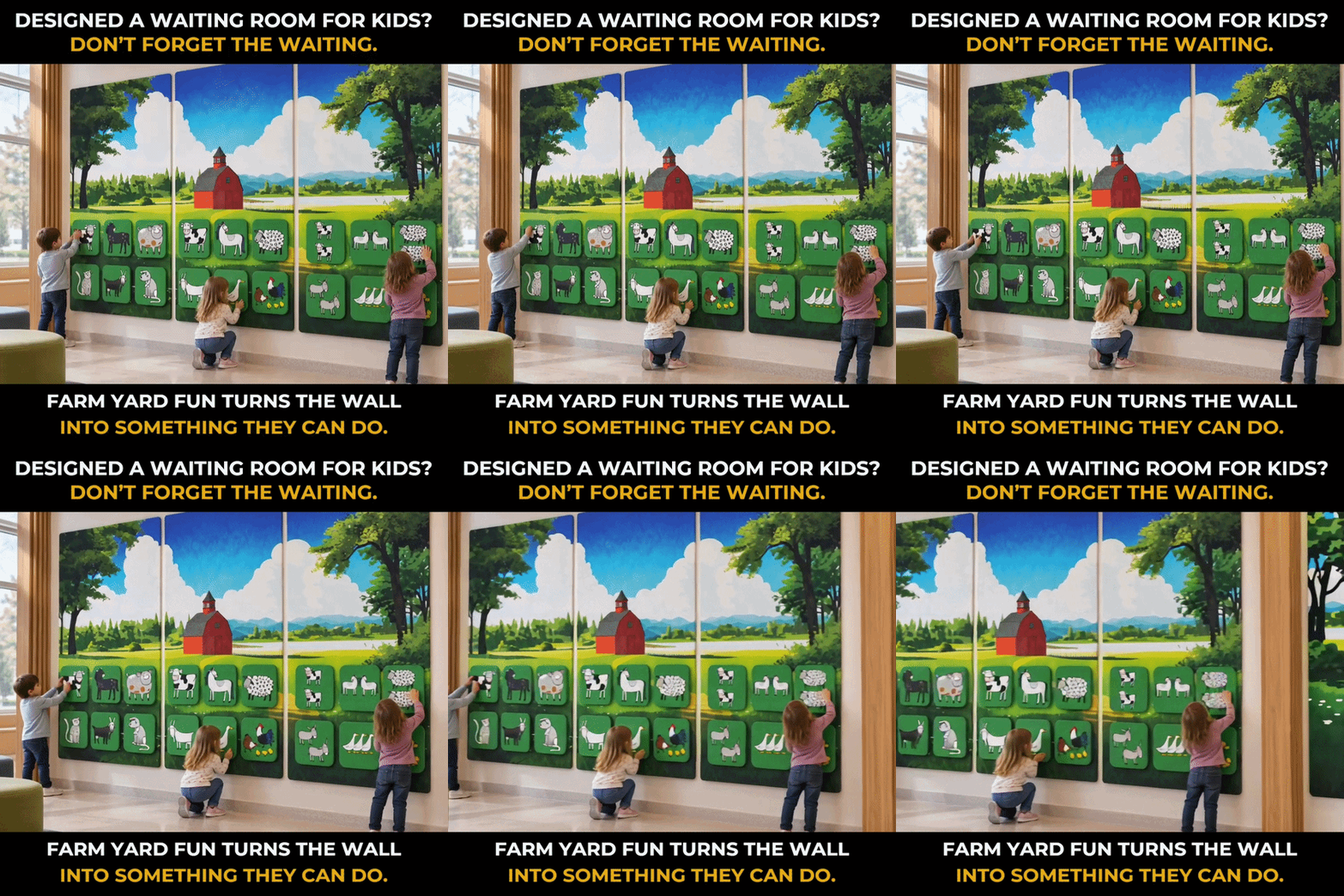
Waiting is one of the most overlooked parts of designing a children's environment.
Consider a pediatric clinic.
A designer may thoughtfully select comfortable seating, durable finishes, appropriate lighting, and a calming color palette. The reception area may be attractive, organized, and accessible.
But then a family arrives with a four-year-old.
The child has little interest in the upholstery, the reception desk, or the thoughtfully selected artwork. They're in an unfamiliar place, and there's no guarantee they know how long they'll be there.
The question becomes less about whether the space looks appropriate and more about what the child can actually do within it.
From passive decoration to active engagement
Traditional murals can establish a theme, reinforce a brand, or make a clinical space feel friendlier.
Those benefits matter, particularly in healthcare environments where an inviting setting can help reduce the institutional feel of a room.
But traditional murals are generally passive.
Children look at them. They may point to an animal or ask a question about a picture. Beyond that, the experience depends largely on what the child or an accompanying adult makes of it.
Farm Yard Fun introduces another possibility.
Its removable illustrated animal cards allow children to interact directly with the wall. A child can take down a cow, choose another location for it, replace it, or move on to a different animal.
Another child might identify the horses, look for the sheep, or invent a story about the animals gathered around the barn.
A parent might ask:
"Can you find the pig?"
"Where should the ducks go?"
"What sound does the cow make?"
The mural becomes a starting point for activity and conversation.
It does not require a screen to provide that engagement, and it doesn't depend on a staff member leading a structured activity.
That distinction is useful in spaces where the primary purpose is something other than play.
A design feature that serves the waiting experience
The product is intended for settings such as pediatric facilities, hospitals, waiting rooms, libraries, and family spaces.
In these environments, the mural can become a recognizable destination within a larger waiting or reception area.
Children have something to explore. Accompanying adults have an opportunity to participate. The room gains a playful visual element that also has a functional purpose.
The benefit should not be overstated: an interactive mural cannot eliminate the uncertainty or frustration associated with waiting.
What it can do is give designers another way to provide age-appropriate engagement during that experience.
The specification takeaway: When designing for young children, consider not only what they will see when they enter the room, but what they will be able to do while they're there.
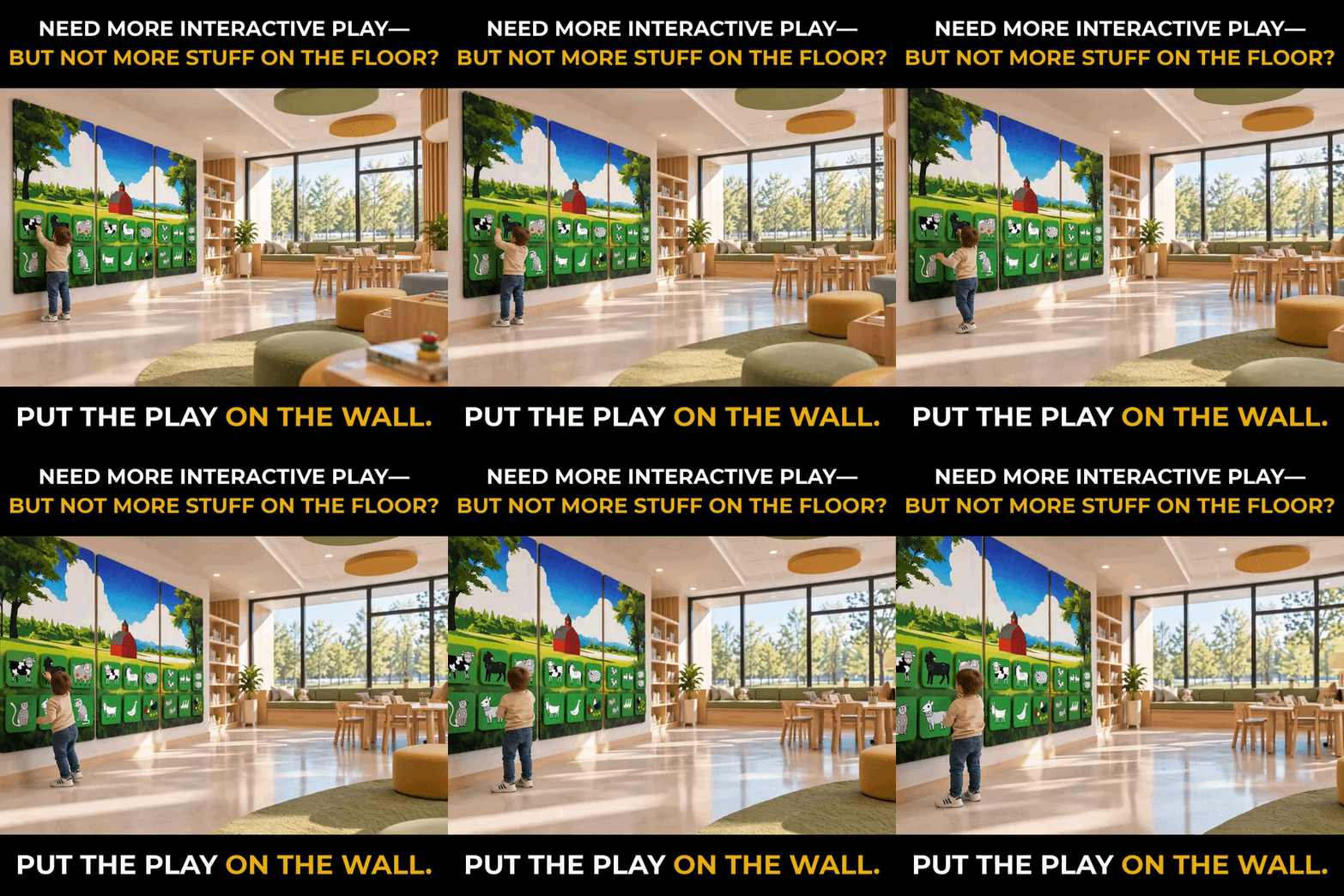
More Interactive Play. Less Competition for Floor Space.
Square footage creates some of the hardest decisions in commercial interior design.
Children's spaces make those decisions even more complicated.
A public library may need book displays, reading tables, comfortable seating, stroller circulation, and space for families to gather.
A pediatric clinic may need accessible routes, a reception area, a mix of seating, and enough room for caregivers to accompany children.
An early learning center may need both structured activity areas and open space for movement.
Adding interactive equipment can be valuable, but every additional floor-based element has consequences.
A play table needs a footprint. An activity station needs clearance around it. Loose toys may need storage, organization, and ongoing attention.
None of these are inherently bad solutions.
The challenge is that every square foot allocated to one function is no longer available for another.
Look at the walls before expanding the play area
Farm Yard Fun takes advantage of vertical wall space by moving an interactive activity onto a wall-mounted system.
Instead of locating an entire play experience on the floor, the mural allows children to engage with the removable animal cards while standing in front of the wall.
That does not mean the activity requires zero floor space. Children still need an accessible approach area, appropriate clearance, and room to interact safely.
It does mean the primary activity components are located on the wall rather than distributed across a collection of floor-based play equipment.
This is an important distinction for space planning.
A wall-mounted activity can help designers preserve more of the room for its other essential functions.
In a library, that may mean maintaining space for bookshelves and reading furniture.
In a clinic, it may mean creating an activity destination along a wall without placing a large play structure in the middle of the room.
In a shared family area, it may mean adding an enrichment opportunity without turning the entire space into a dedicated playroom.
Modular sizing makes planning more flexible
The Farm Yard Fun system is offered in three configurations:
40-inch Starter: One mural panel, with eight pieces listed in the kit.
80-inch Set: Two mural panels, with sixteen pieces listed in the kit.
120-inch Set: Three mural panels, with twenty-four pieces listed in the kit.
This gives designers an opportunity to select a footprint appropriate to the wall and the overall project.
A smaller installation may suit a compact family waiting area, while a three-panel composition can create a more prominent feature wall in a larger library or early learning space.
The available configurations also allow the product to be considered earlier in the layout process, rather than being treated as an accessory to add after furniture placement is complete.
Importantly, the panel arrangement and card quantities should be confirmed against the current manufacturer's drawings before developing final elevations or renderings.
Planning for the people using the wall
A wall activity only works well when children can comfortably access it.
Farm Yard Fun is described for ages 2–6, so its intended users are relatively young.
Designers should consider how the activity zone relates to child height, reach, supervision, circulation, nearby seating, and the placement of other furnishings.
The goal is not simply to get the mural onto a wall.
The goal is to make the wall useful without creating a conflict with how people move through the space.
The specification takeaway: A strong floor plan doesn't always require a dedicated footprint for every activity. Sometimes the best use of space is to make an existing surface do more.
A Cute Wall Is Nice. What if It Could Teach, Too?
Children's spaces are often designed around visual themes.
Animals, nature, transportation, outer space, and colorful patterns are familiar approaches. They create recognizable environments and can make a room feel more approachable.
But a theme and a learning experience are not necessarily the same thing.
A farm mural may introduce a child to the image of a cow or a horse.
An interactive farm mural can give that child an opportunity to move, identify, compare, organize, and talk about those animals.
That difference is at the center of Farm Yard Fun.
Learning opportunities built into the interaction
Gressco identifies fine motor skills, language, and early cognitive development among the developmental areas that the mural is designed to support.
The removable animal cards create opportunities for several types of activity.
Fine motor practice: A child grasps a card, moves it, adjusts its position, and places it onto the mural. Those physical actions provide hands-on practice with controlled movement.
Language and vocabulary: The familiar animal illustrations create natural opportunities to name animals, describe their features, and discuss what they do.
Animal recognition and comparison: Children can identify cows, horses, pigs, sheep, and other animals, then compare similarities and differences.
Imaginative storytelling: A child can arrange animals into a scene and invent a story about what is happening on the farm.
Early cognitive engagement: Choosing locations, sorting animals, identifying patterns, and responding to simple prompts can create opportunities for thinking and problem-solving.
These are learning opportunities rather than guaranteed developmental outcomes.
How much a particular child benefits depends on factors such as age, developmental stage, interest, accessibility, and how the activity is used.
Still, the point is meaningful for designers: the wall is intended to invite participation rather than simply provide a background.
A simple activity can support several kinds of interaction
Imagine two children using the mural together.
One identifies an animal while the other decides where to place it.
They may disagree about which animals belong together, explain their choices, or invent a story involving the barn.
Now imagine a parent or caregiver participating.
The activity might become a conversation about animal sounds, counting, colors, or matching.
The mural does not prescribe a single game or require a complicated sequence of instructions.
That openness is part of its appeal.
Different children may approach the same installation differently, and the activity can change from one visit to the next as cards are rearranged.
Removable pieces are central to the design
The animal cards attach using a PET disc hanging system.
According to the supplied product information, children can remove, place, and reposition the cards without glue or tools.
The cards are also described as reusable and interchangeable between themes, offering possibilities for changing the activity over time. Availability and compatibility of additional themes should be confirmed for a specific project.
For a designer, this makes the cards more than decorative graphics.
They are the interactive components that give the mural its function.
That is also why product accuracy matters so much when representing Farm Yard Fun visually.
The removable element is the entire illustrated animal card, not an animal graphic peeled away from the green backing. The cards retain their own rounded rectangular shape and mount onto the illustrated mural.
That construction is essential to understanding how children use the product.
The opportunity for early learning environments
Farm Yard Fun can complement the learning activities already taking place in preschool settings, early learning centers, and children's libraries.
It could be used as an informal discovery station, a conversation starter, or an activity available during transitions between other programs.
It does not replace a curriculum or an educator.
Instead, it gives designers another way to incorporate opportunities for exploration into the built environment itself.
The specification takeaway: Consider whether a decorative feature can also invite age-appropriate action, conversation, and discovery. A surface that supports interaction may offer more lasting value than one designed only to be viewed.
Acoustic Treatment Doesn't Have to Look Like Acoustic Treatment.
Sound is one of the less visible challenges in children's spaces.
A waiting room may have conversations happening simultaneously at reception, between family members, and among children.
A library may contain reading activities, small group discussions, children moving between areas, and occasional excited voices.
An early learning center may need spaces for both active participation and quieter activities.
In each case, materials and surfaces influence how sound behaves.
Hard floors, glass, painted drywall, and other reflective surfaces can contribute to reverberation.
That is one reason acoustic design should be considered alongside the room's visual design and functional layout.
But acoustic products are not always the first thing a designer wants people to notice in a colorful children's interior.
When the design feature also absorbs sound
Farm Yard Fun provides a way to incorporate acoustic material into a recognizable, child-friendly visual element.
The mural is made with high-density PET acoustic material associated with EzoBord.
The supplied product information identifies a 9mm PET construction with an NRC rating of 0.30.
NRC, or Noise Reduction Coefficient, is a standardized measure of sound absorption performance. It provides a useful specification reference, although performance depends on the tested material or assembly and installation conditions.
An NRC of 0.30 should not be interpreted as a guarantee that the finished room will become 30% quieter.
Instead, it indicates that the tested product or assembly provides measurable sound absorption.
The value of that distinction is important.
Sound absorption is not soundproofing.
Acoustic wall treatment can help address reflected sound and reverberation within a room. It does not inherently block noise transmission between rooms, eliminate children's voices, or replace a broader acoustic strategy.
For an acoustically demanding space, the mural should be evaluated as one part of the overall material and acoustic design.
A more integrated approach to acoustic specification
The interesting design opportunity is that Farm Yard Fun does not present itself visually as a conventional acoustic treatment.
Children see a vibrant landscape with farm animals.
Designers see an interactive wall feature.
Facility owners see an opportunity to give young visitors something to do.
And the PET wall panels also contribute sound-absorbing material to the environment.
These functions do not have to compete visually.
The acoustic material is part of the product's construction rather than a separate feature that must be added alongside the mural.
This is especially valuable in spaces where designers want the visual language to feel playful and cohesive.
There is no need for every acoustic element to look technical, industrial, or institutional.
Sustainability belongs in the material conversation
The product information also describes the PET material as made from 100% recycled material.
For projects with material sustainability goals, that is a relevant attribute to evaluate.
However, recycled content alone does not establish a complete environmental profile. Designers should still request current manufacturer documentation appropriate to the project.
This may include recycled-content confirmation, applicable environmental documentation, product-specific acoustic information, and installation guidance.
The important point is that the mural gives the project team a way to discuss visual design, interactive function, acoustic absorption, and recycled material content as connected considerations.
The specification takeaway: Acoustic treatment can be integrated into a feature that already has a purpose in the room. The most compelling solution is not always the most visibly technical one.
Putting the Four Benefits Together
The real strength of Farm Yard Fun becomes clearer when these four considerations are evaluated together.
A pediatric clinic may begin with the need for age-appropriate waiting-room engagement.
A library may begin with a shortage of available floor space.
An early learning center may be looking for additional opportunities to incorporate hands-on learning into everyday activities.
An interior designer may be searching for a wall feature that supports the acoustic strategy without compromising the visual concept.
Farm Yard Fun approaches these challenges through a single product.
Its illustrated landscape establishes a welcoming setting.
Its removable animal cards create opportunities for activity, storytelling, and early learning.
Its wall-mounted configuration keeps the main interactive components off the floor.
Its PET construction contributes acoustic absorption.
That combination is what makes the product worth discussing early in the design process rather than waiting until the last round of decorative selections.
Questions worth asking during specification
Before incorporating the mural into a project, the design team should evaluate several practical considerations.
Where does the interaction belong?
A wall adjacent to a supervised waiting or activity area may be more appropriate than one along a busy circulation route. Consider who will use the mural, who will supervise, and how the activity affects movement through the room.
How much mural is appropriate?
The 40-, 80-, and 120-inch configurations provide different planning options. Select a size based on the actual wall, expected users, surrounding furnishings, and the role the mural will play in the interior.
Can the intended users reach and engage with the pieces?
Confirm mounting height, reach, clearances, and applicable accessibility requirements during design development.
How will the activity be managed?
Because the cards are removable, the facility should establish expectations for supervision, inspection, cleaning, and replacement or storage of pieces as appropriate.
What acoustic contribution is required?
The mural's published NRC information is a useful starting point. Where acoustic outcomes are a major project objective, review the full room and installation conditions rather than assuming the mural alone will solve the problem.
How will the product fit the visual concept?
The farm landscape is bright and recognizable. It works best when intentionally incorporated into the color palette, adjacent materials, lighting, and layout.
These are not reasons to complicate the product.
They're the practical questions that help turn an appealing concept into a successful specification.
What Matters Most
A successful children's environment does not need to be filled with activities from floor to ceiling.
It needs thoughtful opportunities for engagement, balanced with the other functions that make the space usable.
Sometimes that means comfortable seating and open floor area.
Sometimes it means a welcoming visual theme.
Sometimes it means addressing reverberation before the room becomes occupied.
And sometimes it means giving children a simple activity that encourages them to move, identify, imagine, and interact.
Gressco's Farm Yard Fun Modular Mural Kit brings several of those priorities together.
It is not merely a farm picture on the wall.
It is a wall-mounted interactive experience made with acoustic PET material, designed for spaces where young children and their accompanying adults spend time.
For architects, interior designers, dealers, and space planners, the larger lesson extends beyond this individual product:
The most useful design features often solve more than one problem.
A wall can be a visual feature.
It can be a learning opportunity.
It can contribute acoustic absorption.
And it can give children something meaningful to do without requiring another large piece of floor-based play equipment.
That is a productive way to think about every square foot.
Let's Talk About the Project
Designing a children's library, pediatric facility, waiting room, or early learning environment?
The Ginger Grant Group can help you explore Gressco's Farm Yard Fun Modular Mural Kit, review the available configurations, and discuss how the product may fit your project's functional, visual, and acoustic requirements.
Let's make the space work harder without making it feel more crowded.
Contact The Ginger Grant Group to discuss product information, project applications, and specification support.