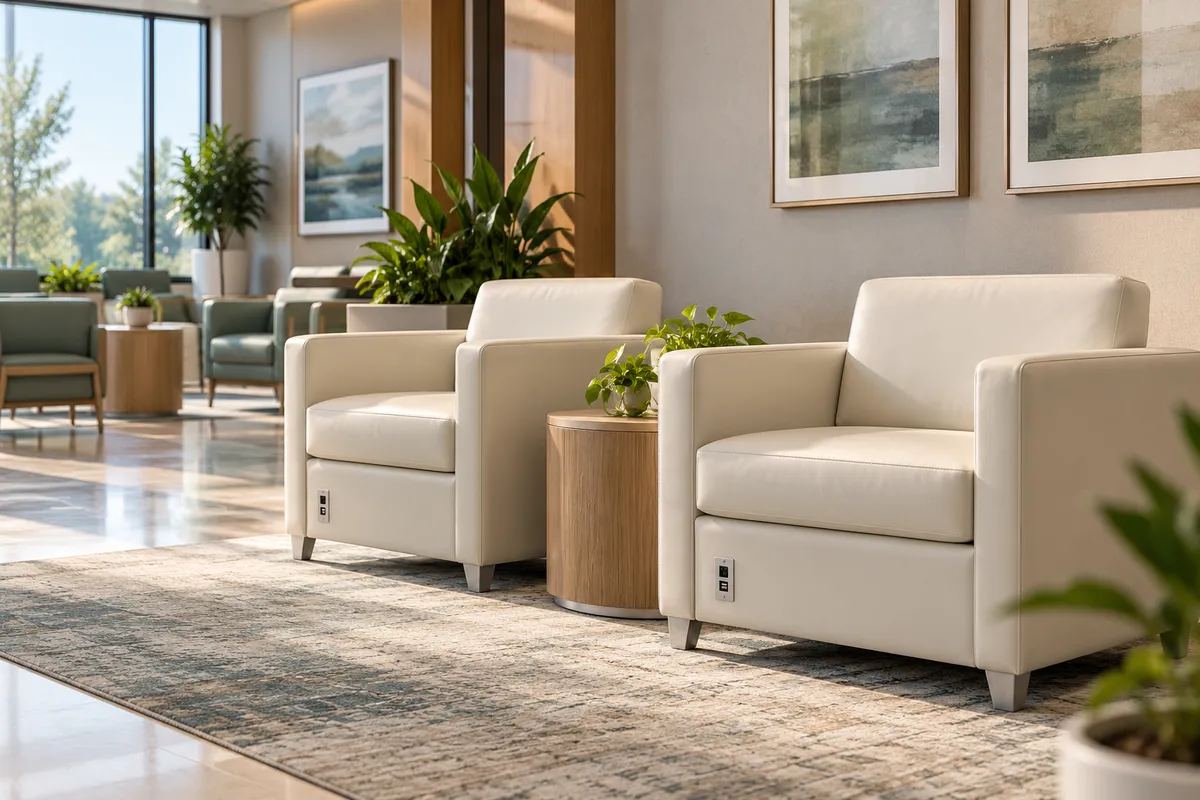
The Weekly Spec, Vol 25: Nightingale Danforth II Lounge Seating
The Weekly Spec: Nightingale Danforth II
What Happens When Lounge Seating Has to Do More Than Lounge?
Lounge seating used to have a fairly simple job.
Give people a comfortable place to sit.
But commercial interiors ask more of furniture now.
A waiting area may also need to support a laptop. A lobby may need to accommodate quick touchdown work. A workplace lounge may be reconfigured as teams and programming change. A single damaged component should not necessarily mean replacing an entire chair. And designers often want visual consistency across a project without repeating the exact same piece everywhere.
That creates a different specification question:
Can lounge seating remain comfortable while also becoming more adaptable, serviceable, and useful?
Nightingale’s Danforth II is designed around that idea.
The series includes a modular club chair, two-seat sofa, and three-seat sofa. Its components are designed to assemble without tools, individual parts can be replaced, and the collection can be specified with multiple arm styles, upholstery options, an optional swivel tablet top, and optional electrical/USB access. Nightingale
The result is not simply another lounge family.
It is seating designed to keep working as the space—and the way people use it—changes.
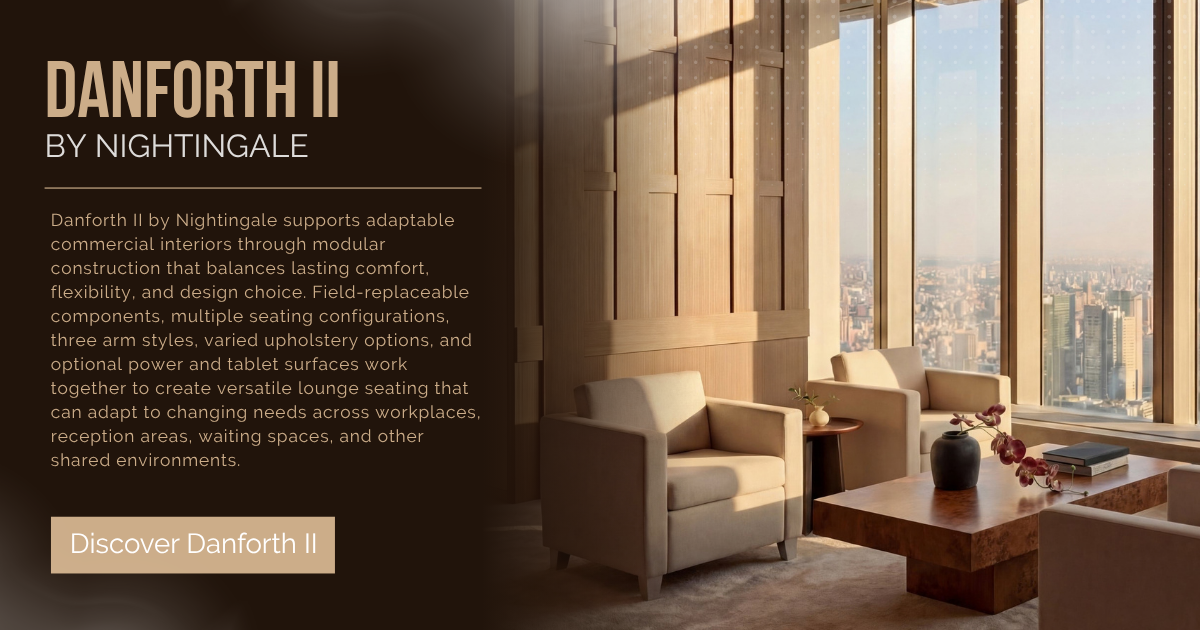
Easy to Move. Easy to Assemble. Easier to Keep in Service.
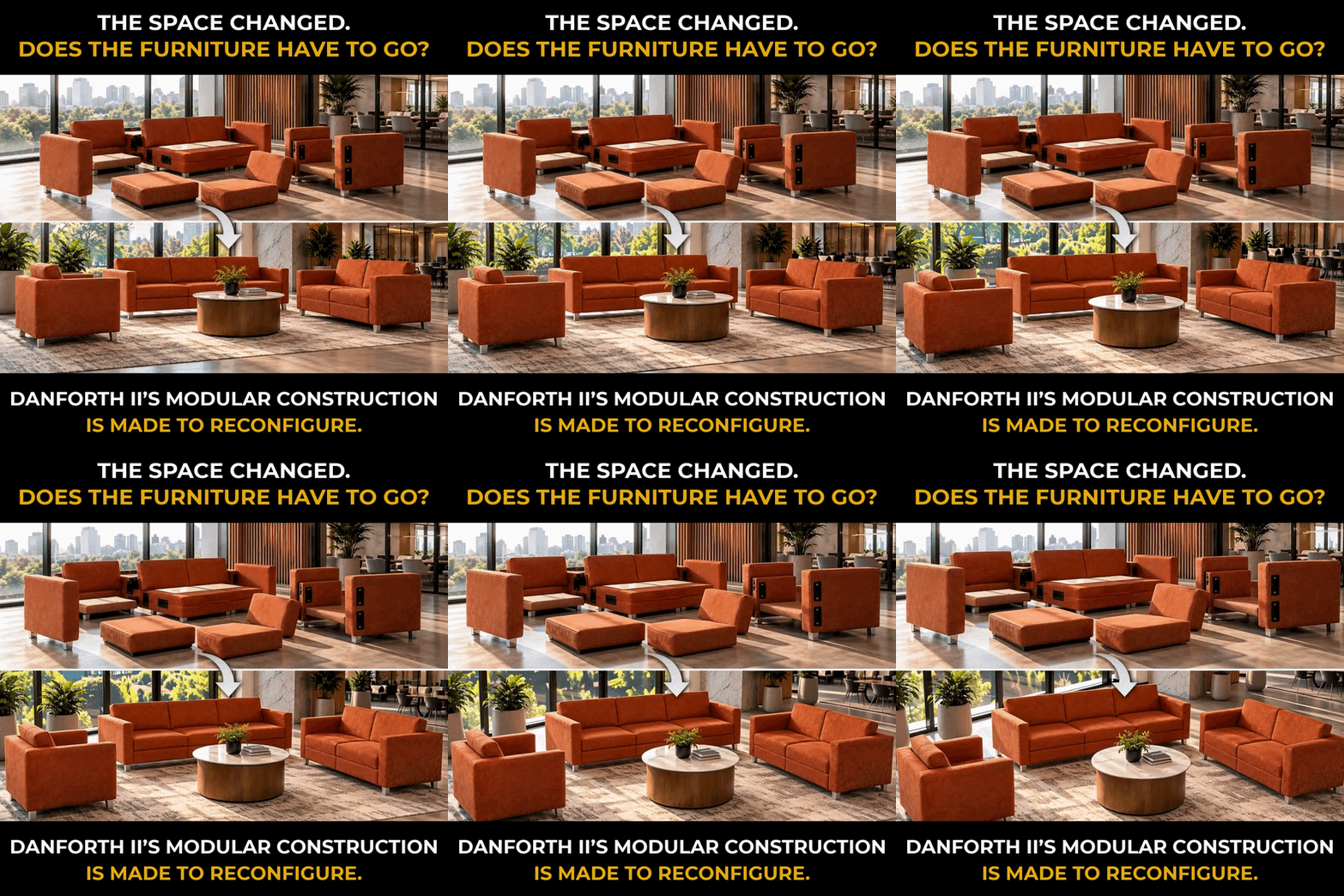
Commercial spaces rarely stay exactly as they were first planned.
Departments move.
Waiting areas shift.
Furniture gets relocated from one part of a project to another.
That makes ease of assembly and movement more important than it may seem on specification day.
Danforth II approaches that challenge through modular construction.
Rather than implying that one seat can be converted into a two-seat or three-seat configuration, the more useful story is that Danforth II is designed to be easy to assemble, move, and service.
Nightingale’s specification material notes that the components slide together without tools. That can make installation, relocation, and component replacement more straightforward than with a more permanently constructed lounge piece.
The benefit is practical.
A chair can be moved to a new setting without turning relocation into a major furniture project.
A sofa can be easier to handle during installation or future moves.
And if a component needs attention, the modular construction supports replacing that part rather than treating the entire piece as disposable.
In this context, modular does not mean transforming one seating size into another.
It means the furniture is designed in a way that supports easier assembly, movement, and long-term maintenance.
One Damaged Component Should Not Automatically Mean One Replaced Chair
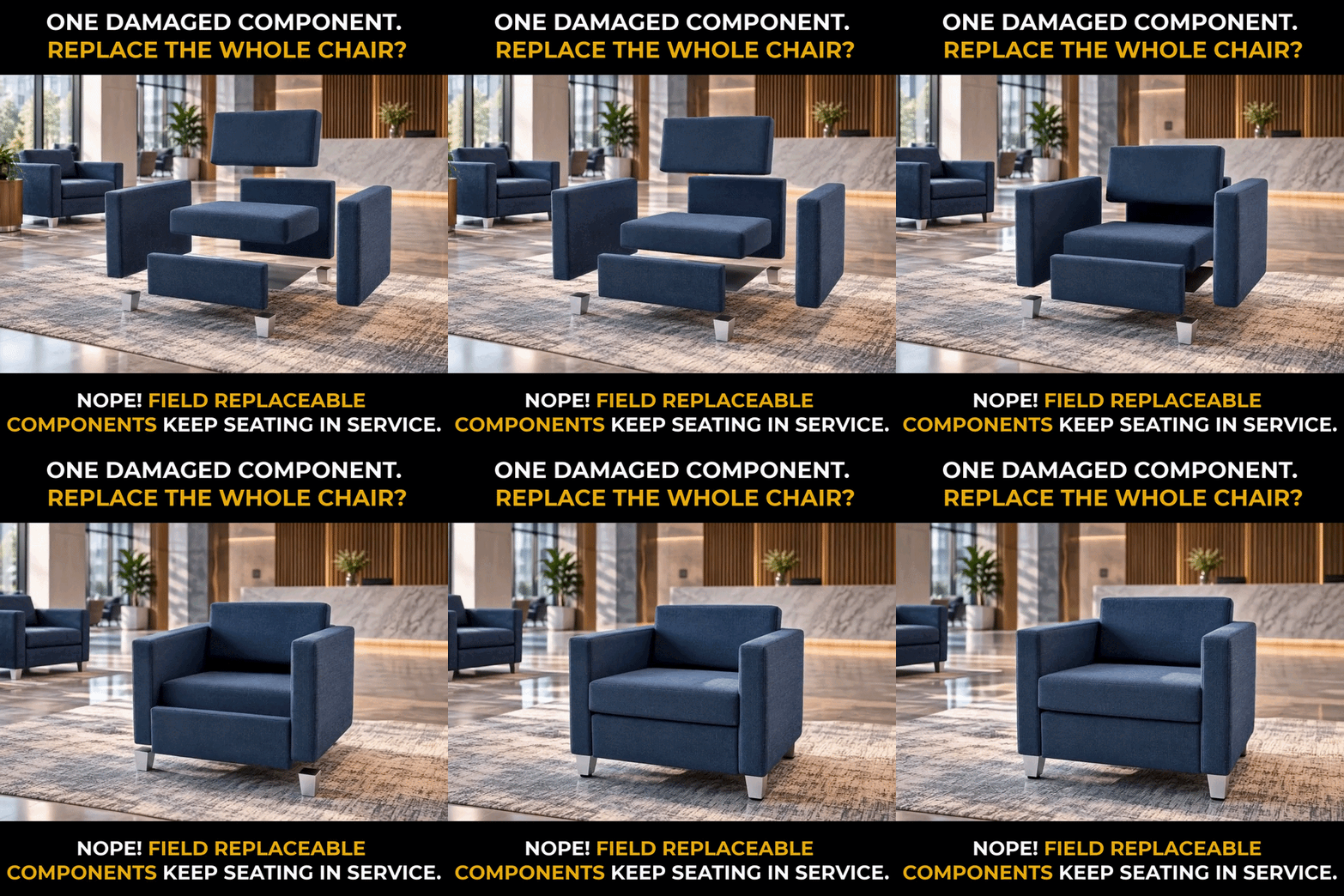
Furniture in commercial spaces gets used.
That sounds obvious, but it has important consequences for specification.
Arms get damaged. Upholstery gets worn. Individual components may eventually need attention even when the rest of the chair is still functioning.
With conventional construction, one problem can sometimes affect the useful life of the entire piece.
Danforth II takes a different approach.
Nightingale specifically identifies easily replaceable components as part of the Danforth II design. The manufacturer also describes the system as quickly assembled modular construction intended to support longevity.
That changes the maintenance conversation.
Instead of thinking about the lounge chair as one inseparable object, the design can be understood as a collection of serviceable parts.
That does not eliminate maintenance.
It makes maintenance more targeted.
For facility teams, dealers, and owners, that distinction can matter over the life of a project.
A serviceable product gives the team another option between “ignore the damage” and “replace the chair.”
And from a specification standpoint, that is worth considering before the furniture ever reaches the site.
Comfortable Seating Still Has to Support What People Actually Do
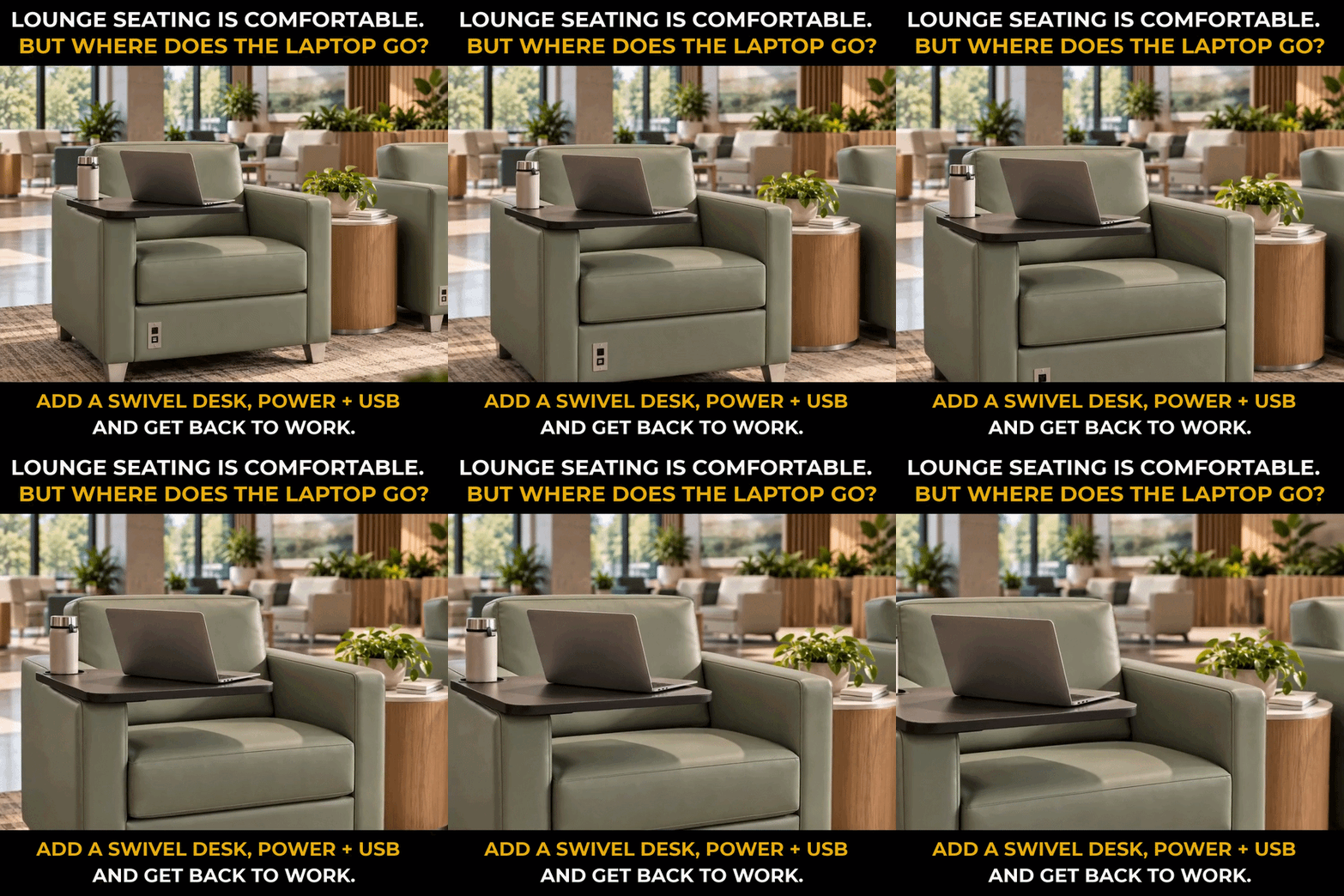
A lounge chair can be perfectly comfortable and still create a small problem:
Where does the laptop go?
Where does someone put a notebook during a quick conversation?
Where can a visitor answer an email without balancing a device on their knees?
Those moments are increasingly common in workplaces, higher education, hospitality, waiting areas, and other shared commercial environments.
Danforth II can be specified with an optional built-in swivel tablet top on select models. Nightingale also offers an optional electrical and USB port.
Those are relatively small additions.
But they can change how the seat functions.
The tablet creates a usable surface without requiring another freestanding table beside every chair.
Power access can support the devices people already bring into these spaces.
And the lounge setting can remain informal without becoming functionally incomplete.
This is where specification becomes less about adding features and more about understanding behavior.
If people are likely to work there, even briefly, the furniture should acknowledge that.
Sit.
Settle in.
Get something done.
A Coordinated Furniture Family Does Not Have to Look Repetitive
Consistency is useful in commercial interiors.
Repetition is not always.
A designer may want lounge seating throughout a project to feel related while still responding to different rooms, palettes, users, and architectural conditions.
That can become difficult when a furniture family offers only one visual expression.
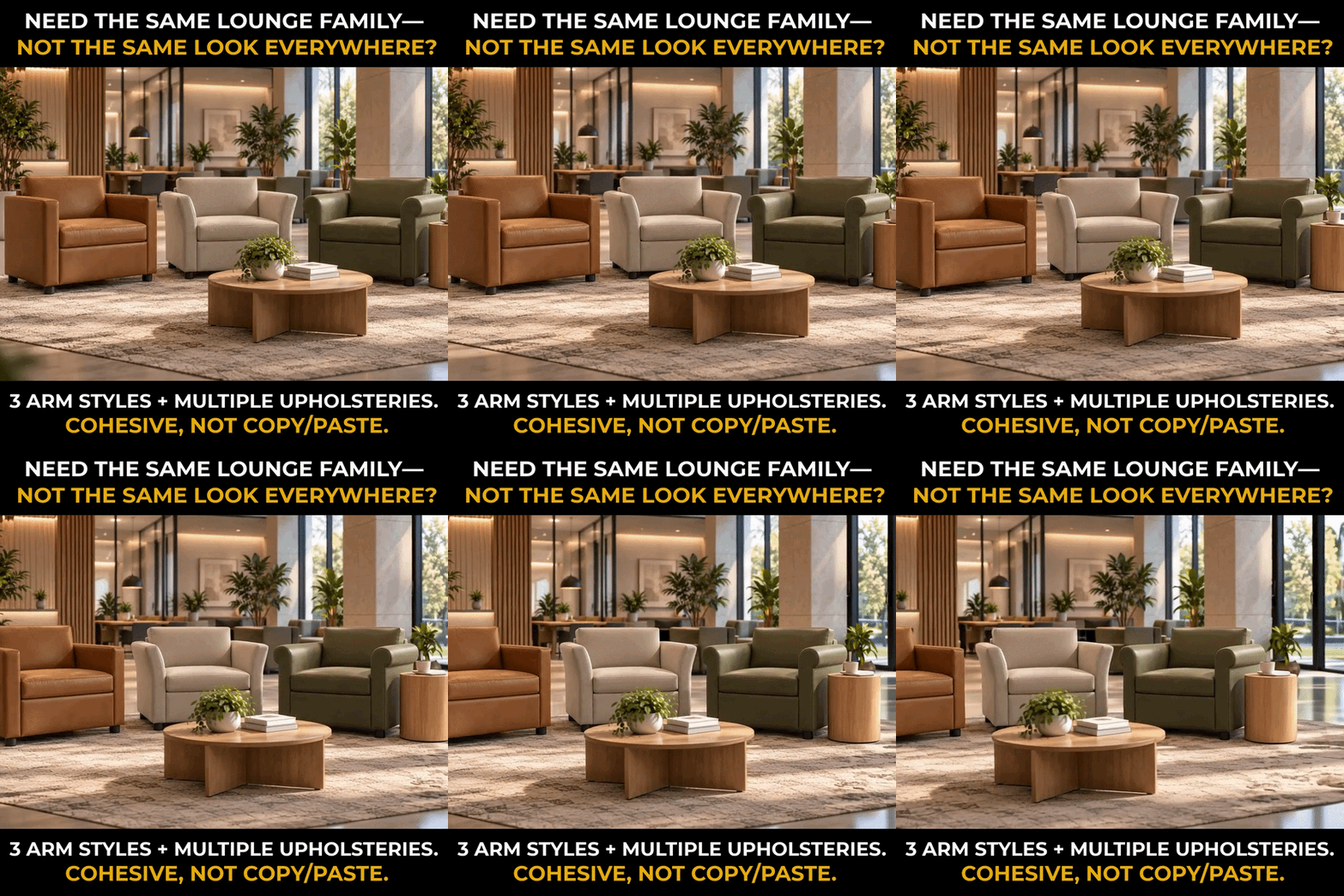
Danforth II offers three arm configurations: Straight, Rolled, and Modern Flared/Flair, depending on the manufacturer document terminology. The series can also be upholstered in textiles, vinyls, and leathers across multiple colors and grades.
That gives designers another way to create continuity.
A more tailored straight-arm version might suit one setting.
A rolled arm can introduce a softer traditional profile elsewhere.
A modern-flared arm can shift the silhouette again while keeping the seating within the same overall family.
Upholstery expands that range further.
The goal is not to create three unrelated pieces.
It is to give the specification enough flexibility that the furniture can respond to the room without losing its connection to the broader design language.
Cohesive does not have to mean copy/paste.
What Matters Most
Danforth II becomes interesting when the discussion moves beyond appearance.
Yes, it is lounge seating.
But its usefulness comes from the way several practical decisions work together.
Modular construction gives the furniture more adaptability as spaces change.
Replaceable components create a more serviceable approach to wear and damage.
Optional tablet surfaces and electrical/USB access allow lounge settings to support short-duration work.
Multiple arm styles and upholstery choices help designers maintain a common furniture language without making every setting look identical.
And the family spans a club chair, two-seat sofa, and three-seat sofa, giving planners a consistent vocabulary across different footprints. Nightingale
That is the broader specification lesson.
Furniture does not only have to fit the floor plan on installation day.
It has to support the people using it, the facility maintaining it, and the space as it evolves.
Because the better question is not simply:
Where can we put lounge seating?
It is:
How much can that lounge seating continue doing for the space after it gets there?
If you are evaluating lounge seating for a workplace, lobby, waiting area, education environment, hospitality setting, or other commercial interior, The Ginger Grant Group can help explore Danforth II configurations and options appropriate for the project.