The Weekly Spec, Vol 8: CET Specification Tool
Visualization, Revision Speed, and Modern Specification Efficiency
Commercial interior projects rarely move in straight lines anymore.
Layouts evolve. Client feedback shifts priorities. Finishes change. Budgets tighten. Install dates stay fixed while revision requests continue rolling in.
At the same time, dealers, designers, architects, and project stakeholders are expected to move faster than ever while still maintaining accuracy, visualization quality, and coordination across the entire project lifecycle.
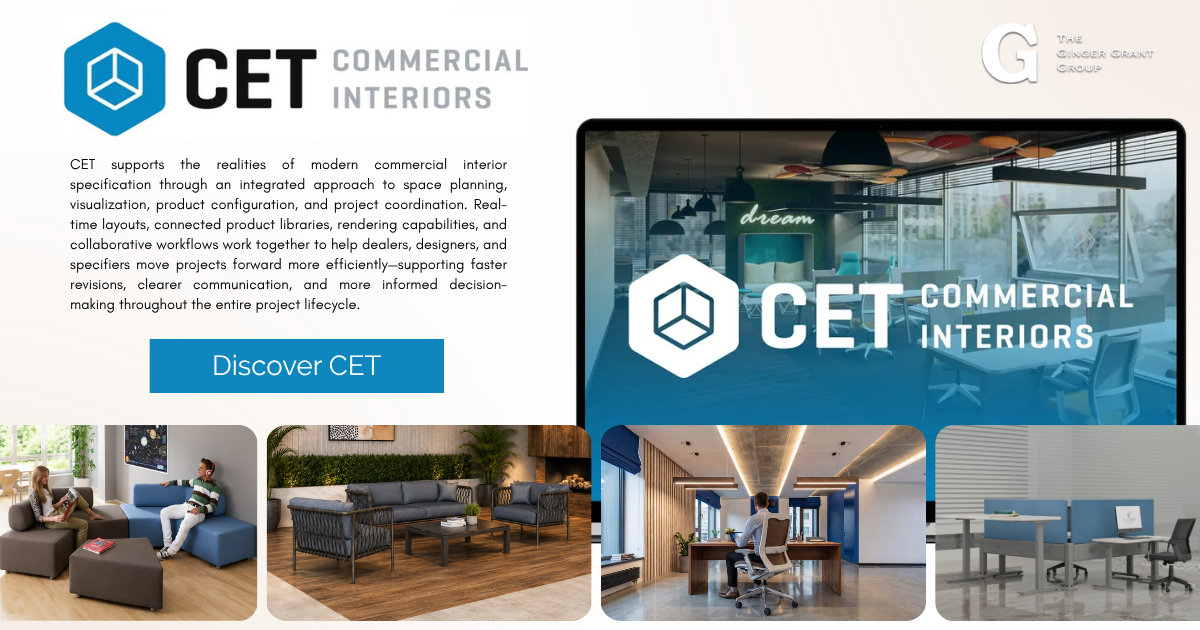
This week's Weekly Spec explores how CET helps dealers, designers, and specification teams work more efficiently with manufacturers that support CET-driven workflows. By bringing visualization, product configuration, rendering, and specification updates into a more connected environment, teams can maintain momentum while reducing coordination friction throughout the life of a project.
When Teams Need Access Anywhere
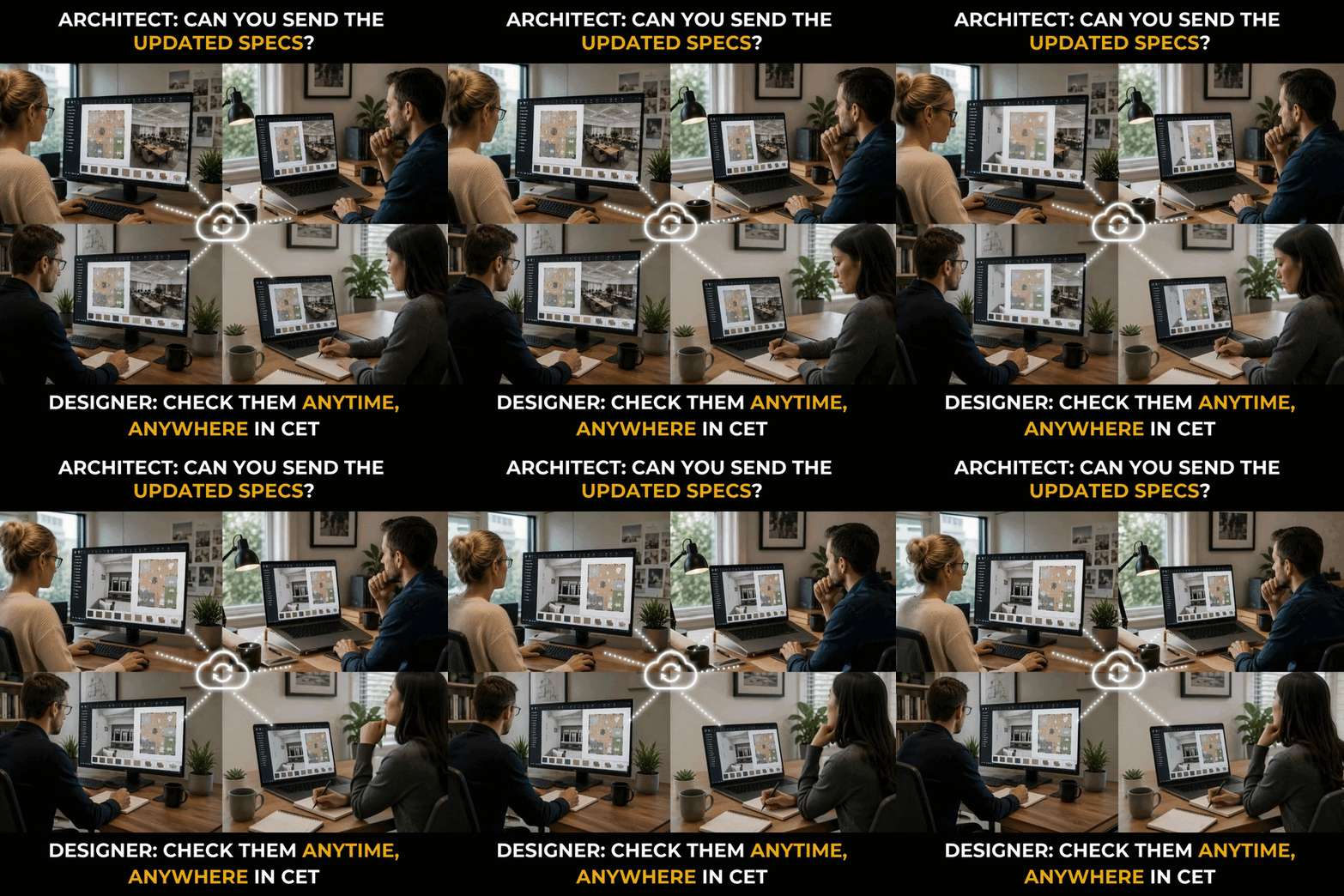
Modern specification workflows rarely happen in one office anymore.
Project teams often include dealers, designers, architects, manufacturer representatives, procurement teams, and remote stakeholders all working across different schedules and locations. That creates constant pressure to keep layouts, revisions, renderings, and specifications aligned throughout the life of a project.
One of the biggest advantages of CET is that it helps create continuity across those workflows. Instead of layouts, rendering updates, and product selections living across disconnected systems, teams can work from a more connected environment that supports visibility and coordination throughout the process.
That flexibility becomes increasingly valuable as projects grow more collaborative and timelines continue compressing.
Visualization Moves Projects Forward
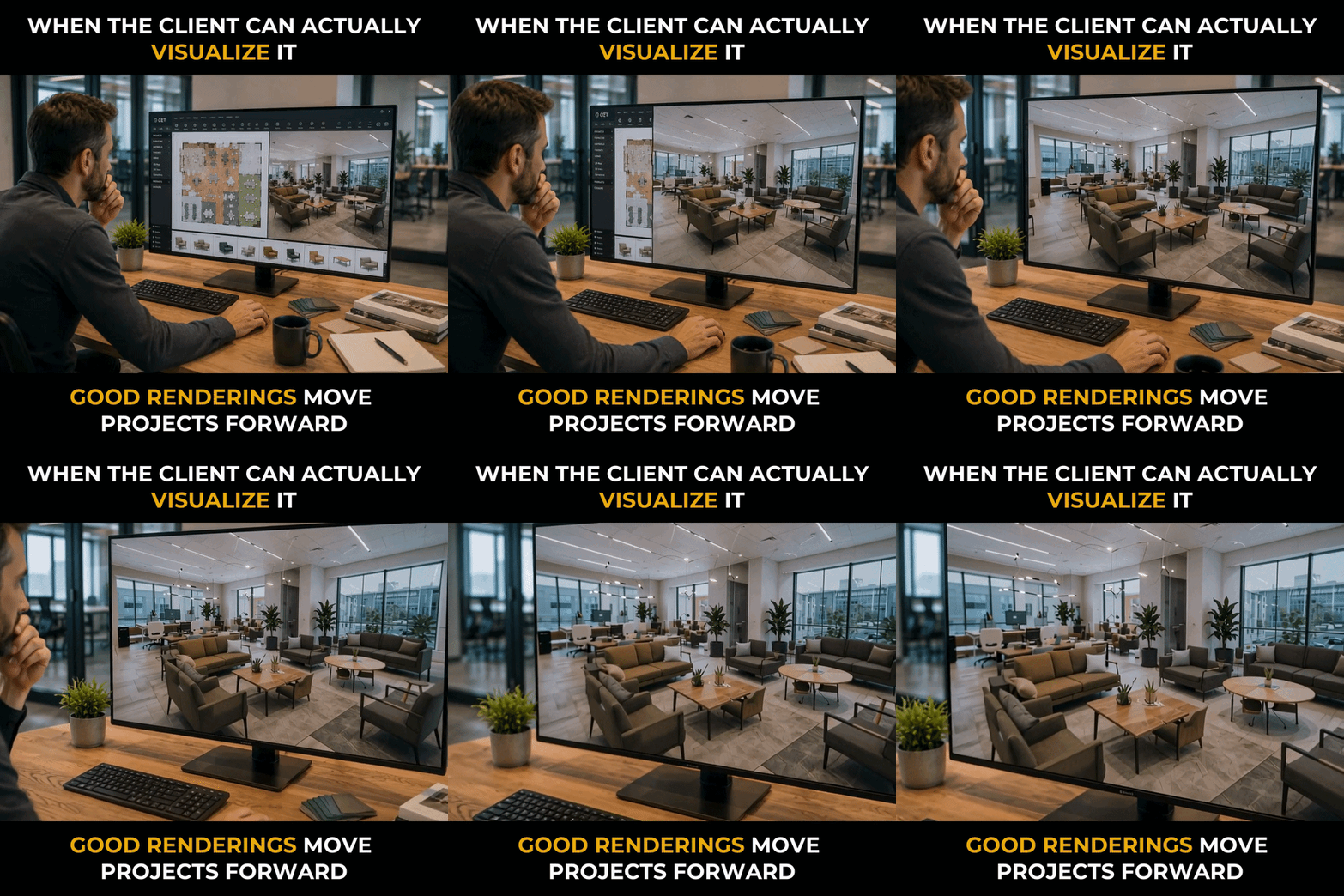
One of the biggest project slowdowns in commercial interiors is uncertainty.
Clients may understand layouts technically, but renderings help them connect to the environment being created. Strong visualization creates alignment faster because stakeholders can clearly see how products, finishes, layouts, and spatial relationships work together before installation ever begins.
That clarity reduces hesitation, improves communication, supports faster approvals, and helps stakeholders feel more confident in the direction of a project.
Good renderings are not just presentation tools.
They are alignment tools.
Deadlines Rarely Slow Down
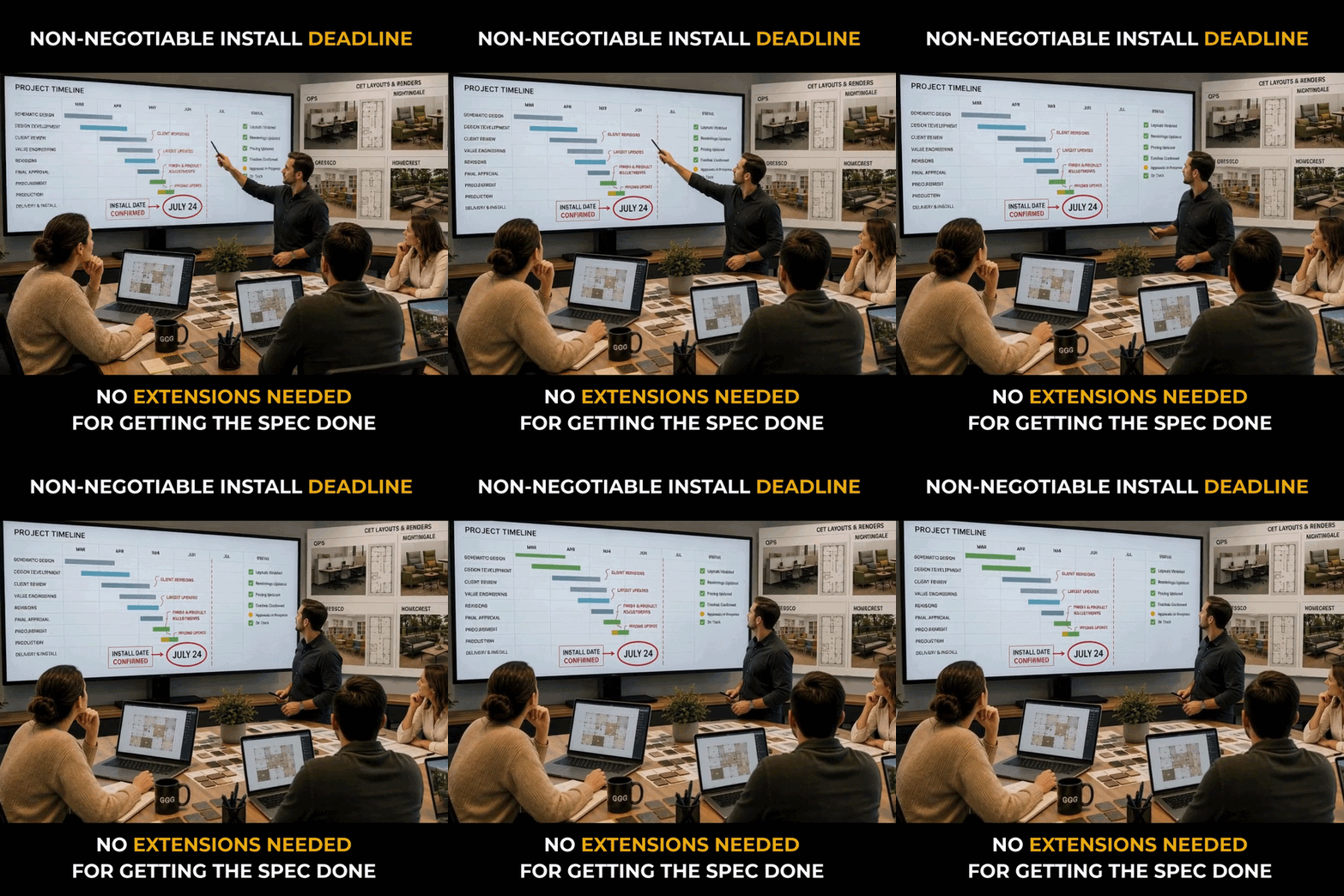
One of the realities of specification work is that project timelines continue moving even while revisions are still happening.
Install dates are often fixed while teams simultaneously manage layout updates, finish revisions, pricing adjustments, product substitutions, approval cycles, lead time coordination, and ongoing client feedback.
The workflow itself has to absorb that pressure.
CET helps support faster adaptation by making layout changes, rendering updates, and specification coordination easier to manage without rebuilding entire project packages from scratch.
In modern commercial interiors, operational flexibility is no longer optional.
It is necessary.
Revision Speed Matters

Late revisions are simply part of the industry.
What changes outcomes is whether the workflow itself is built to handle those revisions efficiently.
The most effective specification environments today are not necessarily the ones working the longest hours. They are the ones using systems that help reduce friction, simplify updates, maintain visualization continuity, and improve coordination across the entire project lifecycle.
That operational efficiency compounds over time across every project.
As expectations for speed continue increasing throughout commercial interiors, connected workflows become one of the most valuable tools specification teams can invest in.
Manufacturers Supporting CET Workflows
Several manufacturers represented by The Ginger Grant Group currently support CET-driven specification workflows, helping dealers and designers move from concept to installation more efficiently.
These include:
Open Plan Systems
Nightingale
Homecrest Outdoors
Gressco
By integrating product visualization, configuration, and specification into a more connected workflow environment, these manufacturers help support the speed, clarity, and collaboration modern projects require.
What Matters Most
The biggest takeaway from this week is simple: modern specification workflows depend on visibility, flexibility, speed, and collaboration.
CET helps support that reality by creating a more connected environment for the manufacturers, products, and project teams that drive commercial interiors forward.
Because modern specification is no longer just about selecting products.
It is about helping projects move from concept to completion with greater clarity, coordination, and momentum.
If you would like to learn more about Open Plan Systems, Nightingale, Homecrest Outdoors, Gressco, or other manufacturers represented by The Ginger Grant Group that support CET-driven workflows, reach out to our team for product applications, specification support, and dealer resources.