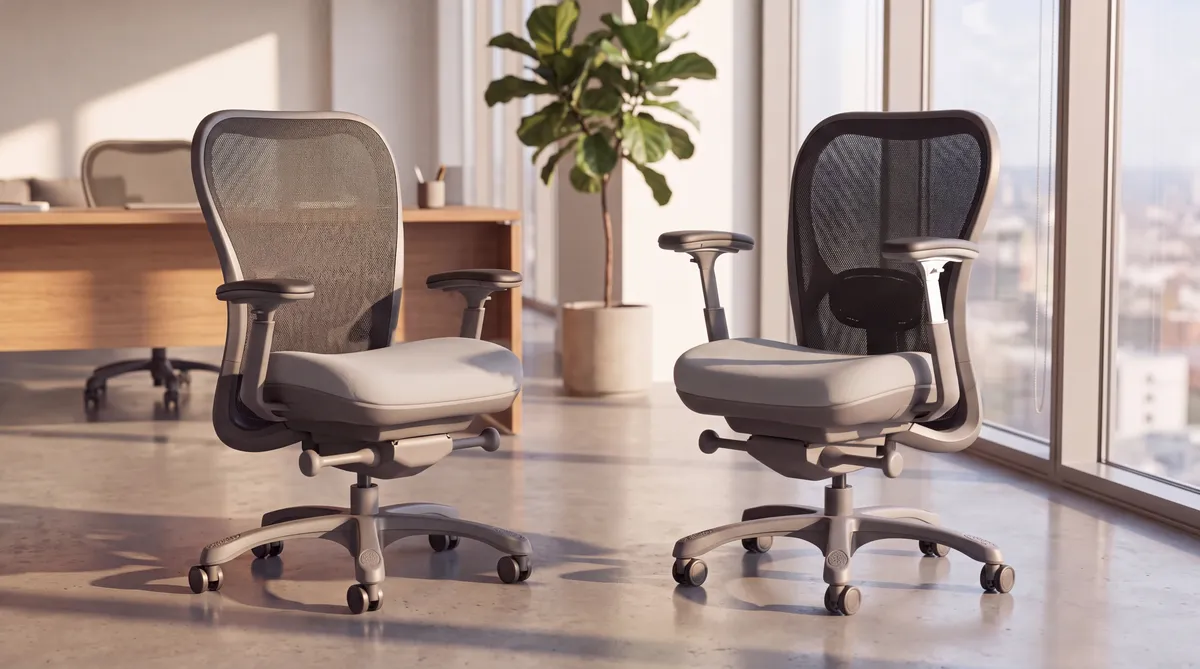
The Weekly Spec, Vol 27: Nightingale CXO Heavy Duty Task Chair
The Weekly Spec: Nightingale CXO Heavy Duty Task Chair
Heavy-Duty Doesn't Have to Mean Basic
Higher-Capacity Seating, Adjustable Ergonomics, and Everyday Workplace Comfort
Not every office chair needs to be heavy-duty.
But when a project calls for higher-capacity seating, the selection shouldn't begin and end with the weight rating.
A chair still needs to support the person using it. It needs to adjust to different body proportions, provide comfortable seating throughout the workday, and function within the surrounding workspace.
And for architects, interior designers, facility managers, and furniture dealers, it needs to fit the project's performance requirements without looking out of place alongside the rest of the furniture.
That's where heavy-duty seating presents an interesting specification challenge.
How do you provide greater strength and durability without giving up the ergonomic features people expect from a high-performance task chair?
Nightingale's CXO Heavy Duty (CXO HD) is designed around that question.
Engineered for weight demands up to 450 lbs, the CXO HD combines reinforced construction with a range of adjustments intended to support individual comfort. Its features include adjustable lumbar support, ENERSORB pressure-distributing foam, a breathable ABLEX mesh back, and a sophisticated tilt mechanism.
For commercial projects, those details matter.
A chair's performance isn't defined by a single number. It's the combination of capacity, support, adjustability, materials, and intended use that determines whether it's appropriate for a particular workstation.
This week, we're exploring four challenges CXO HD helps address—and why heavy-duty seating deserves the same thoughtful specification process as any other ergonomic furniture.
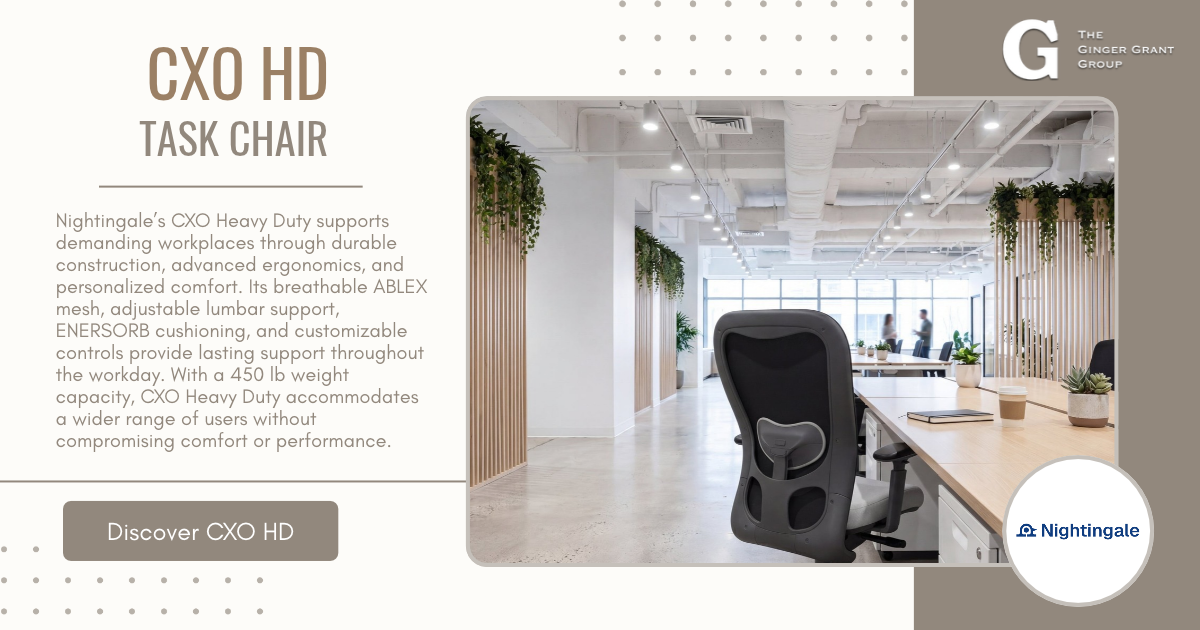
Need a Heavy-Duty Chair? Why Settle for Basic?
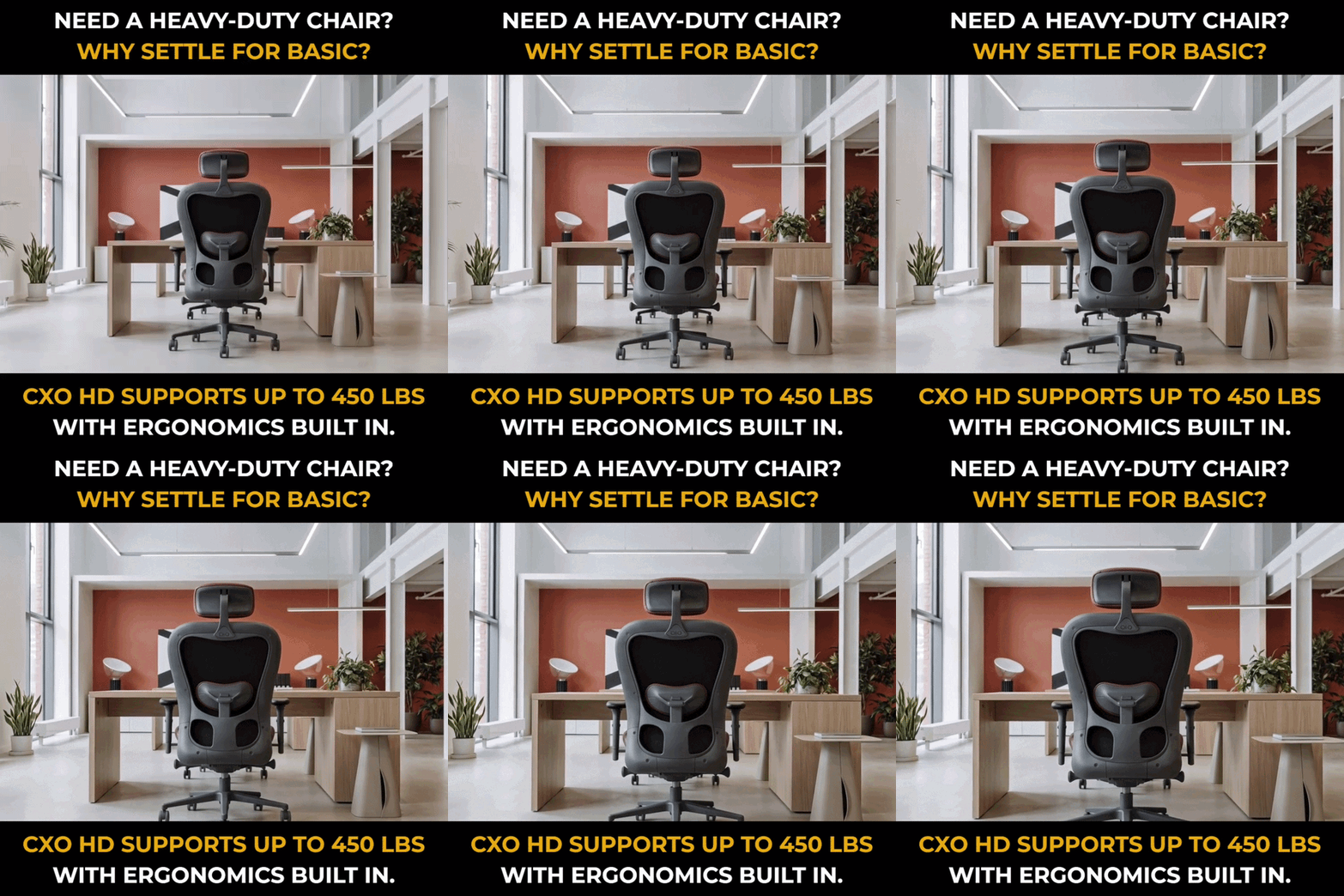
Heavy-duty office seating is often approached as a specialty category.
A project may require chairs with higher weight capacities, reinforced components, or construction better suited to particular users.
Those requirements are important, but they can create a tendency to focus almost entirely on strength.
The specification conversation becomes about the rating rather than the sitting experience.
And that raises a practical question:
Does higher-capacity seating have to sacrifice the features found in a well-designed ergonomic task chair?
Capacity is the starting point, not the complete solution
Nightingale's CXO HD is rated for users up to 450 lbs.
To support that application, its construction includes a heavy-duty Class 4 gas lift, reinforced components, a five-prong die-cast aluminum base, and large casters.
These are meaningful considerations for a facility manager or furniture specifier reviewing the requirements of a commercial installation.
But the chair doesn't stop at structural support.
CXO HD also incorporates adjustable armrests, seat-depth adjustment, lumbar support, a synchronous knee-tilt mechanism, and ENERSORB foam.
That combination is what makes the product particularly relevant for workplace design.
It offers a heavy-duty seating option without reducing the specification to capacity alone.
Designing for a broader range of users
Consider an office renovation involving multiple departments.
The project team may be selecting furniture for private offices, shared workstations, administrative areas, and meeting spaces.
Most standard task chairs may satisfy the project's general needs.
However, some workstations may require a higher-capacity seating option.
Rather than treating that requirement as an afterthought, the designer can consider how specialized seating integrates with the overall workplace.
The CXO HD provides an option that belongs visually and functionally within a contemporary office setting.
Its mesh back, upholstered seat, adjustable components, and recognizable CXO design language help it fit into commercial interiors without appearing purely utilitarian.
For dealers and specifiers, that creates an opportunity to address individual seating requirements while preserving consistency across the furniture plan.
Specify the correct duty rating
One distinction is especially important.
A 450 lb weight rating does not automatically mean a chair is approved for continuous 24-hour operation.
CXO HD is intended for heavy-duty ergonomic seating applications, but projects involving continuous multi-shift use should be evaluated against the manufacturer's specific duty-cycle recommendations.
Nightingale offers other seating products designed for those applications.
This is why selecting the correct model matters as much as selecting the correct product family.
The specification takeaway: Heavy-duty seating should be evaluated for strength, intended use, ergonomics, and visual compatibility—not weight capacity alone.
Your Back Isn't One-Size-Fits-All. Why Is Your Lumbar Support?
People don't sit the same way.
They differ in height, proportions, posture, preferences, and how they position themselves at a workstation.
Even when two employees use identical desks, monitors, and keyboards, their seating requirements may be different.
That's one reason ergonomic adjustability deserves attention during furniture specification.
A supportive chair is useful.
A chair that allows the user to adjust that support can be considerably more adaptable.
The limitation of fixed lumbar support
Lumbar support is intended to help support the lower back.
But a fixed support feature may not align equally well with every user.
For one person, it may feel too high.
For another, it may sit too low.
Someone else may prefer more pronounced support, while another user may find the same amount uncomfortable.
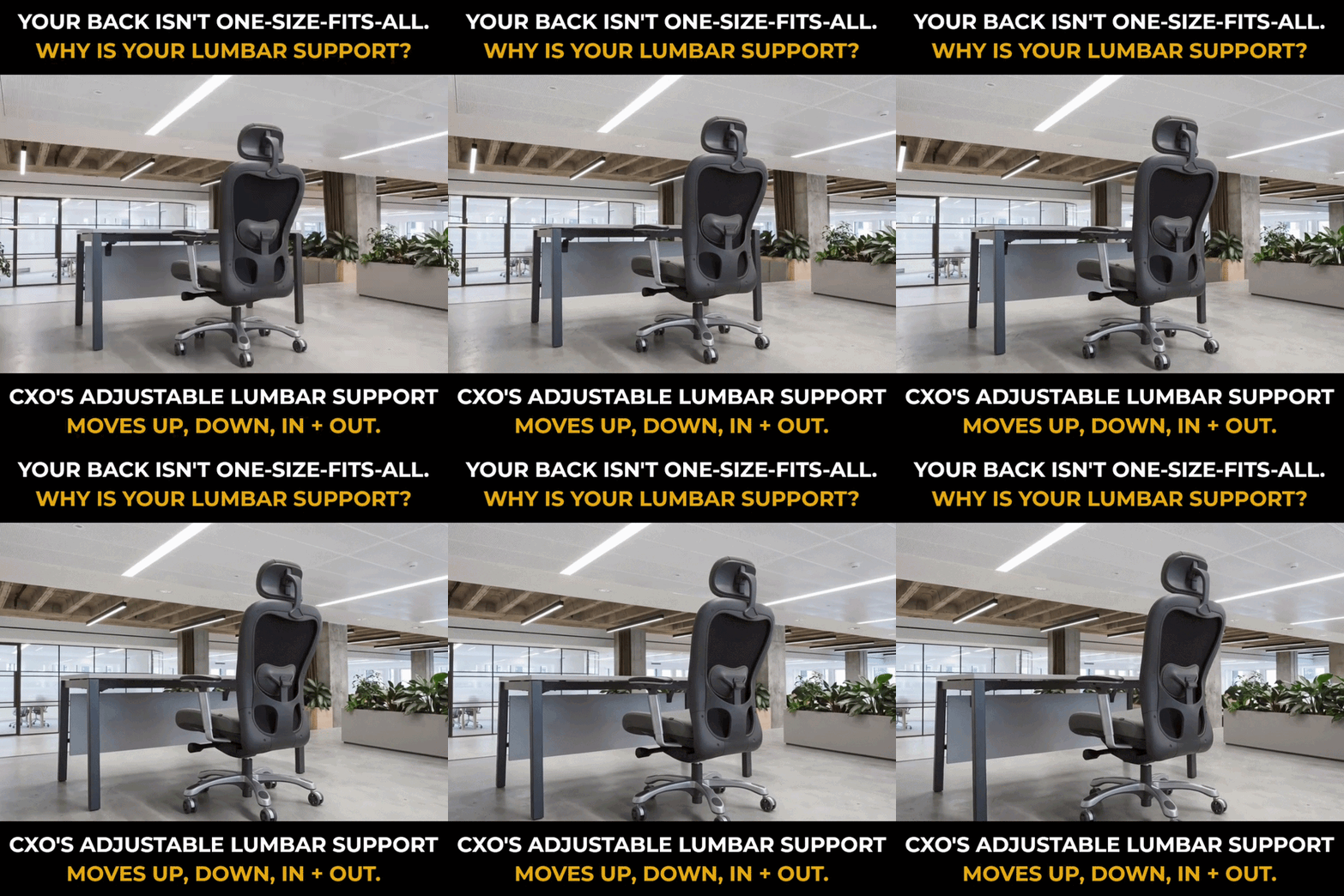
CXO HD addresses this challenge with an independently adjustable lumbar support pad.
The support can move vertically and adjust in depth, allowing the user to change both its position and how prominently it supports the lower back.
Nightingale specifies:
4 inches of vertical lumbar adjustment
2 inches of depth adjustment
These adjustments provide a useful range for personalizing the sitting experience.
What those adjustments mean in practice
Imagine a shared office where multiple employees use the same workstation at different times.
One user may need the lumbar pad positioned higher.
Another may prefer it lower and closer to the chair's backrest.
Rather than relying entirely on the backrest's fixed contour, each user can make adjustments to suit their individual preference.
This is particularly relevant in workplaces with shared seating or varied users.
It can also matter in private offices, where an individual may adjust the chair as their tasks and seating preferences change throughout the day.
The lumbar pad incorporates ENERSORB foam, adding cushioning to the contoured support.
A useful detail for furniture specifiers
The lumbar mechanism is visually distinctive.
From behind, the CXO's backrest reveals an independent support assembly within the frame.
That is more than a design feature.
It communicates that the chair has an adjustable support component rather than relying only on the mesh backrest.
When evaluating showroom samples, specifiers should encourage users to test the adjustment range and determine whether the support aligns comfortably with their needs.
No lumbar adjustment guarantees relief from back pain, and a chair should not be presented as a medical treatment.
But adjustable support can provide useful flexibility as part of an ergonomic workstation.
The specification takeaway: When seating needs to accommodate different users, independently adjustable lumbar support provides a more personalized option than a fixed backrest alone.
The Workday Is Long Enough. Why Make Sitting Harder?
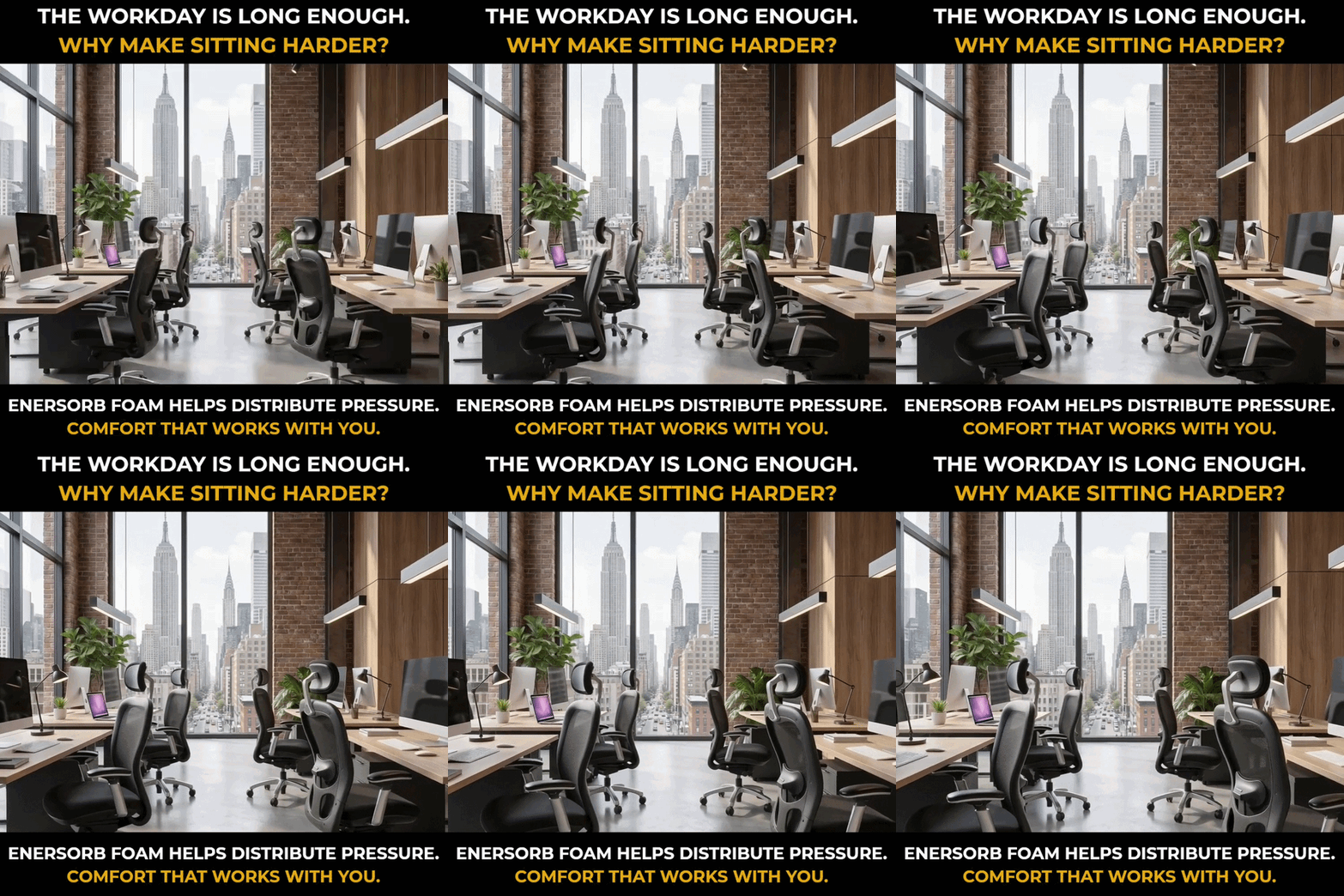
A task chair is one of the most frequently used furniture pieces in a commercial workplace.
Employees may spend substantial portions of the day seated while working at computers, attending virtual meetings, reviewing documents, or completing administrative tasks.
The chair becomes part of the everyday working environment.
And while a seat cushion may seem like a relatively simple component, its construction can make a meaningful difference to perceived comfort.
The problem with uncomfortable pressure
Sitting places pressure on areas of the body that contact the seat.
If the seat feels excessively firm or doesn't distribute that pressure comfortably, users may find themselves shifting positions frequently.
But simply making a seat softer isn't necessarily the answer.
A useful seat needs to balance cushioning with appropriate support.
CXO HD uses Nightingale's ENERSORB foam technology.
According to Nightingale, this energy-absorbing foam is designed to distribute applied pressure more evenly and reduce concentrated pressure points.
The chair's contoured seat also incorporates a waterfall-style front edge.
Rather than ending in a sharp, horizontal edge, the cushion slopes away from the user's thighs.
This contour is intended to reduce pressure beneath the legs during seated use.
Why seat design belongs in the specification
When furniture is selected primarily from photographs, the visual appearance of a chair can receive more attention than the shape and feel of its seat.
Two chairs may look similar in a rendering but offer very different seating experiences.
Seat depth, cushioning, front-edge contour, and adjustment mechanisms all contribute to how a chair fits the person using it.
CXO HD includes an integrated seat slider for depth adjustment.
This allows users to adjust the seat position relative to the backrest.
It's a particularly useful feature when considering differences in body proportions.
A person with longer legs may prefer a different seat-depth setting from someone with shorter legs.
Comfort also involves movement
CXO HD incorporates a synchronous knee-tilt mechanism with tension adjustment and an infinite-position tilt lock.
These features allow the user to adjust the chair's reclining behavior and selected position.
The mechanism is part of a broader ergonomic approach that recognizes seating is not always static.
People shift, lean, recline, and return to upright work.
A chair that accommodates these movements through its intended adjustments can support a more adaptable seating experience.
For designers and furniture dealers, this is also an opportunity to discuss how seating works alongside desk height, monitor positioning, and general workstation setup.
The chair is important, but it is only one element of the complete workstation.
The specification takeaway: Don't evaluate comfort solely by cushion thickness or appearance. Seat construction, pressure distribution, depth adjustment, and tilt functionality all deserve consideration.
Supportive Chair. Stuffy Backrest?
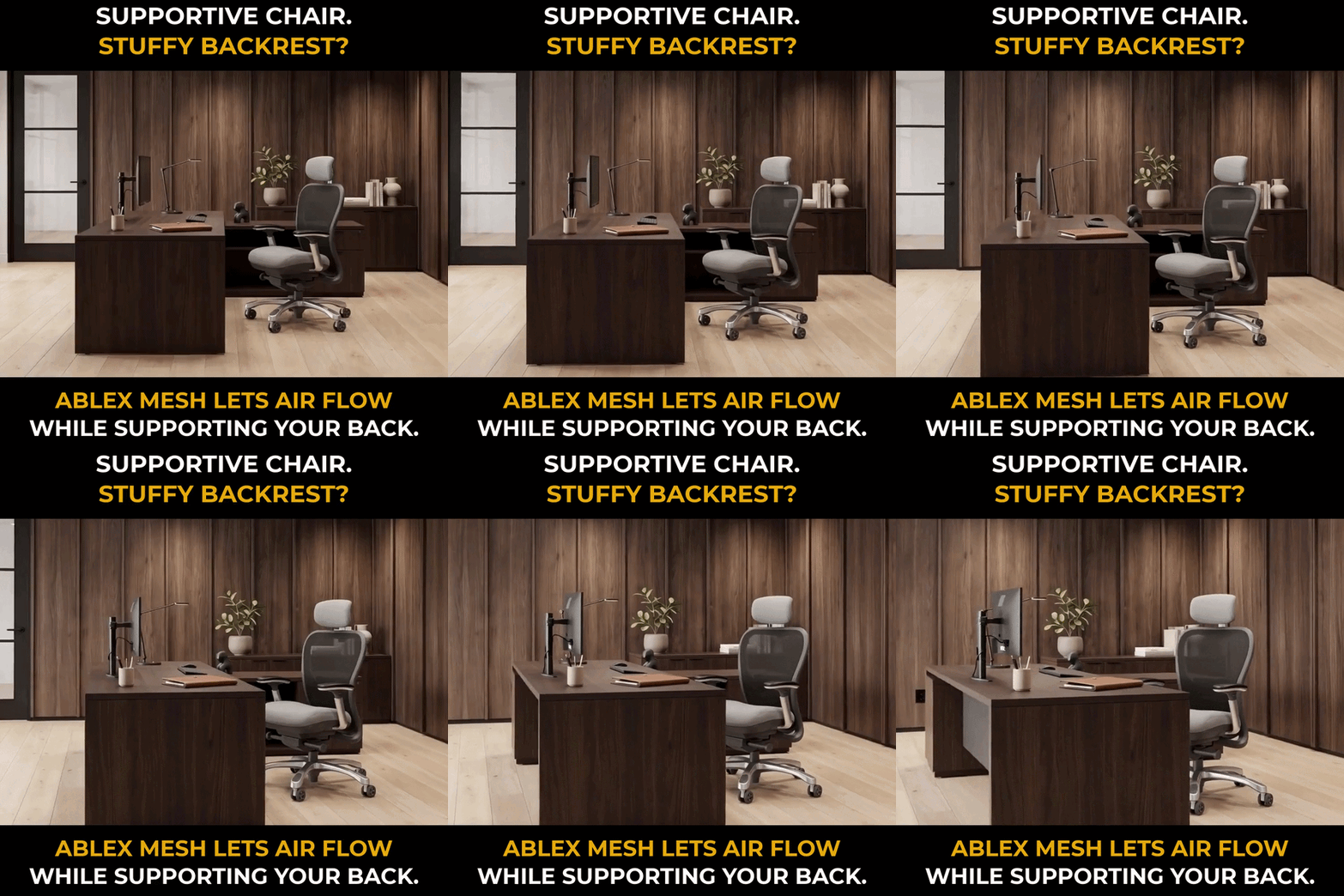
Comfort isn't only about cushioning and support.
The materials surrounding a seated user also affect the experience.
In offices where employees sit for extended periods, the breathability of the backrest is a useful specification consideration.
A solid upholstered back can provide support, but it may offer less direct airflow than an open mesh design.
That difference becomes particularly relevant in workplaces with varying temperatures, seasonal conditions, or users who prefer a more ventilated seating surface.
ABLEX mesh and breathable support
CXO HD uses Nightingale's ABLEX patterned-weave mesh back.
The mesh is designed to allow air to pass through the backrest while providing support and accommodating dynamic movement.
This is an important difference from simply adding ventilation openings to an otherwise solid back.
The mesh itself forms the primary back-contact surface.
It provides a flexible, breathable interface between the user and the chair frame.
Support and airflow are not opposing goals
A common assumption is that a supportive chair needs a substantial, upholstered backrest.
But support depends on the complete design of the chair, not just the amount of material behind the user.
CXO HD combines its ABLEX mesh back with the independently adjustable lumbar pad.
The mesh provides a flexible back-contact surface, while the lumbar component allows more targeted adjustment.
Together, those elements support a seating design that considers both ventilation and individual support preferences.
A practical commercial application
Consider a contemporary workplace with large windows, shared workstations, and varying patterns of occupancy.
Employees may spend time moving between meeting rooms, focused desk work, and collaborative activities.
As the working environment changes throughout the day, a breathable mesh chair can provide a different seating experience from a fully upholstered alternative.
The ABLEX mesh allows airflow rather than creating a continuous fabric-covered barrier against the back.
It doesn't replace building ventilation or guarantee that a user will never feel warm.
However, it is a material feature that can contribute to comfort during extended use.
The aesthetic advantage
Mesh also has a distinct visual character.
It gives CXO HD a lighter-looking backrest while retaining its substantial frame and heavy-duty construction.
This can be particularly useful in contemporary commercial interiors where designers want seating to feel refined rather than bulky.
The chair remains clearly ergonomic without relying on an oversized upholstered silhouette.
The specification takeaway: Breathability should be considered alongside cushioning, support, and adjustment. ABLEX mesh allows CXO HD to provide a ventilated backrest without abandoning ergonomic function.
What Designers and Dealers Should Consider When Specifying CXO HD
Selecting a heavy-duty ergonomic chair is about matching the furniture to the needs of the people and the environment.
CXO HD offers several valuable features, but the project team should still review how those features relate to the actual application.
Confirm the duty requirements. Start with the required weight capacity and expected usage pattern. Verify whether the chair will be used during a conventional workday or in a continuous multi-shift environment. Select the model appropriate to those conditions.
Review the adjustment range. Lumbar position, seat depth, armrest height and width, pneumatic height adjustment, and tilt settings all affect how a user can personalize the chair.
Evaluate the seating experience. ENERSORB cushioning and the waterfall seat profile are useful starting points, but whenever possible, evaluate a physical sample for individual comfort and fit.
Consider the workspace. Check seat height, armrest positioning, desk clearance, floor surface, caster selection, and the surrounding workstation layout.
Confirm the configuration. CXO HD is offered with model-specific options, including an optional headrest configuration. Verify the selected arm design, upholstery, finish, and accessories against the current manufacturer specifications.
Request current documentation. Use Nightingale's product sheet, technical information, applicable test documentation, and warranty terms to confirm the chair meets project requirements.
For dealers, these considerations help guide more informed client conversations.
For architects and interior designers, they provide a framework for specifying seating that supports both the users and the overall workplace plan.
And for facility managers, they help establish whether the product is appropriate for the intended application before procurement.
What Matters Most
Heavy-duty seating is not simply about making an ordinary chair stronger.
It involves understanding how capacity, support, durability, and comfort work together.
A higher weight rating addresses one important requirement.
But the people using the chair still need appropriate support, breathable materials, comfortable cushioning, and adjustments that allow them to find a suitable seated position.
Nightingale CXO HD brings these considerations into one ergonomic task chair.
Its reinforced construction is designed for higher-capacity applications.
Its lumbar support can be adjusted vertically and in depth.
Its ENERSORB foam is designed to distribute seated pressure.
Its waterfall seat and integrated adjustments contribute to a more adaptable seating experience.
And its ABLEX mesh back provides breathable support.
For the commercial design community, the broader message is straightforward:
Specialized seating should receive the same attention to comfort, performance, and aesthetics as the rest of the furniture specification.
The goal is not just to find a chair that meets the requirement on paper.
It's to choose seating that makes sense for the person, the workspace, and the way the furniture will be used.
Because a heavy-duty chair should still be a great task chair.
Let's Talk About the Right Chair for the Project
Specifying task seating for a commercial office, administrative facility, or workplace renovation?
The Ginger Grant Group can help you explore Nightingale CXO HD, review its ergonomic features, and discuss the appropriate configuration for your project.
Whether you're evaluating higher-capacity seating, furnishing multiple workstations, or comparing ergonomic task chair options, the conversation should begin with the people using the furniture.